
-
Mastering Discipline: Dharmic Practices for Spiritual Bliss and Devotional Growth
Discipline in the dharmic traditions is not mere suppression but the intelligent redirection of desire toward higher aims. Drawing on Hindu, Buddhist, Jain, and Sikh sources, this article explains how ethical restraint, attentional training, and ritual regularity form a unified system that sustains devotional service and spiritual bliss. It translates Patanjali’s abhyasa–vairagya, the Bhagavad Gita’s…
-
Nalanda vs. Takshashila: Inside South Asia’s Legendary Learning Hubs and Their Lasting Legacy

Takshashila and Nalanda illuminate two complementary models of ancient education in South Asia: a teacher‑centered, city‑embedded network and a purpose‑built, campus‑centered Mahāvihāra. Takshashila’s Gandhāran milieu fostered multilingual, practice‑oriented scholarship at a crossroads of Achaemenid, Hellenistic, and Indic worlds. Nalanda, sustained by Gupta, Harṣa, and Pāla patronage, curated advanced specialization, international translation networks, and a renowned…
-
Unlock the Paths of Yoga: A Comprehensive Guide to Hatha, Kundalini, Ashtanga, Kriya, Jivamukti

This comprehensive guide clarifies five major pathsHatha, Kundalini, Ashtanga, Kriya, and Jivamuktishowing how each unites body, breath, and mind while honoring shared dharmic ethics across Hinduism, Buddhism, Jainism, and Sikhism. Readers discover the philosophical foundations, core methods (asana, pranayama, bandhas, mudras, meditation), and practical safety cues that make practice sustainable. The article demystifies yogic anatomy…
-
Chhattisgarh Mandir Mahasangh: A Bold Plan to Protect Temples and Renew Dharmic Heritage

Temple trustees and priests in Chhattisgarh have resolved to establish a Mandir Mahasangh to professionalize temple management, protect temple lands from encroachment, and renew Dharmic heritage. The proposed federation emphasizes legal compliance, financial transparency, and standard operating procedures while respecting local traditions. It recommends GIS-based land protection, conservation-grade heritage care, and robust safety and crowd…
-
Divine Justice and Fallen Kings: How Hindu Scriptures Enshrine Honor for Women

Ancient Hindu scriptures deliver a consistent warning: mistreating women is adharma that invites downfallof men, dynasties, and entire realms. Drawing on the Mahabharata, Ramayana, Bhagavata Purana, and Dharmashastra, this analysis shows how narratives like Draupadi’s humiliation, Ravana’s abduction of Sita, Amba’s denial of agency, and Ahalya’s deception culminate in moral and political collapse. Legal traditions…
-
Garuda in the Vishnudharmottara Purana: Iconography, Weapons, and Living Symbolism
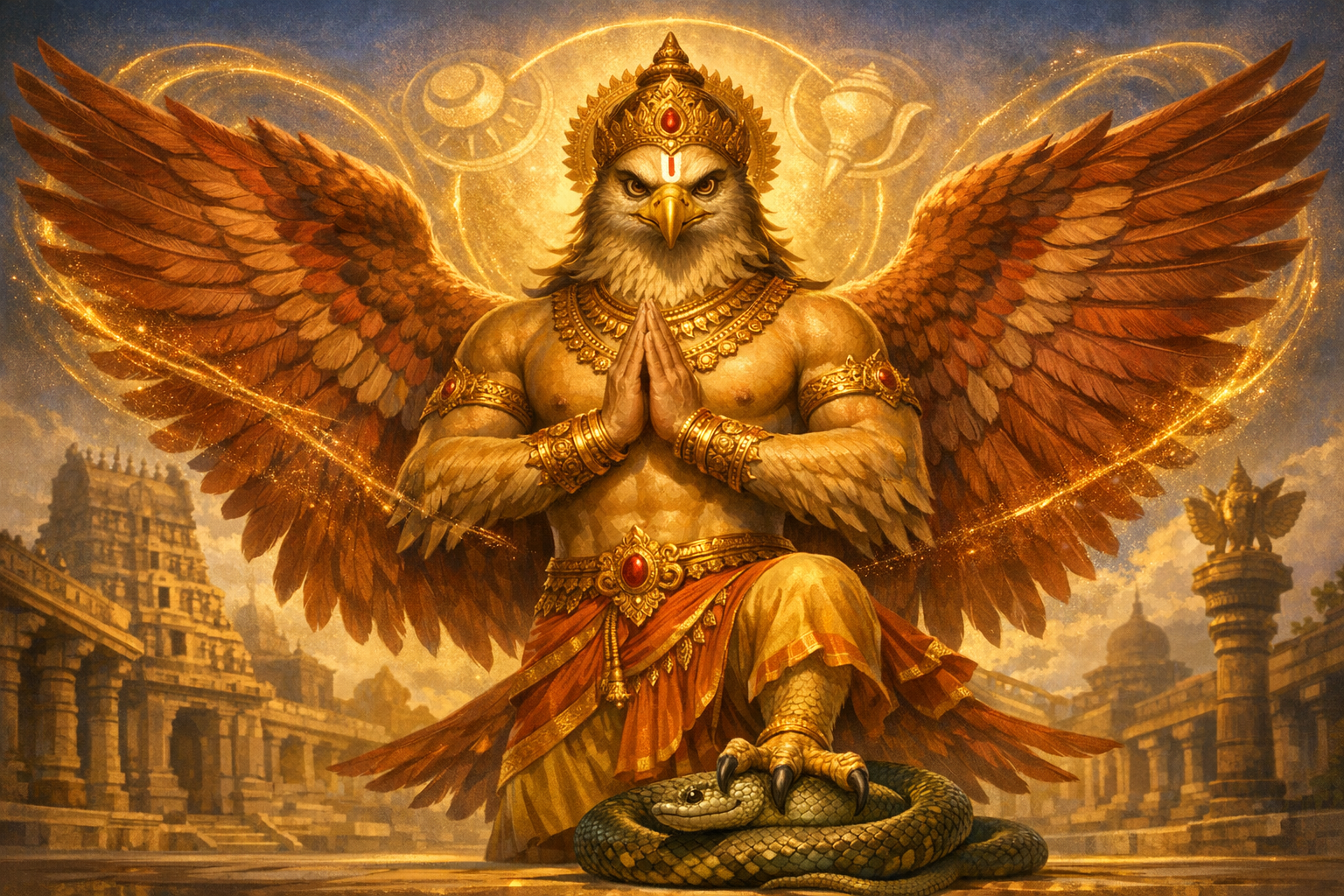
This in-depth study presents Garuda as codified in the Vishnudharmottara Purana, clarifying how precise iconography communicates theology in Hindu scriptures. Readers will learn the canonical features of Garuda’s form, the logic of his attributes and weapons, and why serpent-subjugation is central to his protective meaning. The essay situates Garuda within Vedic antecedents and Puranic narratives,…
-
Vishwakarma Across India: How Bengal’s Striking Icons and Rituals Recast the Divine Architect
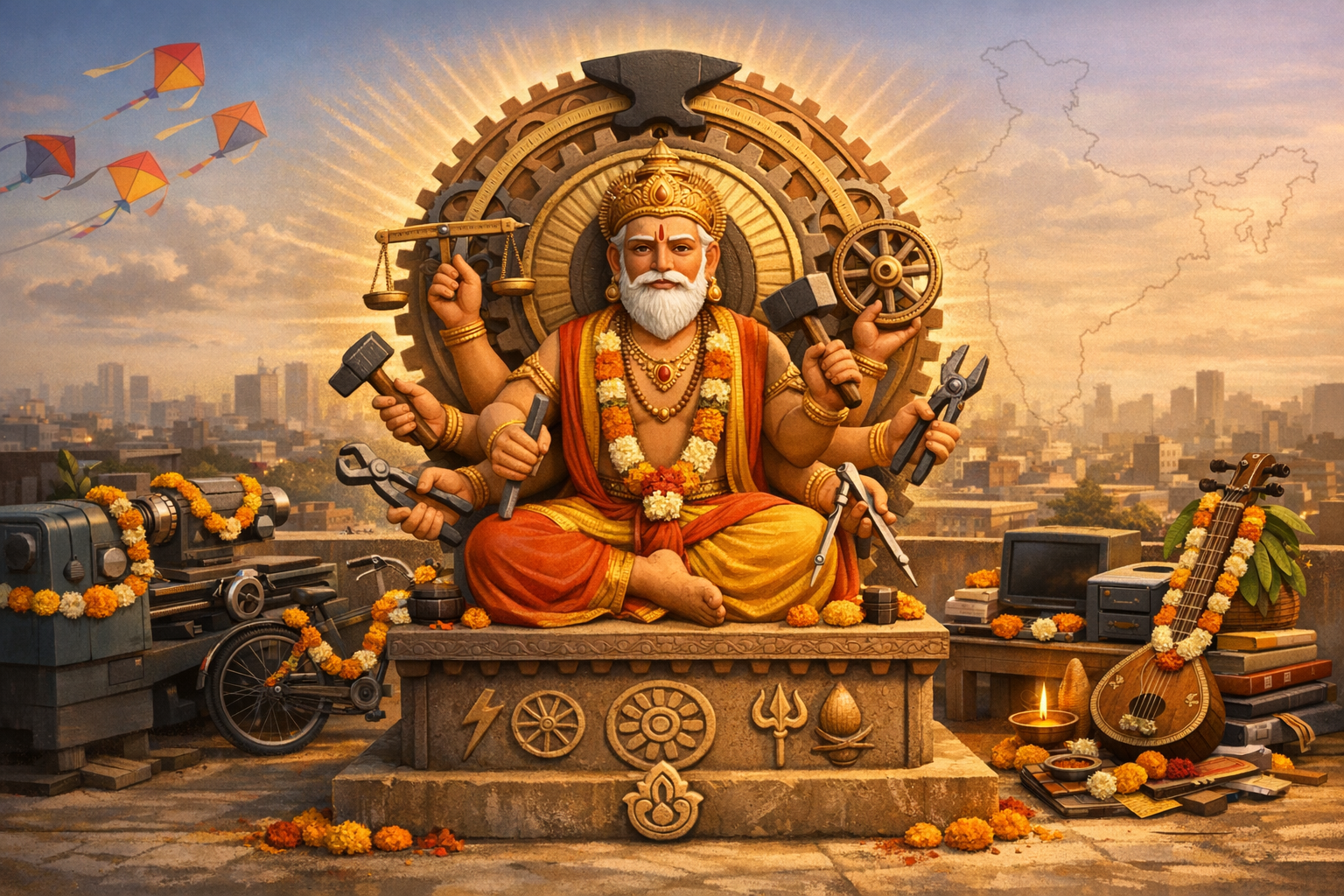
Vishwakarma, the divine architect, is honored across India through rich regional traditions that share a common theological core yet vary in iconography, ritual calendar, and social meaning. Bengal’s Biswakarma Puja, marked on Kanyā Saṅkrānti, relocates devotion to rooftops and workshops, pairing vivid clay icons with explicit tool worship and communal kite-flying. North and West India…
-
Varaha Jayanti 2026 (September 13): Date, Puja Vidhi, Story, Temples and Deeper Significance

Varaha Jayanti 2026, the appearance day of the Varaha Avatar of Vishnu, falls on September 13 according to most regional panchangs. Celebrated on Bhadrapada Shukla Dwadashi, the festival honors Lord Varaha’s restoration of Bhudevi (Earth) and reaffirms dharmic stewardship and ecological responsibility. Devotees observe fasting, perform Varaha puja with tulasi and shodashopachara offerings, and recite…
-
Khalsa Unveiled: Equality, Sovereignty, and Sacred Resistance in Guru Gobind Singh’s Vision

This in-depth exploration of the Khalsa traces its emergence at Vaisakhi 1699 and explains how Guru Gobind Singh united equality, sovereignty, resistance, and spirituality into a single ethical order. Readers gain a clear understanding of the Amrit Sanchar, the Panj Piare, and the Five Ks as living disciplines. The essay unpacks doctrines such as miri-piri,…
-
Ekadasha Parayana of Vishnu Sahasranama: Transformative Benefits, How-To, and Daily Discipline

Ekadasha Parayana is an eleven-day observance in which the Vishnu Sahasranama is recited eleven times daily, uniting devotion, attention training, and ethical living. Rooted in the Mahabharata and the Vaishnava bhakti tradition, the practice is accessible to householders and monastics and adaptable to individual contexts. Practitioners commonly report cognitive clarity, emotional balance, and a deepening…
-
NCST confirms minor status in Kerala interfaith marriage; forged certificate, POCSO case

The NCST has confirmed that Monalisa Bhosle was 16 years old at the time of her marriage to Farman Khan on 11 March 2026 in Kerala, amid allegations of a forged birth certificate. Khargone Police have registered a POCSO case, placing the matter within India’s strong child protection framework. The analysis clarifies how POCSO and…
-
Virat Hindu Sammelan, Pune: A Bold Call for a Constitutional Hindu RashtraAnd Its Pathways

At a Virat Hindu Sammelan near Pune, Sunil Ghanwat called for collective, democratic efforts to pursue a constitutional Hindu Rashtra. This analysis clarifies what “Hindu Rashtra” can mean within India’s legal framework, distinguishing a civilizational, dharma-guided ethic from any theocratic model. It explains constitutional constraintsArticles 25–28, equality provisions, and the basic structure doctrinewhile mapping lawful,…
-
Vishu in Kerala: The Astronomical New Year, Sacred Vishukkani, Sadhya, and Dharmic Harmony

Vishu marks the sidereal Sun’s entry into Mesha (Aries) and is cherished in Kerala as an astronomical New Year of vision, renewal, and balance. This in-depth explainer clarifies how almanacs determine Mesha Sankramana, why Vishu is linked to the term vishuvam, and how its rituals translate cosmic order into everyday ethics. Readers will learn the…
-
Love Conquers All: Bhakti’s transforming power, Gita-guided compassion, Dharmic unity

This essay examines the proposition “Love conquers all” through the lens of bhakti, situating Virgil’s maxim alongside Bhagavad-gita teachings on equal vision and empathy. It clarifies how Sri Krishna and Srimati Radharani are interpreted in Gaudiya Vaishnava theology as complementary expressions of the Divinelove’s object and love’s essencewithout imposing exclusivist claims. It explains Puranic cosmology’s…
-
Protecting Goa’s Inquisition-Era Memory: Preserve ‘Hat Katro Khamba’ and Confront the Past
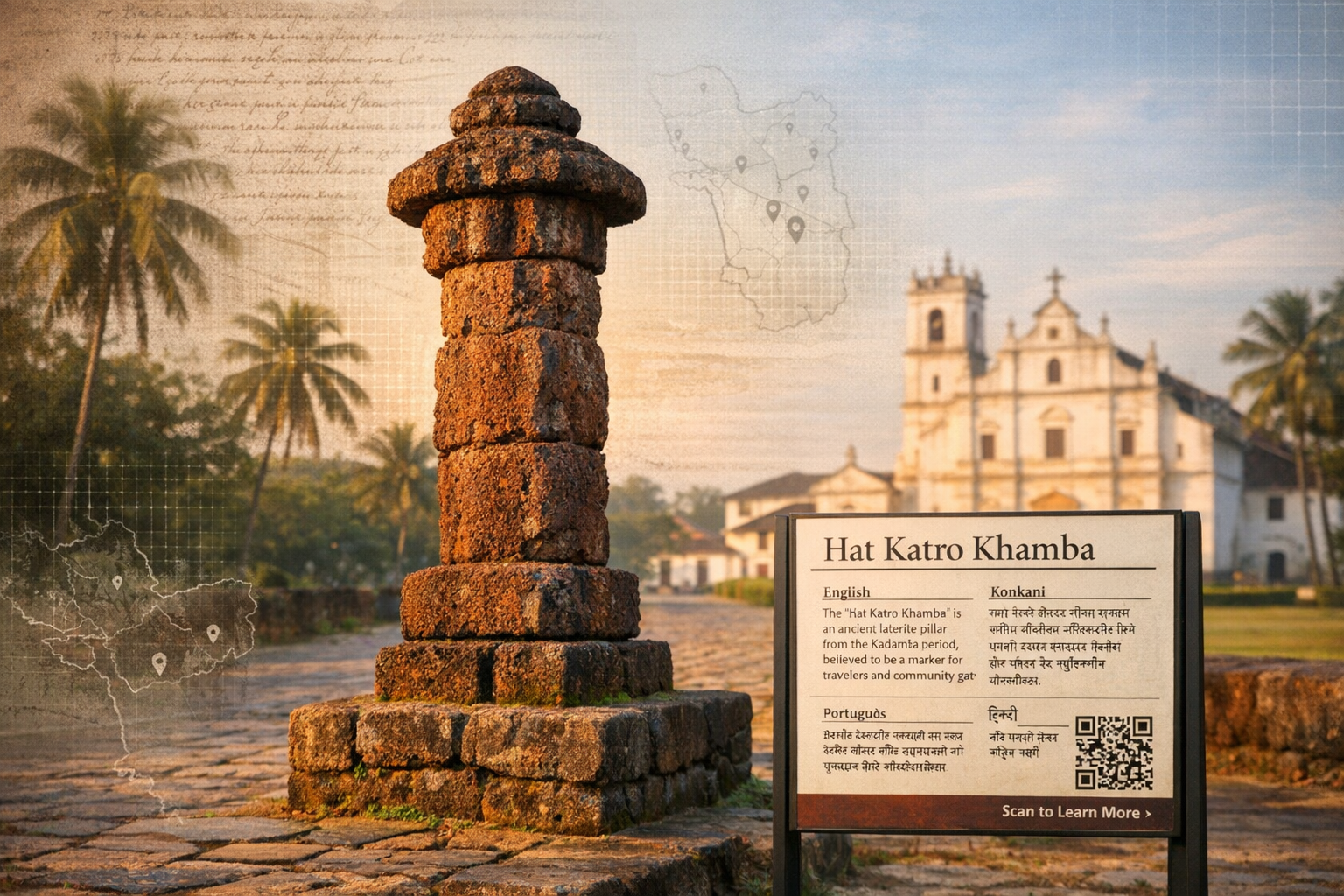
Hindu Raksha Maha Aghadi has urged the Goa Government to retain the historical name ‘Hat Katro Khamba’ and to protect Inquisition-era evidence through rigorous, public-facing interpretation. The debate underscores why toponyms are historical sources that anchor social memory and guide research. Global conservation principles recommend documentation, context, and consultation rather than nominal erasure through renaming.…
-
Krishna’s Absolute Plan and Sharanagati: Profound, Practical Insights from SB 11.1.2
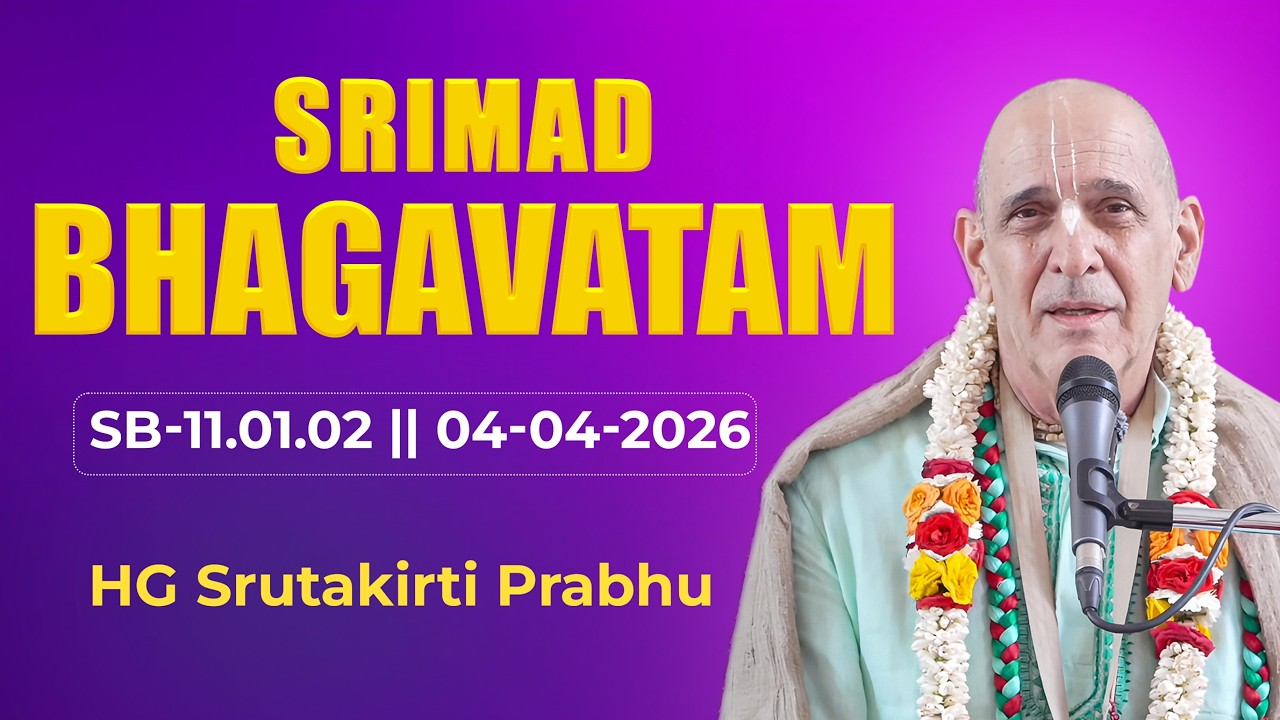
This analysis, inspired by HG Srutakirti Prabhu’s reflection on Srimad Bhagavatam 11.1.2, examines why surrender and service to Krishna under authentic guru-guidance constitute the operative core of spiritual life. It clarifies how the Bhagavata Purana reads even painful, large-scale disruptions as part of a benevolent divine order that educates and purifies. The piece explains sharanagati’s…
-
Divine Restraint: Bagalamukhi, Madanasura, and the Sacred Science of Vak Siddhi

Goddess Bagalamukhi, one of the Dasha Mahavidya, embodies Stambhana Shaktithe divine restraint that stills harmful speech and clarifies intention. The classical tale of Madanasura (Madana), who abused Vak Siddhi, frames an enduring ethic: as the power of voice grows, so must responsibility. This long-form study explores Bagalamukhi’s iconography, the mantra science around “Hleem,” and the…
-
Mudgala Upanishad and the Purushasukta: Decoding Cosmic Personhood, Unity, and Dharma

The Mudgala Upanishad, preserved in several Rigvedic lists, offers a concise contemplative counterpart to the Purushasukta (Rig Veda 10.90). Read together, they articulate a powerful vision of the Cosmic Person (Purusha) that harmonizes ritual symbolism with precise Upanishadic metaphysics. The essay explains key motifsimmanence and transcendence, cosmic sacrifice, and microcosm–macrocosm mappingswhile clarifying socially sensitive verses…
-
Pana Sankranti 2026 on April 14: Odia New Year’s astronomy, rituals, and dharmic unity
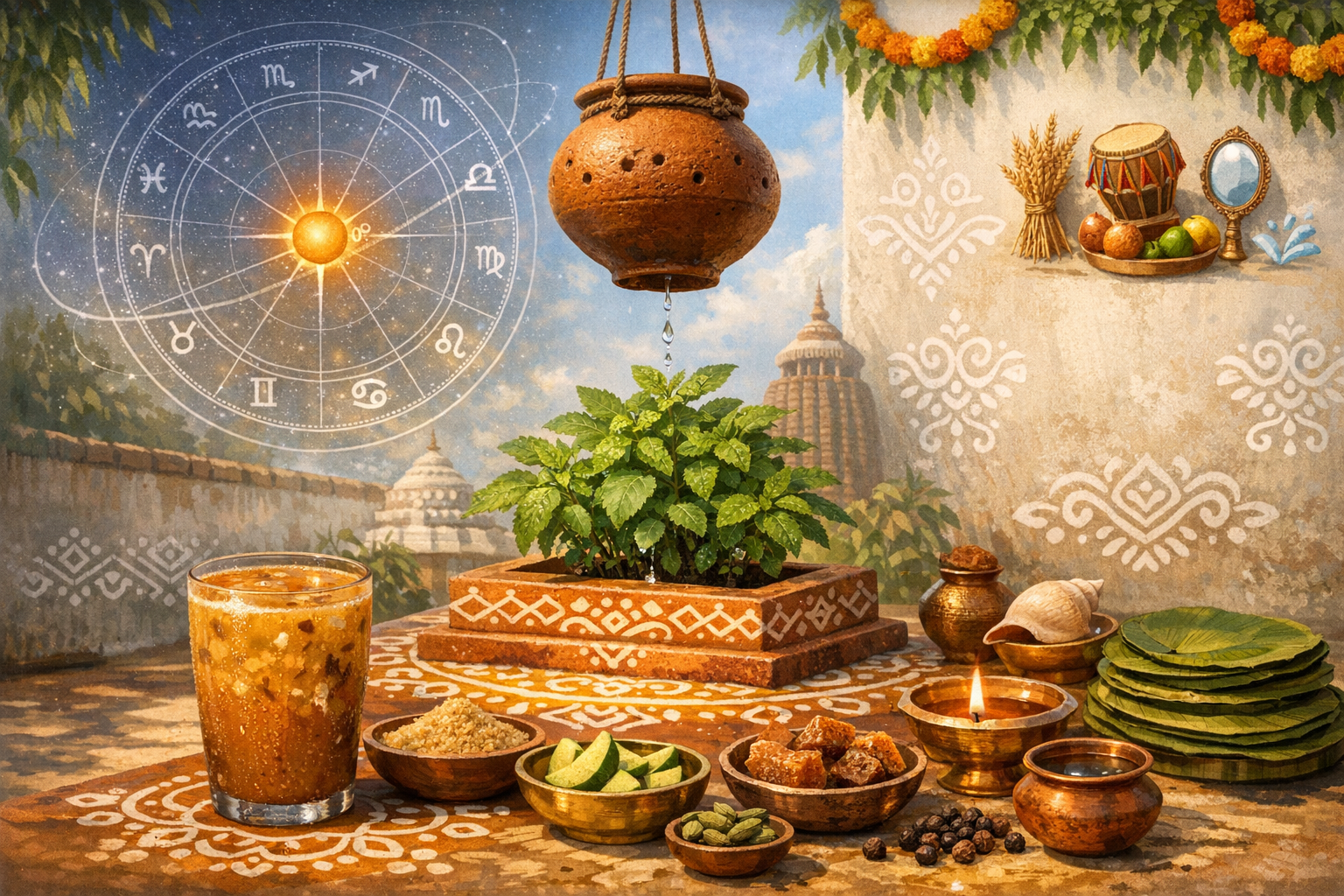
Pana Sankranti on 14 April 2026 marks the Odia New Year (Maha Vishuva Sankranti/Meru Sankranti) and the Sun’s ingress into sidereal Aries (Mesha Sankranti). This long-form guide explains the astronomical basis (sidereal vs tropical frameworks and ayanamsa), clarifies why solar months run from Sankranti to Sankranti while some lunar months run from Purnima to Purnima,…
-
Only Knowledge, No Struggle: Effortless Wisdom in Hindu, Buddhist, Jain, and Sikh Thought

This essay unpacks the aphorism “there is only knowledge, so they remain one with it and do not struggle” through a comparative study of Hindu, Buddhist, Jain, and Sikh philosophies. It clarifies how each tradition frames liberating knowledgejnana, prajna, giānand why non-struggle means non-contradiction with truth rather than passivity. Readers gain a concise overview of…