-
A Sacred Farewell: How the Holy Name Can Bring Peace at Life’s Final Threshold

A hospital chaplaincy encounter at Werribee Hospital shows how the Hare Krishna maha-mantra helped a family accompany Vijay through his final hours. The account is examined through the theology of the Bhagavad Gita, including its teachings on the enduring soul, remembrance of Krishna, and the Divine as both mother and father. It explains the devotional…
-
ISKCON at 60—Day 6 with Radhanath Swami: Why Its Founding Vision Still Matters

Day 6 of ISKCON’s 60th Anniversary Week brought HH Radhanath Swami and Yadunath Das together for an evening centered on the Incorporation of ISKCON play. This comprehensive account clarifies that the July 11, 2026 program was held at the Bhakti Center while remaining part of the anniversary observance centered on Matchless Gifts at 26 Second…
-
The Mahamantra Unveiled: Sixteen Names, Divine Love, and the Path to Krishna-Prema

The Hare Krishna Mahamantra contains sixteen sacred names whose repeated sounds disclose a sophisticated theology of divine love. This study explains the traditional interpretation associated with Srila Jiva Gosvami and the Mahaa-mantrartha Dipika, examining every occurrence of Hare, Krishna, and Rama. It shows how the mantra recalls Radha and Krishna’s attraction, separation, reunion, compassion, protection,…
-
Leadership Like Salt: The Quiet Power of Balance, Service, and Spiritual Integrity

Leadership resembles salt because its value depends on balance, proportion, and its ability to strengthen the whole without dominating it. The account of Alexander in the Gedrosian Desert illustrates how shared sacrifice can create trust more effectively than rhetoric. Vedic teachings explain why the conduct of influential people shapes institutional and social standards. Hindu, Buddhist,…
-
Unlocking Ekadashi: Devamrita Swami Explains Caitanya-caritamrita Adi-lila 14.39

This detailed study explores Caitanya-caritamrita Adi-lila 14.39 through the Ekadashi class presented by HH Devamrita Swami on 11 July 2026. It explains why the young Nimāi requested Viṣṇu’s offering from Jagadīśa and Hiraṇya and why the episode is theologically significant. Readers gain a precise understanding of the relationship between naivedya, prasadam, fasting and divine grace.…
-
The Boundless Energies of Lord Krishna: A Deep Guide to Shakti, Maya and the Cosmos

Gaudiya Vaishnava philosophy describes Lord Krishna as the one Supreme Person whose unlimited energies manifest spiritual reality, individual consciousness and the material cosmos. This study explains the internal potency, the marginal jīva potency and the external potency of māyā with reference to the Bhagavad-gītā, Upaniṣads, Śrīmad-Bhāgavatam and other Vaishnava texts. It examines the spiritual functions…
-
Sacred Books, Open Minds: Powerful Lessons from Three Spiritual Encounters

Three encounters involving Vijaya das and Madhur Gauranga das reveal how spiritual books can inspire inquiry without coercion. A discussion with two skeptics demonstrates the value and limitations of Pascal’s Wager as a prompt for examining religious uncertainty. A later meeting with a Christian couple shows how sincere interfaith respect can reduce defensiveness while preserving…
-
The Banana Trap: A Powerful Sadhana for Letting Go and Reclaiming Inner Freedom

The banana trap is a powerful metaphor for the way desire can become captivity when a person refuses to release what is causing harm. This expanded reflection examines attachment through the Bhagavad Gita, Bhakti Yoga, aparigraha, contemporary habit research, and the psychology of reward. It explains why “wanting” may persist even when an object or…
-
Beyond the Storm: ŚB 11.7.43 Reveals the Soul’s Unchanging Spiritual Nature

ŚB 11.7.43 compares the eternal soul to the sky, which remains untouched while winds drive clouds and storms across it. Vraj Vihari dasa’s morning Bhagavatam class places this image within Kṛṣṇa’s teachings to Uddhava and the avadhūta’s study of nature. The discussion clarifies the distinction between the changing body-mind system and the enduring spiritual self.…
-
Where It All Began: Why ISKCON’s Day 3 at 26 Second Avenue Still Matters After 60 Years

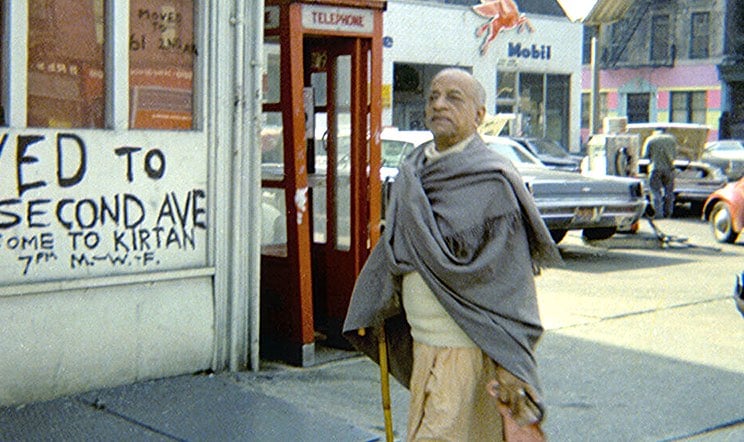
Day 3 of ISKCON’s 60th Anniversary Week returned to Matchless Gifts at 26 Second Avenue, the modest New York storefront where the movement was founded in 1966. The program brought senior devotees, kirtan, historical recollections, harinama, and prasadam into the setting where A.C. Bhaktivedanta Swami Prabhupada first developed a stable community of Krishna consciousness in…
-
ISKCON at 60, Day 2: HG Anuttama Prabhu on Living Krishna Consciousness

Day 2 of ISKCON’s 60th Anniversary Week places HG Anuttama Prabhu’s presentation within the movement’s historical, theological and institutional development. The reflection traces ISKCON’s journey from Srila Prabhupada’s modest 26 Second Avenue storefront to a global Gaudiya Vaishnava community. It explains bhakti, acintya-bhedābheda-tattva, mantra meditation, scriptural study, prasadam and the ethics of devotional practice. It…
-
Astrology and Bhakti: A Powerful Guide to Karma, Free Will, and Spiritual Freedom

This comprehensive guide examines how astrology and bhakti relate to karma, free will, sacred timing, and spiritual transformation. It explains the technical foundations of Jyotiṣa while distinguishing astronomical calculation from symbolic interpretation and modern scientific evidence. The discussion shows why a birth chart need not be treated as a fixed sentence or a complete description…
-
Dorothy’s Airport Transformation: How Bhakti Turns Grief and Fear Into Inner Peace

An exhausting airport delay becomes the setting for Dorothy’s movement from rage and fear toward spiritual calm. Her encounter with Radhanath Swami explores grief, terminal illness, the fear of death, and the Bhakti understanding of the eternal soul. The discussion examines free will and karma while firmly rejecting guilt, fatalism, and victim-blaming. It explains how…
-
Why Cow Service Matters: Vedic Wisdom for Ethical Care and Lifelong Protection

The Vedic concept of go-mata presents cow protection as an ethic of gratitude, reciprocity, and lifelong responsibility. This discussion explains the three connected duties of go-seva, go-puja, and go-raksya through Gaudiya Vaishnava theology and contemporary animal-welfare principles. It examines Lord Sri Krsna’s pastoral relationship with the cows of Vrndavana and the moral symbolism of Emperor…
-
How Sankirtana Turned a London Arrest Into a Remarkable Victory of Mercy

Five Hare Krsna devotees entered a crowded London shopping district to practice sankirtana and were arrested for alleged obstruction. Their journey to the police station unexpectedly continued with drums, cymbals, smiling officers, and permission to resume chanting after a congested bus queue. At Great Marlborough Street Magistrates Court, inconsistent police evidence met a disciplined defense…
-
Food for All in Venezuela: Powerful Lessons from ISKCON’s Disaster Relief Seva

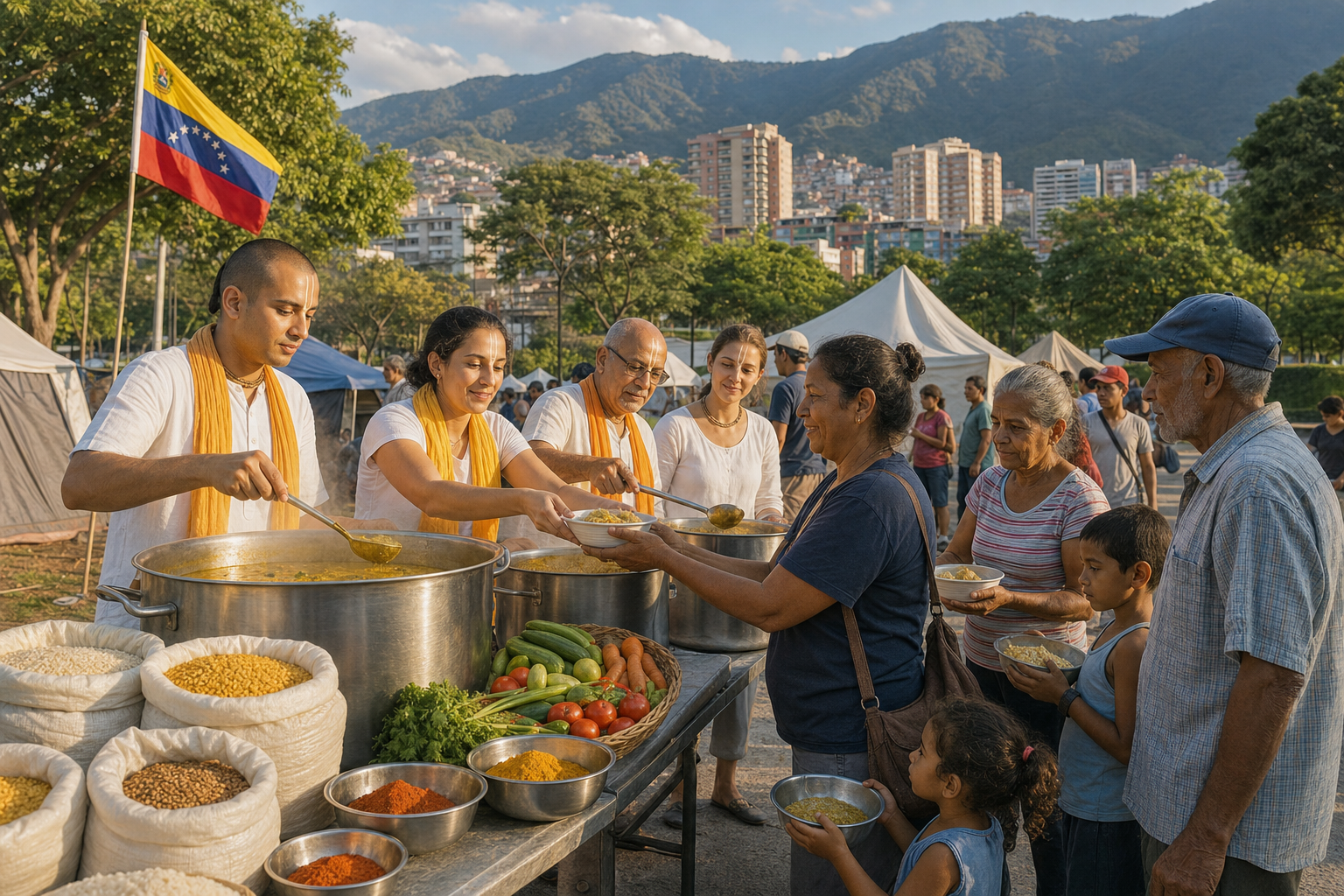
Food For All’s response in Venezuela shows how ISKCON-linked community kitchens can offer practical disaster relief through warm meals, local partnership, and disciplined seva. After an earthquake affected families in Caracas, the local Food for Life program began serving cooked food to people displaced into tents, streets, and parks. The arrival of support from the…
-
Nectar Talks Season 3: A Powerful New Chapter in Community Dialogue and Culture

Nectar Talks Season 3 represents a renewed phase for a community-centered podcast that has reached an important five-year milestone. The new season emphasizes deep-dive interviews, guest hosts, improved production quality, and stronger community engagement. This rewrite examines why those changes matter for cultural dialogue, digital storytelling, and long-form public conversation. It highlights the importance of…
-
Jaya and Vijaya in Vaikuntha: A Profound Lesson on Devotion, Offense, and Humility

This article offers a detailed academic reflection on H.G. Akinchan Krishna Prabhu’s 23 June 2026 Śrīmad-Bhāgavatam class at ISKCON Chowpatty on SB 3.15.28. It explains the episode of Jaya and Vijaya at the seventh gate of Vaikuṇṭha and the arrival of the four Kumāras. The discussion explores why the apparent conflict in Vaikuṇṭha is not…
-
Dhruva Maharaja’s Painful Exile: Powerful Lessons from SB 4.8.65

Śrīmad-Bhāgavatam 4.8.65 presents King Uttānapāda’s painful confession after neglecting Dhruva Mahārāja and Sunīti. The verse reveals how attachment, favoritism, and loss of compassion can distort family duty and public responsibility. Dhruva’s exile becomes a profound lesson in transforming rejection into spiritual determination through guru guidance, sadhana, and devotion to Lord Vishnu. The discussion highlights the…
-
Essential Gaudiya Wisdom from July 8: Bhagavatam, Ekadashi, and Living Bhakti

This rewritten archive presents the July 8, 2026 Dandavats feed as a meaningful guide to Gaudiya Vaishnava learning and practice. It highlights Srimad Bhagavatam classes, Caitanya Caritamrita study, Yogini Ekadashi, and the remembrance of Srivasa Pandit. The article explains how scripture, fasting, saintly memory, and disciplined methodology work together in Krishna consciousness. It also frames…