
This article was originally posted on the Chanakya Forum.
Ah, but a man’s reach should exceed his grasp
Or what’s a heaven for?
– Robert Browning
The arc lights have dimmed in New Delhi and the international leaders who came for the G-20 (now G-21) Summit have returned home, carrying lasting memories of their magical experience in the land of eternal charm. The world marveled at the impeccable arrangements and organization.
Analysts will take apart the Delhi Declaration and examine every word and punctuation in the context of past agreements. I prefer to chase the future. I am writing this report on a day, 9/11, that transformed our world forever, demonstrating the malefic power of hate and rage and exploitation and inequality.
The New Delhi G-20 Summit has demonstrated to a divided world what committed, selfless leadership can achieve to build a sustainable future. Bharat has walked the talk, leading by example. One overriding conviction is that India has once again proved its immortal presence as a Vishwaguru, providing a healing touch. The world needs India!
There was a mood of optimism and hope among the delegates and the world, beating back the “global trust deficit”, a term used by Prime Minister Narendra Modi in his opening remarks. His closing comments said it all: I am satisfied that today the G20 has become a platform for optimistic efforts regarding the vision of One Earth, One Family, One Future. New Delhi is the Consensus Capital of the World or Sarvsammati Rajdhani. India has given the gift of hope to the world, and the world has given a resounding vote of confidence to India that has now become the voice of our world, not just of the Global South.
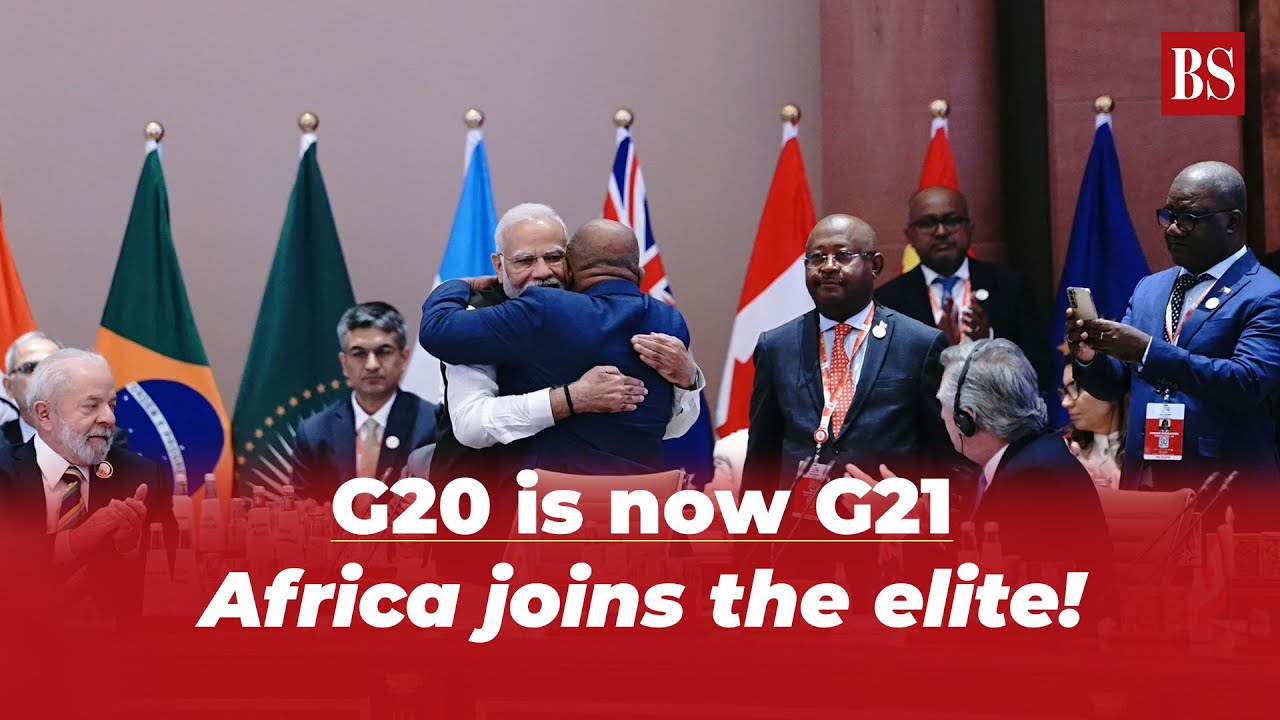
On the “hard” side, the big takeaways of the Summit were the admission of the African Union representing 55 countries, the renewed focus on climate preservation with the aim of tripling global renewable energy capacity by 2030, the launch of the Global Biofuel Alliance, and the Partnership for Global Infrastructure and Investment and the ship-and-rail based mega India-Middle East-Europe Economic Corridor between several nations including India, Saudi Arabia, UAE, Israel, Jordan, France, Italy, etc. Joe Biden dubbed it a big deal while the European Commission President called it a green and digital bridge across continents and civilisations.
The foundations of future growth are often laid as societies respond to the weaknesses that crises expose. The biggest challenge that we face is climate change.
The United Nations says in its first Global Stocktake report released in September 2023 that the world is dangerously off course in meeting the Paris Climate Agreements for reducing carbon pollution and enhancing finance for the developing world. We have created climate change, and if we do not reverse it, then like Frankenstein’s monster, it will destroy us.
In New Delhi, the United Kingdom promised USD 2 bn for the Green Climate Fund
The rich countries and their acolytes have committed over USD 150 bn to fund the war in Ukraine.
The leaders who came to New Delhi had ascended a higher civilizational and value system and went back feeling that in 48 hours they were able to craft a road to an abiding future for a planet that we do not own but have merely borrowed from our children.
Our Prime Minister was in Jakarta for a few hours on 06 September 2023 for the 20th ASEAN and the 18th East Asia Summit (EAS) before rushing back to home for the G-20 Summit. Indonesia, the current chair of ASEAN, rearranged the summit schedules to allow for his early departure. This gesture confirms that when we speak, the world listens.
In an exclusive interview three days before the G-20 Summit to a digital TV network and in a signed article in several newspapers, Prime Minister Narendra Modi spoke about Bharat’s G-20 priorities – sabka saath, sabka vikas, sabka vishwas, sabka prayaas (everyone’s support, everyone’s development, everyone’s faith, everyone’s effort). This is our guiding principle for the world.
Prime Minister Modi said that when global leaders meet him, they are filled with a sense of optimism about us, especially its rapidly growing clean and green economy, with a human-centric approach that can be replicated in other countries too – this is the model that sees development in a human context, people above profit, in a free, open, democratic, transparent system. A huge human world exists beyond the big fellows, and this world lives in Asia, Africa, and Latin America
We have shown that in making our economies and societies more climate resilient lies our future growth and wellbeing. It is a different world we wake up to everyday and continuing with worn out unsupported assumptions makes understanding our new world impossible. The formerly marginalized are speaking up, individually and collectively.
G-20 is a work in progress and India’s presidency will be remembered for is focus on Digital Public Infrastructure and the magnificent opportunities that it offers for the future. There have also been several first-time initiatives within the G-20 framework that will endure for decades. Some forgotten areas have been brought back into focus, while new initiatives to make our world a safer, better place have been taken.
We have StartUp 20, the voice of the global startup ecosystem, disaster risk reduction, international research initiative for millets and other ancient grains, cyber security to make the digital world safer for all, scientific research, technology development and its deployment, integrating climate and development goals, women-led development, counter narcotics as a foreign policy mandate and traditional medicine.
Internationally, we have showcased India’s potential in tourism, defence, investment and trade by taking the G20 delegates to the far corners of our country, demonstrating our strength and development to the world. The Bank of International Settlements says that Bharat has achieved in the last eight years what it should have in the last 50 years!
Under Bharat’s leadership, G-20 has given a collective voice to those who were heard but not listened to, the spotlight has come on global challenges such as health, climate, hunger, energy, economic recovery, digital world, critical technologies, terrorism, supply chain resilience and debt.
More than one of my African principals messaged me, thanking India for bringing their neglected continent to the global high table. We have chosen India as our role model, they said.
Africa today. Tomorrow, the world.
Please consider supporting Chanakya Forum and following their twitter account.