
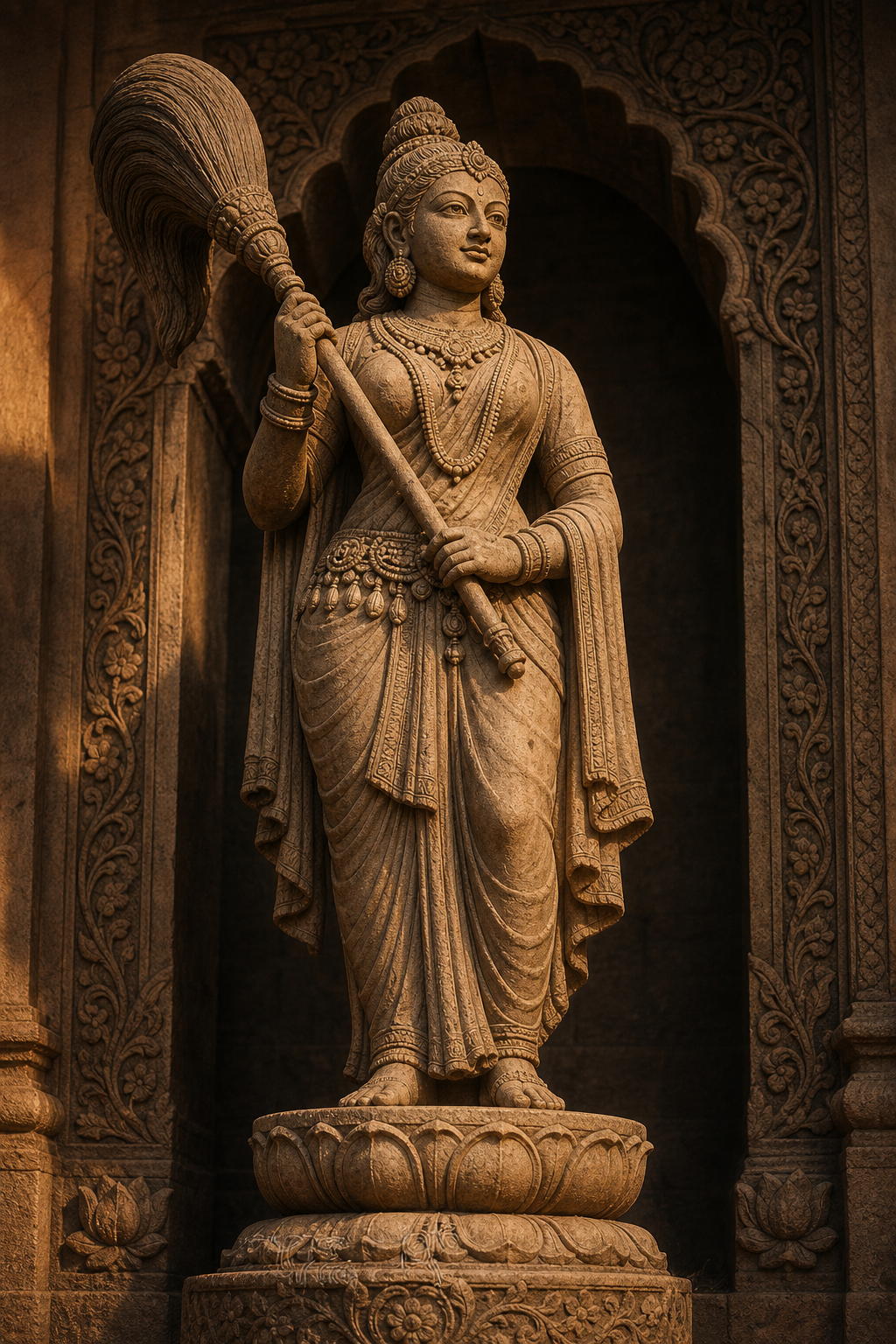
A cauri-bearing Yakshini cannot be understood by identifying the figure and her object separately. The image joins a nature-associated feminine being with an instrument of ritual care and royal honour, creating a compact visual statement about abundance, authority, protection and sacred presence.
This layered reading helps distinguish what the image depicts from what it communicates. The Yakshini is more than an attractive attendant, while the cauri is more than a practical fan: their conjunction shows how service, beauty, fertility and sovereignty can participate in the same sacred order.
A compound symbol rather than a fixed emblem
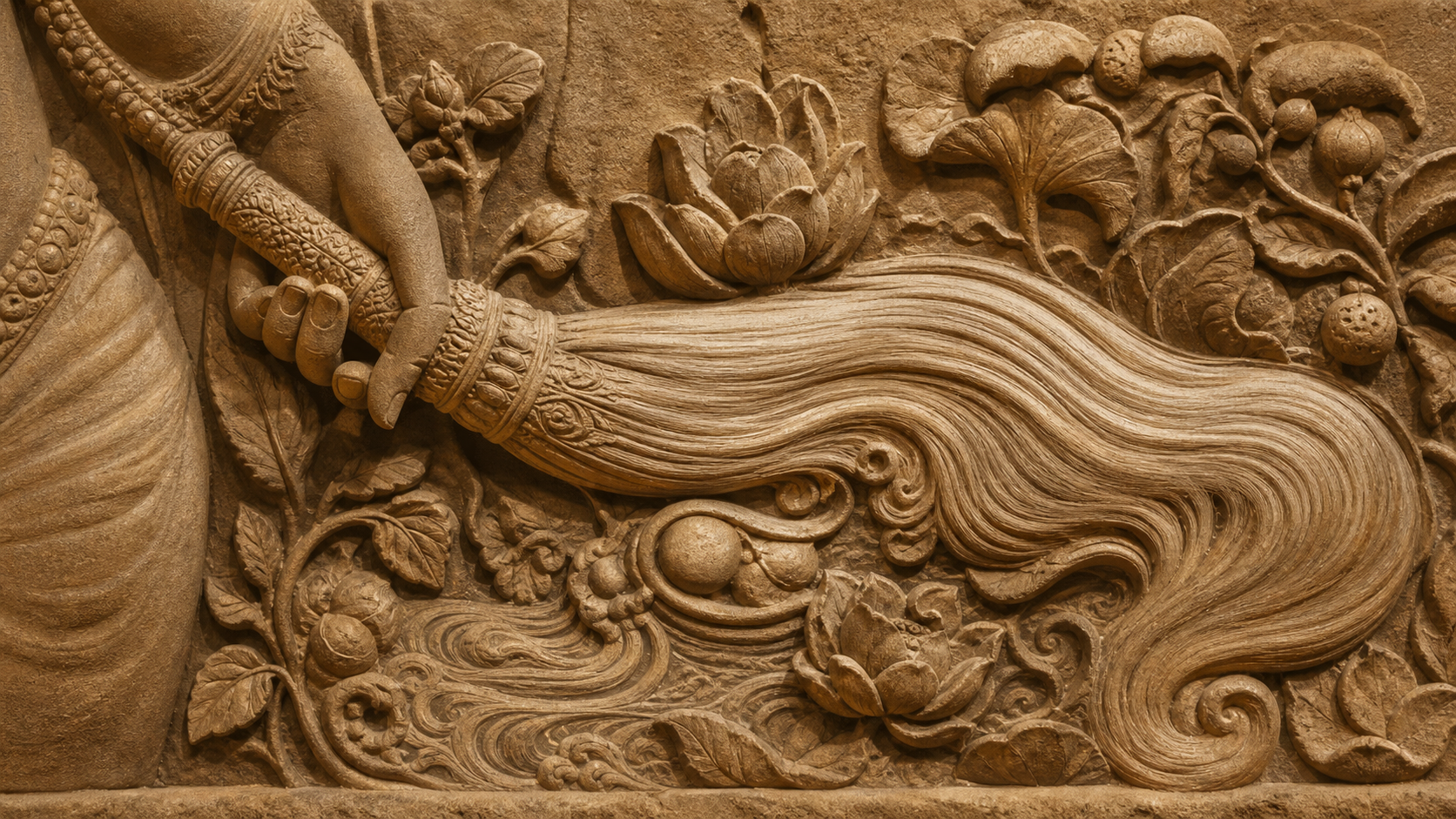
The DharmaRenaissance Blog source describes the cauri as a fly-whisk used to fan and honour a revered person, keep insects away and help preserve an atmosphere of purity around a royal or sacred body. It also places the object among the lamps, bells, vessels, garlands, umbrellas and fans that contribute to the ritual life of a Hindu temple.
These practical and ceremonial functions should not be forced into separate categories. A useful ritual object can acquire meaning through the care with which it is handled, the person or presence toward whom it is directed and the setting in which it appears. The movement of the cauri can therefore suggest cooling and protection while also marking the recipient as worthy of exceptional attention.
The Yakshini adds another field of associations. The source connects Yakshinis, as feminine counterparts of Yakshas, with trees, water, fertility, treasure and the concealed powers of the earth. The resulting image does not have a single dictionary-style translation. It draws meaning from the relationship between the attendant, the honoured presence, the ritual action and the surrounding sacred space.
Why the Yakshini changes the gesture
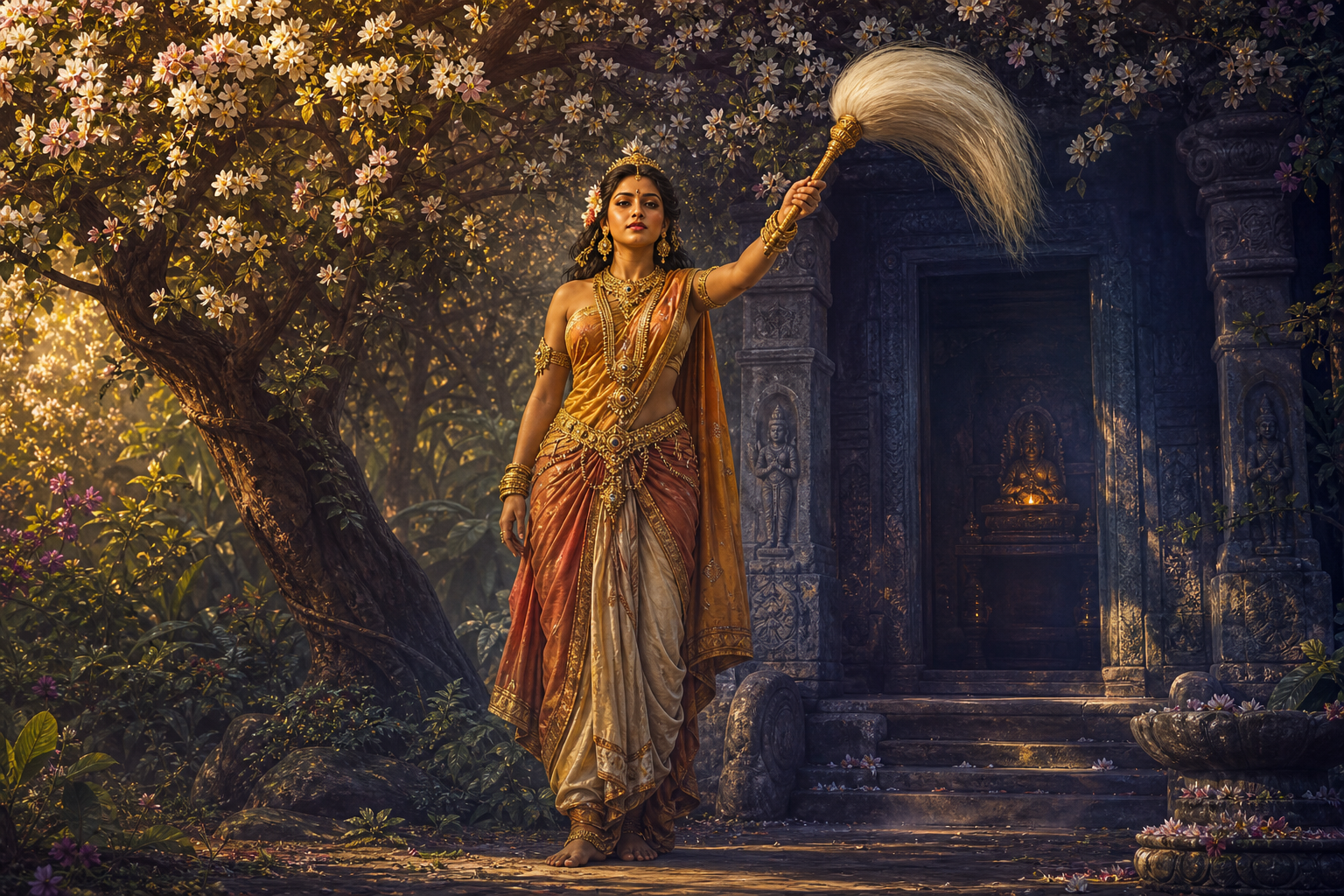
According to the source, early Indian art often represents Yakshinis through bodily vitality and associations with vegetation. It relates this visual language to the tree-and-woman motif, including the shalabhanjika, in which feminine presence and flourishing vegetation together evoke fruitfulness and abundance. The body in this context is not necessarily opposed to spiritual meaning; it can signify the generative force of life.
This matters because two reductive readings become possible when the wider symbolism is ignored. One treats the Yakshini as architectural decoration whose beauty has no religious function. The other identifies every auspicious feminine figure directly with the supreme Goddess. The source supports a more careful position: the Yakshini belongs within a broad field of sacred feminine power, or Shakti, without always being represented as the supreme Goddess herself.
Her placement at a gateway, railing, pillar or shrine also gives her a threshold function in the source’s account. Beauty, fertility and protective presence prepare the transition from ordinary surroundings into consecrated space. When she carries the cauri, the figure does more than announce abundance. She actively participates in shaping the atmosphere around the sacred centre.
Service and sovereignty within one image

The cauri belongs to the ritual grammar of seva, the source explains: devotional service offered to the divine with discipline, care and humility. In temple worship, the deity may be approached as a living sovereign, an honoured guest, a beloved presence and an inward reality. The fly-whisk makes that theology visible through an attentive physical gesture.
Its royal associations deepen the image. Kings and other eminent persons were honoured with fly-whisks and parasols, and sacred art could redirect that language of courtly dignity toward a deity. A cauri-bearing attendant consequently signals that the central figure not only receives devotion but reigns.
Yet the source connects divine sovereignty with dharma rather than with domination alone. Legitimate sacred authority implies protection, balance, generosity and the stability of a larger order. The Yakshini’s service should therefore not be reduced to social subordination. Within the image, she contributes auspicious energy, protection and care to the manifestation of that order.
This synthesis also clarifies why the cauri is neither merely utilitarian nor merely a status symbol. Its gentle action holds together cleanliness, comfort, reverence and majesty. It turns care into a public sign of the recipient’s sacred dignity.
A shared form without erased distinctions
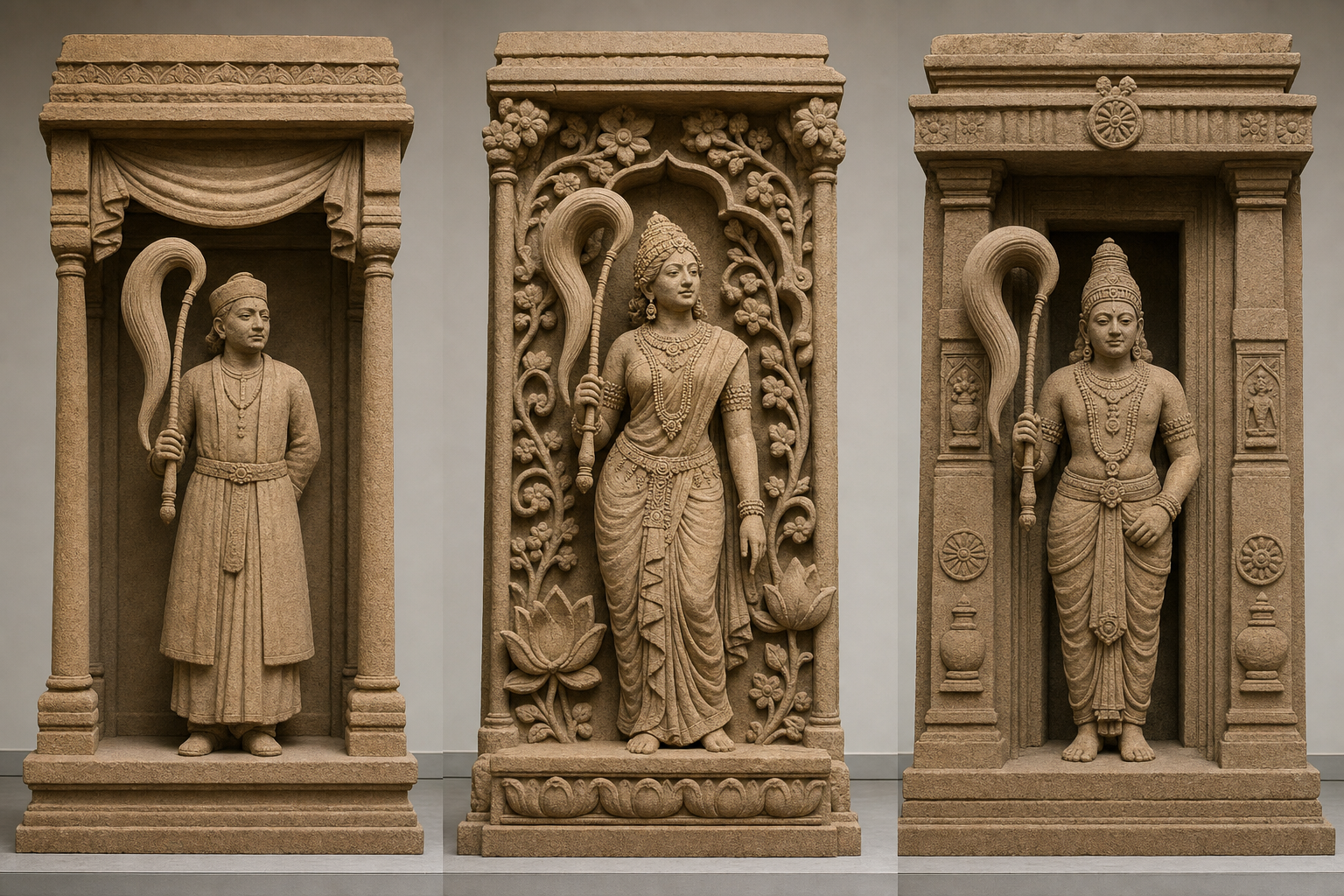
The source places Yakshas and Yakshinis within Hindu, Buddhist and Jain artistic traditions, where they can appear as nature beings, guardians, local deities, protectors or attendants. It specifically associates them with Kubera, fertility and prosperity in Hindu contexts; with Tirthankaras as attendant deities in Jain contexts; and with the protection of the Dharma in Buddhist accounts. These parallels point to cultural continuity, but they do not make the traditions interchangeable.
A similar distinction is necessary when considering the cauri itself. The source notes its use in Hindu and Jain reverential service and compares it with the chaur sahib waved over the Guru Granth Sahib in Sikh tradition. This comparison concerns a shared vocabulary of honour. It does not imply that Sikh practice includes Yakshini symbolism or that the theological object of reverence is the same in each tradition.
The most responsible comparison therefore works at two levels. It recognises recurring forms – attendants, fly-whisks, guardianship and ceremonial honour – while preserving the different religious frameworks that give those forms meaning. Shared gestures reveal civilizational connections precisely because each tradition can adapt them without surrendering its distinct identity.
Key takeaways
- The cauri combines practical care with ritual purification, protection, honour and royal dignity.
- The Yakshini introduces associations with fertility, vegetation, abundance, beauty and the powers of the living earth.
- Her service is best read as active participation in sacred order, not simply as decorative attendance or social subordination.
- Comparable beings and gestures occur across Dharmic traditions, but their theological meanings remain distinct.
Future interpretation of such images will be strongest when it attends to object, gesture, placement and religious setting together. The cauri-bearing Yakshini then emerges not as an isolated motif, but as a guide to a visual culture in which care can express power, beauty can guard a threshold and nature can disclose sacred abundance.