
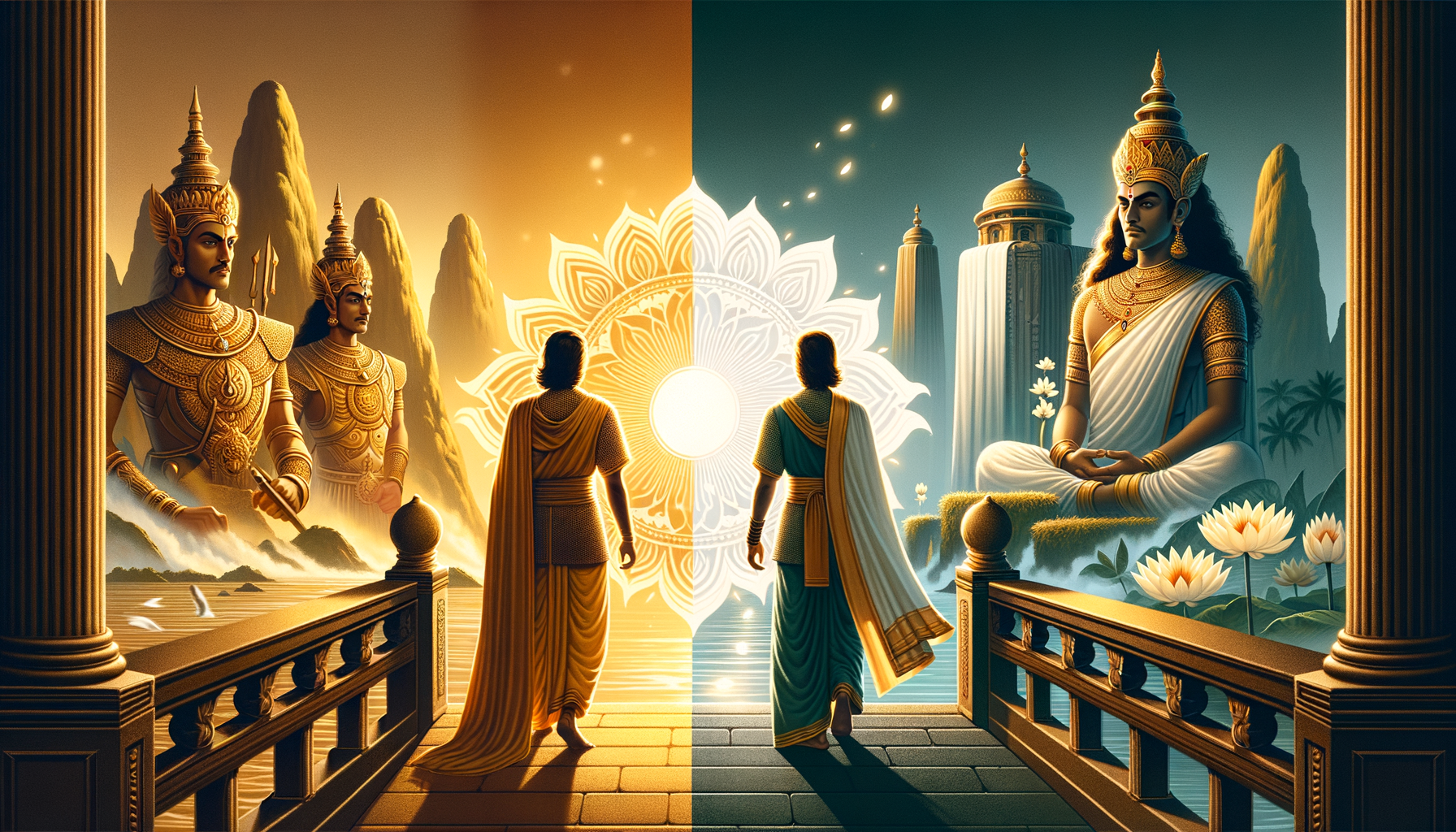
The Hindu epics Ramayana and Mahabharata assemble character portraits that test the boundaries between dharma and adharma, duty and desire, and allegiance to blood versus allegiance to righteousness. Within this ethical landscape, Atikaya of the Ramayana and Yuyutsu of the Mahabharata illustrate how moral choice, not birth, defines character. Their lives offer a compelling comparative analysis that speaks to readers across dharmic traditions, inviting reflection on the enduring question: what truly anchors one to dharma?
Both figures emerge from the margins of royal households. Atikaya, a mighty prince of Lanka and son of Ravana, stands outside the primary line of succession yet embodies formidable valor and learning. Yuyutsu, born to Dhritarashtra and a vaishya woman (Sughada/Sauvali), bears the social stain of irregular birth in some retellings. Yet, beyond the shadow of illegitimacy, each becomes a study in moral agency: one adheres unflinchingly to kinship, the other to conscience.
In the Ramayana’s Yuddha Kanda, Atikaya is renowned for mastery of divine weapons and boons attributed to Brahma. His battlefield prowess is unmatched until Lakshmana, guided by discernment and rightful cause, invokes the Brahmastra. The encounter does more than end a duel; it frames Atikaya’s unwavering loyalty to Ravana’s cause as a tragic misplacement of courage. Valor, the episode suggests, must be yoked to dharma to be luminous rather than ruinous.
In the Mahabharata, Yuyutsu’s ethical arc moves in the opposite direction. Though raised among the Kauravas, he recognizes the adharma in Duryodhana’s designs and publicly crosses over to the Pandava side at the onset of the Kurukshetra War. Remembered for truthfulness and restraint, he survives the war and is appointed to safeguard Hastinapura, serving as a custodian of order in the new moral and political settlement. His life demonstrates how birth-based stigma can be transcended by principled choice.
The juxtaposition is striking: Atikaya represents fidelity to lineage even when lineage stands against righteousness; Yuyutsu represents fidelity to righteousness even when it risks severing lineage. Read together, they reveal a core Hindu Dharma insight shared across the Hindu epics: dharma is action-guided discernment (viveka) rather than inherited status. This is the heart of the Hindu way of life and resonates with the broader Indian Epics tradition.
Across dharmic traditions, the lesson converges. In Buddhism, intention (cetana) elevates ethical action; in Jainism, ahiṁsā and right conduct outweigh social rank; in Sikh thought, dharam and sach (truth) ground justice above narrow loyalties. The shared dharmic ethos affirms that spiritual identity is forged through disciplined conduct, compassion, and responsibilityvalues that bind communities in unity in diversity.
For many readers, this contrast speaks to lived dilemmas: whether in families, institutions, or civic life, one often chooses between pleasing one’s own and upholding the common good. Yuyutsu’s courage validates conscientious dissent; Atikaya’s fate cautions against valor without moral bearings. Together they offer a relatable guide for leadership, reminding that integrity anchored in dharma secures both inner peace and social trust.
From a literary perspective, the epics deploy these figures as ethical foils. Atikaya amplifies the perils of shaurya unmoored from ethical limits; Yuyutsu exemplifies steadiness of satya and dharma under pressure. This narrative design deepens the epics’ moral pedagogy, enabling readers to recognize dharma in action rather than in lineage, label, or ideology.
Contemporary relevance follows naturally. In plural societies, the Ramayana and Mahabharata teach that unity flourishes when righteousness, not birth, is the measure of worth. The lesson invites cultivation of viveka, compassion, and responsible stewardship across communitiesHindu, Buddhist, Jain, and Sikhsustaining religious pluralism without erasing distinct paths.
Ultimately, Atikaya and Yuyutsu show that moral clarity can neither be inherited nor outsourced. Dharma lives in deliberate choice. Beyond birth and beyond the shadow of illegitimacy, their stories urge alignment of strength with justice and loyalty with truthan enduring call from the Hindu epics to all who seek a principled life.
Inspired by this post on Hindu Blog.
