
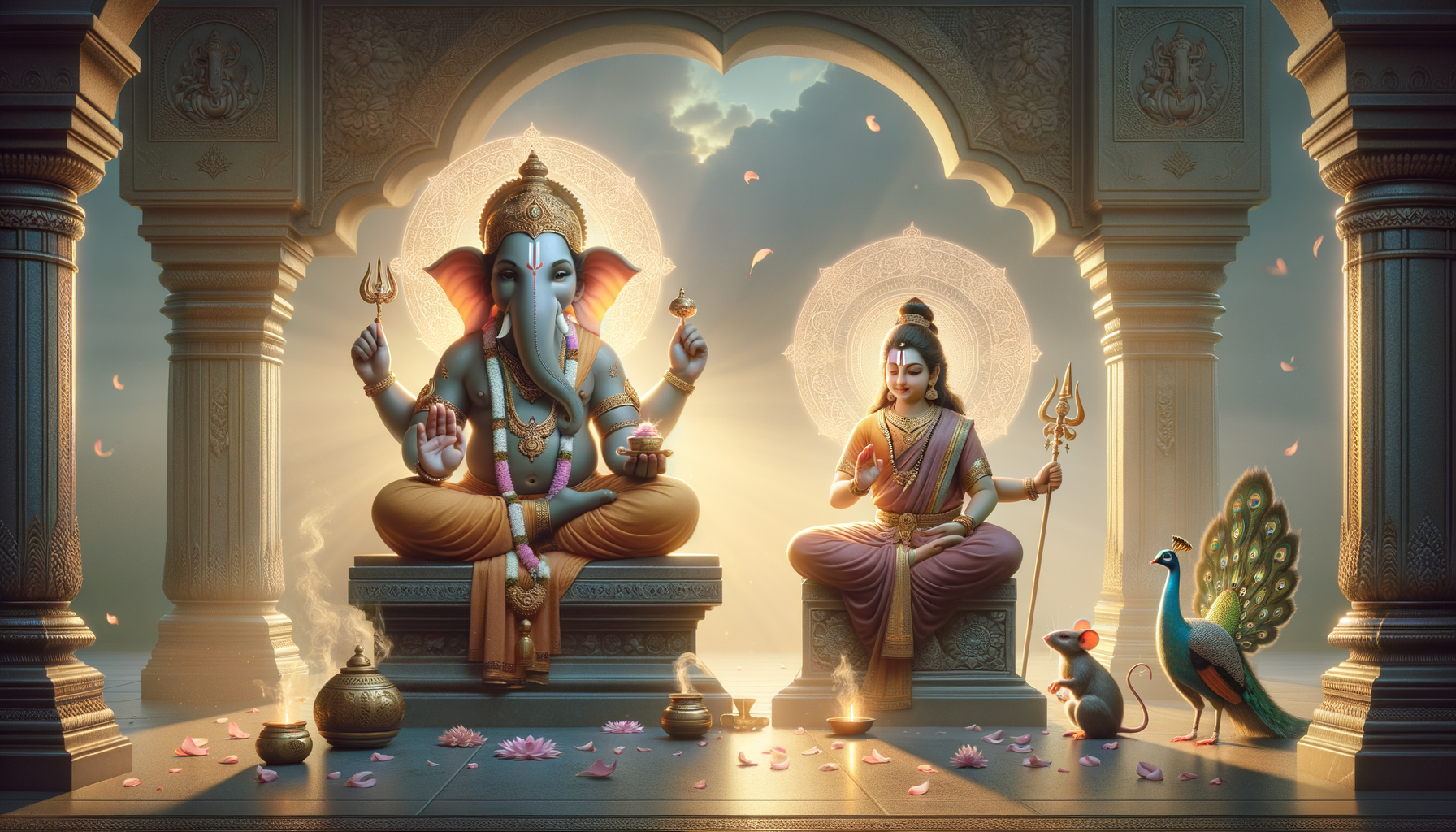
The Brahma Purana presents a resonant narrative of divine manifestation through the births of Ganesha and Kartikeya, illuminating the complementary virtues of wisdom and valor at the heart of dharmic traditions. This account, treasured in Hindu mythology and Puranic literature, frames sacred origin stories as vehicles for ethical insight, communal harmony, and spiritual reflection.
According to the Purana, before a ritual bath, Pārvatī anointed her body with unguent and, upon removing the accumulated dross, fashioned a human form. In this recension, the form bore an elephantine head from the outset, signaling auspiciousness, intellect, and the power to remove obstacles. Installed as Gaṇeśalord of thresholds and beginningsthis manifestation symbolizes clarity of mind, steadfast duty (dharma), and compassionate guardianship over the liminal spaces of life and worship.
The symbolism of the elephant head extends beyond iconography. In the Puranic frame, it encodes discernment (viveka), grounded strength, and broad, inclusive vision. Devotional practice thus begins with Ganesha, inviting the qualities of patience, prudence, and ethical action into every undertaking. These themes align with a broader Indic ethos that values mindful initiation, communal well-being, and respect for diverse spiritual paths.
Kartikeyaalso known as Skanda, Subrahmaṇya, and Muruganemerges in the Brahma Purana as the embodiment of celestial energy directed toward protection and righteous action. Born from Śiva’s brilliant tejas and nurtured by the Kṛttikās, Kartikeya’s arrival consecrates courage, leadership, and the disciplined pursuit of truth. His peacock vahana signifies conquest over pride and impulsive desire, reflecting a refined martial ethic rooted in restraint and responsibility.
Together, the manifestations of Ganesha and Kartikeya articulate a balanced spiritual pedagogy: wisdom guiding action, and valor tempered by insight. In this synthesis, the Purana underscores that obstacles (vighna) are met first with understanding and then with purposeful effortan enduring lesson for personal growth, community life, and collective service.
These Puranic narratives also illuminate shared values across dharmic traditions. The virtues embodied hereprajñā (insight), karuṇā (compassion), ahiṁsā (ethical restraint), tapas (discipline), seva (selfless service), and śaurya (courage)resonate across Hinduism, Buddhism, Jainism, and Sikhism. Such convergence fosters unity in spiritual diversity while honoring the distinct practices and lineages that animate the broader Indic heritage.
In lived practice, devotees reflect these teachings through vrata, japa, and festival observances such as Ganesh Chaturthi and Skanda Ṣaṣṭhi, integrating symbolism with ethical action. Approached in this spirit, the Brahma Purana’s narrative becomes a contemplative guide: Ganesha invites clear beginnings; Kartikeya inspires steadfast progress; together, they model a path where intellect and duty advance harmony within self and society.
By reading these manifestations as complementary, the story encourages a unifying vision of dharmaone that values multiple modes of worship and understanding while cultivating mutual respect. In this way, the births of Ganesha and Kartikeya continue to bridge hearts and traditions, offering timeless direction for inclusive, compassionate, and courageous living.
Inspired by this post on Hindu Pad.
