
-
Dandaniti and Rajadharma: Ancient Hindu Statecraft for Just, Stable, Ethical Governance

Dandaniti—ancient India’s science of governance—unites authority with ethics by treating punishment as a disciplined last resort under dharma. Drawing on Arthasastra, Dharmasastra, and Vidura-niti, it details institutions, courts, revenue, internal security, diplomacy, and just war norms. The saptanga model organizes the state’s limbs and anticipates modern concerns for fiscal prudence and checks on power. Procedural…
-
How Free Are We, Truly? Karma, Neuroscience, and Moral Choice across Dharmic Paths

Are human choices truly free or fixed by forces beyond control? This analysis surveys determinism, libertarianism, and compatibilism; integrates current neuroscience on readiness potentials, predictive decoding, and conscious veto; and then synthesizes insights from Hinduism, Buddhism, Jainism, and Sikhism. Readers gain a clear, practical model of bounded freedom grounded in karma, dependent origination, Anekantavada, and…
-
Beyond Metaphor: Srimad-Bhagavatam on Reality, Consciousness, and an Enchanted Cosmos

This essay explains how Srimad-Bhagavatam dissolves the divide between literal reality and poetic metaphor by advancing a consciousness-first ontology. It shows why the Bhagavata Purana treats fear, love, and intelligence as living principles, situates humans within a multilayered cosmos of devas, gandharvas, and siddhas, and uses rasa-rich poetry as a genuine mode of knowledge. Readers…
-
Caitanya Caritamrta: The Transformative ‘Magic Book’ Behind Global Kirtan and Seva

Caitanya Caritamrta blends luminous biography and rigorous theology to show how Caitanya Mahaprabhu’s Bhakti project became a living method—hear, chant, reflect, serve—capable of transforming daily life. It explains achintya-bheda-abheda, the doctrine of simultaneous oneness and difference, and anchors practice in nama-sankirtana centered on the Hare Krsna Maha Mantra. The text’s inclusive ethos appears in hospitality…
-
From Tehsils to Nation: Gau Samman Avahan Abhiyan’s Roadmap to Honor Gaumata as ‘Rashtramata’

The ‘Gau Samman Avahan Abhiyan’ channels reverence into a lawful, evidence-based framework for cow protection and conservation. By submitting detailed memorandums to Tehsildars across Maharashtra and Goa, citizen groups seek tehsil-level coordination, humane animal care, and transparent, data-driven governance. The campaign’s invocation of Gaumata as ‘Rashtramata’ functions as an inclusive civilizational metaphor that unites Hindu,…
-
‘Beti Surakshit, Rashtra Surakshit’: Mobilising Pune for Women’s Safety and National Unity

Hindu Janajagruti Samiti (HJS) has launched ‘Beti Surakshit, Rashtra Surakshit’ in Pune to foreground women’s safety through legal literacy, digital self-defense, bystander training, and workplace protections. The initiative gains traction when framed as universal, rights-based, and non-discriminatory, consistent with constitutional values. Practical guidance spans POSH compliance, cyber safety under the IT Act, and clear recourse…
-
Decoding Nrisimha Tapaniya Upanishad: The Transformative Power of the Second Khanda Mantra
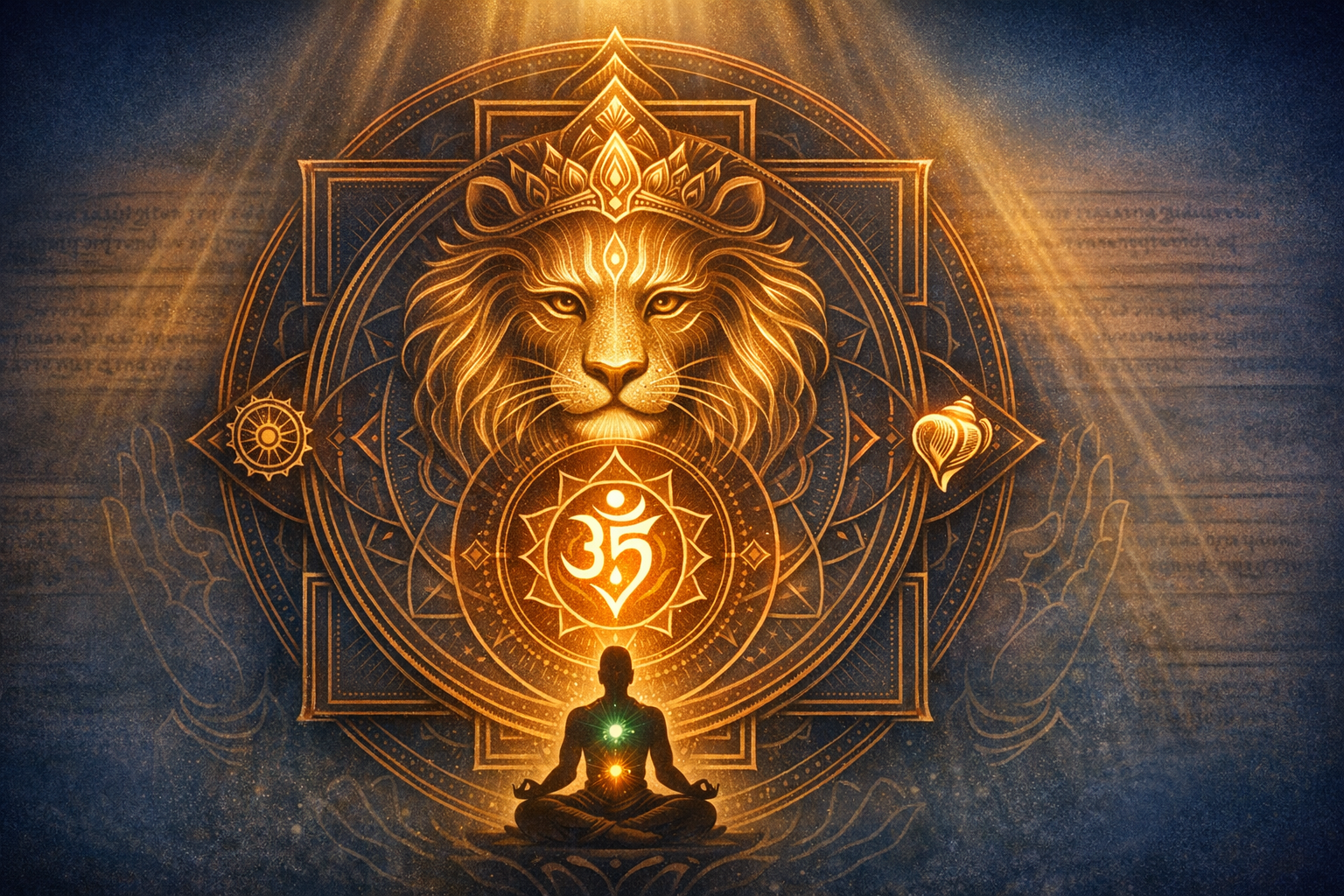
The second khanda of the Nrisimha Tapaniya Upanishad offers a rigorous account of mantra potency in the Tantric Vaishnava tradition. It presents the Nrisimha bija kṣrauṁ as the energetic heart of protective wisdom and details how dhyana, nyasa, and japa integrate to transform attention and behavior. Readers gain historical and philological context for the Upanishad’s…
-
Laghu Shyamala: The Enigmatic Dark Goddess of Shakti, Speech, and Fertile Creation in Hinduism

Laghu Shyamala is honored as a dark-hued, esoteric form of the Divine Mother whose power concentrates knowledge, speech, creativity, and fertility. The name reveals an accessible pathway to Shakti, pairing the generative symbolism of “Shyamala” with the concise, practical emphasis of “Laghu.” Iconography—veena, parrot, book, and japa-mala—maps a theology of cultured eloquence and compassionate learning.…
-
Bhagavan and Ishvara, One Truth: Why Vishnu and Shiva Bear These Timeless Honorifics

The titles Bhagavan and Ishvara carry precise theological weight in Hindu philosophy without enforcing hierarchy. Bhagavan highlights the plenary, relational fullness of the Divine, while Ishvara emphasizes sovereign lordship and cosmic governance. Scriptures apply both titles across deities—Vishnu is called Ishvara, and Shiva is addressed as Bhagavan—signaling complementarity rather than exclusivity. Vedantic schools, Shaiva traditions,…
-
Break Free from Maya: Transcending Superimpositions for God‑Realization in Advaita Vedanta

This long-form exploration clarifies why Advaita Vedanta insists that God-Realization demands freedom from limiting superimpositions (adhyāsa, upādhi), and shows how to remove them with rigor and compassion. It unpacks core methods—Pañca Kośa Viveka, Drg-Drśya Viveka, neti neti, śravaṇa–manana–nididhyāsana—while honoring the supportive roles of Karma Yoga and bhakti. Drawing parallels with Yoga’s kleshas, Buddhism’s deconstruction of…
-
Avatar vs Prophet: Decoding Sacred Roles, Divine Presence, and Dharma Across Faiths

This in-depth analysis explains the core difference between a Hindu avatāra and an Abrahamic prophet by examining ontology, revelation, soteriology, and ritual life. It shows how the avatāra is the Divine Presence entering the world to restore dharma, while the prophet is a human messenger who conveys God’s guidance. The piece nuances the comparison by…
-
Dharma Unveiled: The Living Code of Virtue Guiding Daily Life Across Dharmic Traditions

Dharma is presented as a living, context-sensitive code of virtue shared across Hinduism, Buddhism, Jainism, and Sikhism. The article clarifies its scope—from universal virtues like ahiṃsā and satya to role-specific duties—and shows how it governs the pursuit of prosperity and well-being without compromising conscience. It draws on classical sources (Dharmashastras, the Bhagavad Gita, Buddhist canons,…
-
Decoding Panchamukhi Ganapati: Five Faces that Harmonize Elements, Senses, and Self
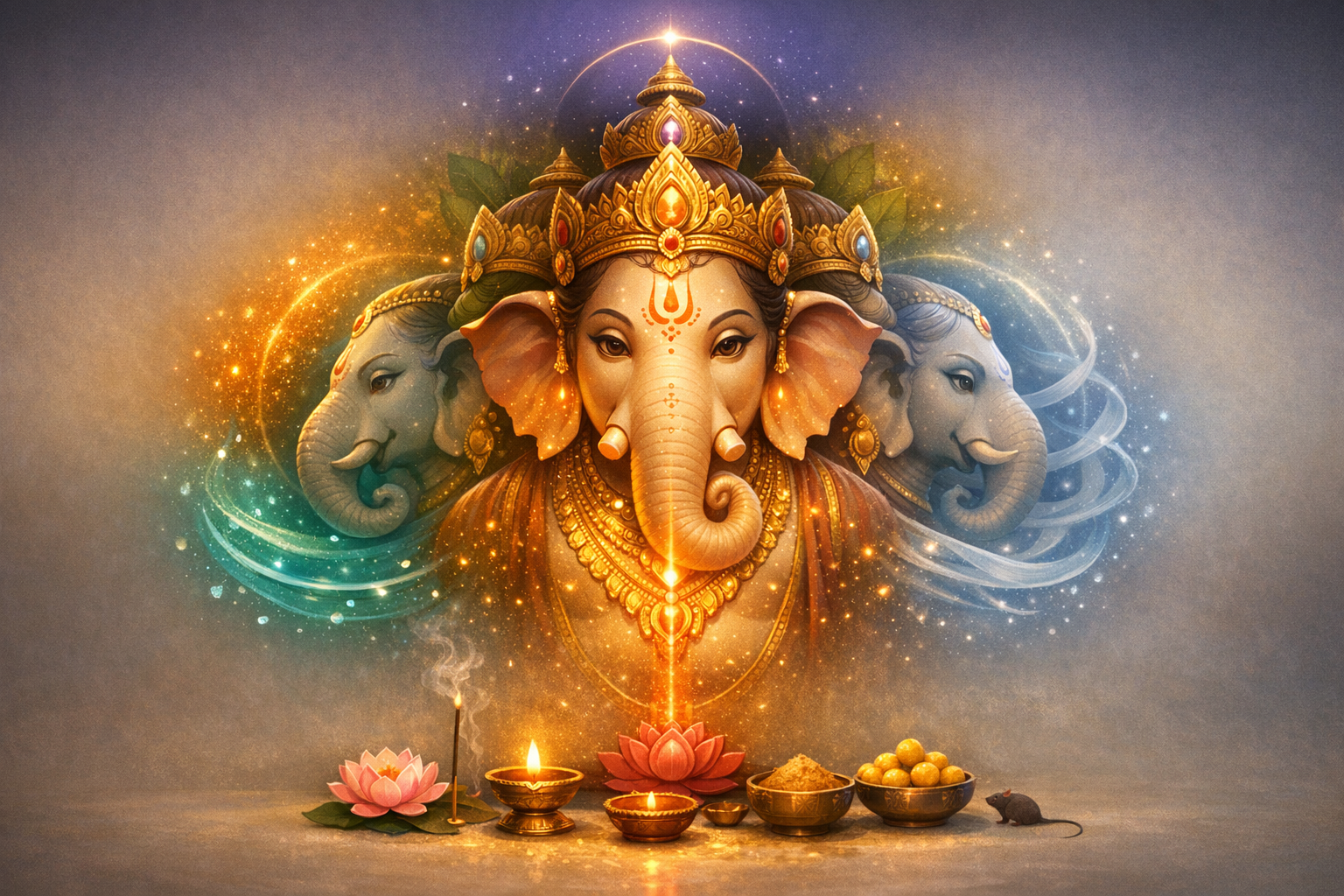
This in-depth exploration decodes Panchamukhi Ganapati as a five-faced synthesis of the five senses and the five great elements. It clarifies the classical mapping of indriyas to pancha mahabhuta and shows how the image guides pratyahara and allied yogic practices. Readers encounter multiple scholarly interpretations, from pancha prana and Pancha Kosha Viveka to the fivefold…
-
Srinivasa Mangapuram Vasanthotsavams 2026: Dates, Sacred Rituals, and Golden Chariot Darshan Guide
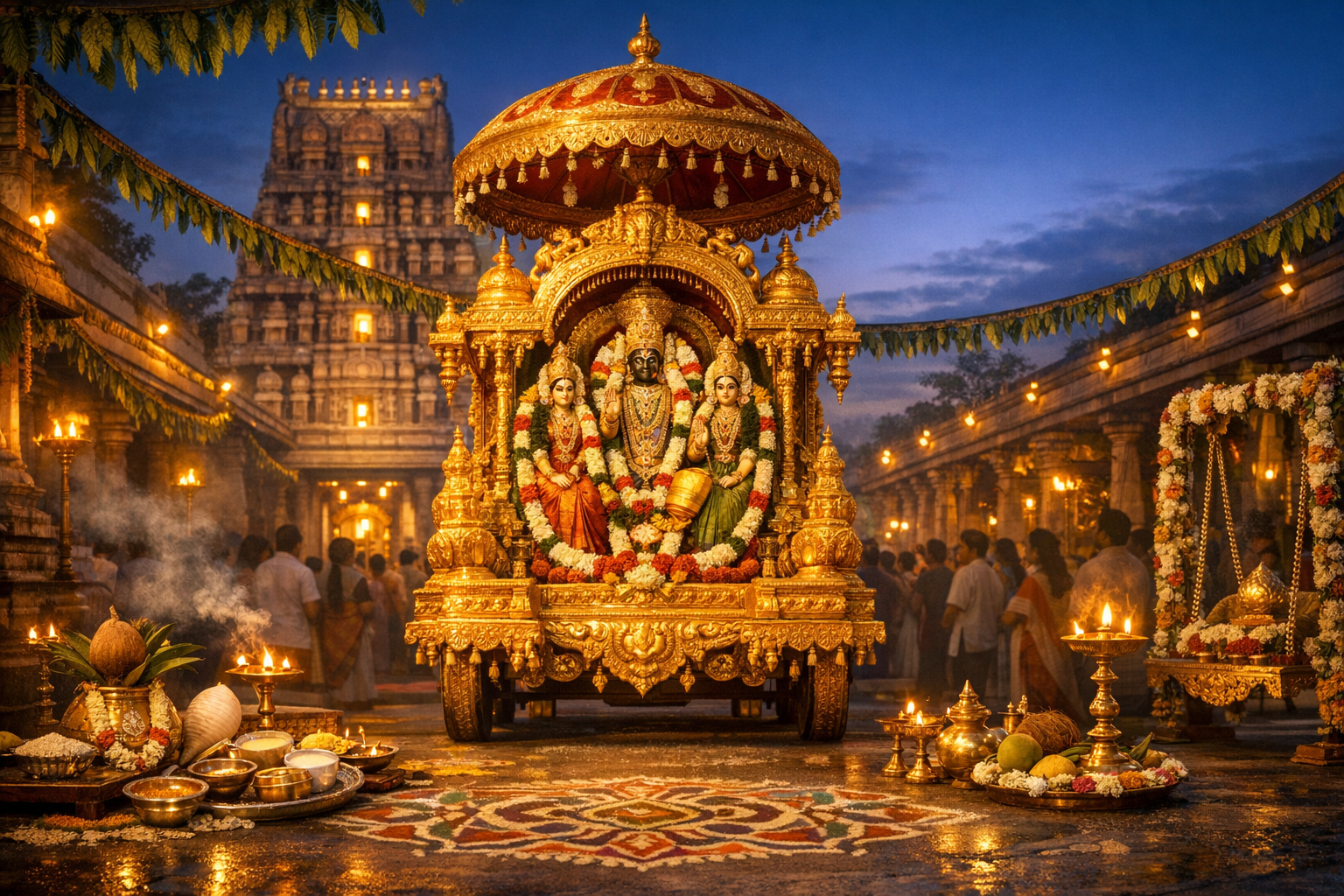
Srinivasa Mangapuram Vasanthotsavams 2026 will be celebrated from 7–9 May at Srinivasamangapuram near Tirupati under TTD. Each day features Snapana Tirumanjanam, Unjal Seva, and processions that emphasize renewal, devotion, and communal harmony. The highlight is the Golden Chariot (Swarna Ratham) on 8 May from 6–7 pm, when Sri Kalyana Venkateswara Swamy blesses devotees with Sridevi…
-
May 12, 2026 Panchang: Precise Dashami–Ekadashi (9:47 AM) Shift, Auspicious Times Guide

On Tuesday, May 12, 2026, most regions observe Krishna Paksha Dashami until 9:47 AM, after which Krishna Paksha Ekadashi begins. This guide explains what a tithi is and why its start and end times vary by location. It outlines the spiritual focus of Dashami as preparation for Ekadashi, along with fasting rules, Smarta–Vaiṣṇava nuances, and…
-
Turning the Tide on Punjab’s Youth Unemployment: Data-Driven Jobs Plan with Dharmic Unity

Punjab faces a stubborn youth unemployment challenge marked by skills mismatches, low female participation, and heavy reliance on agriculture with limited value-add. This analysis synthesizes insights from official labour surveys and employer feedback to propose a practical, data-driven jobs strategy. It prioritizes agricultural diversification and green transitions, manufacturing deepening in legacy clusters, and formal-service growth…
-
Why Hanuman’s Lanka Infiltration Seemed Impossible: Fortifications, Yogic Science, and Bhakti

Hanuman’s entry into Lanka in the Sundara Kanda is a tightly orchestrated mission that combined strategic insight, advanced fortifications, yogic mastery, and unflinching bhakti. Lanka’s defenses—attributed in origin to Vishwakarma’s design and later fortified by Ravana—made infiltration rather than siege the rational first move. The ocean crossing presents a trilogy of tests (Mainaka, Surasa, Simhika)…
-
Panaji Police HQ Protest: Hindus Demand Equal Action on Hate Speech, Uphold Rule of Law

Hundreds of citizens gathered outside the Panaji Police Headquarters in Goa, contending that laws on derogatory religious speech are being enforced unevenly. Protesters cited the swift arrest of Gautam Khattar over remarks about St. Francis Xavier and demanded similar urgency when Hindu deities and traditions are mocked. The analysis situates their demand within India’s constitutional…
-
Why Simple Presence Transforms Lives: The Science of Attention, Friendship, and Calm Under Pressure

A late chance at a youth basketball tryout became the seed of a rare friendship and a lesson in the quiet power of attention. When a coach called from a waiting room minutes before a high-stakes interview, an ordinary conversation provided the calm he needed. Research in social baseline theory, polyvagal theory, psychological safety, and…
-
Decoding the First Khanda of Nrisimha Tapaniya: Cosmogony, Anustubh Metre, Fearless Mantra Power

The first khanda of the Nrisimha Tapaniya Upanishad fuses cosmogony with mantra science in the anustubh metre, presenting a disciplined pathway from fear to fearless compassion. Readers gain a clear sense of the text’s Atharvavedic affiliations, its layered pedagogy (phonetics, metre, and meaning), and its integrative practice model involving japa, nyasa, and contemplative visualization. The…