
-
Unlock the Ocean Within: Dharmic Pathways to Atman, Timeless Wisdom, and Resilient Strength

This essay examines the statement “You know little of that which is within you. Within you is the ocean of infinite power” through the shared frameworks of Hinduism, Buddhism, Jainism, and Sikhism. It explains the Upanishadic vision of ātman and Brahman, the yogic map of prāṇa and kundalinī, and the ethical preconditions that make inner…
-
May 15, 2026 Panchang: Trayodashi to Chaturdashi, Auspicious Timings, Nakshatra, Rashi
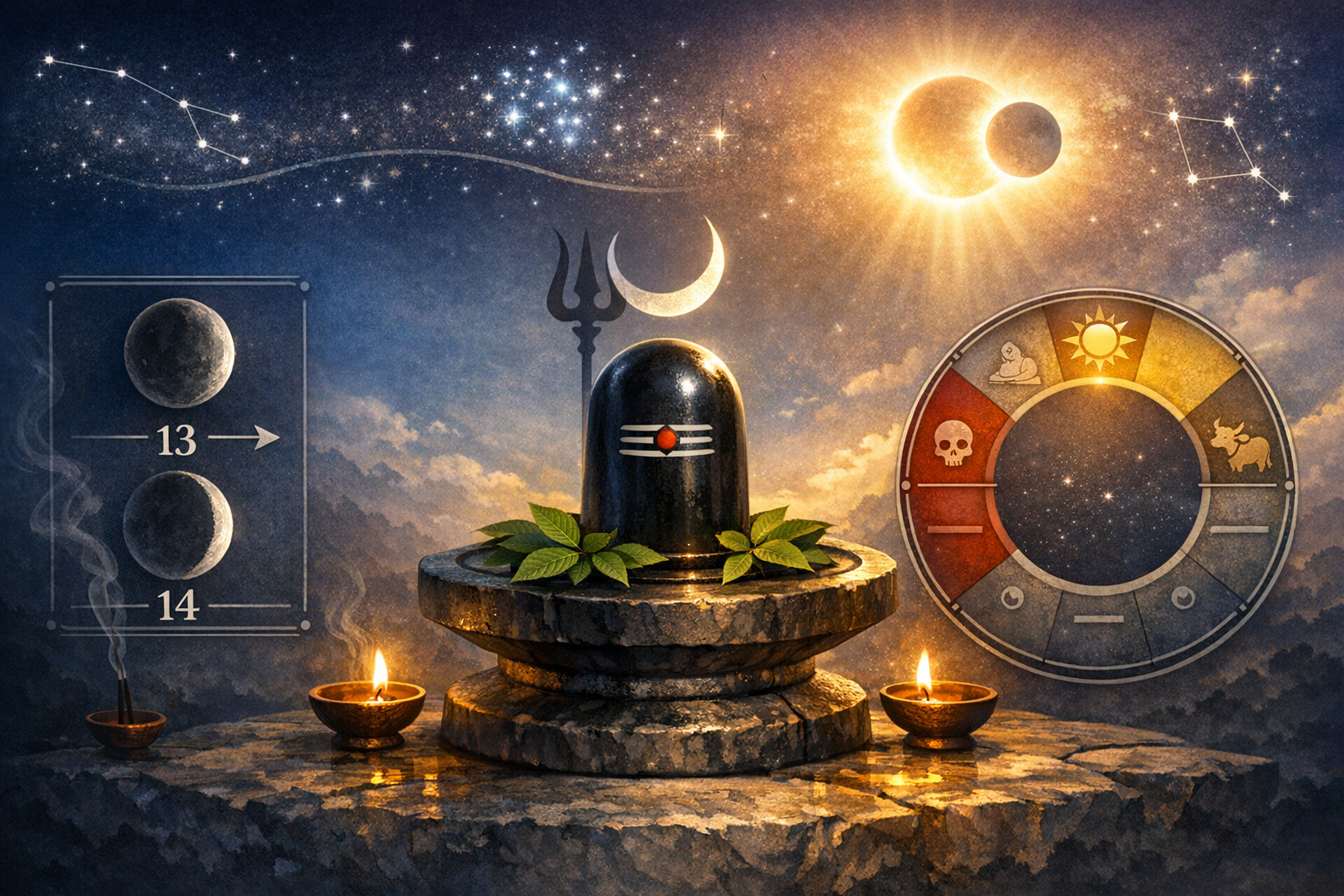
May 15, 2026 (Friday) marks the transition from Krishna Paksha Trayodashi to Chaturdashi, with Trayodashi ending at 05:52 IST across most Indian regions. Because Trayodashi does not coincide with evening twilight, Pradosh is not observed on this calendar date; instead, monthly Shivaratri falls during the late night of May 15–16 (verify Nishita Kaal locally). The…
-
When Indore’s Bureaucracy Burned History: The Lost Holkar Archives and Parasnis’s Crusade

The near-total loss of the Holkar Archives at Indore, following years of official obstruction and a fire in a substandard repository, remains a defining lesson in how bureaucratic negligence can erase civilizational memory. This narrative situates D. B. Parasnis within that tragedy and highlights his lifelong effort to rescue, professionalize, and open Indian historical records…
-
Why Bathing Women Hid from Vyasa but Not Shuka: A Deep Dive into Gaze, Purity, and Dharma

A classic Hindu teaching story contrasts how women bathing in a pond responded to Vyasa and to his son Shuka, and it reveals a layered ethic of consciousness and context. The narrative illustrates how a jivanmukta’s non-objectifying gaze fosters ease, while a revered householder’s presence naturally elicits social modesty. Read through Advaita, bhakti, and yoga…
-
Beyond Moving On: Evidence-Based Strategies for Trauma Integration and Nervous System Healing

Many people “move on” from painful relationships yet remain vulnerable to old triggers because the nervous system retains unintegrated memories. This evidence-based guide explains why familiar dysregulation can feel like “home,” how naming patterns such as gaslighting and trauma bonding restores clarity, and why daily regulation practices matter. Drawing on neuroscience and dharmic wisdom (yoga,…
-
Bhuridakshinaya Bhairava: Guardian of Dharma, Southern Direction, and Sacred Abundance

Bhuridakshinaya Bhairava unites fierce guardianship with ethical generosity, drawing on the multiple meanings of dakshina as offering, right-hand propriety, and the southern direction. The epithet’s Vedic resonance with bhuri-dakshina illuminates a moral economy in which right giving completes right worship. In Shaiva Tantra, Bhairava’s role as Kshetrapala aligns with directional theology, temple architecture, and observances…
-
ISKCON Helsinki Launches Ambitious Malmi Manor Temple Restoration to Safeguard Living Heritage

ISKCON Helsinki has launched a multi-year restoration and modernization of its Malmi Manor temple complex, uniting rigorous heritage conservation with contemporary performance standards. The program balances minimal intervention and reversibility with essential upgrades to structure, envelope, and building services suited to Nordic climate demands. Kirtan hall acoustics, fire safety, and accessibility receive focused attention, improving…
-
From Riyadh to Tehran: How Srila Prabhupada’s Vedic Wisdom Inspires Unity and Hope

Interest in India’s ancient knowledge has expanded across Arab and Persian cultural spheres, especially during periods of uncertainty. This article examines why Srila Prabhupada’s books resonate in these contexts: philosophical clarity, rigorous translation, and accessible practice. It explains how Arabic and Persian editions preserve Vedic nuance while remaining readable for university courses and interfaith study…
-
NCERT Removes Maratha Expansion Map: Why the Attock–Cuttack Legacy Matters to India’s Students
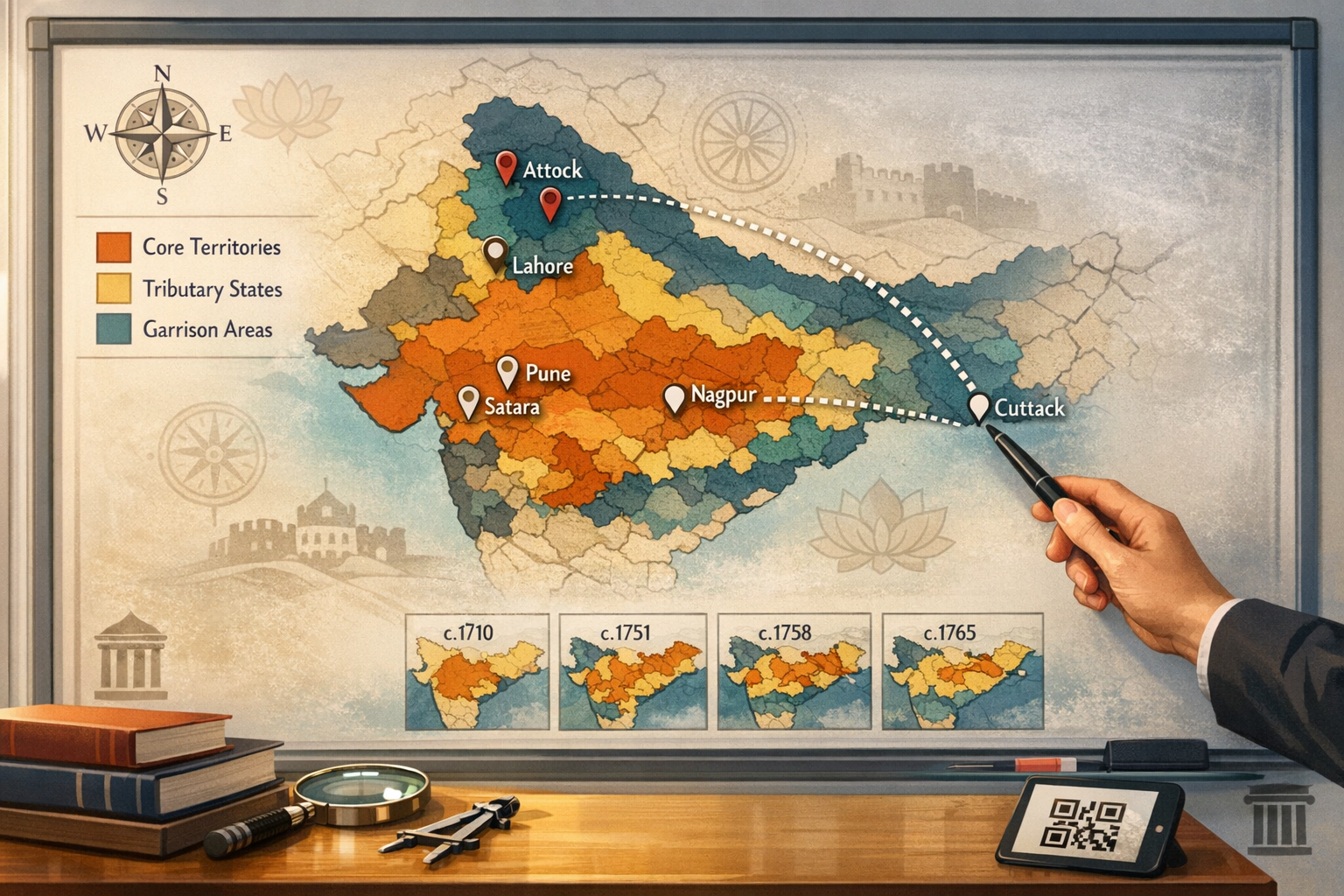
NCERT’s removal of the map showing Maratha expansion from Attock to Cuttack has sparked a vital discussion about how Indian textbooks balance accuracy, pedagogy, and heritage. This analysis explains what changed, why maps matter for spatial learning, and how the petition before the Bombay High Court frames the issue. It clarifies the historical context—brief Maratha…
-
Nitya in Hinduism: Timeless Truths and Daily Duties for Transformative Dharmic Clarity

Nitya in Hindu thought unites two powerful ideas: the eternal ground of being and the disciplined regularity of daily practice. Classical sources such as the Upanishads and Bhagavad Gītā affirm the ātman as nitya, while Mīmāṃsā and Dharmaśāstra define nitya-karma as obligatory daily duties that stabilize conduct and clarity. Agamic and Vaiṣṇava traditions embed nitya…
-
Beyond Chant and Dance: The Transformative Science of Nama, Naam Simran, and Scriptural Hearing
Chanting the Holy Name stands supreme in Sri Caitanya Mahaprabhu’s teaching, yet it flourishes when supported by hearing, reflection, and ethical alignment. Drawing on Srimad-Bhagavatam’s ninefold path of devotion, this article explains why sravana (hearing) provides the sambandha-jnana that turns sound into a living relationship with Krishna (Krsna). It clarifies the difference between mere “shadow…
-
Malati the Cow: A Dramatic New Vrindaban Rescue and Evidence-Based Guide to Milk Fever

A postpartum emergency at New Vrindaban became a textbook case in recognizing and treating milk fever (periparturient hypocalcemia) while showcasing the power of community-based, dharmic care. The narrative follows Malati from calving to life-threatening recumbency with bloat, through improvised oral calcium, expert IV therapy, and careful use of hip lifters to restore sternal recumbency and…
-
Hare Krishna Kirtan on King’s Day 2026: Nitai Prabhu Leads a Vibrant Sankirtan in Amsterdam

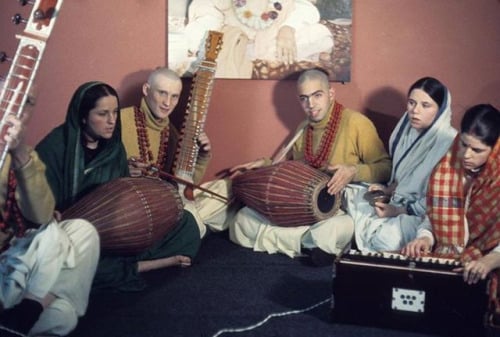
On April 27, 2026, a mobile Hare Krishna kirtan led by Nitai Prabhu wove through King’s Day in Amsterdam, blending devotional rhythm with civic celebration. The procession introduced harinama-sankirtana—congregational chanting of the Hare Krishna maha-mantra—as an accessible form of urban spirituality and cultural exchange. Structured by mridanga, kartals, and harmonium, the call-and-response format enabled spontaneous…
-
Srila Prabhupada’s Anga-Raga Masterclass: Painting Radha‑Krishna Deities, Meaning, and Mudra
This analysis distills a rare episode in ISKCON history where Srila Prabhupada personally demonstrated Anga-Raga, the liturgical “painting of the body” for Radha‑Krishna Deities bound for Hamburg. It explains the method’s theological foundation within Gaudiya Vaishnavism, the disciplined use of black, white, and red pigments, and the devotional perception of form as presence. The discussion…
-
Decoding the Fiery Compassion: A Deep Dive into the Third Chapter of Nrisimha Tapaniya Upanishad

The third chapter of the Nrisimha Tapaniya Upanishad unifies mantra, meditation, and Vedanta into a coherent path of fierce compassion and fearless insight. This deep dive decodes the Nrisimha mantraraja, explicates the bija kṣrauṁ, and clarifies how nyasa sacralizes the body as a field of realization. Readers gain a rigorous yet accessible guide to practice…
-
Dhumavati and Shiva Unveiled: Origin Myths, Smoke-Clad Symbolism, and Transformative Wisdom

Dhumavati, the smoke-clad Mahavidya, teaches how endings and absence become gateways to discernment across the Dharmic family. This in-depth essay clarifies her origin myths, including the Sati–Shiva narratives and the Daksha yajna smoke motif, and interprets their philosophical stakes. It decodes her iconography—crow, broom, winnowing basket, cremation ground—as a curriculum in viveka and vairagya. Readers…
-
Hindu Vote Consolidation as BJP’s Force Multiplier: West Bengal’s Dramatic Recast

This in-depth, data-grounded analysis explains how Hindu vote consolidation acted as a force multiplier for the BJP in West Bengal under India’s first-past-the-post system. It traces the timeline from marginal presence to principal opposition, showing how social coalitions (including Namasudras and Rajbanshis), booth-level organization, and welfare credibility combined to reshape competitiveness. The piece differentiates necessary…
-
Vaikuntha Chaturmukha Vishnu Revealed: The Majestic Four-Faced Theophany of Kashmir
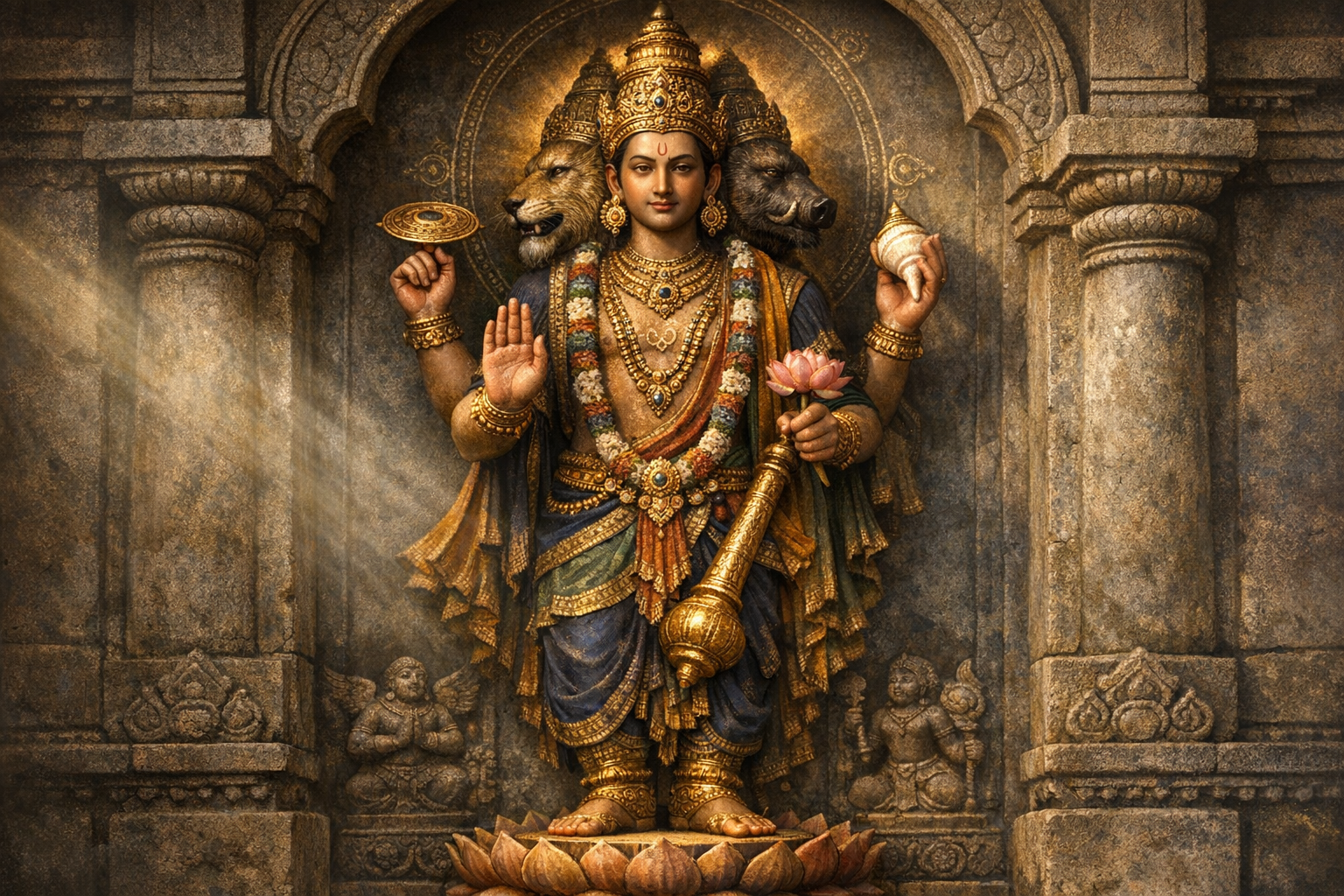
Vaikuntha Chaturmukha Vishnu—Kashmir’s four-faced theophany—unites avatara potency and Vaishnava theology in a single, compelling icon. Anchored in the Vishnudharmottara Purana and refined by early medieval Kashmiri ateliers, the image integrates the human, Narasimha, Varaha, and a hidden fierce face to express omnidirectional vision and cosmic guardianship. Readers gain a technical grasp of attributes, styles, and…
-
Beyond Sectarianism: Dharmic Wisdom for an Inclusive, Boundless Vision of the Divine

This essay examines the insight that a sectarian mind yields a defective image of the Divine, drawing on Hindu philosophy and the wider Dharmic traditions. It traces Vedic and Upanishadic roots of pluralism, explains the Bhagavad Gita’s inclusivism, and shows how Ishta, Advaita, Vishishtadvaita, and Dvaita approach the One-and-many problem without mutual negation. It integrates…
-
Decoding Kamadeva’s Five Arrows: How the Senses Shape Desire, Dharma, and Creation
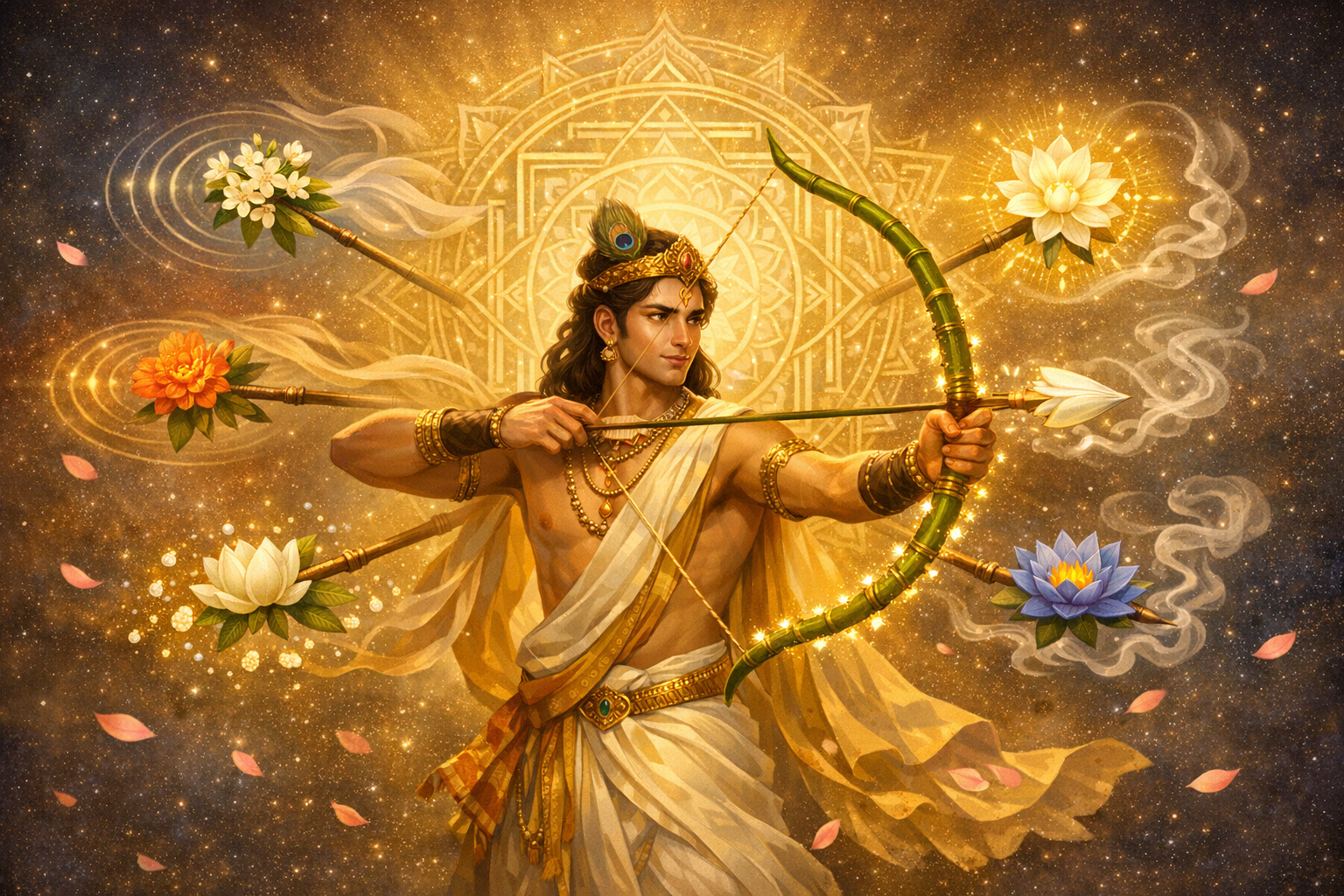
Kamadeva’s five flower-tipped arrows and sugarcane bow form a precise allegory for how the senses animate desire and sustain the cosmic cycle of life. Read as psychology, the allegory maps stimulus, attention, valuation, and pursuit; read as theology, it integrates kāma into the puruṣārthas alongside dharma, artha, and mokṣa. The Madana-dahana narrative shows desire sublimated…