
-
Bury Place Legacy: ISKCON London’s Historic Journey and a Vision of Dharmic Unity

Bury Place represents a living chapter in London’s spiritual history, rooted in ISKCON London’s establishment and the 1969 installation of Sri Sri Radha-Londonisvara at 7 Bury Place by Srila Prabhupada. The narrative highlights responsible heritage stewardship alongside the living practices of seva and yajna that strengthen community life. As a Hindu temple in London, the…
-
Rashi Anusar Mantra: Powerful Zodiac Mantras to Remove Obstacles and Invite Prosperity

This article introduces Rashi Anusar Mantra as a contemplative practice that aligns mantra-japa with the twelve Vedic zodiac signs to reduce obstacles and cultivate prosperity. It preserves the original Hindi context while clarifying how zodiac mantras integrate intention, attention, and ethical action. The discussion highlights shared insights from Hinduism, Buddhism, Jainism, and Sikhism, emphasizing unity…
-
Putra Prapti Pujan Explained: Dharma‑aligned rituals and gentle remedies for healthy progeny
This guide reframes पुत्र प्राप्ति के लिये ज्योतिष उपाय and Putra Prapti Pujan as compassionate, dharma-aligned practices aimed at overall family well-being. It explains commonly observed pujasSantana Gopala worship, Putrada Ekadashi, and Shiva–Parvati pujawhile emphasizing equality for पुत्र and पुत्री. Readers learn how Jyotisha can complement, not replace, medical guidance, and how ethical intent, seva,…
-
Discover Isannapally Kalabhairava Temple: Kamareddy’s 8‑Foot Idol and 16th‑Century Legacy
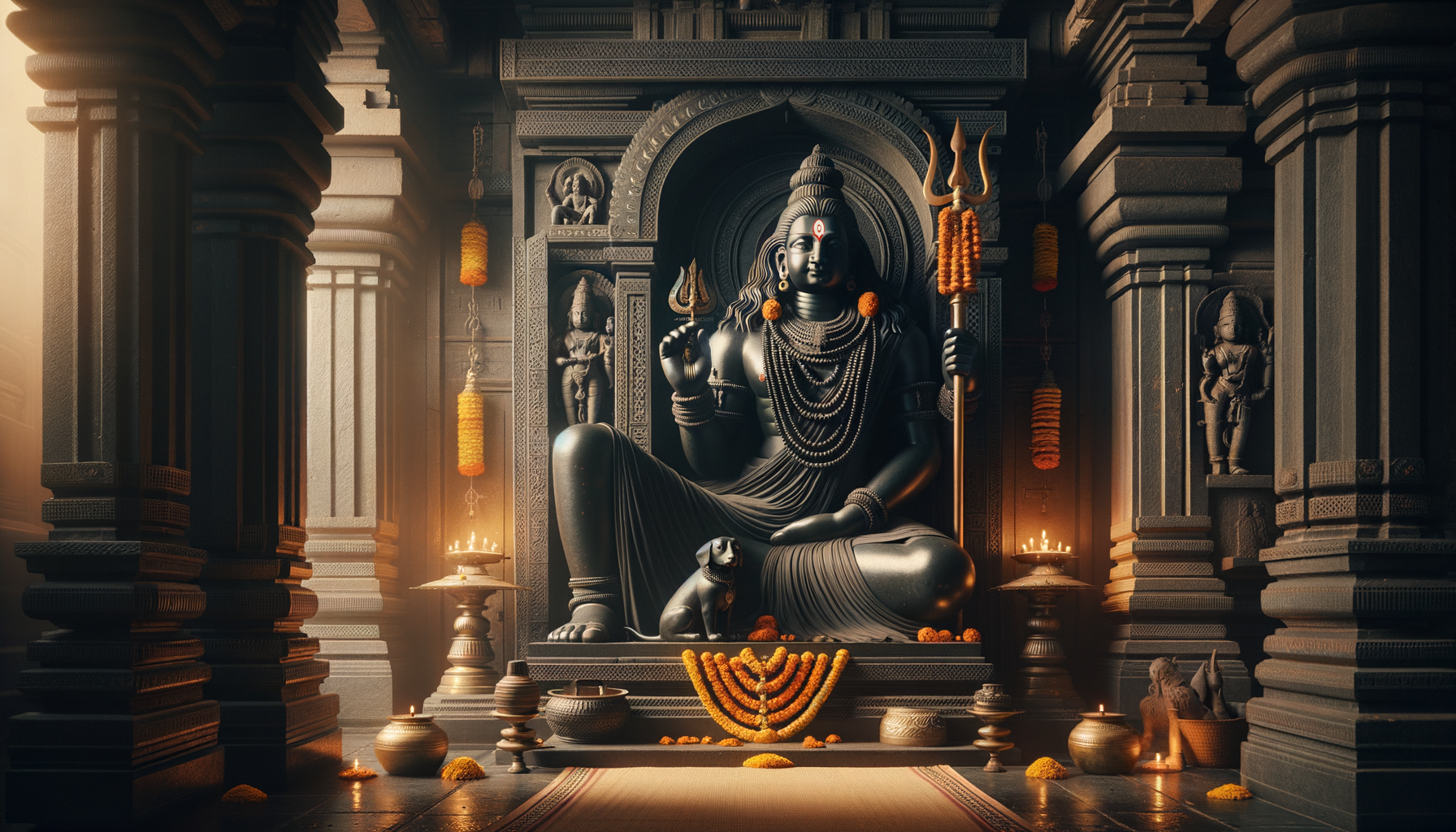
Isannapally Kalabhairava Temple in Bhiknur Mandal, Kamareddy District, Telangana, is esteemed for its powerful spiritual presence and cultural importance. The temple houses an 8‑foot idol of Digambara Kalabhairava Swamy with the dog vahana, conveying vigilance and guardianship. Local tradition dates the icon to the 16th century, situating the shrine within a rich Shaivite heritage. Visitors…
-
Katyayani Vratam 2025–2026: Auspicious Dhanurmasa Dates, Rituals, and a Sacred Path to Unity

Katyayani Vratam in 2025–2026 falls from 16 December 2025 to 14 January 2026, aligning with Dhanurmasam and the lunar month of Margashirsha/Margazhi. This auspicious window emphasizes pre-dawn worship, simple fasting, and mindful offerings to Goddess Katyayani. The observance strengthens inner discipline, family harmony, and community bonds through seva and shared prayer. A concise at-home puja…
-
Tripada Trimurti Unveiled: The Profound Symbolism of Shiva’s Three-Footed Trinity

Tripada Trimurti presents the TrimurtiBrahma, Vishnu, and Shivathrough the striking motif of three feet, highlighting the unity of creation, preservation, and transformation. This interpretation clarifies how the visible legs of Vishnu and Shiva, with the third principle implied through Brahma or the composite form, teach oneness-in-diversity. Readers gain a clear understanding of the term’s meaning,…
-
Laat Bhairav Temple, Varanasi: A Timeless Sanctuary of Kapal Bhairav in Alaipur

Laat Bhairav Temple in Varanasi, also known as Kapal Bhairav, stands in Alaipur as a quietly powerful testament to Kashi’s ancient temple heritage. Identified in the Puranas with a fierce, protective form of Shiva, the shrine emphasizes courage, vigilance, and inner discipline. Its modest setting on the city’s outskirts offers a contemplative counterpoint to crowded…
-
After IFFI skit, HJS seeks BNS 2023 action over alleged insult to Chavundi Daiva

Hindu Janajagruti Samiti (HJS) has urged police action under BNS 2023 after a performance at IFFI that it characterizes as a derogatory imitation of Chavundi Daiva. The request underscores due process within the updated legal framework while centering cultural sensitivity toward sacred symbols. The episode highlights how representations of revered figures resonate deeply across Hindu,…
-
Br̥hatī (Brihati) Vedic Meter Explained: Structure, Rigvedic Usage, and Timeless Significance
Br̥hatī (Brihati) is a principal Vedic meter with thirty-six syllables arranged as four quarters of nine. Traditionally placed fourth in canonical lists of chandas, it bridges compact and expansive meters, balancing precision with breadth. Its cadence shapes the sound and emphasis of Vedic hymns, especially in the Rigveda, and remains audible in contemporary recitation and…
-
Rama, Jatayu, and Dharma: Was Cremation a Transgressionor Compassionate Justice?

A northern Kerala folk questionwas Rama wrong in cremating Jatayu?opens a nuanced inquiry into dharma, ritual norms, and compassion in the Ramayana. The episode portrays Rama honoring Jatayu as a father-figure through antyeṣṭi, foregrounding intention and gratitude over rigid taxonomies. While some customs reserve cremation for humans, the epic frames Jatayu’s valor as ethically exceptional.…
-
The Transformative Power of Book Distribution: Sankirtana, Prasadam, and Dharmic Unity

Book distribution in the Krsna consciousness movement functions as sankirtanathe devotional glorification of the divine through words. It is simple and accessible, whether through the Hare Krsna mantra or reflective reading and discussion. Receiving a book invites personal dialogue with the philosophy and pastimes of Krsna, offering solace and ethical clarity. Temples complement these efforts…
-
Inspiration Through Love: Balancing Discipline and Compassion in Dharmic Education

This reflection presents a practical framework for Dharmic education: love as the source of inspiration and discipline as a compassionate structure. It explains how clear boundaries, when rooted in care, foster intrinsic motivation and dignity in the Guru–Shishya relationship. The discussion connects Hindu, Buddhist, Jain, and Sikh valuesbhakti, karuṇā, ahiṃsā, and sevato demonstrate unity in…
-
Compassion Without Boundaries: Bhakti, Ahimsa, and Seva for the Welfare of All
This reflection, inspired by His Divine Grace A.C.B. Swami Prabhupada, explores how bhakti-yoga calms the mind and orients the heart toward the welfare of all beings. It connects the Vaisnava ethos of universal compassion with shared dharmic principlesmaitri, karuna, ahimsa, seva, and simranfound across Hinduism, Buddhism, Jainism, and Sikhism. The discussion highlights how remembrance of…
-
Beyond Name and Form: Advaita Vedanta’s Transformative Path to the Infinite and Unity

This essay explores a core insight of Hindu philosophy: that ignorance confines the infinite through name and form. Advaita Vedanta explains how naming obscures Brahman’s boundless nature, while still valuing forms as compassionate gateways. Relatable exampleslike the sky in a pot and the ocean’s wavesillustrate why labels are helpful yet limited. The discussion connects this…
-
Avadhuta’s Radical Stillness: Transformative, Goal‑Free Awareness across Dharmic Traditions

This reflection examines the Avadhuta ideal in Hinduism as a disciplined, goalless awareness that reveals freedom without withdrawal from life. It clarifies that “sitting and watching” is rigorous witness-consciousness (sakshi-bhava), not apathy or inertia. The discussion situates this insight within Advaita Vedanta and aligns it with parallel practices across Buddhism, Jainism, and Sikhism, highlighting unity…
-
Resilience in Hinduism: Timeless Dharmic Practices to Rise Strong from Adversity

This article examines resilience in Hinduism as a cultivated capacity grounded in abhyāsa (practice) and vairāgya (wise non-attachment). Drawing on the Bhagavad Gita, the Upanishads, and the Yoga Sutra, it outlines how equanimity, witnessing awareness, and disciplined routines foster emotional balance. Practical methodsdhyāna, prāṇāyāma, and mantra japaare presented as accessible tools for stress management and…
-
Bhai Kirpa Singh of Mattan: Courage, Devotion, and Guru Tegh Bahadur’s Legacy of Freedom

Bhai Kirpa Singh of Mattan, Kashmir, is remembered as a devoted Sikh of Guru Tegh Bahadur whose life bridged Kashmiri heritage and Sikh courage. His association with the Kashmiri Pandits’ appeal at Anandpur Sahib in 1675 highlights a landmark moment for religious freedom under Mughal rule. Guru Tegh Bahadur’s martyrdom, undertaken for universal liberty of…
-
Choose Trust Over Revenge: A Dharmic Roadmap to Inner Strength, Peace, and Unity

In moments of hurt, choosing trust over revengeful action redirects energy from escalation to healing. Grounded in dharma, ahimsa, compassion, and kshama, this approach is shared across Hinduism, Buddhism, Jainism, and Sikhism. It combines inner clarity with practical accountability, replacing reactive punishment with boundaries, due process, and restorative steps. Mindfulness and brief meditation strengthen emotional…
-
December 9, 2025 Panchang Guide: Krishna Paksha Panchami → Sashti Timings, Meaning, and Planning Tips

On Tuesday, December 9, 2025, Krishna Paksha Panchami prevails until 8:01 PM and then transitions to Krishna Paksha Sashti. This Panchang update helps plan rituals, study, and daily routines with clarity and calm. Panchami favors introspection and steady sadhana, while Sashti encourages discipline and purification. Shubh Muhurat, Nakshatra, and Rashi vary by region, so local…
-
December 2025 Skandagiri Temple Festivals: Dates, Programs, and Devotional Highlights

This December 2025 overview for Skandagiri Subramanya Swamy Temple in Hyderabad outlines confirmed observances to help devotees plan meaningful visits. It highlights PRADOSHAM on Tuesday, 2 December 2025, featuring Abhishekam to Lord Ekambareswarar. As the temple follows the lunar panchang, dates and puja timings are typically finalized and announced closer to each event. Practical guidancelike…