-
Chant Shiva’s Eight Sacred Names for Inner Peace, Focused Mind, and Spiritual Awakening

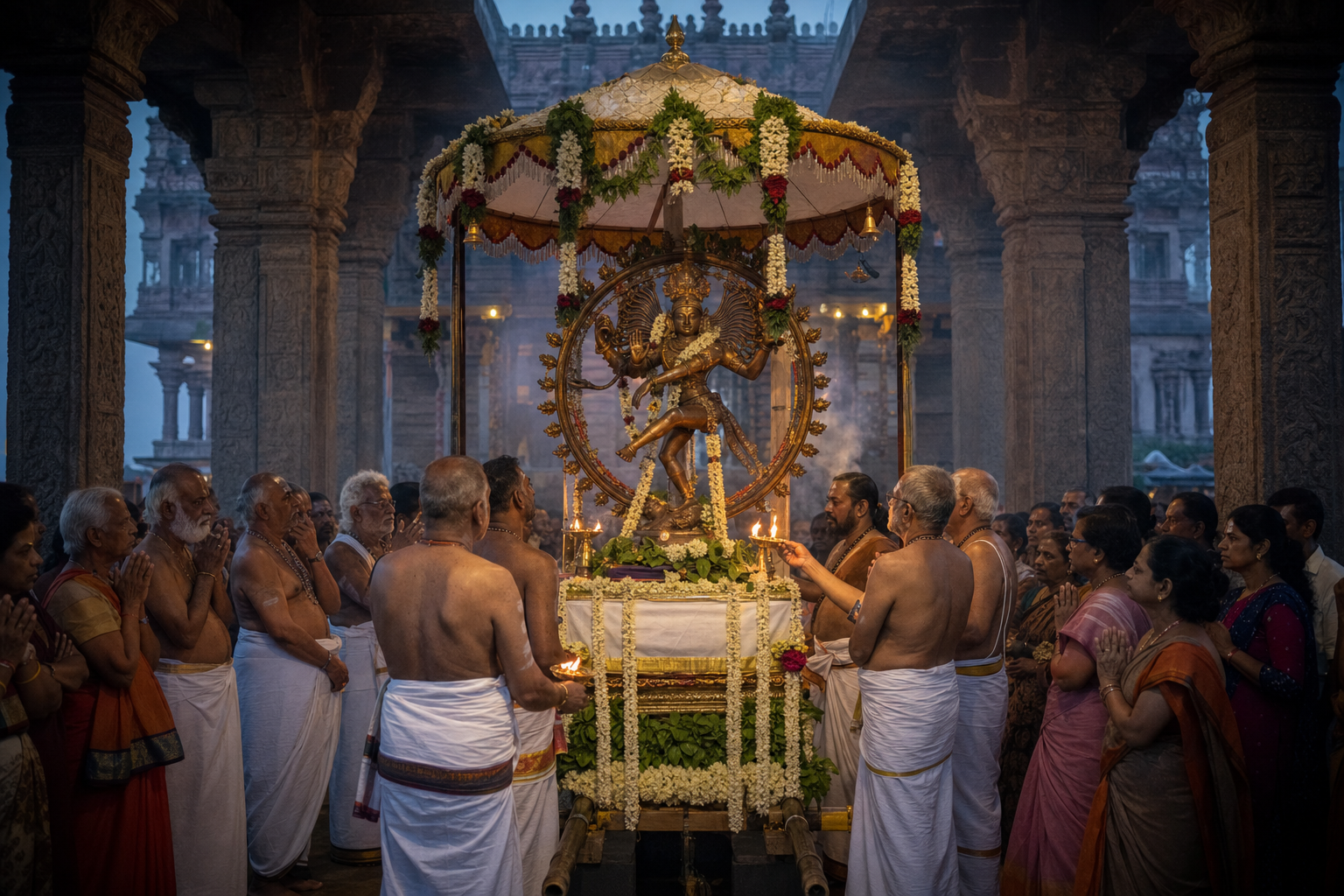
Chanting the eight sacred names of Shiva (Ashtanama Shiva) offers a concise, effective practice for inner peace, focused attention, and spiritual clarity. Each name—Bhava, Sharva, Rudra, Pashupati, Ugra, Mahadeva, Bhima, and Ishana—embodies a distinct contemplative quality that strengthens resilience and compassion. Practiced as mindful nama-japa with calm breathing and clear pronunciation, it enhances attentional stability…
-
Viral Hanuman Chalisa Rap Meets Hip-Hop: A Powerful Fusion Echoing Sanatana Dharma’s Unity

A viral Hanuman Chalisa rap demonstrates how Sanatana Dharma adapts across time, place, and genre without losing sacred intent. By melding bhajans and mantras with hip-hop, the piece offers an accessible entry point for youth and diaspora audiences. Listeners often describe renewed devotion, cultural pride, and a sense of global belonging. Concerns about commercialization underscore…
-
Chatus Sana in Hinduism: The Eternal Four Sages of Brahma and Their Timeless Wisdom

The Chatus Sana—Sanaka, Sanatkumara, Sanatsujata, and Sanandana—are revered in Hinduism as the eternal, mind-born sages of Brahma who embody purity, wisdom, and spiritual knowledge. Their presence across the Puranas, the Mahabharata, and the Upanishads highlights a shared commitment to contemplation, ethical clarity, and inner freedom. Sanatkumara’s Upanishadic teaching, Sanatsujata’s discourse on deathlessness, and Sanaka and…
-
Discover the 68 Swayambhulingas: Self-Manifested Shiva Forms and Bharat’s Sacred Geography

This article explores the 68 Swayambhulingas as self-manifested forms of Lord Shiva that shape the sacred geography of ancient Bharat. It clarifies the meanings of Swayambhu and linga, emphasizing the linga as a cosmic symbol of formless consciousness. Readers gain historical and cultural context for these sites within India’s interconnected temple landscapes. The piece highlights…
-
Gadadhara Vishnu: The Awe-Inspiring Power of Kaumodaki and the Protection of Dharma

Gadadhara Vishnu, “He who holds the mace,” highlights Vishnu’s protective strength through the sacred Kaumodaki. In Hindu symbolism, the mace represents moral discipline, the power to dispel ignorance, and the guardianship of Dharma. Temple darshan and classical iconography communicate reassurance: strength aligned with compassion. This theme resonates across dharmic traditions—Hinduism, Buddhism, Jainism, and Sikhism—emphasizing ethical…
-
Srimad-Bhagavatam: The Living Book-Form of Sri Krsna Revealing Ten Transcendent Themes

Srimad-Bhagavatam is honored in Vaisnava tradition as the “book form” of Lord Sri Krsna, unfolding twelve cantos that mirror His bodily limbs and present ten transcendental topics. Lord Sri Caitanya Mahaprabhu praised it as pramanam amalam—“the spotless authority”—while Srila Rupa Gosvami highlighted hearing the Bhagavatam as a most potent limb of bhakti-yoga. Its narrative and…
-
Why We Hoard What We Can’t Use: Behavioral Science Meets the Dharmic Atyāhāra Warning

Recent behavioral studies reveal a persistent bias to accumulate more than can be used—even when boundaries are explicit. Dharmic traditions have long warned against this tendency through the principle of atyāhāra and the virtues of Aparigraha and Asteya. By integrating consumer behavior insights with Hindu, Buddhist, Jain, and Sikh teachings on contentment and sharing, the…
-
Compassion Beyond Envy: Seeing the Divine in All and Cultivating Dharmic Unity

A society without envy grows from compassion that is equal, unwavering, and rooted in the recognition of sacred life in all beings. Drawing on Vaishnava insight—Jivanam sarva-bhutesu—and aligned with Buddhism’s karuna, Jainism’s ahimsa, and Sikhism’s seva, this reflection shows how Dharmic traditions converge on spiritual unity. It explains why real prana expresses itself through action—Prana…
-
Cultivating an Unwavering Mind: Timeless Yogic Wisdom to Embrace the Whole of Life

Hindu philosophy teaches that a stable and unwavering mind is essential for perceiving the interconnected whole of life. Drawing on the Upanishads, the Bhagavad Gita, and Patanjali’s Yoga Sutras, this reflection explains how steady awareness emerges through disciplined practice and ethical living. It outlines practical steps—mindful breathing, mantra japa, and the yamas–niyamas—that reduce agitation and…
-
Becoming an Empty Vessel: Surrendering Doership for Peace and Clarity in Dharmic Paths

This reflection explores the Dharmic insight that ego-driven doership is an illusion and that becoming an “empty vessel” restores clarity, peace, and ethical strength. It explains how the Bhagavad Gita’s Karma Yoga reframes action as service, releasing attachment to outcome without weakening responsibility. The discussion highlights convergences across Hinduism, Buddhism, Jainism, and Sikhism—anatta, aparigraha, samayik,…
-
Pashupati’s Sacred Symbolism: How Shiva Liberates Bound Souls and Guides All Beings

Pashupati, the profound epithet of Shiva, unites care for all beings with the promise of liberation from worldly bondage. Drawing on Hindu philosophy, it presents the Lord as protector of the bound soul and the One who severs the cords of ignorance and karma. The symbolism nurtures compassion, non-harm, and ethical living while guiding seekers…
-
Plato in Dialogue with Dharmic Wisdom: Insights from a Three-Day Symposium at SKUAST-Kashmir

A three-day international symposium at SKUAST-Kashmir brought Plato into conversation with Dharmic traditions, emphasizing unity in spiritual diversity. Scholars and students explored ethics, political philosophy, and the Socratic method alongside the Upanishads, Buddhist dialectics, Jain Anekantavada, and Sikh ethical reflection. The program modeled rigorous comparative studies and civil discourse, strengthening critical thinking and textual analysis.…
-
Honoring Guru Tegh Bahadur’s 350th Shaheedi: Courage, Gurbani in Action, and Religious Freedom

The 350th Shaheedi of Guru Tegh Bahadur Sahib Ji invites communities to honor a historic stand for freedom of conscience by living Gurbani through collective reflection and compassionate action. This piece outlines how remembrance can move beyond ceremony into seva—through sangat-led dialogues, interfaith collaboration, and ethical education. It highlights shared dharmic values across Sikhism, Hinduism,…
-
December 24, 2025 Panchang: Shukla Chaturthi to Panchami, Auspicious Timings and Guidance

December 24, 2025, begins with Shukla Paksha Chaturthi and transitions to Shukla Paksha Panchami at 10:52 AM in most regions. The early portion of the day is well suited for invoking Sri Ganesha’s guidance for learning and fresh starts, while the later portion favors steady execution and continuity. Selecting auspicious timings involves preferring Abhijit Muhurat…
-
Posh Maas 2025–2026 (Gujarati Calendar): Exact Dates, Ritual Guidance, and Uttarayan Insights

Posh Maas (Paush) in the Gujarati Vikram Samvat calendar runs from 21 December 2025 to 18 January 2026, offering a clear time window for planning observances. The month is traditionally reflective, with certain rites deferred and contemplative practices like vrata, japa, dana, and seva emphasized. A major highlight is Makara Sankranti—celebrated as Uttarayan in Gujarat—around…
-
Poush Mahina 2025–2026: Exact Marathi Calendar Dates, Regional Traditions, and Key Insights

Poush mahina, the tenth month of the Marathi calendar, runs from 21 December 2025 to 18 January 2026. The same lunisolar framework is followed in Gujarat, Karnataka, Telangana, and Andhra Pradesh, fostering regional continuity. Many households observe Poush with simplicity and reflection, reserving select ceremonies for other periods based on local customs. The month aligns…
-
Sankashti Chaturthi 2026: Complete Guide to Dates, Rituals, and Devotional Insights

Sankashti Chaturthi 2026 follows the monthly Krishna Paksha Chaturthi cycle, culminating at moonrise for completing the fast. The year is expected to feature one Angarika Sankashti, traditionally viewed as especially auspicious. This guide clarifies how regional Panchang differences and time zones shape exact dates and moonrise timings. It outlines essential rituals—Sankashti Vrata Katha, Ganesha Atharvashirsha,…
-
Pushya Maasa 2025–2026: Kannada Calendar Dates, Ritual Highlights, and Regional Unity

Pushya Maasa, the tenth month of the traditional Kannada calendar, runs from 21 December 2025 to 18 January 2026. The same Amanta lunisolar framework is followed across Maharashtra, Goa, Gujarat, Telangana, and Andhra Pradesh, supporting coordinated observances with regional distinctiveness. While some traditions consider Pushya less favorable for major new undertakings, it remains highly valued…