
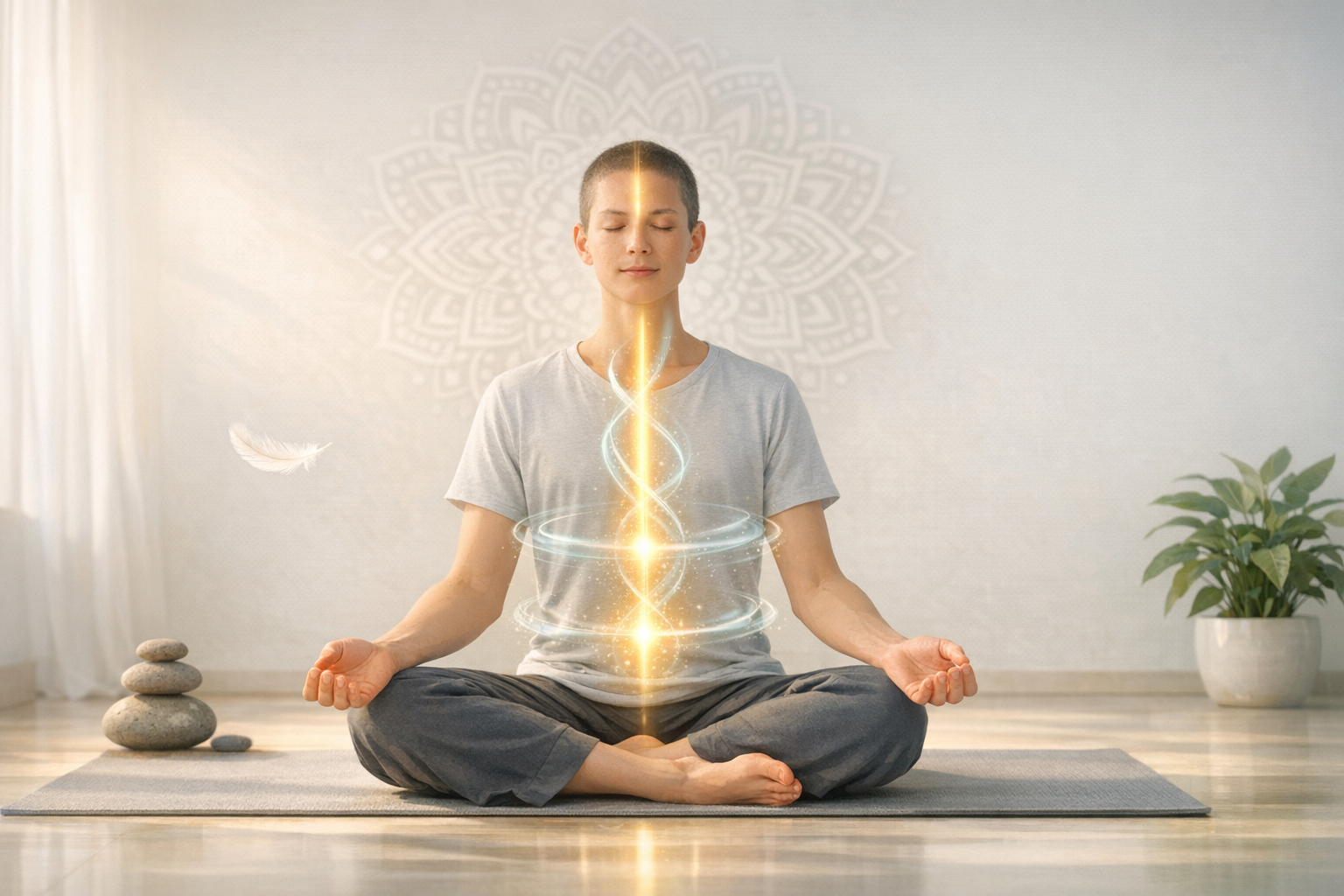
Laghava in yoga denotes a tangible sense of lightness and buoyancy in body and mind that emerges through disciplined practice, especially pranayama (yogic breathing), asana (posture), and dhyana (meditative absorption) under the guidance of a qualified teacher. Beyond a pleasant sensation, laghava functions as a reliable indicator of progress: breath becomes subtle, posture organizes itself with less muscular effort, and attention stabilizes with clarity. Practitioners frequently notice this shift as ease replacing strain, steadiness replacing restlessness, and a quiet energy replacing fatigue.
Etymologically, laghava derives from laghu (light) and stands in constructive dialogue with guru (heavy), terms that appear across classical Indian knowledge systems. In Ayurveda, laghu is one of the fundamental guna (qualities) associated with digestibility and metabolic ease; in yogic literature, related notions of lightness arise as a marker of increasing sattva (lucidity) and refined pranic flow. Classical descriptions also distinguish everyday lightness (laghava) from extraordinary capacities such as laghima (the legendary “lightness” among the aṣṭa-siddhi), situating the former as a natural outcome of steady sadhana rather than an occult feat.
Texts in the broader yoga tradition describe lightness as a byproduct of balancing the body’s energies and clarifying attention. Patanjali, for instance, links mastery over the relationship of the body to space with lightness comparable to cotton, illustrating how refined awareness reduces experiential “weight.” While the image is poetic, its practical meaning aligns with modern observations: when breath, posture, and attention harmonize, perceived effort drops dramatically even during demanding activity.
The ethical foundations of yoga (yama and niyama) are not optional for cultivating laghava; they are causal. Ahimsa reduces inner conflict and muscular guarding, satya aligns intention and action, aparigraha lessens grasping and the heaviness of excess, and sauca and santosa foster clarity and contentment. Without this ethical ballast, the chase for lightness can become a subtle form of strain; with it, lightness matures into stability, discernment, and quiet confidence.
Yogic anatomy clarifies the mechanism. Laghava correlates with unobstructed pranic flow along the nadis, especially the sushumna nadi when prana and apana vayu equilibrate through precise practice. Udana vayu, associated with upward movement and articulation, contributes strongly to the subjective sense of lift; samana vayu organizes digestive fire (agni), freeing energy previously consumed by inefficiency. Over time, energy economy improves: less effort accomplishes more.
Contemporary physiology can describe parallel markers of lightness. As breathing transitions from shallow, rapid patterns to slow, diaphragmatic waves, autonomic balance shifts toward parasympathetic dominance. Heart rate variability often increases, resting respiratory rate may decrease, and chemoreflex sensitivity normalizes with appropriate breath ratios. Practitioners commonly report calmer alertness, steadier mood, and reduced sensations of heaviness in limbs and trunkcorrelates of improved baroreflex function, better CO₂ tolerance, and efficient oxygen utilization.
Asana establishes the structural basis for laghava. Alignment that distributes load through grounding points (feet, shins, pelvis, hands) and decompresses the axial skeleton allows connective tissues to transition from defensive bracing to elastic support. In standing postures and balances, this becomes palpable when the rib cage “floats” over a steady pelvis, the jaw and tongue soften, and breath lengthens without effort. The signature of progress is ease that coexists with precision, not slackness.
Bandha and mudra refine that ease into uplift. Gentle moola bandha stabilizes the pelvic floor, uddiyana bandha (applied appropriately and progressively) enhances upward pranic movement, and jalandhara bandha organizes cervical alignment, breath retention, and vagal modulation. These subtleties must be learned incrementally; when introduced too early or forcefully, they can produce agitation rather than lightness. When integrated with sensitivity, they reliably evoke laghava across postures and breathwork.
Pranayama protocols that foster laghava prioritize smoothness over intensity. Nadi Shodhana with even ratios (for example, 1:1) evolves toward mild lengthening (such as 1:1.5 or 1:2) only after months of stability. Ujjayi supports paced exhalation and attentional steadiness; Bhramari reduces cortical rumination and softens facial tension. Kumbhaka (retention) is introduced conservatively and under guidance; correctly placed, it clarifies mental space and lightens the felt weight of the body.
Kriyas and cleansing practices (shatkarmas) can amplify lightness when individualized. Kapalabhati, done skillfully, sharpens exhalatory tone and brightness; Nauli organizes abdominal viscera and samana vayu. However, these are not universally indicated; constitutional tendencies, especially vata sensitivity, must be considered. Sustainable laghava comes from skillful steadiness, not aggressive purification.
Ayurveda adds actionable context. A laghu (light, sattvic) dietfresh, seasonal, minimally processed, and attuned to agnireduces postprandial heaviness and supports pranayama. Individuals with pronounced vata may require more snigdha (unctuous) and warming foods to avoid an overstimulated “floating” sensation. Hydration, circadian regularity, and adequate sleep consolidate the gains of practice into everyday resilience.
Markers of progress unfold in stages. Early signs include decreased stiffness on waking, steadier nasal airflow, reduced sighing and yawning, and greater ease maintaining an upright seat. Intermediate signs feature a longer, quieter exhale, spontaneous pauses after exhale without strain, buoyant gait, and less reactivity to minor stressors. Advanced signs include consistent subtle breath in meditation, minimal postural effort over time, and an abiding clarity that makes heavy moods rarer and briefer. The tradition consistently cautions against literalizing metaphors of levitation; sustainable lightness is functional, ethical, and testable in daily life.
Observation and journaling prevent self-deception. Practical measures include tracking resting respiratory rate, perceived exertion in familiar asanas, heart rate variability (if available), sleep latency, and digestive comfort. Subjective notessuch as the moment breath first becomes subtle in practice or how quickly calm returns after stressmap progress more meaningfully than chasing new techniques.
Dharmic traditions converge around this experience of lightness. Buddhism articulates lahutā as kāya-lahutā (lightness of the body) and citta-lahutā (lightness of mind) within the Abhidhamma, describing precisely the unburdened pliancy yogic practitioners report. Jain yoga emphasizes ahara-śuddhi, vrata (ethical vows), and samayik to purify attention and reduce grasping, which naturally diminishes the heaviness of reactivity. Sikh tradition nurtures a parallel lightness through simran and the cultivation of sehajequipoise that dissolves the weight of anxiety and compulsion. Across these pathways, disciplined breath, ethics, and contemplative steadiness converge on a shared, unifying experience of laghava.
This unity underscores an essential pedagogical insight: lightness matures as craving lightness subsides. When practice is anchored in compassion, truthfulness, and restraint, bodily buoyancy and mental clarity arrive as side effects rather than goals. In all four dharmic streamsHinduism, Buddhism, Jainism, and Sikhismthe lightness that matters most is the easing of suffering and the capacity to meet life with lucid kindness.
Cautions keep the experience wholesome. Excessive fast breathing or long retentions can trigger dizziness or anxiety, especially in those with high vata, cardiovascular concerns, or panic tendencies. Signs of imbalance include persistent dryness, insomnia, jitteriness, or irritability masquerading as “energy.” The remedy is to simplify: favor slower practice, grounding asanas (such as forward bends and gentle twists), nourishing meals, and supportive rest until steadiness returns.
A sample progression for cultivating laghava might include 8–12 minutes of gentle spinal mobilization, a light Surya Namaskar sequence tailored to breath, 12–18 minutes of standing and balancing postures emphasizing relaxed exhalation, seated forward bends and a mild backbend, a supported inversion such as Viparita Karani, followed by Nadi Shodhana with even ratio and a brief Bhramari. Ten to fifteen minutes of seated meditation consolidates the shift; Savasana seals the practice with integrative quiet.
Daily micro-practices reinforce lightness outside the mat. Two to three minutes of slow nasal breathing before conversations, relaxed exhalation while walking, softening the tongue and jaw when typing, and pausing to feel the feet while standing gradually replace the body’s habitual heaviness with responsive ease. Over weeks, this reframes stress not as a weight to carry but as information to process with composure.
In sum, laghava is both a sign and a support of yogic maturation. It rests on ethics, skillful breath, intelligent alignment, and wise recovery; it resonates across dharmic lineages as a shared experiential language; and it translates into concrete benefitsefficient movement, calmer affect, and clearer thought. Approached patiently and inclusively, the science of lightness becomes a common ground for unity, deepening respect and dialogue among the diverse traditions that cherish the transformative potential of disciplined, compassionate practice.
Inspired by this post on Hindu Blog.
