
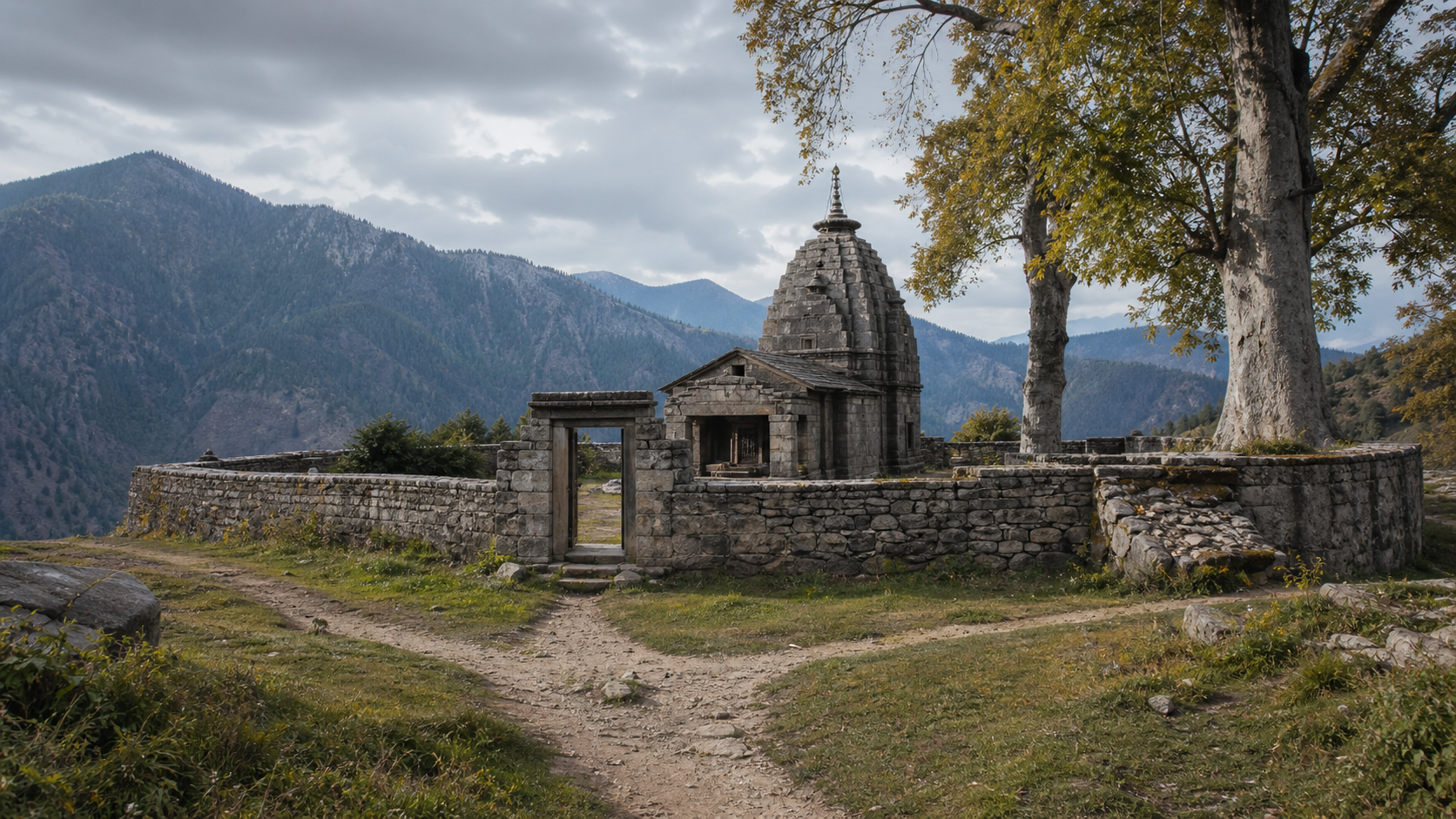
If you saw that Jammu and Kashmir rejected a Hindu temple-protection measure and concluded that its temples now stand outside the law, make one distinction first: the absence of a dedicated temple statute is not the absence of legal protection. It means that a threatened shrine must currently navigate several laws, departments and kinds of evidence instead of entering through one clear door.
For you, the practical question is therefore not simply whether another bill should be introduced. It is whether a temple committee, displaced custodian or concerned citizen can identify a sacred property, prove what belongs to it, report a threat and obtain a reasoned decision before damage or encroachment becomes irreversible. That is the standard by which any claim of adequate protection should be judged.
The rejection did not create a legal vacuum

The Jammu and Kashmir Assembly rejected the proposed Hindu Temple Protection Bill on March 31, 2026. Deputy Chief Minister Surinder Choudhary defended that decision on the ground that existing laws already protect religious places. That position is partly correct: several legal routes are available. But each route addresses a different problem, and none by itself supplies a complete inventory-and-enforcement system for ordinary temples and their attached lands.
| Protection layer | What it can address | What it does not solve by itself |
|---|---|---|
| Articles 25 and 26 of the Constitution | Freedom of religion and a denomination’s right to manage religious affairs, subject to public order, morality and health | Missing title documents, an uncertain boundary or a slow local proceeding |
| Criminal-law protections | Injury or defilement of a place of worship, deliberate religious provocation and promotion of communal enmity | Ownership, endowment administration and ordinary boundary disputes |
| Places of Worship (Special Provisions) Act, 1991 | Preservation of the religious character of a place of worship as it existed on August 15, 1947 | Routine maintenance, conservation, title reconstruction or removal of every encroachment |
| Ancient Monuments and Archaeological Sites and Remains Act, 1958, and adapted local heritage regimes | Conservation controls for monuments and sites that fall within the relevant protected categories | Shrines that have not been formally brought within those heritage systems |
| Jammu and Kashmir Migrant Immovable Property Act, 1997 | Protection and restoration of migrant immovable property, including a relevant case where title or custodianship connects displaced persons or their trusts to the property | A universal management code for every temple |
| Revenue, municipal and public-premises processes | Land records, unauthorized occupation, encroachment and removal proceedings through due process | A successful result when the parcel, owner or chain of title is poorly documented |
| Shrine-specific statutes | Specialized governance for major institutions such as Shri Mata Vaishno Devi and Shri Amarnathji | Comprehensive coverage for smaller, local or unattended temples |
The Supreme Court’s 1954 Shirur Mutt judgment supplies an important constitutional boundary. The State may regulate secular aspects of a religious institution, including aspects of property administration, but it may not use that authority to extinguish protected religious practice. A sound sacred-space regime should therefore improve records, conservation and lawful enforcement while leaving rituals and genuinely religious affairs with the appropriate religious body.
Two sweeping claims should be rejected. It is inaccurate to say that Jammu and Kashmir has no law capable of protecting temples. It is equally unconvincing to say that the mere existence of several laws proves that protection is effective. A remedy scattered across multiple statutes can be legally real and practically inaccessible at the same time.
The weak point is the path from a sacred site to a remedy
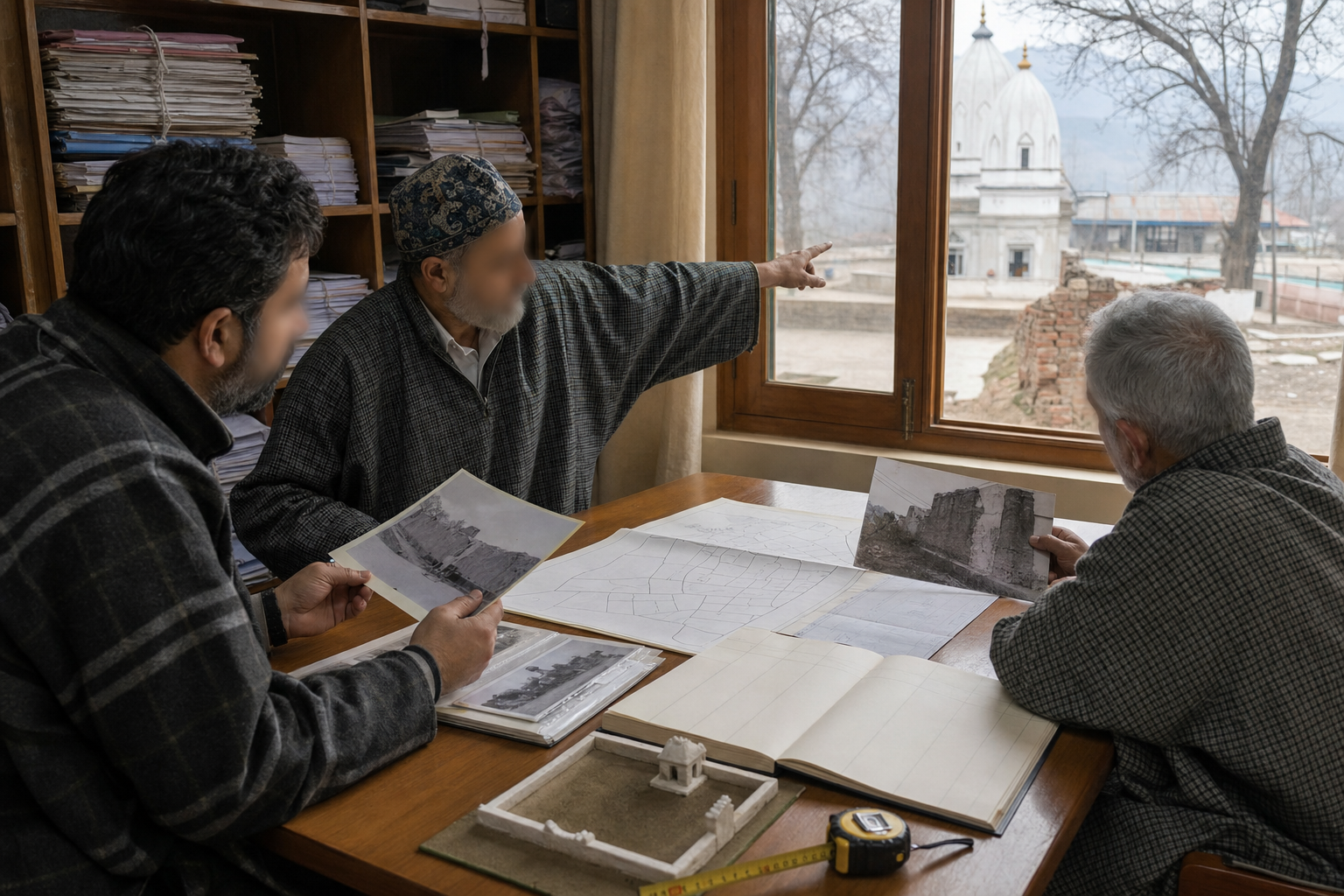
A temple is a living sacred presence, not merely a parcel number. Yet when a committee seeks administrative relief, the State must be able to connect that presence to a defined site, an attached property schedule, a lawful custodian and a particular violation. If any link is missing, the dispute can stall before an authority ever reaches its merits.
The upheaval and displacement of the 1990s made that chain especially fragile. Custodians left, institutional memory was dispersed, buildings deteriorated and revenue records did not always travel with the people responsible for them. Later disputes over land regularization, including those associated with the annulled Roshni Act, intensified public concern about land around religious places. Estimates of affected temples vary widely, so advocates should not make a disputed aggregate number carry an argument that can be established property by property.
A documented threat to one shrine deserves action even if nobody can yet prove a territory-wide total. The stronger approach is to publish a verifiable register that distinguishes active temples, abandoned or damaged sites, protected monuments, attached endowment land, disputed parcels and confirmed encroachments. Those categories must not be collapsed. A damaged structure may need conservation; an occupied parcel may require a title proceeding; deliberate desecration may require an immediate police response.
You can often recognize an implementation failure through one of five signs:
- The shrine has a familiar name but no stable property identifier linking it to the revenue record.
- The sanctum is identifiable, while agricultural land, shops, water sources, pathways or other appurtenant property are missing from the same file.
- Old grants, trust deeds, revenue entries and present possession tell different stories, but no authority has been assigned to reconcile them.
- Police, revenue, municipal and archaeology officials each treat the matter as another department’s responsibility.
- An order is eventually issued, but there is no transparent record of inspection, compliance, appeal or conservation work afterward.
This is why digitization cannot mean scanning a few pages and declaring the problem solved. A usable record must connect the legal documents to a mapped boundary, the mapped boundary to current physical use, and current use to the body authorized to manage the site. Changes should leave an auditable history rather than silently overwriting earlier entries.
Judge any new law by its machinery, not its label

The political argument is often framed as a choice between a Hindu-specific act and reliance on religion-neutral laws. That choice is too narrow. A dedicated Hindu temple law could still fail if it creates a board without reliable records, deadlines or appeal rights. A broader sacred-heritage law could work, but only if it names the traditions and properties it covers, recognizes unequal historical circumstances and produces enforceable duties rather than ceremonial promises.
For a Dharma-minded citizen, inclusion should not require erasure. Hindu temples made vulnerable by displacement need explicit attention. Buddhist monasteries and stupas, Jain basadis and Sikh gurdwaras also belong within a principled commitment to Jammu and Kashmir’s sacred geography. Equal legal protection should mean equal seriousness, not a refusal to document where the greatest losses or administrative failures occurred.
Before supporting a future bill, policy or administrative order, check whether it contains these operational elements:
<!– wp:list {