
-
Beyond Starships: Vedic and Dharmic Pathways for Safe, Effortless Journeys to Other Worlds
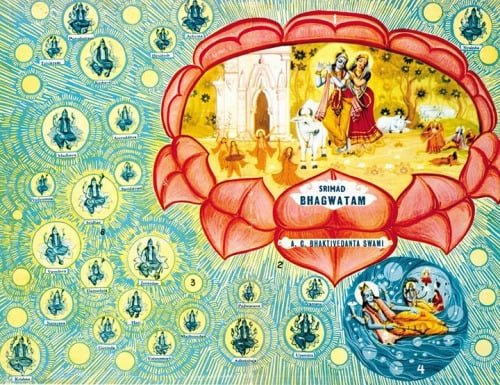
Modern fascination with interplanetary travel reflects a timeless philosophical impulse to understand creation and its inhabitants. Vedic literature, supported by Srimad-Bhagavatam, Sri Isopanisad, and the Bhagavad-gita, offers a complementary research program to empirical science via testimony and disciplined practice. Rather than relying on fragile material instruments, the Vedic model proposes bhakti-yoga as a safe, replicable…
-
Atharva Veda Unveiled: The Fourth Veda That Bridges Ritual, Healing, and Daily Life

The Atharva Veda distinguishes itself from the Rig, Sama, and Yajur Vedas by extending Vedic wisdom into healing, household life, and public welfare while sustaining rigorous ritual and philosophical depth. It preserves two major recensions (Śaunaka and Paippalāda), the Gopatha Brāhmaṇa, and Atharvanic Upanishads like Muṇḍaka, Māṇḍūkya, and Praśna. Signature hymnssuch as the Bhūmi Sūkta,…
-
Why All Rivers of Bhakti Flow to Gokula: Insights on Brihad Bhagavatamrita 1.2.37–49

This study distills HH Niranjana Swami’s 2026 Lithuania exposition of Brihad Bhagavatamrita 1.2.37–49, showing how praise of Brahma, Indra, and other luminaries functions as a pedagogic ladder guiding readers toward the intimate devotion of Gokula and Goloka. It defines Gokula and Goloka with precision, contrasts aisvarya (majesty) and madhurya (sweetness), and explains why the text…
-
Upashruti: The Luminous Goddess of Night, Oracular Wisdom, and Vedic Revelation

Upashruti is presented as a nuanced personification of sacred listening the contemplative capacity to ‘hear’ wisdom in the stillness of night. Grounded in Vedic philosophy, Puranas, and the logic of śabda-pramāṇa, the essay situates her alongside Rātri, Vāk, and Yoganidrā. It outlines practical, night-centered sādhanā (mauna, japa, nādānusandhāna) and explains how disciplined listening refines ethical…
-
Is Space Also Relative? Dharmic Cosmology and Modern Physics on Time, Place, and Perception

Vedic cosmology asserts that one human year equals a deva-day and that 4.32 billion years comprise a single day of Brahmā, presenting a layered vision of time that scales across realms. Read alongside Einstein’s relativitywhere time and distance depend on gravity, motion, and metricthis framework invites a parallel question: is space also relative? Dharmic traditions…
-
Upamana in Mimamsa Darshana: Unlocking How Comparison Becomes Valid Knowledge in Hindu Epistemology

Upamāna, or comparison, is treated in the Mimamsa Darsana as a disciplined source of valid knowledge that aligns testimony, perception, and relevant similarity. Rather than a loose metaphor, it is a technical pramāṇa with clear conditions: credible prior śabda, relevance of features, and the absence of defeaters. Classical debatesespecially with Nyāyaclarify whether comparison yields the…
-
8 Powerful Steps for Prayerful Reading of Srila Prabhupada’s Books for Deep Bhakti Insight

This article presents a practical, eight-step method for prayerful reading of Srila Prabhupada’s books that unites devotion with rigorous study. It explains how intention, a sattvic setting, and a brief invocation prime attention and humility. Slow, structured reading, classical hermeneutic tools, and light Sanskrit awareness deepen comprehension of Bhagavad Gita, Srimad Bhagavatam, and Chaitanya Charitamrita.…
-
Dhata the Aditya of Well‑Being: Origins, Mantra, Rituals, IconographyA Comprehensive Guide
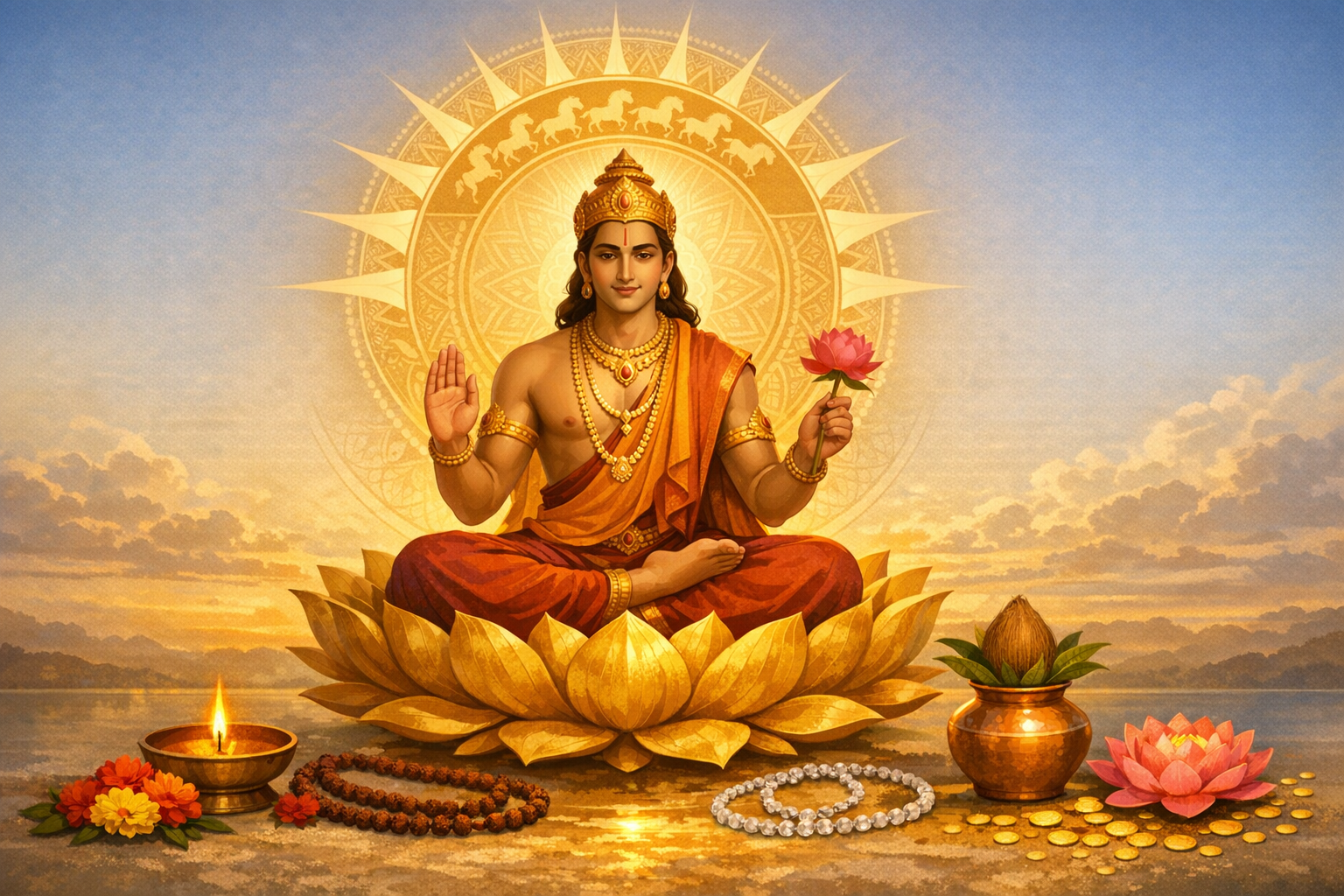
Dhata, one of the Dwadasha Adityas and son of Aditi and Kashyapa, is revered as an establisher of cosmic order and a benefactor of health, wealth, and peace. This comprehensive guide explains Dhata’s Vedic etymology, his place among the Adityas, and why traditions often worship him with Mata Lakshmi Devi for holistic well-being. It outlines…
-
Dvārakā’s Radiant Splendor (SB 10.90.18–20): Divine Opulence, Social Grace, and Harmony

Śrīmad-Bhāgavatam 10.90.18–20 evokes Dvārakā as a model dharmic city where divine presence, social grace, and ethical prosperity converge. The passage situates wealth as a theological outcome of virtue rather than a standalone aim, emphasizing refined leisure, communal safety, and aesthetic culture. Readers gain clarity on Vaishnava theology (aiśvarya versus mādhurya), classical aesthetics (rasa), and the…
-
When Kings Fail: Ramayana’s Timeless Blueprint for Rajadharma and Good Governance

This long-form analysis demonstrates how the Ramayana functions as a living manual of rajadharma, diagnosing the social symptoms of failed leadership and prescribing practical remedies. It explains the timeless concept of matsya-nyāya, the legal vacuum where the strong prey on the weak, and shows how Vibhishana’s counsel to Ravana outlines a ruler’s core duties in…
-
Srimad Bhagavatham Explained: A Definitive Guide to the 12 Cantos of Bhagavata Purana

Srimad Bhagavatham (Bhagavata Purana) distills the heart of bhakti through twelve cantos and 18,000 verses within a compelling narrative of Parikshit’s seven-day dialogue with Shuka. This long-form guide clarifies the structure of the text and highlights major narratives such as Dhruva, Prahlada, Ajamila, and Gajendra, culminating in the Krishna-lila of Canto 10. It outlines core…
-
When the Lord Becomes a Son: Kardama Muni and the Descent of Real Knowledge (SB 3.24.30)

Srimad Bhagavatam 3.24.30 captures Kardama Muni’s address to the Lord, who descends to fulfill a sacred promise and inaugurate the dissemination of real knowledge in the heart of family life. The episode anticipates Kapila’s theistic Sankhya, where analytical clarity and bhakti-yoga form a coherent path to liberation. By highlighting divine fidelity“to fulfill Your word”the verse…
-
Varuna in the Vedas: Majestic Sovereign of rta, Waters, and Nature’s Vital Powers

Varuna, among the oldest deities in the Rigveda, stands as sovereign of rta (cosmic order), guardian of the waters, and witness to truth. The Vedic hymns credit him with distributing nature’s vital powersstrength in horses, milk in cows, vitality in the heart, and even fire concealed within the watersexpressing a grand ecology of interdependence. His…
-
Indra and Varuna’s Celestial Rivalry: Vedic Kingship, Cosmic Law, and the Battle for Order

Indra and Varuna frame a profound Vedic conversation about power, law, and legitimacy. Indra’s thunderous decisiveness (kṣatra) complements Varuna’s guardianship of ṛta, revealing why force must be answerable to truth and why law must be capable of protection. Rigvedic hymns, especially RV 1.32 and RV 7.86–7.89, ground this dialectic, while Brāhmaṇa and Upaniṣadic texts transform…
-
Navagvas and Dāśagvas in Hinduism: Angiras Lineage, Vedic Timekeeping, Ritual Mastery

This study explains why Navagvas and Dāśagvas matter in Hinduism by situating them within the Angiras lineage and the Rigvedic ritual world. It clarifies how these names encode nine‑ and ten‑month attainments in year‑long sattras (Sattrayāga), while noting alternative scholarly views that treat them as Angirasa group designations. Readers gain a clear overview of Vedic…
-
In Memoriam: HG Ekanatha Prabhu ACBSPGuardian of the Bhaktivedanta Archives and Vedabase

HG Ekanatha Prabhu ACBSP of The Bhaktivedanta Archives passed away on Vijay Ekadasi in Sandy Ridge, North Carolina, following sudden heart failure. He is remembered for exemplary stewardship of Srila Prabhupada’s books, tapes, photographs, and the Bhaktivedanta Vedabase. His work exemplified archival best practiceshigh-fidelity audio digitization, careful image capture, rigorous metadata, and OAIS-aligned long-term preservation.…
-
Arthavada in Mimamsa: Unlocking the Purposeful Praise That Animates Vedic Ritual

Arthavada, the eulogistic and explanatory stratum of Vedic discourse in Mimamsa, explains why rites matter and how their value should be understood. It complements injunctions and prohibitions by providing praise, censure, and narrative that motivate precise action and steady restraint. Distinguishing Arthavada from mantra and namadheya clarifies the complete architecture of Vedic literature: what to…
-
Mahidhara of Kashi: The 16th‑Century Vedic Exegete Who Illuminated the Shukla Yajur Veda

Mahidhara, a seminal 16th-century scholar from Kashi (Varanasi), shaped the study of the Shukla Yajur Veda through his Vedadipa, a lucid commentary on the Madhyandina Samhita. The work blends textual precision with ritual context, making complex mantras intelligible to students, practitioners, and researchers. Readers benefit from a model of Vedic exegesis that transmits tradition without…
-
Mahanamni Explained: Sacred Sama Veda Sakvari Verses Shaping Ahina Rituals and Unity

The Mahanamni, a set of nine Sama Veda verses in Jaiminiya Samhita 2.7, begins with the words “vida maghavan” and is also known as the Sakvari verses. These chants hold enduring ritual significance, especially within the focused framework of Ahina sacrifices. Their careful phonetics and measured melodic patterns ensure that intention, meter, and meaning align…
-
Rishi Agastya–Lopamudra Kalyanam: Sacred Union at Pothigai Hills and Vedic Legacy

The Agastya–Lopamudra Kalyanam, revered in Hindu tradition and situated in the sacred Pothigai Hills, portrays a luminous union of tapas and vidya. It presents Agastya Maharshi as a pioneering sage and Ma Lopamudra as a Rigvedic voice and learned princess of Vidarbha, modeling the Vedic ideal of mutual respect and scholarly partnership. Their son Dridhasyu,…