
-
Historic Honour: Param Singh MBE Receives Freedom of the City of London, Inspiring Dharmic Unity
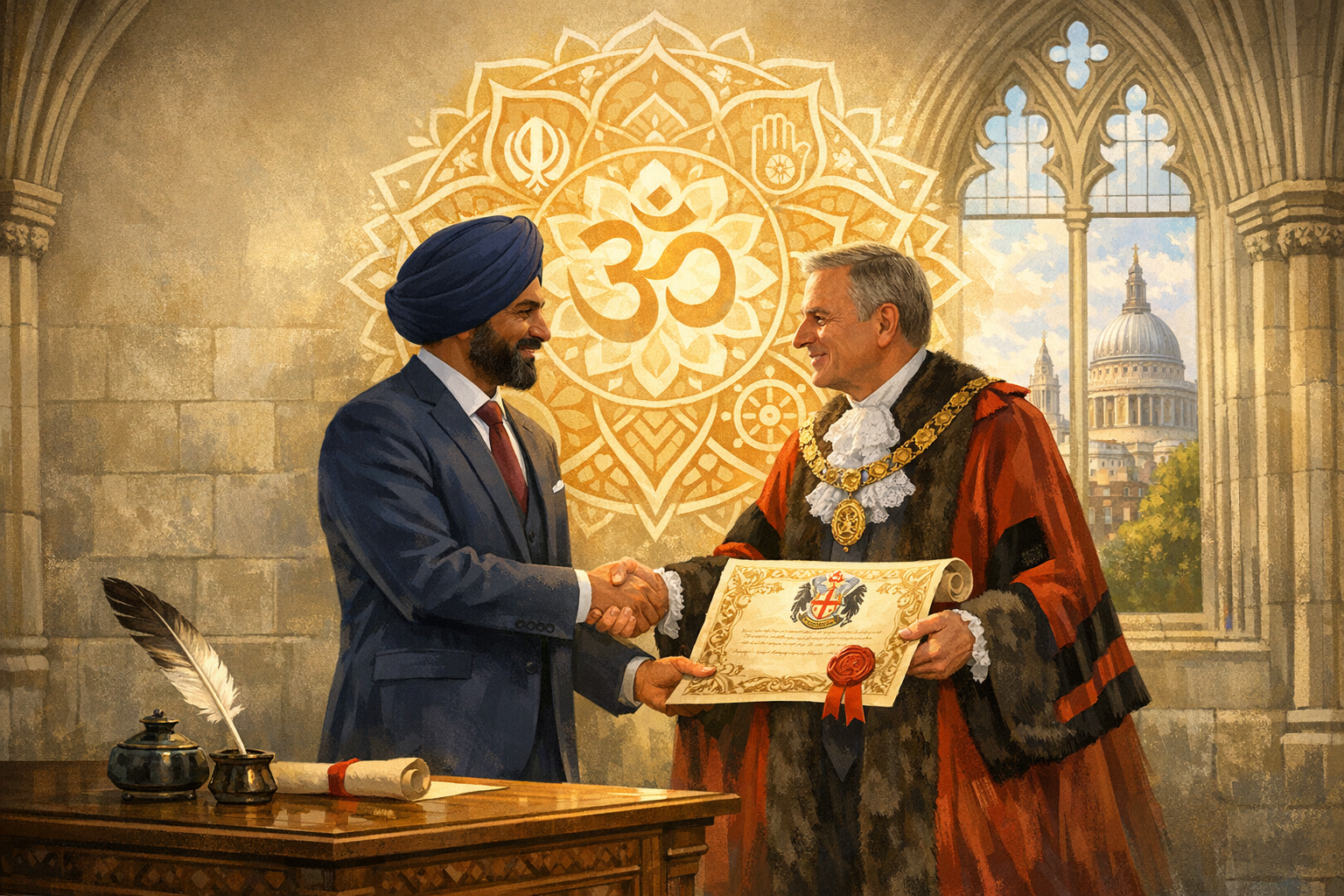
Param Singh MBE, founder of City Sikhs, has been awarded the Freedom of the City of London, a historic civic honour that recognizes sustained leadership in community cohesion, interfaith dialogue, and public service. The recognition highlights how Sikh values of seva and sarbat da bhala translate into inclusive civic action within London’s ancient institutions. It…
-
Own Your Dharma with Clarity and Courage: A Dharmic Antidote to Social Comparison

This comprehensive essay examines a core Dharmic counseldo not get lost in others’ idealsand explains why it is vital in an age of social comparison. Drawing from the Bhagavad Gita, Upanishads, Yoga Sutra, Buddhist teachings, Jain Anekantavada, and Sikh principles, it presents a practical, ethical, and context-sensitive framework for staying aligned with one’s svadharma. Readers…
-
Ishavasya Upanishad on Lobha: Renounce to Rejoice, Practice Aparigraha, Heal Society
The Ishavasya Upanishad opens with a concise yet sweeping ethic that links metaphysics to daily conduct: if all is pervaded by the sacred, then enjoyment must be tempered by renunciation and freedom from greed. This piece unpacks the opening mantra philologically and philosophically, clarifying how “tena tyaktena bhuñjīthā” can mean both to enjoy and to…
-
Growing Up With Shabad: The Transformative Science, Music, and Devotion Uniting Dharmic Paths

Growing up with Shabad forms attention, identity, and ethics through sacred sound anchored in Sikhism’s Shabad Guru. Musicological rigorraag, taal, and the interpretive role of rahausupports cognitive development, Gurmukhi literacy, and stable daily rhythms. Physiological pathways, including breath-synchronized prosody and vagal regulation, help reduce stress and build resilience. Comparative insights show deep kinship with Hindu…
-
Dr Pravin Togadia in Hajipur: A Powerful Call for Hanuman Chalisa Kendras to Unite Dharmic India
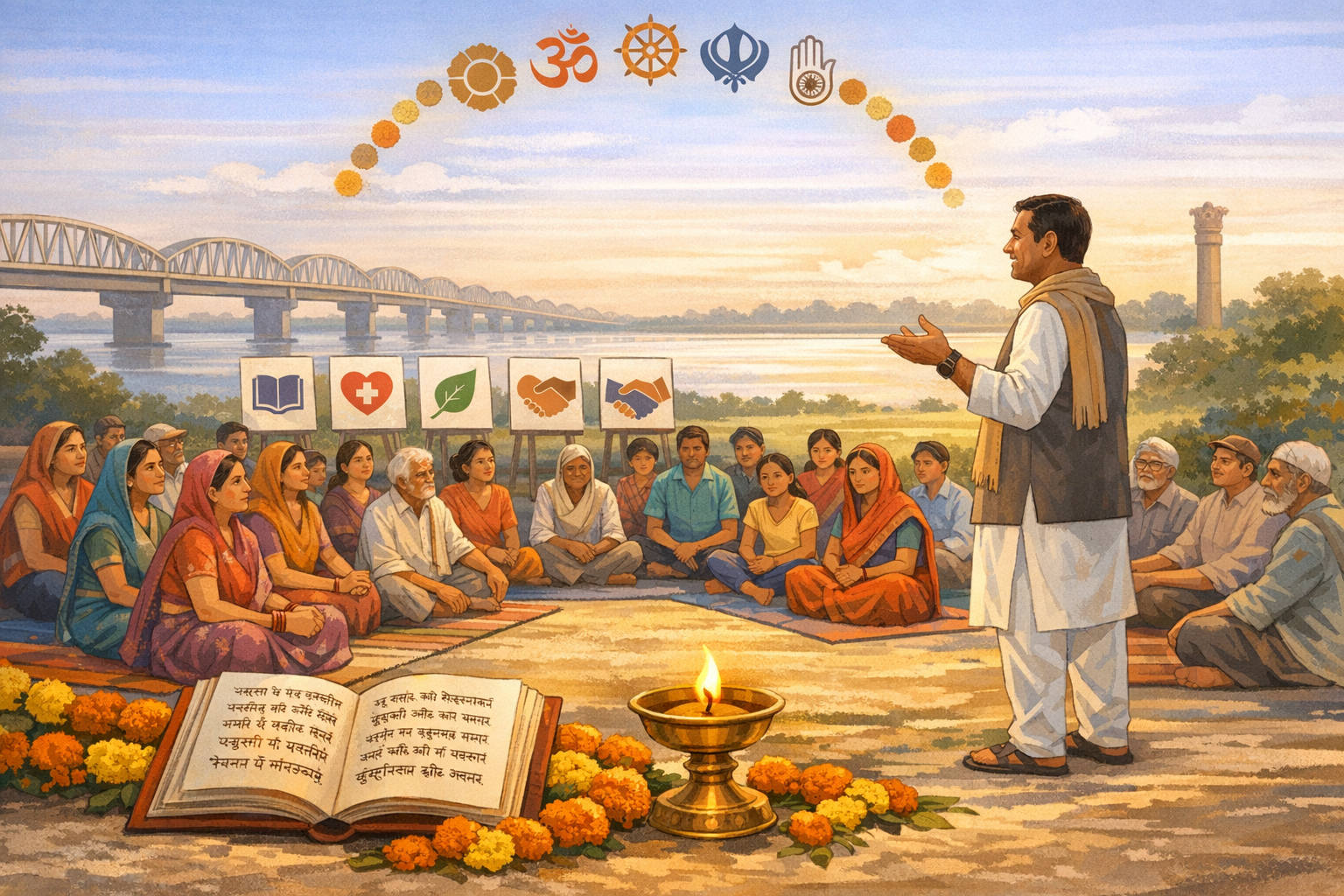
In Hajipur, Bihar, on March 11, 2026, AHP chief Dr Pravin Togadia called for ‘Hanuman Chalisa Kendra in Every Village’a simple, scalable framework to pair devotion with service. The proposed kendras center on sadhana (recitation), sangathan (local organization), and seva (civic action) to cultivate trust, resilience, and cultural continuity. Built on the Bhakti Tradition and…
-
Peterborough’s Bharat Hindu Samaj Temple Wins Early Court Relief: Due Process and Pluralism

Peterborough’s Bharat Hindu Samaj Temple has won early court relief against a proposed council disposal to a Muslim community group, pausing the sale while the Administrative Court examines whether legal and equality duties were met. Readers gain a clear map of the UK public-law framework governing disposals, including section 123 of the Local Government Act…
-
Hare Krishna in Ireland: Vedic Wisdom Transforming Lives and Nurturing Dharmic Unity

This academically grounded portrait of Hare Krishna practice in Ireland follows three devotees whose lives are reshaped by Vedic philosophy as taught in the Bhagavad-gita. It explains how Srila Prabhupada’s teachings address birth, old age, disease, and death in ways that are both doctrinally rigorous and practically actionable. The narrative shows how bhakti-yogajapa, kirtan, study,…
-
Unlocking Sacred Meaning in Hindu Philosophy: Vācya, Lakṣaṇā, and Vyañjanā Demystified

Language in Hindu philosophy operates through three layered modes of meaningvācya (literal), lakṣaṇā (indicated), and vyañjanā (suggested)that guide readers from clear denotation to transformative insight. This long-form, research-driven exploration clarifies each mode with classical examples, links them to Nyāya, Mīmāṁsā, Vedānta, and Alaṅkāra-śāstra, and highlights the contributions of Ānandavardhana, Abhinavagupta, and Bhartṛhari. It demonstrates how…
-
Unity in Diversity: Harnessing Dharmic Pluralism for Deeper Spiritual Harmony and Growth
This analysis presents Unity in Diversity as a disciplined dharmic pluralism that elevates both personal practice and community life. Anchored in Srila Prabhupada’s insight that spiritual variety leads to agreement, it distinguishes unity from uniformity and diversity from fragmentation. It clarifies acintya-bheda-abheda and Ishta in Hinduism, integrating Swami Vivekananda’s views to show how devotion can…
-
ISKCON GBC approves Vaisnavi Diksa Guru framework: historic, unifying step for inclusive bhakti

At the GBC AGM 2026, ISKCON’s Governing Body Commission approved a GBC – ISKCON Bureau (IB) Committee proposal on Vaisnavi Diksa Guru (VDG), marking a significant step in clarifying how qualified Vaisnavis can serve as initiating spiritual masters. The decision emphasizes guru-tattva principlesrealized knowledge, strict sadhana, and spotless conductover incidental characteristics such as gender. It…
-
Deepak Chopra in the Epstein Files? What the Records Showand How Dharmic Unity Responds
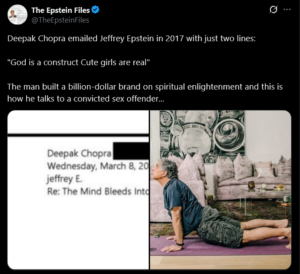
Headlines claim Deepak Chopra appears in the “Epstein files,” a term that refers to unsealed civil-court materials including contact lists, calendars, and emails. Inclusion in such documents does not, on its own, prove wrongdoing, and context is essential. Screenshots circulating online attribute controversial email lines to Chopra, while his public statement condemns abuse, denies criminal…
-
Beyond Names and Forms: Embracing the Infinite Nature of God in Dharmic Wisdom

Hinduism teaches that the divine is infinite and cannot be confined to one form or name, as expressed in the Upanishadic dictum “Ekam Sat Vipra Bahudha Vadanti.” This perspective affirms religious pluralism through Ishta, allowing varied yet valid approaches to the sacred. Related dharmic traditions reinforce this vision: Jainism’s Anekantavada, Buddhism’s skillful means, and Sikhism’s…
-
From Many Forms to One Reality: Unifying Dharmic Paths to Universal Divinity

This reflection reframes “from many gods to one” as a unifying dharmic philosophy rather than a call for uniformity. It explains how Hindu Ishta, Buddhist Dharmakaya, Jain Anekantavada, and Sikh Ik Onkar converge on one universal reality through diverse practices. Readers gain a clear, academic framework for understanding religious pluralism and unity in spiritual diversity.…
-
Delhi Conference Rallies 25+ Groups for Dharmic Unity and Voluntary ‘Ghar Wapsi’ Outreach
A New Delhi resolution on February 10, 2026 convened over twenty-five organizations to coordinate a voluntary ‘Ghar Wapsi’ outreach framed as a dharmic unity and cultural renewal effort. The initiative emphasizes informed choice, constitutional religious freedom, and respect for pluralism across Hinduism, Buddhism, Jainism, and Sikhism. Leaders including Upananda Brahmachari, Dr Charudatta Pingale, Rahul Dewan,…
-
Transforming Shame into Pride: Guru Ravidas and a Unified Dharmic Identity in America
This academic reflection traces a Hindu American’s journey from cultural hesitation to confidence through the teachings of Guru Ravidas Ji. It highlights how inclusive Sanatana Dharma and the Bhakti Tradition foster inquiry over rote ritual, anchoring devotion in understanding. By emphasizing Oneness and dignity beyond social labels, the narrative affirms Religious Pluralism and unity across…
-
From Doubt to Clarity in Krishna Consciousness: Navigating Vedic Proofs with Confidence

Seeking certainty in matters of truth is natural, especially within Krishna Consciousness. Vedic philosophy organizes valid knowing into three pramanaspratyaksa, anumana, and sabdaso doubt can mature into clarity. The Brahma-Madhva-Gaudiya Sampradaya emphasizes sabda, operationalized through guru, sastra, sadhu, while still valuing perception and reason. This balanced approach aligns with broader dharmic traditions: Buddhism’s experiential insight,…
-
A Path to Truthful Living: A Transformative Review on Satya, Dharma, and Dharmic Unity
A Path to Truthful Living offers a rigorous yet accessible guide to satya as a daily practice, linking truthful speech to ahimsa and disciplined self-mastery. Readers gain a comparative understanding of Hindu, Buddhist, Jain, and Sikh perspectives, with an emphasis on unity in spiritual diversity and religious pluralism. Practical methodsmindfulness, meditation, samayik, simran, and reflective…
-
Atikaya and Yuyutsu: Dharma Beyond Birth in Ramayana–Mahabharata | A Compassionate Comparison
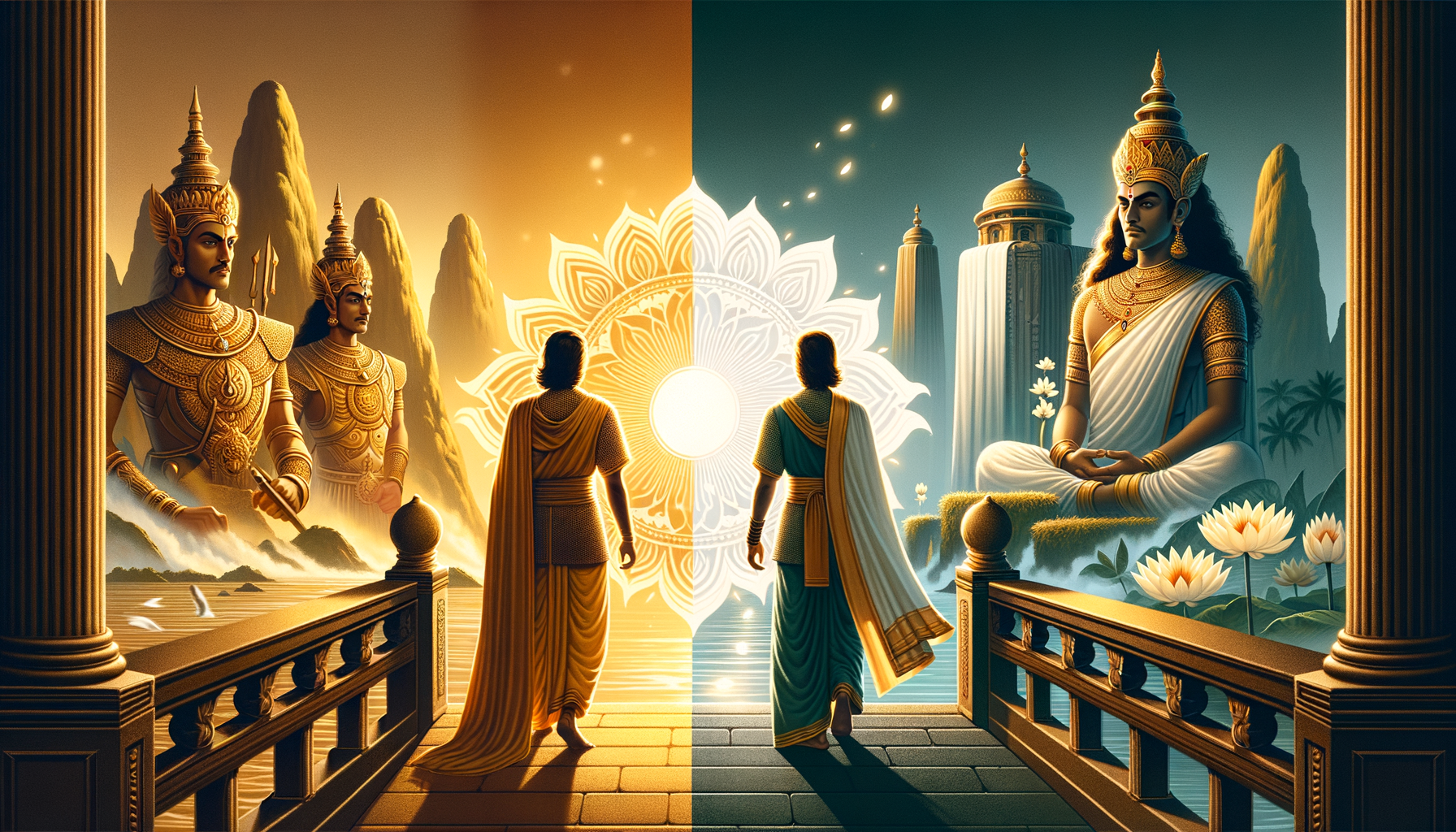
This essay compares Atikaya of the Ramayana and Yuyutsu of the Mahabharata to show how moral choice, not birth, defines character in the Hindu epics. It explains Atikaya’s courageous yet misplaced loyalty to Ravana and Yuyutsu’s principled decision to side with the Pandavas. The analysis highlights dharma versus adharma as a practical, action-based ethic rather…
-
Haviryajna Unveiled: Vedic Sacrifices that Harmonize Cosmos, Ethics, and Unity
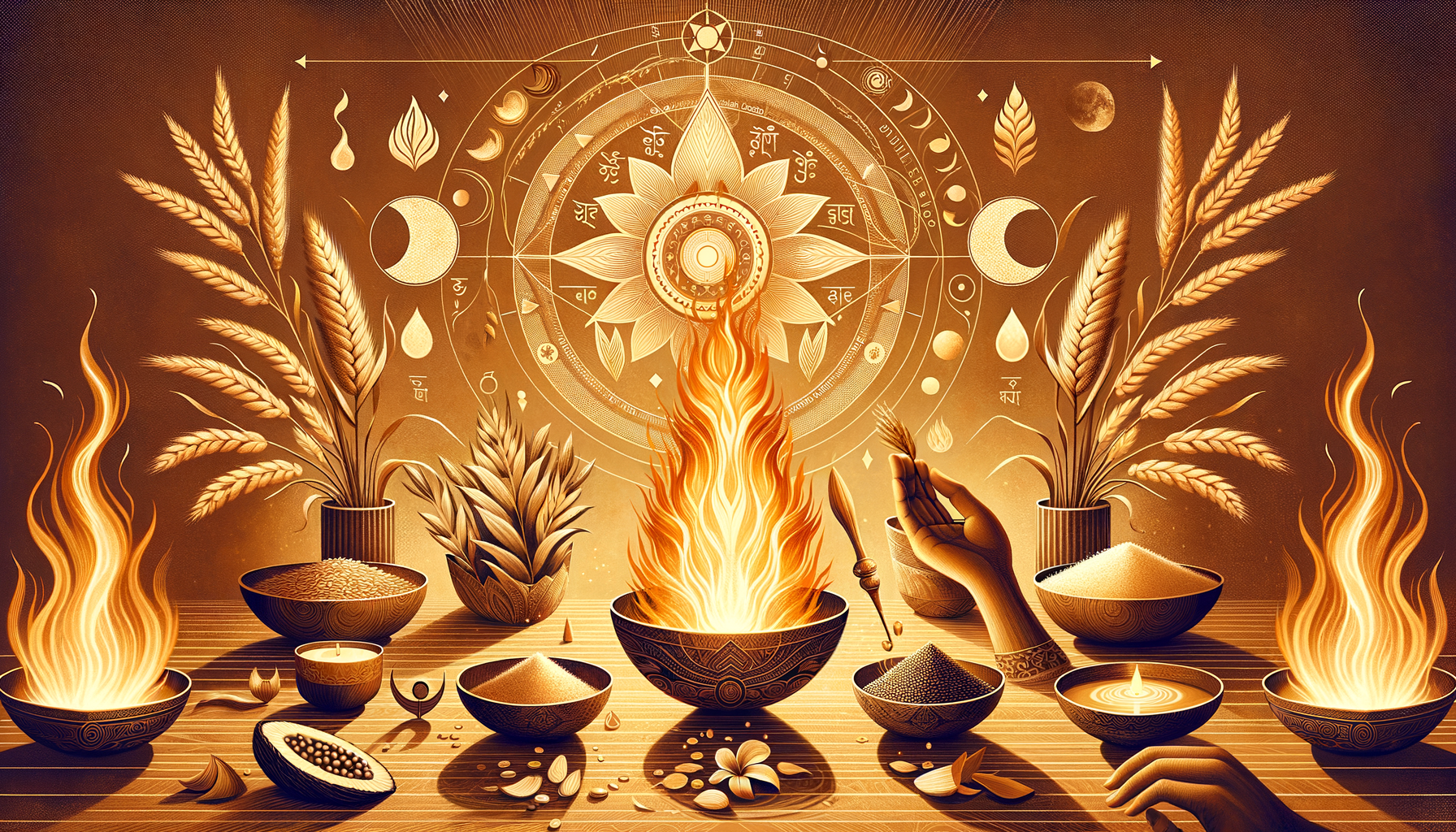
Haviryajna represents a core class of Vedic sacrifices using havismeasured offerings of grains and gheealigned with cosmic order. The threefold classification of Pakayajnas, Haviryajnas, and Soma Yajnas clarifies how Vedic ritual scales from household devotion to communal and cosmic responsibility. Rites such as Agnihotra, Darśa–Pūrṇamāsa, Cāturmāsya, and Āgrayaṇa illustrate the Haviryajna focus on sacred time…
-
Falgun Purnima 2026 (Holika Purnima): March 3 Date, Holika Dahan, Rituals, and Meaning

Falgun Purnima 2026, also called Holika Purnima, falls on March 3 and is dedicated to Lord Krishna and Goddess Lakshmi while honoring the wider Phalguna month’s reverence for Shiva and Parvati. The evening bonfire of Holika Dahan symbolizes the triumph of dharma, with Holi (Rangotsav) celebrated on March 4. Observances include snana, vrata, Krishna Puja,…