-
Canada’s Hard Truth on Air India 182: Justice, Memory, and Khalistani Extremism

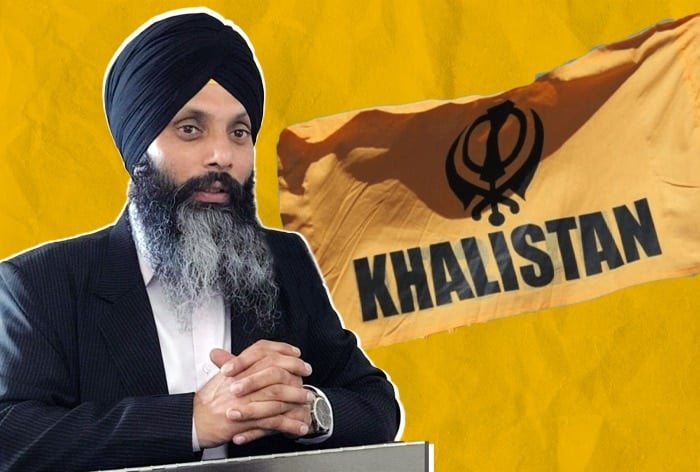
Air India Flight 182 remains the deadliest terrorist attack in Canadian history and a defining test of Canada’s counterterrorism memory. The recent acknowledgment naming Canada-based Khalistani extremists as responsible for the Kanishka bombing is significant because it confirms what India had long argued: the massacre was not an abstract aviation disaster but a terrorist conspiracy…
-
Bharat’s Strategic Reset: Why De-Americanising Must Not Mean Trusting China

The debate over de-Americanising Indian statecraft must be treated with historical depth rather than emotional reaction. Bharat was never fully Americanised, as its record of non-alignment, the 1971 Indo-Soviet Treaty, and repeated resistance to external pressure demonstrate. At the same time, disappointment with Washington should not lead India to romanticise China or ignore the realities…
-
Inside the NIA-ATS Ram Mandir Plot Case: Serious Security Lessons from Saharanpur Arrest

The arrest of Mohammad Sohail from Karnataka’s Davanagere region has raised serious questions about alleged threats to the Ram Mandir in Ayodhya and the wider challenge of counterterrorism in India. The case, reported by IANS on June 25, 2026, involves a joint NIA-ATS operation and remains under active investigation. Investigators are reportedly examining digital devices,…
-
NASM-SR Salvo Test: Powerful Boost to Bharat’s Indigenous Naval Strike Edge

The NASM-SR salvo test marks a major advance in Bharat’s indigenous naval strike capability. By launching two Naval Anti-Ship Missile Short Range weapons in quick succession from a helicopter platform, DRDO and the Indian Navy demonstrated a more realistic and tactically demanding combat capability. The test matters because salvo firing can complicate enemy ship defences…
-
RFID, QR IDs and Resolve: Inside the High-Security Amarnath Yatra 2026

Shri Amarnath Ji Yatra 2026 is scheduled from 3 July to 28 August, with one of the most extensive security arrangements planned for the pilgrimage in recent years. The security grid combines RFID tracking for registered pilgrims, QR-code-based identity cards for service providers, CCTV surveillance, watch towers, mock drills, and strict traffic regulation. The Shrine…
-
Bharat’s Drone-Age Army: Powerful Lessons in Self-Reliant Future Warfare

Bharat’s Indian Army is entering a decisive phase of military modernisation shaped by drones, artificial intelligence, electronic warfare, cyber operations, and precision fires. General Upendra Dwivedi’s tenure is significant because it accelerated the move from manpower-heavy structures toward a more technology-enabled and future-ready force. The rapid expansion of drone and counter-drone capabilities reflects hard lessons…
-
Kerala Study Camp Poster Raises Urgent Questions on Islamist Ideology and Youth Spaces

A Kerala study camp poster reportedly featuring Hassan al-Banna, Sayyid Qutb, and Ahmed Yassin raises serious questions about youth education, Islamist ideology, and democratic accountability. The issue is not whether controversial figures may be studied, but whether they are being critically examined or presented as role models. Al-Banna shaped the Muslim Brotherhood, Qutb influenced revolutionary…
-
Bharat’s Urgent Sovereignty Test: AI, Starlink, and Resilient National Power

Bharat’s sovereignty challenge in the age of AI and Starlink is not limited to ownership of technology. It is about whether critical systems can continue to function during disruption, coercion, cyberattack, electronic warfare, or denial of access. The Ukraine conflict shows how commercial satellite networks can become decisive military infrastructure and also strategic vulnerabilities. Artificial…
-
Dhurandhar as Counterpropaganda: Bollywood, Pakistan and India’s Security Debate

This essay examines Dhurandhar as a major intervention in Bollywood’s treatment of Pakistan, terrorism, national security, and secularism. It argues that the film’s controversy arises because it challenges older cinematic habits that softened Pakistan’s strategic hostility while demanding Indian self-blame. The analysis explains how the film uses geopolitical memory, archetypal characters, and public frustration to…
-
Canada’s Air India 182 Admission: A Powerful Reckoning with Extremism and Memory

Canada’s acknowledgement of Canada-based Khalistani extremist involvement in the Air India Flight 182 bombing has renewed attention on the 1985 Kanishka tragedy. The bombing killed all 329 people aboard and remains Canada’s deadliest terrorist attack. This analysis explains why the CSIS-linked framing matters for public memory, India-Canada relations, and counterterrorism policy. It separates Khalistani extremism…
-
Vengurla Sakal Hindu Sammelan: Powerful Call for Unity, Dharma and Nation

The Sakal Hindu Sammelan in Vengurla highlighted Hindu unity, patriotism, Dharma, cultural preservation, and social responsibility. The gathering called for an organised Hindu society capable of protecting heritage while contributing to national security and civic stability. Its message is best understood through a constructive Dharmic lens that values discipline, service, knowledge, and harmony. The event…
-
Delhi PFI Terror Case Erupts: NIA Charges, and the ‘Hindu Rashtra’ vs ‘Islamic State’ Clash

A Delhi court at Patiala House has ordered the framing of charges in a high-profile NIA case against senior PFI leaders, advancing the matter into full trial. The hearing featured a provocative defense claim“If RSS can call for a ‘Hindu Rashtra’ in Bharat, PFI can aspire to an ‘Islamic State’ in India”which spotlights the legal…
-
Delhi Police foil alleged Ghazwa-e-Hind plot: four arrested; recce, sleeper cells, financing probed

Delhi Police Special Cell has arrested four individuals for an alleged Ghazwa-e-Hind-inspired plot, with early leads pointing to reconnaissance near the Red Fort and India Gate, as well as possible sleeper cells and terror-financing channels. The analysis explains how recce, digital forensics, and layered intelligence (HUMINT, SIGINT, OSINT) inform modern counterterrorism without compromising civil liberties.…
-
Inside the Nashik TCS allegations: Why an ATS–NIA terror-angle probe could be decisive

An advocate’s call for an ATS–NIA probe into alleged sexual exploitation at a TCS office in Nashik reframes the incident as a potential counterterrorism risk with national-security implications. This analysis explains ATS and NIA mandates, the legal thresholds that would justify a terror-angle inquiry, and how UAPA, POSH, ITPA, IT Act, and DPDP intersect. It…
-
Hindu Sena’s Call for a Nationwide ‘Disturbed Areas Act’: Safeguarding Homes and Harmony

Hindu Sena’s March 2026 appeal for a nationwide ‘Disturbed Areas Act’ spotlights a difficult policy challenge: preventing coercive demographic change while safeguarding constitutional freedoms and property rights. This analysis separates the property-focused ‘disturbed areas’ model from security laws, evaluates Gujarat’s approach, and outlines how a national framework could work through evidence-based micro-notifications, time-bound permissions, and…
-
From Street Protests to Silence: How Selective Outrage Weakens India’s Unity and Security

This analysis examines why mass mobilizations in India sometimes intensify around distant geopolitical controversies while domestic terror victims struggle for sustained public attention. It clarifies selective outrage and misplaced loyalty as products of algorithmic incentives, identity signaling, and psychological biases. Anchored in dharmic ethics across Hinduism, Buddhism, Jainism, and Sikhism, it proposes a consistent standard…
-
Maharashtra ATS Exposes Football-Based Radicalisation: Safeguarding Youth, Sport, and Unity

Maharashtra’s Anti-Terrorism Squad has highlighted the risk of violent extremist recruitment exploiting football clubs, demanding a precise and rights-respecting response. This analysis explains why sports ecosystems can be vulnerable, how offline grooming fuses with online radicalisation, and which behavioral indicators merit attention without profiling. It outlines practical safeguards that clubs, coaches, and families can adopt,…
-
Allahabad HC declares ‘Sar Tan Se Juda’ an offence against the State, reinforcing unity and rule of law

The Allahabad High Court ruled that the slogan ‘Sar Tan Se Juda’ is an offence against the State because it challenges India’s sovereignty and incites armed rebellion. The decision clarifies the constitutional limits of free speech by distinguishing lawful dissent from explicit advocacy of violence. It offers actionable guidance for police, prosecutors, and lower courts…
-
BJP MLA Mohan Mate Seeks Halal Certification Ban to Protect National Security and Trust

BJP MLA Mohan Mate has urged a nationwide ban on the halal certification system, citing concerns that illegal certifications from private organisations could threaten India’s sovereignty and national security. The development brings renewed attention to regulating faith-linked labeling within India’s diverse food market. A uniform, transparent framework can bolster supply-chain integrity while protecting consumer trust.…