-
Diamond Harbour’s Powerful Tribute to Syama Prasad Mookerjee’s Enduring Legacy

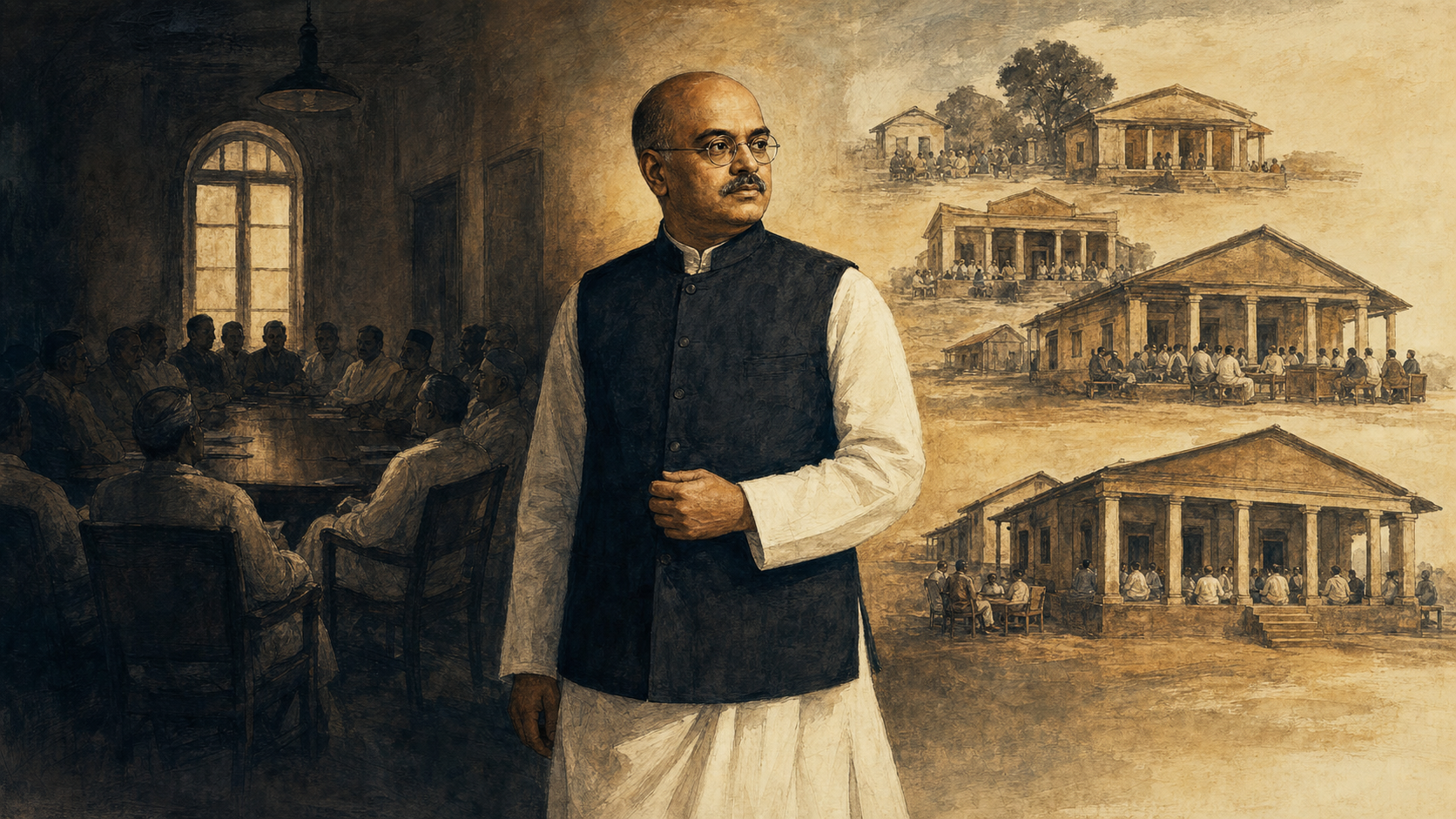
Diamond Harbour became a major centre of commemoration during the 125th birth anniversary observance of Dr. Syama Prasad Mookerjee in West Bengal. The programmes combined blood donation camps, memorial lectures, cultural performances, exhibitions, and official administrative participation. The observance highlighted Dr. Mookerjee’s contributions to education, Bengal’s Partition-era history, national integration, and Indian political thought. It…
-
Inside Karnataka’s Congress Power Struggle: How High-Command Drift Fueled a Governance Crisis

Karnataka’s present impasse within the Congress echoes a half-century pattern of centralized reshuffles, factional realignments, and revolving-door loyalties. This analysis traces the arc from H.C. Srikantaiah’s 1980 defection and Devaraj Urs’s fall to the high-command style under Indira and Rajiv Gandhi, then examines today’s Siddaramaiah–D.K. Shiva Kumar contest. It explains how a 50:50 power-sharing formula,…
-
Unmasking Bihar’s Jungle Raj: Shahabuddin, Lalu, and the Price of Criminalized Politics

This analysis revisits Bihar’s “Jungle Raj” to examine how political criminalisation took root in the 1990s and why its lessons remain urgent today. Drawing on reporting by Sankarshan Thakur, a PUCL fact-finding bulletin, and intelligence accounts cited by Arun Shourie, it traces the rise of Mohammad Shahabuddin and the enabling environment that blurred lines between…
-
Why is the Complete History of the Communists Still not Part of our School Textbooks?

The history of Communism in India is a contentious and complex one. The rise and influence of Communist parties in India have had significant consequences on the country’s political and social landscape. From its early days to the present, Communism has played a prominent role in Indian politics, often polarizing opinions and leading to intense…