
-
Srimad-Bhagavatam 11.2.50: Conquer Desire and EgoInsights from H.G. Dinabandhu Prabhu
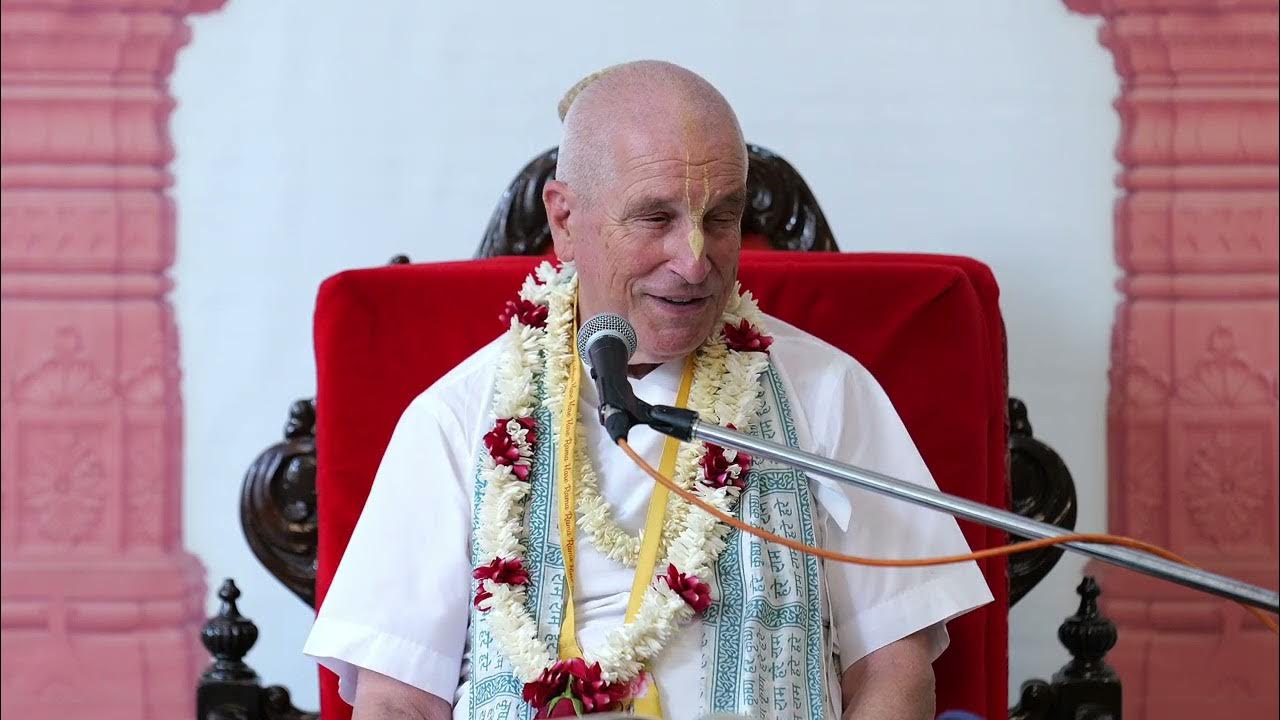
This analysis of Srimad-Bhagavatam 11.2.50 distills H.G. Dinabandhu Prabhu’s core insight: material desire and ego trap the mind in self-centric pursuit and conflict. It charts how deep vāsanā and samskāra patterns create chronic reactivity, then presents bhakti as the structured remedy that reorients consciousness toward service. Readers gain a practical blueprintsravana, kirtana, japa, mindful regulation,…
-
Darwin and the Vedas: Reconciling Evolution with Dharmic Wisdom for a Unified Path

This article examines how Darwinian evolution and dharmic wisdom can enrich each other without conflation. It maps three major differencesteleology, consciousness, and ethicsshowing why evolution’s non-teleological mechanisms complement rather than contradict dharmic metaphysics. It highlights ancient Indian reflections on change (Sāṃkhya, Nyāya–Vaiśeṣika, Ayurveda, Purāṇic cosmology), alongside Buddhist dependent origination, Jain classifications of life, and Sikh…
-
Beyond Blind Chance: A Dharmic Inquiry into Evolution, Consciousness, and Life’s Purpose

This article examines two assumptions often attached to evolution: that life’s diversity is driven entirely by chance and law, and that consciousness is reducible to chemistry. It distinguishes well-supported evolutionary mechanisms from the still-open questions of abiogenesis, emphasizing that conflating them obscures both scientific strengths and genuine uncertainties. It then surveys leading origin-of-life hypotheses and…
-
Unmasking Myths: How Truly Enlightened Beings Live, Eat, and Speak Among Us

This essay dismantles the popular myth that enlightened beings must look or act extraordinary, showing instead how Dharmic traditions depict realization as profound normalcy. Drawing on Hindu philosophy, Buddhism, Jainism, and Sikhism, it clarifies how liberation expresses itself in everyday eating, speaking, working, and serving. It synthesizes concepts such as mokṣa, nirvāṇa, kaivalya, kevala-jñāna, and…
-
Ravana’s Abduction of Sita Revisited: Dharma, Curses, and a Deliberate Path to Moksha
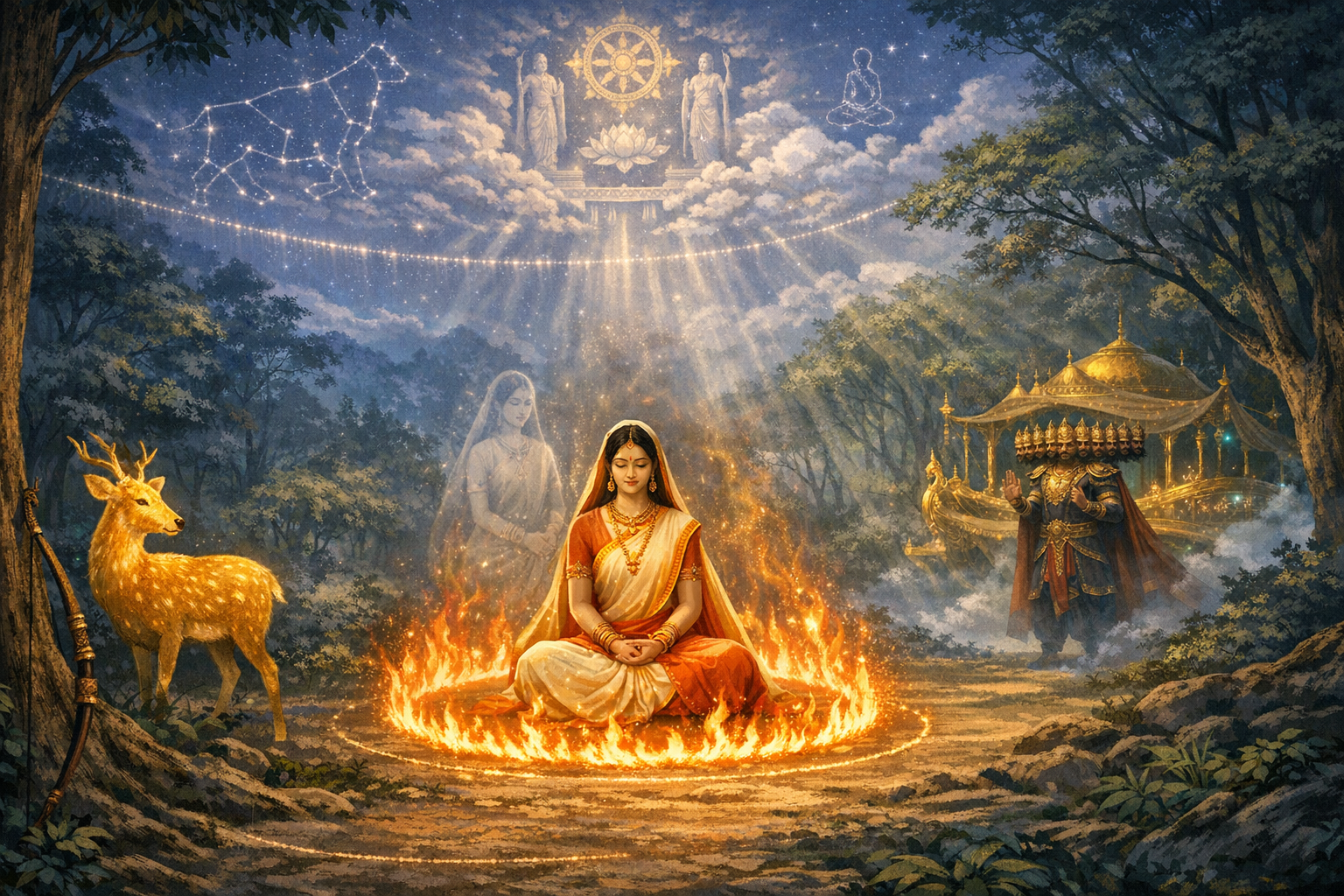
Did Ravana kidnap Sita to be slain by Sri Rama and attain moksha? A careful, text-sensitive study shows that while Valmiki’s Ramayana emphasizes Ravana’s pride and desire, later Puranic and bhakti traditions interpret his fall within a cosmic design of grace. The Jaya–Vijaya doctrine, vaira-bhakti (absorption through enmity), karmic curses, and the Maya Sita motif…
-
Kshemaraja of Kashmir Shaivism: Timeless Nondual Wisdom, Practice, and Dharmic Harmony

Kshemaraja, the eminent disciple of Abhinavagupta, distilled Kashmir Shaivism’s non-dual insights into lucid, practice-ready guidance. Core textsPratyabhijñāhṛdayam, Spandanirṇaya, Spandasandoha, and Śiva Sūtra Vimarśinībridge rigorous Indian philosophy and accessible methods. Readers gain a clear map of upāyas to steady attention, reduce stress, and cultivate compassion. Everyday beauty and stillness become gateways to recognition (pratyabhijñā) through the…
-
Karya Karana Bhava: Unveiling Causality’s Power Across Dharmic Wisdom Traditions
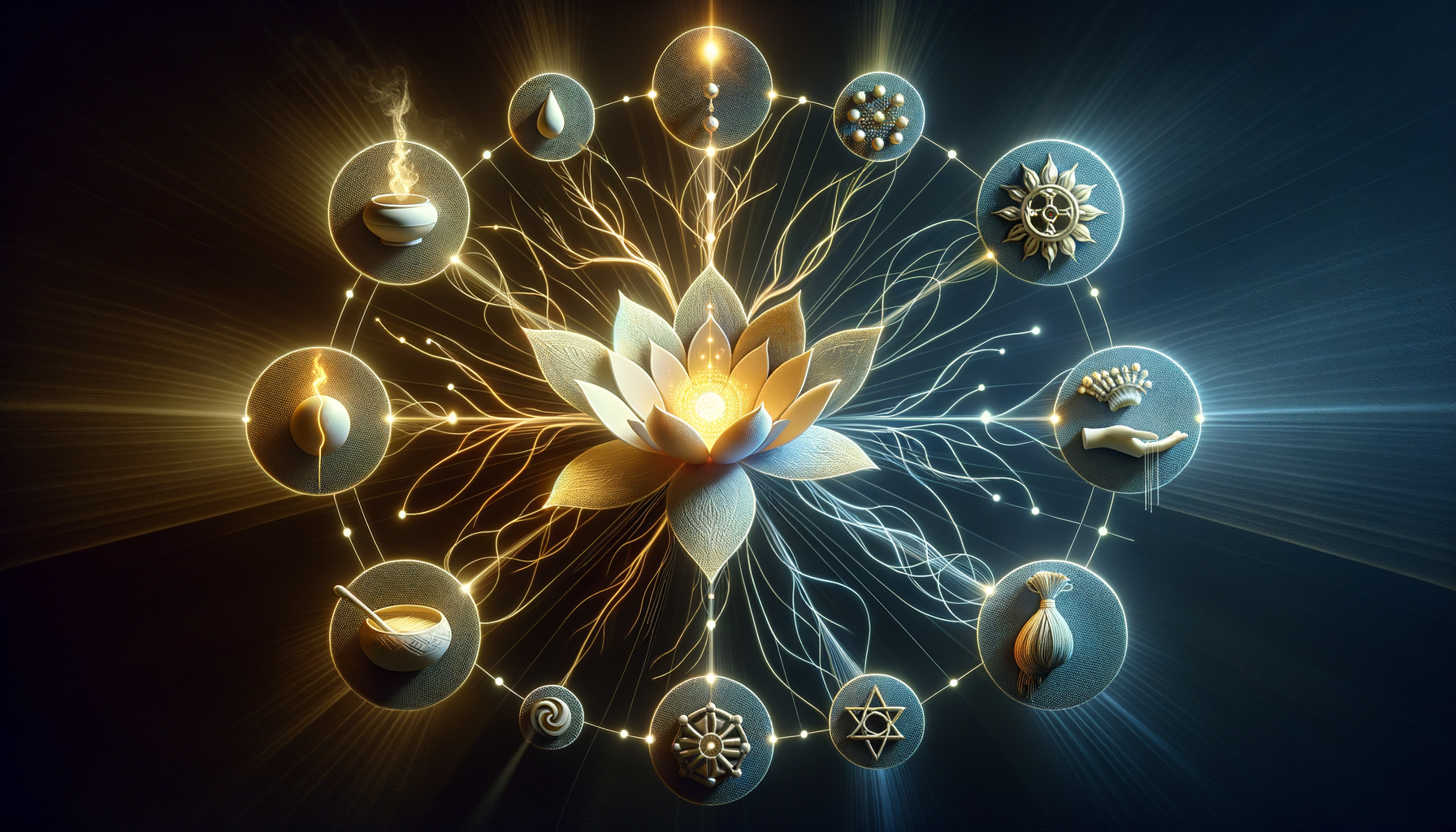
Karya Karana Bhavathe principle of cause and effectoffers a clear lens for understanding reality, ethics, and spiritual growth in Hinduism. Grounded in the Vedas and Upanishads and refined by Samkhya, Nyaya, and Vedanta, it clarifies how choices shape outcomes through karma and disciplined practice. Everyday examples show how patience, consistency, and seva produce meaningful effects,…
-
Embracing Human Limits for Inner Peace: A Dharmic Guide to Ambition and Acceptance

Modern culture often imagines success as limitless, yet Dharmic wisdom clarifies that human achievements are bounded by body, time, and causality. Acceptance of these limits is not resignation but a disciplined orientation that supports inner peace and spiritual growth. Drawing on Hindu philosophyespecially the Bhagavad Gita and Karma Yogaalongside Buddhist insights on impermanence, Jain anekantavada,…
-
Moha and the Veil of Tamas: Understanding Delusion Across Dharmic Traditions

Moha, in Hindu philosophy, is a state of delusion tied to tamas, the guna of inertia and darkness, that obscures discernment and fosters ignorance or false knowledge. It narrows perception, encourages attachment to assumptions, and turns reactivity into a substitute for reflection. Within the framework of the gunas, rajas can intensify confusion, while sattva restores…
-
Karmavipaka Explained: How Karma Ripens Across Dharmic Paths and Shapes Destiny

Karmavipaka (कर्मविपाक) explains how actions ripen into lived experience within Hindu philosophy. Grounded in the Sanskrit kri, meaning “to do,” it frames karma as lawful causality rather than external reward or punishment. The threefold classificationsanchita, prarabdha, and kriyamanaclarifies how past, present, and future actions interrelate. Far from fatalism, Karmavipaka emphasizes purushartha (effort), ethical choices, and…
-
Thirteen Radiant Forms of Goddess Kali in Tantraloka: Abhinava Gupta’s Kashmiri Vision

This exploration presents the thirteen forms of Goddess Kali in Abhinava Gupta’s Tantraloka as a living contemplative map within Kashmir Shaivism. Rather than a fixed list, these forms serve as dynamic lenses that refine attention, transmute fear, and reveal the liberating vastness of Shakti. The discussion situates Kali within Trika and Kaula streams while acknowledging…
-
Sage Kapila: Vishnu’s Fifth Avatar and the Transformative Power of Sāṁkhya Wisdom

Sage Kapila, revered as the fifth avatar of Vishnu, anchors Sāṁkhya’s profound vision of consciousness and nature. This account distinguishes purāṇic narrative from the classical philosophical school, clarifying Kapila’s teachings in the Bhāgavata Purāṇa and the later scholastic texts like the Sāṁkhya-kārikā. Readers gain a concise map of core conceptsPurusha, Prakriti, gunas, and the tattvasalongside…
-
Beyond the Senses: Hindu Wisdom on the Mind’s Subtle Realm and Paths to Inner Clarity

This reflection explores how Hindu wisdom understands the mind as operating beyond the reach of the physical senses, while aligning with shared insights from Buddhism, Jainism, and Sikhism. It outlines a subtle map of mindmanas, buddhi, ahamkara, and chittaand shows why sensory data alone cannot fully explain consciousness. Practical methods such as pratyahara, breath awareness,…
-
Who Fashions Imagination? A Dharmic Insight into Gods, Consciousness, and Creativity

This essay explores a classic Hindu philosophical paradox: if gods are imagined by humans, who fashions imagination itself? It clarifies how, in Vedanta and allied Hindu thought, awareness is ontologically prior to mental imagery, making imagination a function within consciousness rather than its source. The discussion situates deities as Ishtameaningful forms that refine attention and…
-
Dharma Beyond Black and White: Hindu Ethics Across Time, Circumstance, and Consequence

Hindu philosophy treats ethics as a disciplined, context-sensitive inquiry rather than a fixed rulebook. Grounded in dharma and guided by deśa–kāla–pātra, it balances intention, action, and consequence while honoring ahimsa, satya, svadharma, and lokasaṅgraha. Epic teachings from the Mahabharata and the Bhagavad Gita model how to act responsibly without attachment to outcomes. Parallels from Jain…
-
Drik and Drishya in Advaita Vedanta: Master the Seer–Seen Insight for Inner Clarity

Advaita Vedanta’s Drik–Drishya teaching clarifies the difference between the seer (subject) and the seen (object) to guide seekers toward Atman, the unchanging witness. By observing that body, senses, thoughts, and emotions are all Drishya, attention naturally returns to the stable Drik. This contemplative method, echoed in the Upanishads through neti neti, strengthens meditation, emotional balance,…
-
Transcending Tapa-traya: Śrīmad Bhāgavatam 4.29.32 on Time, Karma, and Lasting Relief

This article presents an academically grounded reading of Śrīmad Bhāgavatam 4.29.32, showing how time, karma, and forgetfulness of the Supreme Lord sustain the threefold miseries of material life (tapa-traya). Readers gain a clear framework to recognize internal, social, and environmental forms of suffering without fatalism. The discussion highlights unity among Dharmic traditionslinking Buddhist dukkha, Jain…
-
Kumarila Bhatta: The Brilliant Mimamsa Sage Who Revitalized Vedic Thought and Unity

Kumarila Bhatta, the eminent Mimamsa thinker of the 7th–8th century CE, revitalized Vedic philosophy through rigorous hermeneutics and disciplined reasoning. His major worksŚlokavārttika, Tantravārttika, and Tuptikārefine language theory, epistemology, and the authority of the Veda. Rather than opposing other dharmic paths, his precise critiques of Buddhist and Jaina arguments exemplify a constructive culture of debate…
-
Anyonyashraya Demystified: Avoid the Mutual Dependence Trap in Dharmic Reasoning
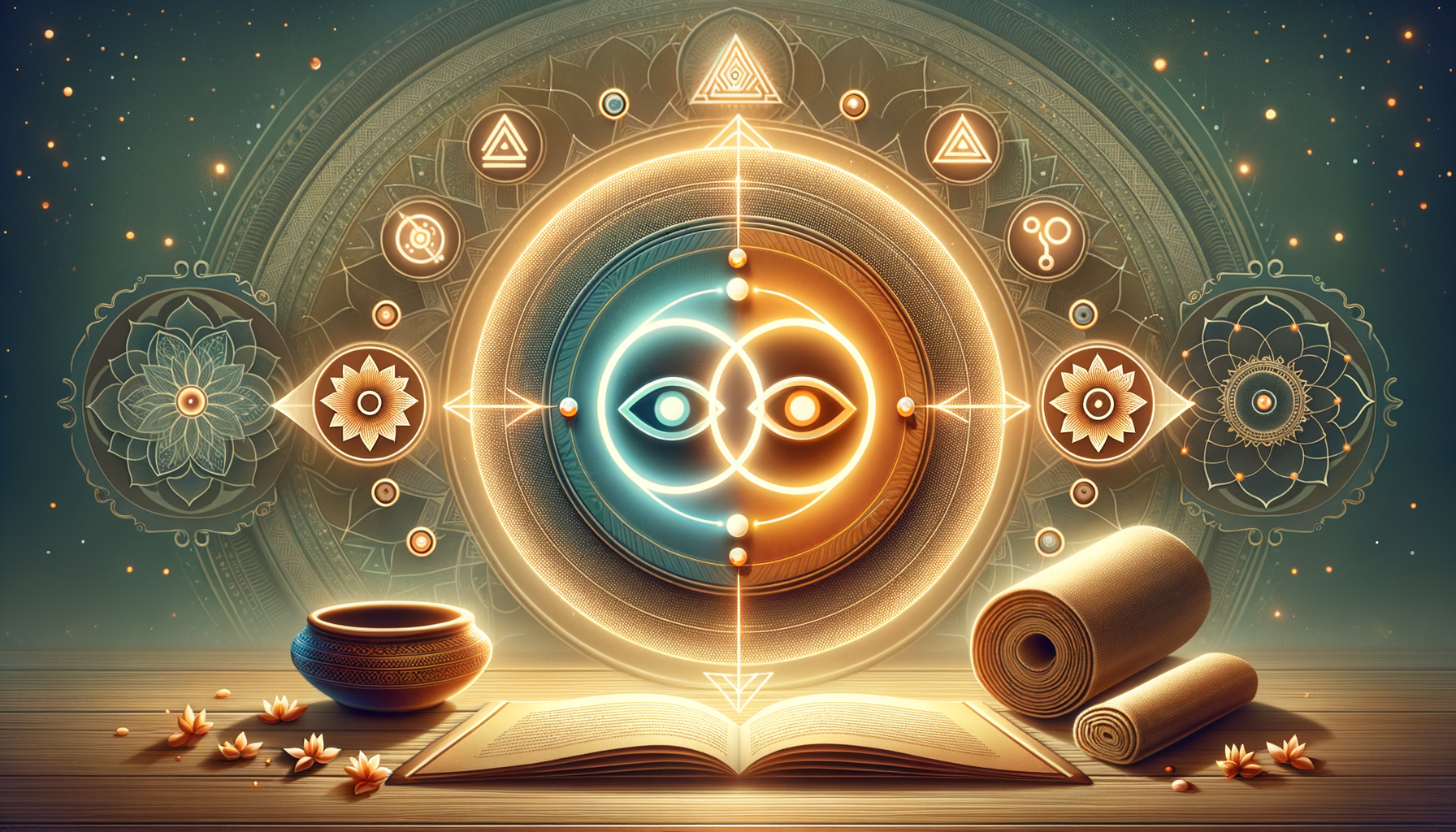
This article clarifies Anyonyashraya, the fallacy of mutual dependence, and distinguishes it from Anyonya Abhava (reciprocal negation) in Hindu philosophy. It explains how tarka (disciplined deliberation) exposes circular justification and safeguards sound reasoning. Everyday examples make the concept relatable and easier to spot in conversations and study. The discussion situates Anyonyashraya within Indian logic alongside…
-
Hinduism Beyond Miracles: Supersensual Knowledge Rooted in Reason and Lived Experience
Hinduism is often mischaracterized as supernatural, yet its core affirms supersensual knowledgetruths beyond the senses that remain coherent, rational, and experientially verifiable. Drawing on pramāṇa theory, Upanishadic inquiry, and Yoga, it advances a disciplined path where meditation, ethics, and contemplation yield repeatable inner transformations. This perspective aligns with Buddhism’s experiential insight, Jainism’s Anekantavada, and Sikhism’s…