
-
Jishnu: Krishna’s Ever-Victorious Name Sanskrit Meaning, Origins, and Living Significance

Jishnu, a sacred epithet of Bhagavan Sri Krishna, means the ever-victorious and derives from the Sanskrit root √ji, “to conquer.” Classical sources, including the Vishnu Sahasranama, affirm its scope as the triumph of dharma rather than mere domination. In the Mahabharata and Bhagavad Gita, Krishna’s counsel frames victory as dharma-yuddhaethical struggle grounded in inner mastery…
-
Culturally Sensitive Sharing: Inclusive Paths to Krishna Consciousness and Dharmic Harmony

This article presents a culturally sensitive framework for sharing Krishna Consciousness in harmony with the wider dharmic family. It explains why no single method suits every seeker and how understanding culture and counter-culture guides effective outreach. Readers learn how Harinam, Book Distribution, Bhagvad Gita study groups, and Home Programs can be adapted to local contexts…
-
Speak Less, Hear More: Dharmic Wisdom on Silence, Empathy, and Transformative Communication

Modern life rewards loudness, yet dharmic wisdom teaches that silence and attentive listening create deeper connection, clearer thinking, and ethical speech. Hinduism’s shravana–manana–nididhyasana frames listening as a disciplined path to knowledge, complemented by the Gita’s guidance on truthful, beneficial, and gentle speech. Parallel insights in Buddhism, Jainism, and Sikhismnoble silence, anekantavada and samayik, and Suni-aiconverge…
-
Sacred Yet Transient: How Hindu Philosophy Illuminates the Soul’s Journey and the Body’s Role

Hindu philosophy presents the body as a sacred yet impermanent vessel for the eternal Atman, a view memorably expressed in Bhagavad Gita 2:22. Understanding this distinction encourages reverence for embodied life while cultivating non-attachment. The model of sthula, sukshma, and Karana Sharira explains experience across physical, mental, and karmic layers, clarifying why ethical action matters.…
-
Chanting as Life’s True Medicine: BG 2.7 Reflections at ISKCON Kuala Lumpur
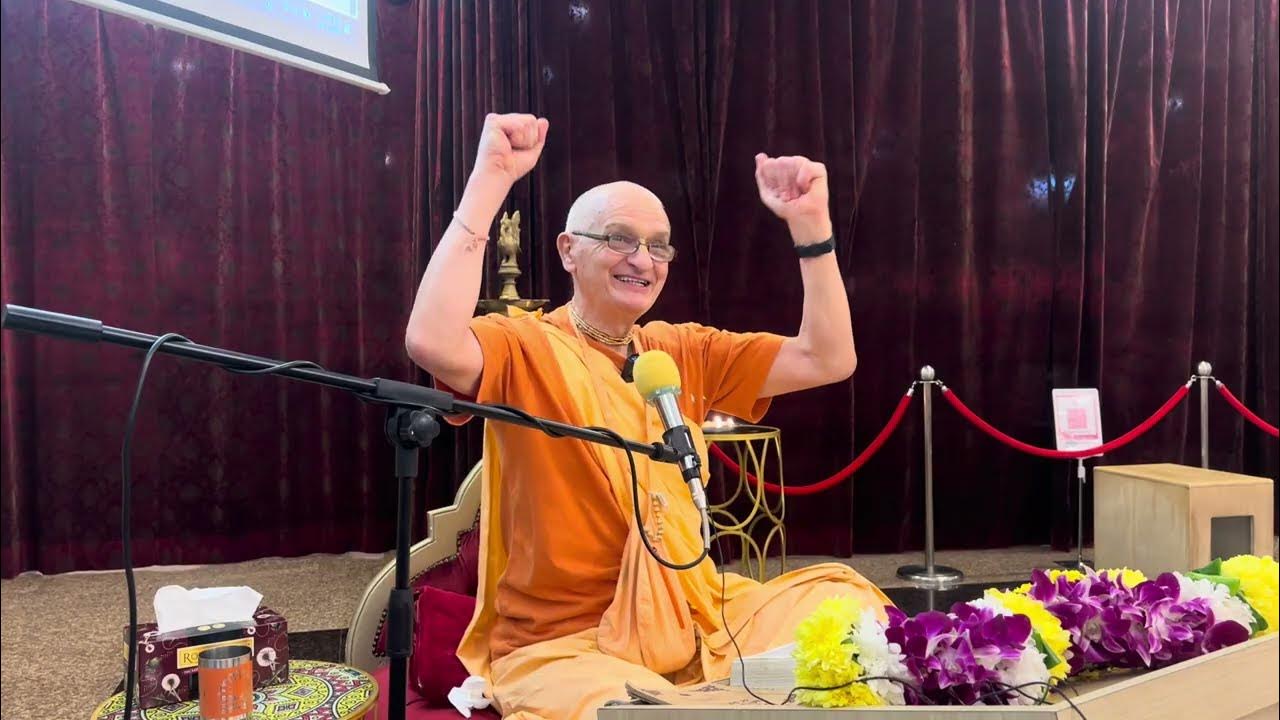
At ISKCON Sri Jagannatha Mandir, Kuala Lumpur, HH Jayananda Goswami reflected on Bhagavad Gita 2.7 to show how surrender and guidance translate into a focused, meaningful life. Recalling Srila Prabhupada’s final days, the talk emphasized that chanting the holy names is the real essence of living, beyond merely prolonging the body. Chanting and preaching Krishna…
-
Master the Restless Mind: Patience, Constant Practice, and Detachment in Dharmic Traditions

Dharmic traditions converge on a precise method for mastering the restless mind: patience (kṣamā), constant practice (abhyāsa), and detachment (vairāgya). This triadaffirmed in Hinduism and echoed in Buddhism, Jainism, and Sikhismtranslates timeless wisdom into practical steps for inner peace and emotional balance. Short, regular sessions of breath awareness, japa, or meditation build attentional strength without…
-
Beyond Ego: Unmasking Supreme Truth in Dharmic Wisdom for Inner Freedom and Clarity

This article explores a core paradox in Hindu philosophy: the Supreme Truth exists prior to the ego, and practices driven by self-importance obscure rather than reveal it. Drawing on the Upanishads, Bhagavad Gita, and Advaita Vedanta, it shows how sadhana matures from acquisition to attunement. It connects Hindu insights with Buddhism’s anatma, Jainism’s Anekantavada, and…
-
Decoding the Bhagavad-gita’s Timeless Architecture: Dharma, Yoga, and Moksha Unveiled

This reading of the Bhagavad-gita reveals a clear three-tiered architecturedharma, yoga, and mokshathat unifies ethical life, disciplined practice, and ultimate liberation. Understanding dharma as the finite, yoga as the bridge, and moksha as the infinite preserves the text’s internal coherence. The framework offers practical guidance for modern responsibilities while pointing beyond them to lasting freedom.…
-
When Hatred and Jealousy Backfire: Dharmic Wisdom on Karma, Healing, and Freedom

Hatred and jealousy act like venomous darts that ultimately return to the archer, a truth echoed across Hindu, Buddhist, Jain, and Sikh teachings. Drawing on the Bhagavad Gita, Upanishads, Srimad Bhagavata Purana, Ramayana, and Mahabharata, this piece explains how karma and dharma frame these emotions as forces that corrode clarity and freedom. It highlights iconic…
-
End Disappointment Now: Dharmic Wisdom on Letting Go of Expectations with Compassion

Modern life often equates success with high expectations, yet this habit can intensify anxiety and disappointment. Dharmic wisdomgrounded in Hindu philosophy and echoed in Buddhist, Jain, and Sikh teachingsoffers a practical alternative: act with integrity while letting go of rigid outcomes. Karma Yoga emphasizes effort over results, Patañjali highlights steady practice and vairāgya, Jain aparigraha…
-
When Words Fall Silent: Hinduism’s Transformational Path to Inner Stillness and Wisdom

True silence in Hinduism is not mere muteness but an effortless stillness of mind that reveals wisdom. Upanishadic insights describe a reality beyond speech and thought, while Yoga philosophy offers a practical path through pranayama, pratyahara, dharana, and dhyana. Sound becomes a gateway to silence as japa and kirtan refine attention from words to awareness.…
-
Expectations, Ego, and Liberation: Dharmic Wisdom for Healing Relationships and Joy

Dharmic traditions agree that unmet expectations and ego-driven desires fuel relational suffering. Hinduism’s Karma Yoga reframes action through detachment from outcomes, while Buddhism’s mindfulness softens craving and reactivity. Jain principles of ahimsa and aparigraha reduce harm and possessiveness, and Sikh seva dissolves ego into compassionate service. Together, these teachings cultivate empathy, patience, and a lived…
-
When Anger Blinds Truth: Dharmic Wisdom and Practical Tools to Restore Clarity

Anger, according to the Bhagavad Gita (2.63), initiates a precise cognitive and ethical declinedelusion, memory confusion, loss of discernmentending in poor choices. Dharmic traditions converge on this insight: Hinduism, Buddhism, Jainism, and Sikhism each identify anger as a primary obstacle to wisdom and compassion. This analysis offers practical toolsbreath awareness, mindfulness, loving-kindness, patience, and sevato…
-
Destiny vs. Free Will: How Karma and Choices Shape Our Future Across Dharmic Traditions

Is the future predetermined, or do choices genuinely shape outcomes? Drawing on Hinduism, Buddhism, Jainism, and Sikhism, this piece clarifies how karma names conditions from the past while puruṣārtha preserves present agency. The Bhagavad Gita’s Karma Yoga, Buddhism’s emphasis on intention, Jainism’s ethical discipline, and Sikhism’s balance of Hukam and effort converge on responsible freedom.…
-
Fierce Grace on Kurukshetra: Goddess Kalaratri’s Sacred Role and Soul-Carrying Symbolism

Goddess Kalaratri emerges in the Mahabharata War as a profound symbol of Time, moral consequence, and fierce compassion. Read as a cosmic witness and soul-carrier, she reframes Kurukshetra not as mere carnage, but as a rite of ethical passage aligned with Dharma-Yuddha. This lens clarifies how endings in the epic serve renewal within a larger…
-
Mastering the Three Gunas: A Transformative Hindu Path to Personality Growth and Calm

Hinduism offers a precise, practice-ready model of personality development through the three gunasSattva, Rajas, and Tamasexplained in the Bhagavad Gita and the Srimad Bhagavata Purana. By cultivating Sattva for clarity, channeling Rajas into purposeful service, and reducing obstructive Tamas, individuals gain emotional balance, ethical focus, and resilient energy. Practical stepsmeditation, pranayama, sattvic diet, structured routines,…
-
Master Your Inner World: Hindu Spirituality for Resilience, Clarity, and Courage

Hindu spirituality offers a practical, life-affirming framework for mastering the inner world to meet daily challenges with clarity and courage. Grounded in Dharma and Karma Yoga, it strengthens focus, emotional balance, and ethical action without retreating from responsibility. Across dharmic traditionsHinduism, Buddhism, Jainism, and Sikhismshared practices like mindfulness, ahimsa, and seva build resilience and compassion.…
-
Heaven on Earth Is Contentment: A Dharmic Path to Lasting Joy Beyond Wealth and Status

This article examines why contentmentsantosha in Hindu thoughtfunctions as a greater treasure than material abundance and how it manifests as “heaven on earth.” It contrasts the emptiness that can persist despite wealth with the quiet joy possible in simplicity. Drawing on shared insights from Hinduism, Buddhism, Jainism, and Sikhism, it shows how santosha, aparigraha, upekkhā,…
-
Eternal Gains vs. Fleeting Wins: Sunday Feast Bhagavad Gita with Prabhupada Priya Devi Dasi

This Sunday Feast lecture (January 11, 2026) by Prabhupada Priya Devi Dasi presents a clear contrast between spiritual activities and material pursuits through the lens of the Bhagavad Gita. It highlights that material achievements are inherently temporary, while spiritual advancement carries enduring benefits. Referencing Karma Yoga (Bhagavad Gita 2.40), the talk notes that even small…
-
The Inner Inferno: How Hindu Wisdom Transforms Uncontrollable Anger into Clarity and Peace

Hindu philosophy reframes hell as an inner stateuncontrollable anger (krodha)that distorts judgment and harms relationships. Drawing on the Bhagavad Gita and yogic disciplines, this article explains how anger escalates and how breath, meditation, and self-study interrupt the cycle. Practical stepssuch as short pranayama sets, mindful naming of emotions, and satttvic routinesbuild emotional resilience and self-control.…