
A temple visit by a public official has become a proxy debate over whether visible Hindu practice should be understood as personal devotion or electoral positioning. The limited source report presents the central dispute clearly: V.D. Satheesan rejects the label of “soft Hindutva” and grounds his worship in personal and constitutional liberty.
The episode offers a useful opportunity to separate an individual’s religious freedom from legitimate scrutiny of political conduct. That distinction matters for Hindus and for the wider family of Dharmic traditions seeking an equal, confident place in public life.
Key takeaways
- Struggle for Hindu Existence reports that Satheesan defended temple worship as a personal and constitutional right.
- A temple visit by itself does not establish a politician’s electoral motive or ideological position.
- Personal devotion deserves protection, while decisions made with public authority remain open to scrutiny.
- Respect for conscience supports the open practice of Hindu, Buddhist, Jain and Sikh traditions alike.
What the source actually reports
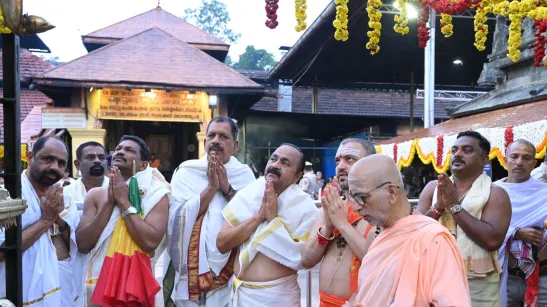
According to Struggle for Hindu Existence, the report identifies V.D. Satheesan as Kerala’s chief minister and says his temple visit prompted an allegation of “soft Hindutva.” It attributes to him the response that visiting a temple is his “personal right, not soft Hindutva” and characterizes his position as an appeal to the constitutional freedom to worship.
The material supplied for this article is only a short feed summary. It does not identify the temple, the occasion for the visit, the person making the allegation or the larger exchange in which Satheesan responded. The account should therefore be treated as a summary of one reported position, not as a complete record of the controversy or independent proof of anyone’s political motives.
Why the political label needs evidence
In political commentary, “soft Hindutva” generally describes the selective use of Hindu symbols or practices by figures who are perceived to be seeking broader electoral acceptance without adopting an explicitly Hindutva platform. It is an interpretive label, not a self-proving description.
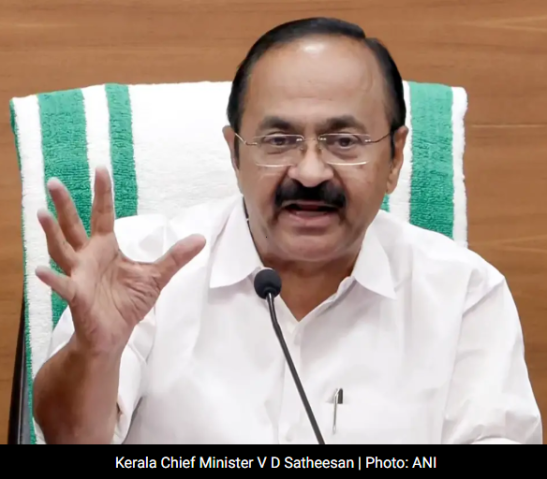
A temple visit can arise from devotion, family custom, community participation, political calculation or more than one motive at once. Mere visibility cannot settle which explanation applies. A persuasive political critique would need a wider pattern of statements, policies and conduct. Without that context, applying an ideological label risks turning ordinary Hindu worship into evidence against the worshipper.
Religious liberty and public accountability are compatible
India’s constitutional framework broadly protects freedom of conscience and religious profession and practice, while recognizing limits connected with public order, morality, health and other constitutional provisions. This general protection does not resolve a dispute about political strategy, but it establishes an important starting point: holding public office does not erase personal religious identity.
That principle works in both directions. A public figure should not be treated as suspect simply for entering a temple, offering worship or expressing a Dharmic identity. At the same time, personal faith cannot shield the use of state authority from examination. Individual devotion belongs to the sphere of liberty; official decisions remain subject to law, equal treatment and democratic accountability.
The wider Dharmic stake in open public practice
The significance extends beyond one Hindu leader or one political controversy. Hindu, Buddhist, Jain and Sikh traditions are distinct in doctrine and institutions, yet each sustains a lived path through sacred spaces, disciplined practice, festivals, pilgrimage, service and community memory. A healthy civic order allows adherents to participate in public life without concealing those identities.
Hindutva, as civilizational self-affirmation, need not reduce every act of Hindu worship to a partisan signal. Nor should criticism of political opportunism be dismissed when it is supported by evidence. Dharmic unity is strengthened when society can defend unapologetic religious practice while still demanding integrity from those who exercise power.
A better standard for future debate
Future discussion should focus on testable conduct: whether public resources were misused, whether any citizen was treated unequally and whether a leader’s policy record supports the accusation being made. The sound standard is neither enforced religious invisibility nor immunity from scrutiny. It is equal liberty, evidence before accusation and accountability for official action. Applied consistently, that approach protects temple-going Hindus while preserving space for every Dharmic community to live openly in democratic society.
Inspired by this post on Struggle for Hindu Existence.
