

The supplied source identifies sustainability as its subject but provides no substantive article text. It therefore supports no claims about particular projects, policies, results or environmental conditions.
What can be offered responsibly is a clearly marked editorial framework: how a shared Dharmic ethic can deepen sustainability without erasing the differences among Hindu, Buddhist, Jain and Sikh traditions.
What the source actually establishes
In the material provided, Dharma Civilization Foundation presents a page titled Sustainability and classifies it among its DDA26 themes. No explanation, evidence, examples or recommendations accompany that listing. Readers should therefore treat the theme as an invitation to inquiry, not as a developed position from the Foundation.
This limitation matters. Credible civilizational writing should distinguish what a source reports from what an editor infers. The reflections below are general analysis rather than a summary of an unpublished or unavailable argument.
A Dharmic lens begins with relationship and restraint
Sustainability is often discussed as a technical problem of managing resources. A Dharmic perspective adds an ethical question: what duties arise from living within an interconnected order that no individual or generation owns outright?
Different traditions answer in their own languages. Hindu thought offers dharma as responsibility within a larger order. Buddhist teachings emphasize interdependence and compassion. Jain philosophy gives exceptional weight to ahimsa and aparigraha, or non-possessiveness. Sikh tradition places seva, honest living and shared welfare at the center of community life. These teachings are not interchangeable, but they converge in challenging careless consumption, avoidable harm and indifference to consequences.
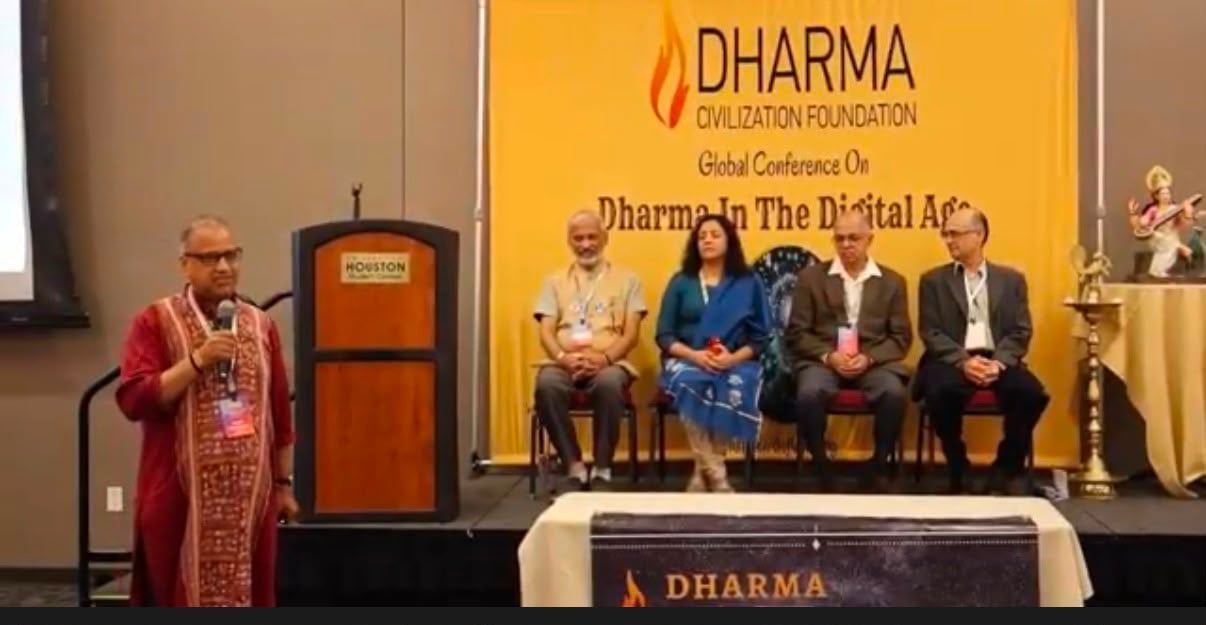
A confident Dharmic civilizational outlook can preserve these distinctions while recognizing their common moral direction. Unity need not mean uniformity; it can mean cooperation rooted in mutual respect.
Values become meaningful through accountable choices
Spiritual language alone does not make an activity sustainable. Households and institutions still have to examine how they obtain food and materials, use water and energy, generate waste, maintain buildings and serve surrounding communities. A practice should be judged not only by its intention but also by its effects.
Temples, gurdwaras, viharas, Jain centers and other community organizations can approach such questions through their own disciplines and local circumstances. The most credible efforts will connect reverence with measurement, restraint with practicality and service with transparent responsibility. They will also avoid presenting symbolic gestures as complete solutions.
Key takeaways
- The supplied source names sustainability as a theme but provides no detailed claims to summarize.
- Dharmic traditions offer distinct yet compatible resources for restraint, compassion, non-harm and service.
- Civilizational unity is strengthened when traditions cooperate without surrendering their identities.
- Sustainability becomes credible when ethical commitments shape observable household and institutional choices.
The next step is a more specific Dharmic conversation grounded in evidence, local knowledge and honest evaluation. Such work can turn a broad theme into a durable culture of care shared across generations and traditions.
Inspired by this post on Dharma Civilization Foundation.
