Linear B offers neither a key for reading the Indus signs nor proof that every ancient script will eventually yield. Its real value is methodological: the decipherment shows how archaeological context, repeated patterns, grammatical structure and carefully tested hypotheses can reinforce one another.
The comparison also clarifies why the Indus problem remains so resistant. Linear B became readable when researchers found enough independent constraints to narrow the possibilities. The surviving Indus inscriptions provide far less linguistic leverage, making disciplined uncertainty as important as ingenuity.
The useful analogy is methodological, not predictive
Decipherment is not a single act of matching signs to sounds. The DharmaRenaissance account distinguishes several connected questions: whether the signs encode language, what kind of writing system they constitute, what values individual signs carry, which language is represented and whether the proposed reading works across the corpus. Solving only one of these questions does not solve the others.
A theory can therefore produce a few recognizable-looking words without qualifying as a decipherment. A robust solution must explain recurring sign order, spelling conventions, grammatical changes, names, numbers and previously unread texts without relying on a growing collection of special exceptions. This distinction matters especially for the Indus script, where linguistic proposals can become entangled with modern claims about ancestry and cultural ownership.
Linear B and the Indus signs do share an important starting difficulty. The account describes Linear B as having lacked a convenient bilingual inscription or surviving scribal tradition, while both its script and language initially appeared unknown. The Indus signs remain in that difficult position. But a similar starting category does not mean that the two corpora contain equally useful evidence.
How Linear B converted context into linguistic constraints
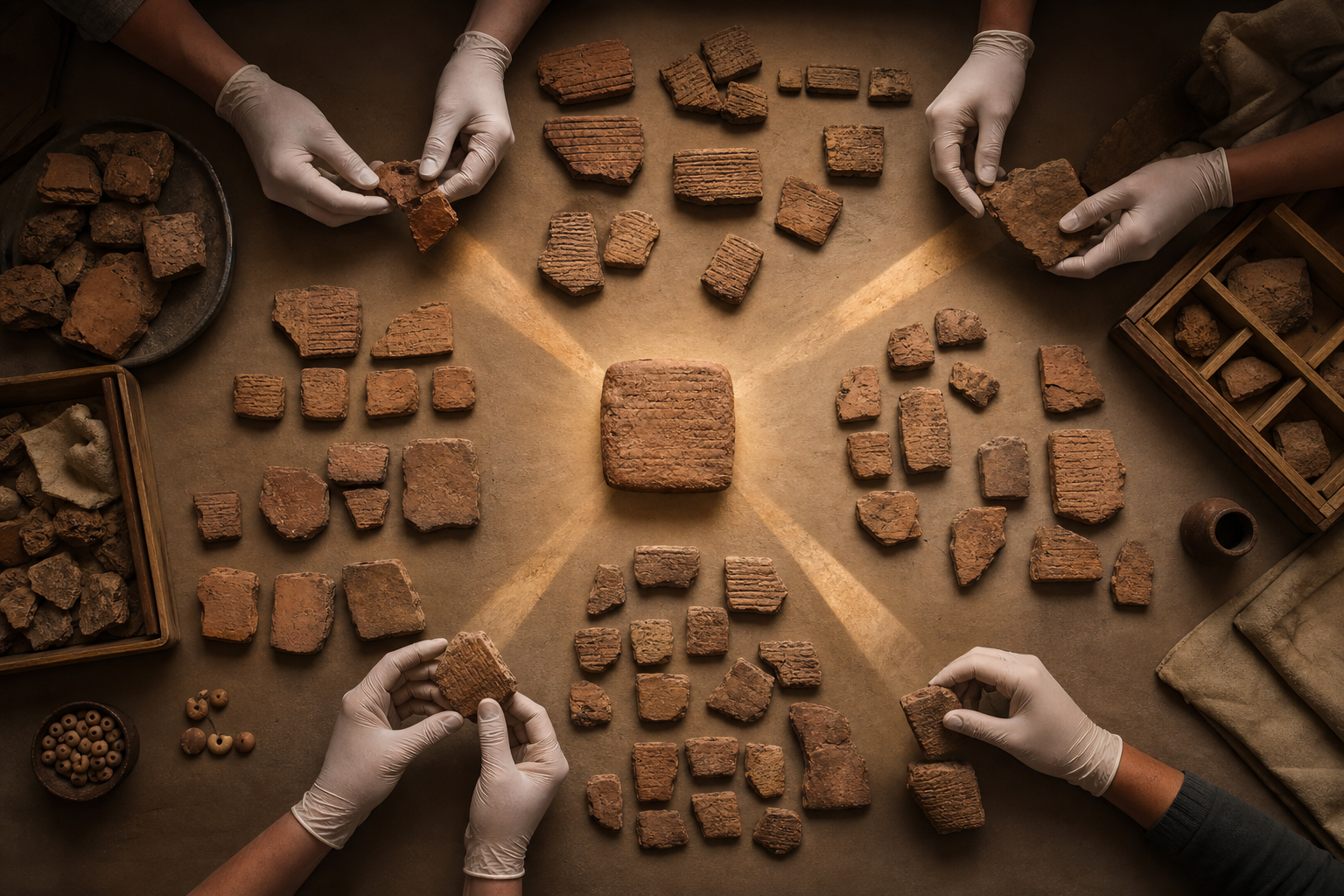
The Linear B solution emerged from cumulative work rather than an isolated moment of inspiration. Arthur Evans, who began uncovering inscribed clay at Knossos in 1900, separated Linear B from other Cretan writing systems. According to the source account, he identified the direction of writing, separators between word groups, numerical signs and patterns associated with commodities. These observations did not reveal pronunciations, but they established that the tablets belonged to an organized administrative system.
Alice Elizabeth Kober then treated the inscriptions as structured data. The account reports that she assembled an analytical archive of approximately 180,000 slips and cards, comparing the distributions of signs without prematurely assigning them sounds. Her recurring sets of related word groups, later called Kober triplets, shared beginnings while changing their endings systematically. That pattern supplied evidence for inflection: the texts appeared to preserve grammatical variation rather than merely lists of unrelated symbols.
Kober also organized signs according to relationships that suggested shared vowels or consonants. Her contribution was not a guessed vocabulary but a framework of constraints. A proposed sound value would have to fit the emerging grid as well as the changing word endings. This narrowed the range of possible readings before the underlying language had been identified.
Michael Ventris brought the productive risk that followed this groundwork. He was a professional architect and an amateur decipherer, rather than an amateur architect, and his achievement depended on structures established by Evans and Kober. John Chadwick contributed after the initial solution. Framing the history this way reveals a transferable lesson: decipherment advances when classification, restraint, hypothesis and verification occur in sequence.
The character of Linear B itself supplied another constraint. The source describes a core phonetic inventory of roughly 87 syllabic signs, most representing a vowel or an open consonant-plus-vowel syllable. Such a system could omit final consonants, insert vowels into consonant clusters and fail to preserve distinctions familiar from alphabetic Greek. Once these conventions were understood, Greek forms that had initially looked unrecognizable could be explained systematically.
The episode also illustrates the danger of inherited assumptions. Evans strongly favored a non-Greek interpretation, and the account says his scholarly prestige influenced the field. His early archaeological classifications were valuable, but his linguistic expectation became a boundary that later evidence had to overcome. Kober’s refusal to begin with a preferred ethnic or linguistic answer provided an important counterexample.
Why the Indus corpus offers less linguistic leverage
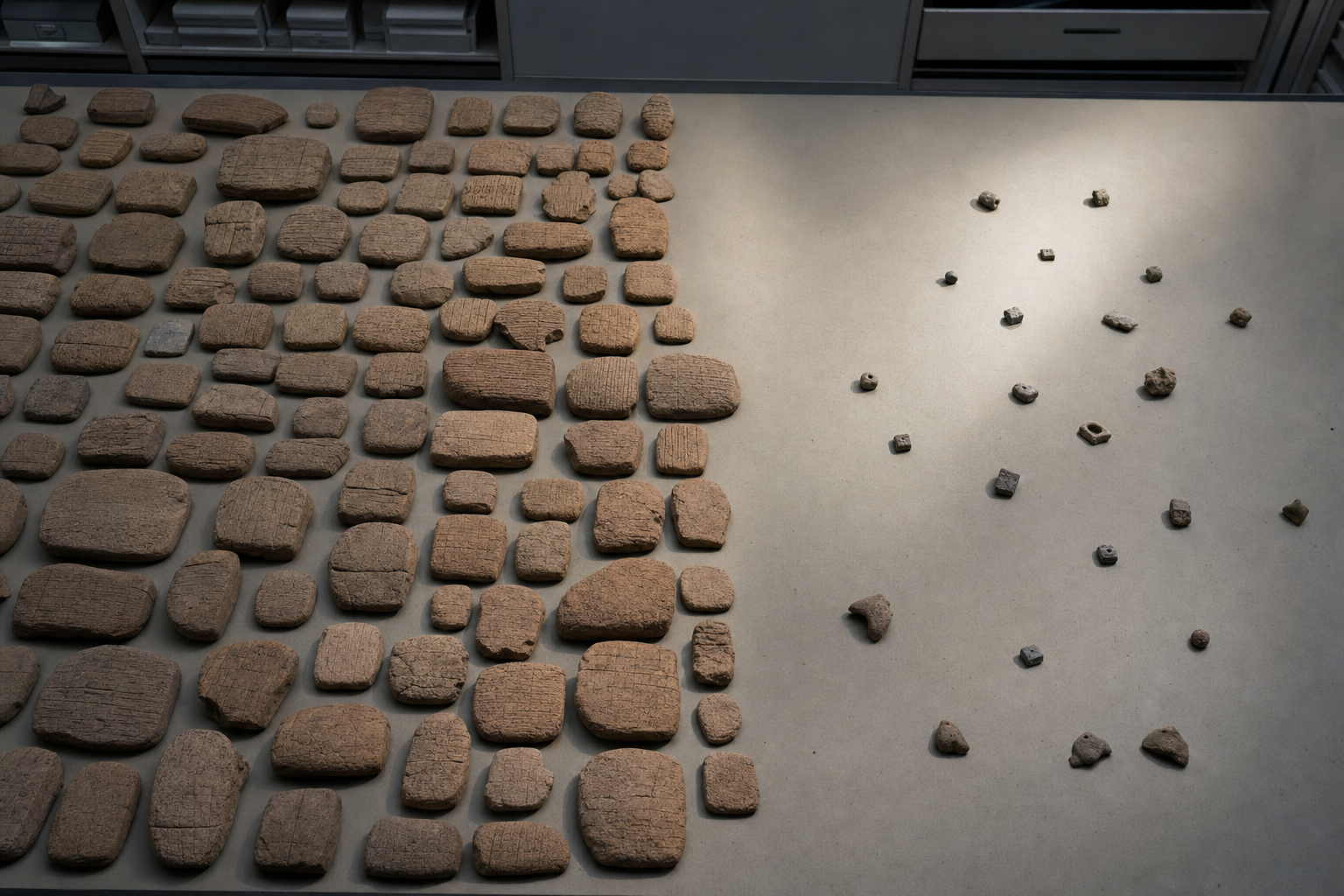
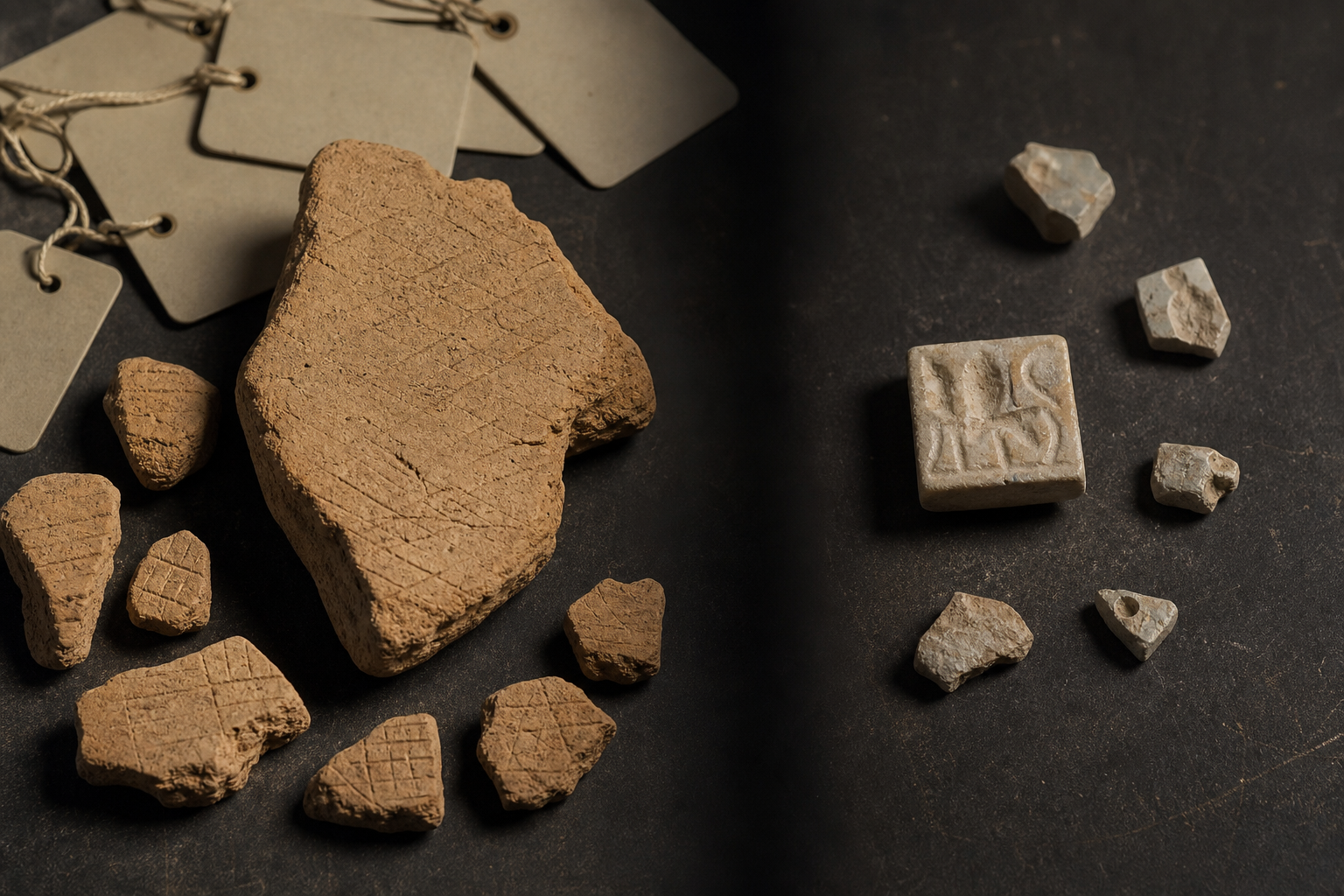
The Indus evidence is abundant as archaeology but sparse as continuous text. The source reports thousands of inscriptions on seals, sealings, tablets, pottery and other objects. Depending on how variants are classified, researchers commonly distinguish several hundred signs. Yet most inscriptions are extremely short, often containing only about five signs.
That brevity changes the problem fundamentally. A large number of short strings does not automatically provide the information contained in longer sentences. Researchers need repeated structures to distinguish a grammatical ending from part of a name, a phonetic sign from a commodity marker, or a syntactic rule from a pattern caused by the function of a particular object. With only a few positions in many inscriptions, competing explanations can remain compatible with the same observations.
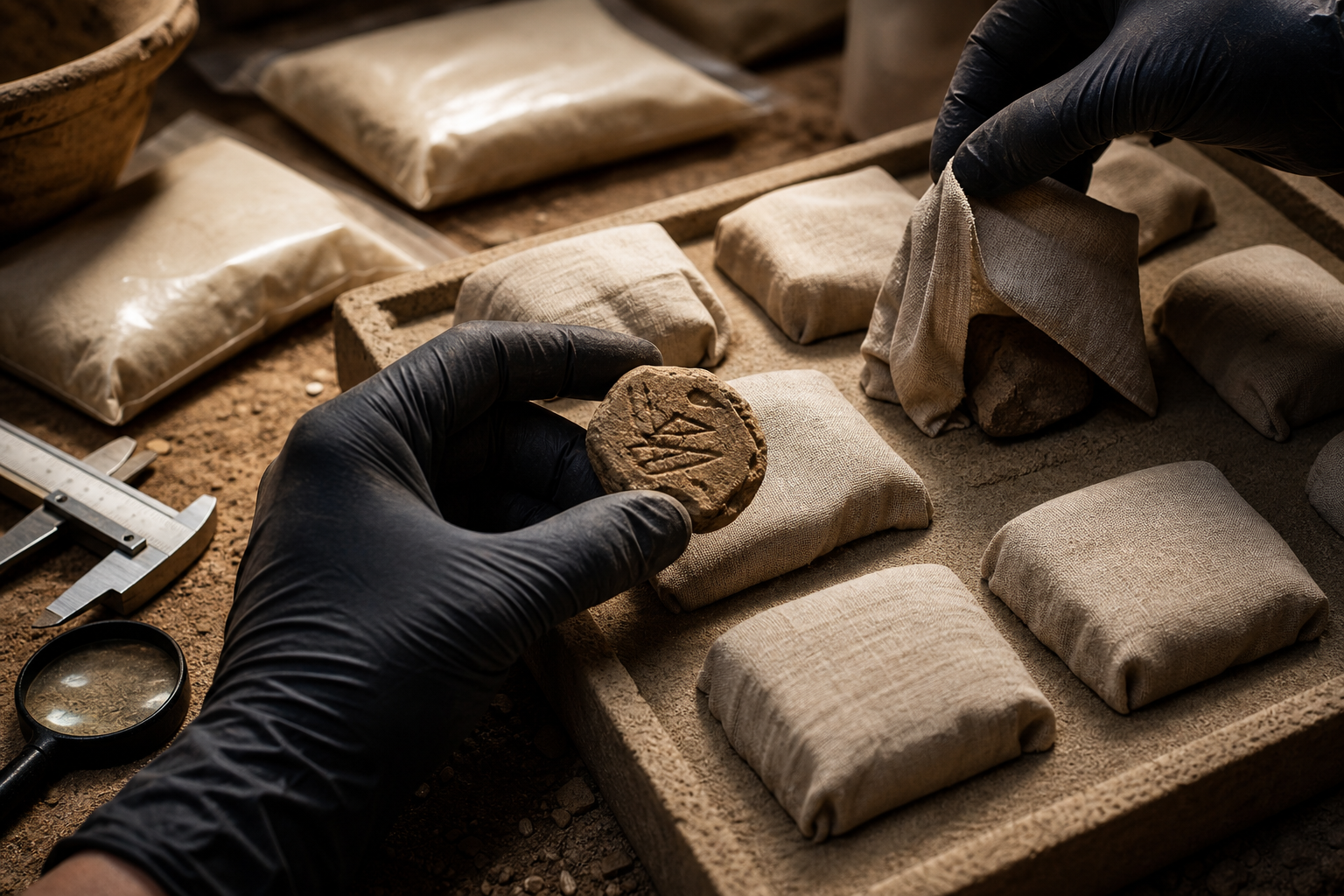
Archaeological context can still act as a limited external guide. The object carrying an inscription, its find location and accompanying numerals or pictorial signs may suggest an administrative or commercial function. Such context can constrain meaning, as commodity associations did for Linear B, but it does not by itself establish pronunciation, grammar or language.
Sign classification creates another foundational issue. If scholars disagree about whether two shapes are separate signs, regional forms or scribal variants, their sign inventories and frequency counts will differ. The source accordingly presents the number of Indus signs as dependent on the sign list and its rules. Normalizing the corpus is therefore part of the decipherment problem, not merely clerical preparation.
The central difference is not that Linear B attracted greater brilliance. Its tablets eventually allowed multiple constraints to converge: document function, repeated sign groups, changing endings, a syllabic grid and a language hypothesis that could explain the system’s spelling conventions. The Indus corpus has not yet supplied an equivalent chain strong enough to force one reading over its rivals.
Tests a credible Indus decipherment would have to pass
Corpus-wide explanatory power
A proposal must work beyond a selected group of favorable inscriptions. It should use stable sign values and consistent reading rules across objects and contexts, while accounting for common sequences as well as difficult examples. Isolated resemblance to words in a chosen language is evidence of possibility, not a completed solution.
Structure before linguistic identity
Kober’s work demonstrates the value of identifying relationships before assigning sounds. For the Indus material, a strong case would first establish reproducible patterns in sign position, substitution and recurrence. A proposed underlying language would then need to explain those patterns rather than requiring them to be reclassified whenever they conflict with the theory.
Predictions that can fail
A decipherment becomes persuasive when it predicts how unread inscriptions should behave. It should clarify which signs can alternate, how grammatical or numerical information is expressed and why particular signs occur in particular positions. If every contradiction can be dismissed as an irregular spelling, unknown name or exceptional usage, the proposal cannot be meaningfully tested.
Independent constraints are crucial. Archaeological context, internal patterning, numerical notation and linguistic interpretation should point toward the same solution without being derived from one another. Linear B became convincing because the reading explained several features at once. The same standard, rather than the fame or cultural appeal of a proposed language, should govern claims about the Indus signs.
Key takeaways
- Linear B provides a model of method, not a transferable codebook for the Indus script.
- Its decipherment rested on cumulative contributions from Evans, Kober, Ventris and Chadwick, combining archaeological classification with linguistic testing.
- The extreme brevity of most Indus inscriptions limits the detection of grammar, syntax and recurring phrases even though thousands of inscribed objects survive.
- A credible solution must explain the full sign system consistently and generate testable readings of material not selected to support it.
Future progress will depend on strengthening the constraints: clearer sign classification, more consistent corpus analysis and, if archaeology provides it, evidence containing richer or externally anchored text. Until those elements converge, the most constructive lesson from Linear B is that patience and falsifiable structure are not obstacles to decipherment; they are its foundation.