
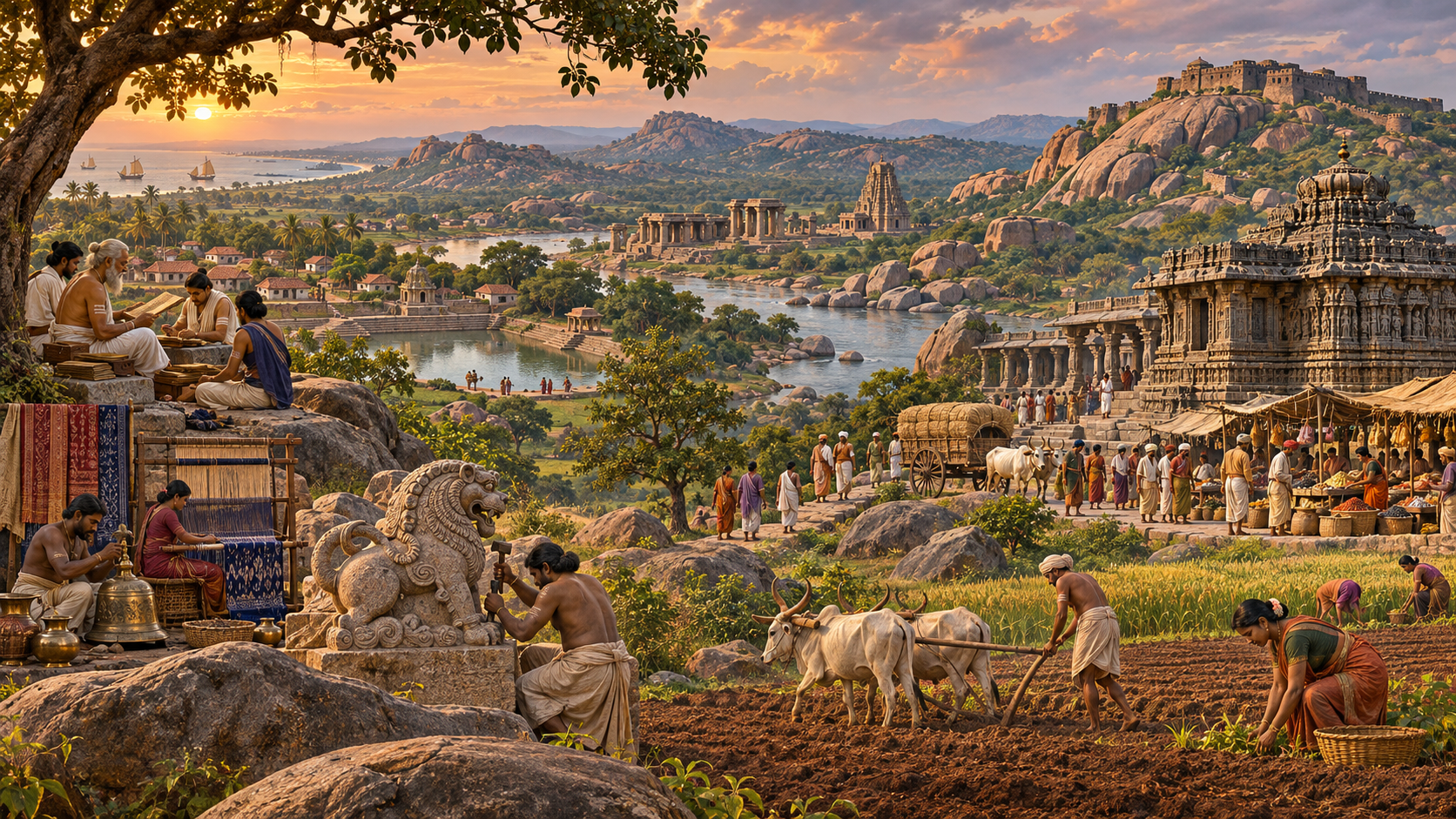
If you have encountered one claim that Karnataka is merely a recent administrative creation and another that its ancient identity proves it was always a nation separate from Bharat, you have been handed a false choice. Karnataka can possess a deep regional identity without fitting the political model of a modern sovereign state.
The useful question is not whether Karnataka is real as a historical region. It is. The question is what kind of reality the surviving name, memory, language and culture establish. Once you separate cultural continuity from modern statehood, the history becomes clearer and present-day arguments become easier to judge.
Key takeaways
- Karnataka’s historical regional identity does not depend on it having resembled a modern nation-state.
- The older regional memory carried by the name Karu Desa should be understood in its own civilizational setting, not forced into a later Westphalian framework.
- Evidence that Karnataka had a distinct identity does not, by itself, prove that the region stood outside the wider world of Bharat.
- Regional loyalty and civilizational belonging answer different questions. You do not have to weaken one to affirm the other.
- When judging a historical claim, separate the evidence for cultural distinction, political organization, territorial borders and sovereign independence. These are not interchangeable.
A historical region is not a miniature nation-state
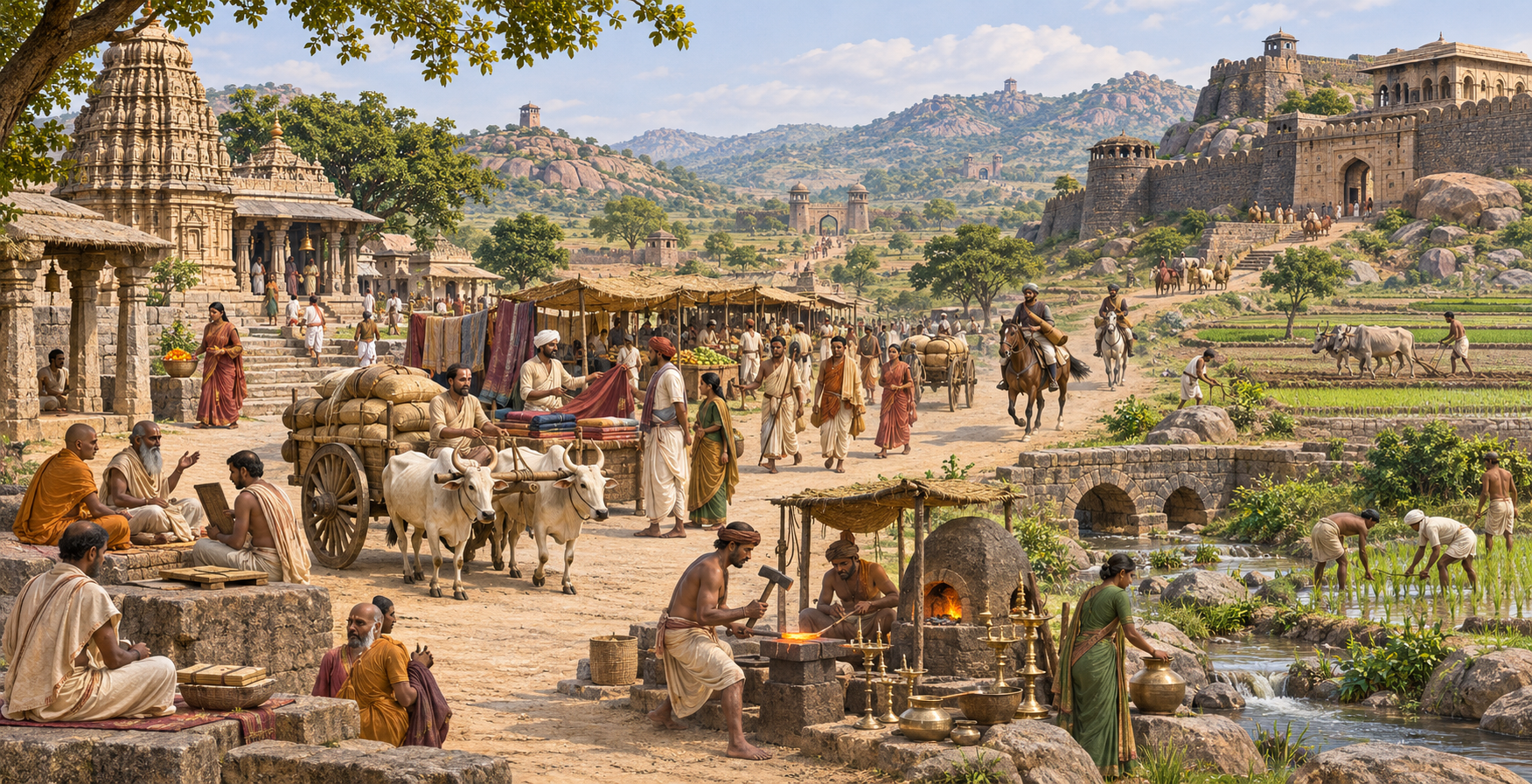
Many arguments about Karnataka go wrong before any evidence is examined. They assume that every enduring cultural region must have been an early version of a modern country. That assumption imports a Westphalian idea of political identity into a setting where belonging could be layered, overlapping and expressed through more than government.
A modern nation-state is normally imagined through exclusive sovereignty, formal citizenship and a defined border. A historical region can remain recognizable through language, inherited customs, sacred associations, place names and shared memory even when political boundaries and rulers change. The existence of the second does not automatically establish the first.
| Question | Historical regional identity | Modern nation-state |
|---|---|---|
| What sustains belonging? | Language, culture, memory, customs and attachment to place | Citizenship, institutions and sovereign authority |
| How must borders work? | They may shift, overlap or remain culturally porous | They are expected to define a state’s jurisdiction |
| Does distinctiveness require exclusivity? | No; a region can participate in a wider civilization | Sovereignty normally distinguishes one state from another |
| What does continuity prove? | That a regional identity endured in some form | Not, by itself, that an independent state endured |
This distinction prevents two equal and opposite mistakes. One is to deny Karnataka’s depth because its past does not resemble the present state. The other is to convert every sign of regional continuity into proof of separate nationhood. Neither conclusion follows from the evidence it claims to explain.
Karu Desa changes the frame, not the political verdict
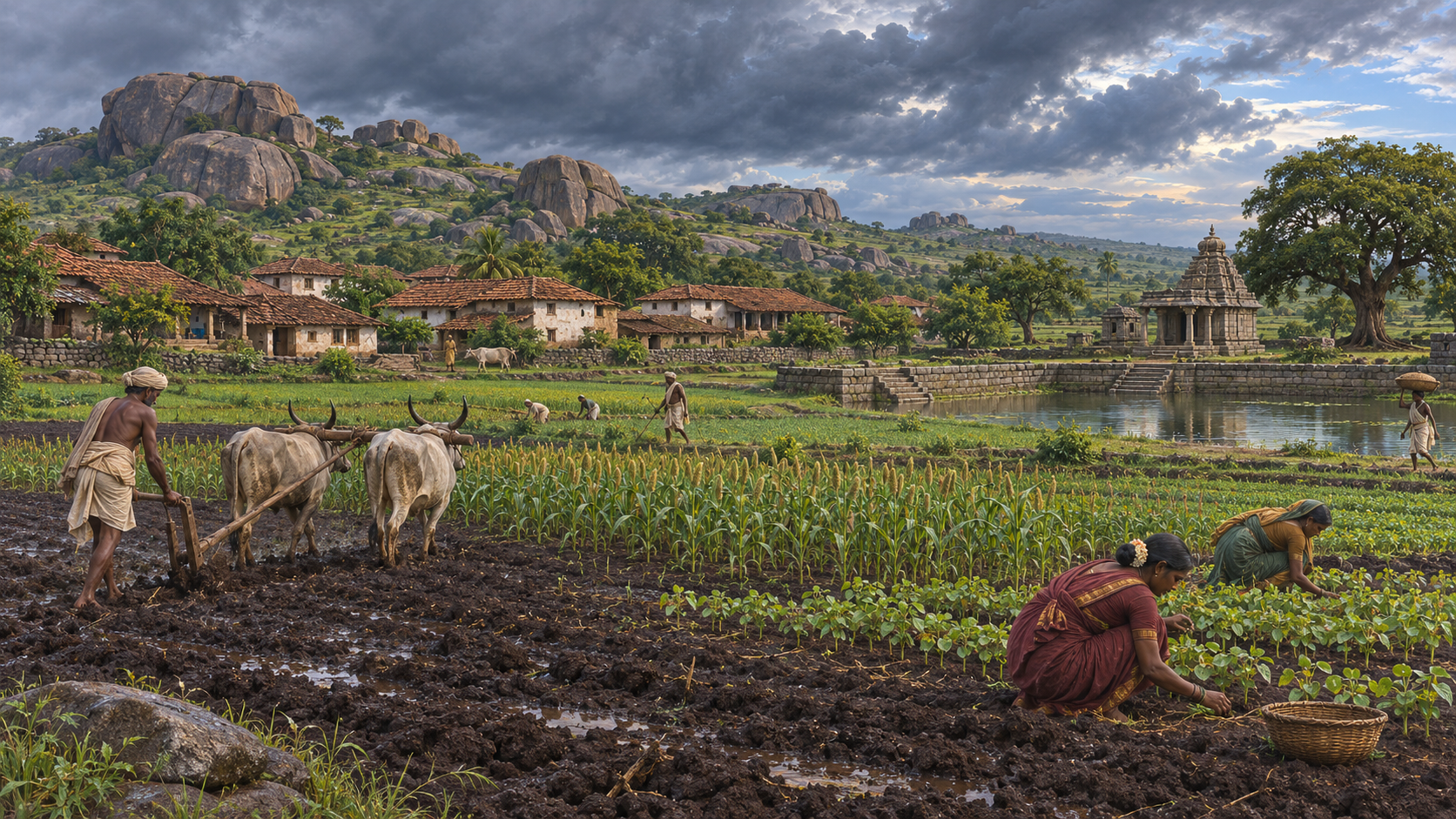
The memory of Karu Desa as Karnataka matters because it places the region deeper in history than a purely administrative account allows. It tells you that Karnataka should not be treated as a name with meaning only after modern borders were drawn.
But an old regional name must be asked to prove only what it can prove. It supports the existence of an identifiable land and regional consciousness. By itself, it does not establish fixed borders, an unchanging population, uninterrupted government or a claim to political separation. Those are additional propositions requiring additional evidence.
This is where wording matters. Compare the statements “Karnataka had an identity” and “Karnataka possessed the same kind of sovereignty expected of a modern nation-state.” The first concerns historical recognition and continuity. The second makes a much narrower political claim. Moving from one to the other without showing the missing steps is not historical reasoning; it is a change of subject.
The reverse error is just as weak. Saying that Karnataka belonged to the wider civilizational life of Bharat does not make its regional character imaginary. A larger identity does not erase every identity within it. If it did, every language, pilgrimage landscape, local custom and regional memory would have to disappear before civilizational unity could exist. That is neither a necessary nor a particularly Dharmic understanding of unity.
How to test a claim about Karnataka’s past
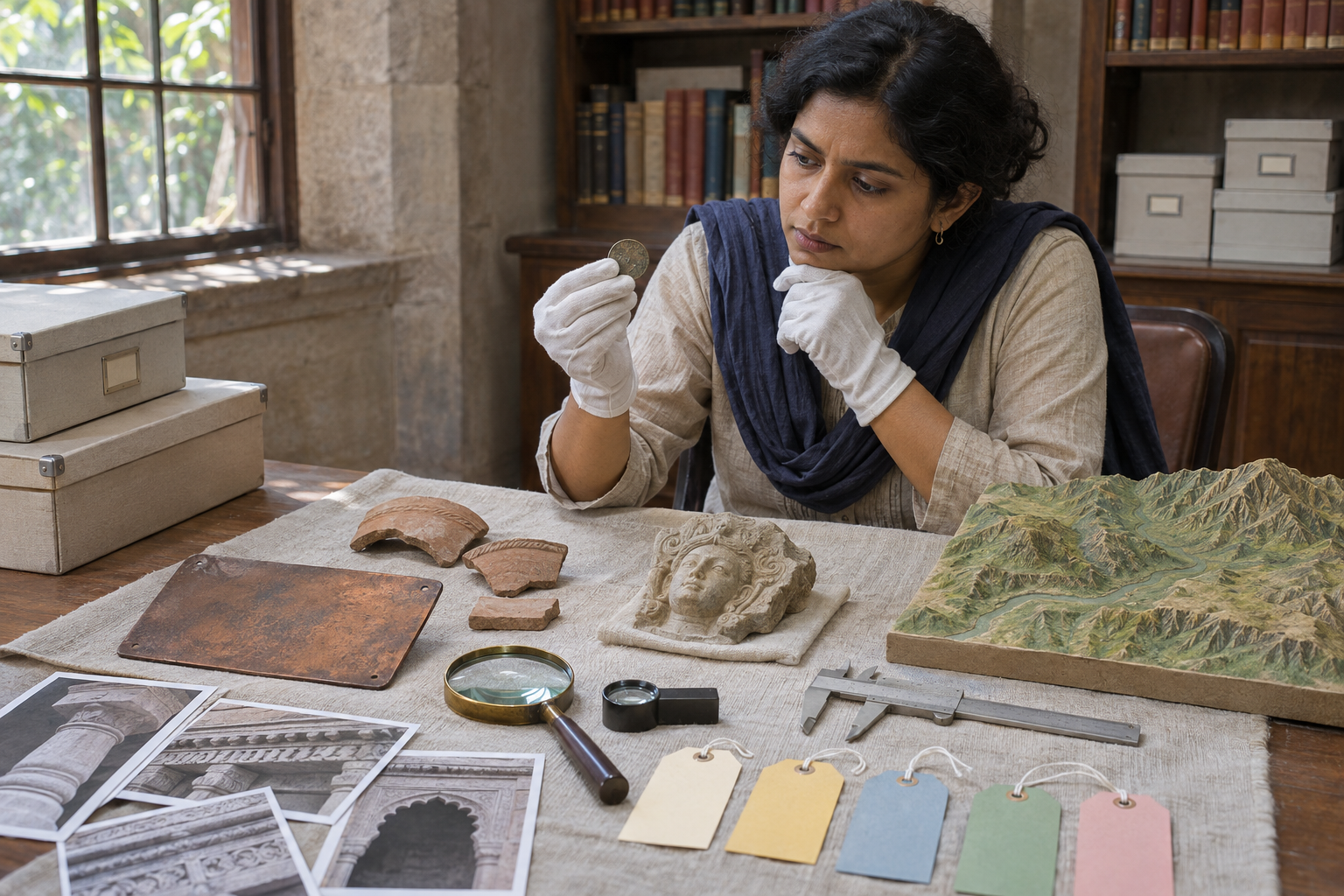
When a speech, video or social-media thread uses history to demand a present political conclusion, apply the following test before accepting or rejecting it.
- State the claim precisely. Is it claiming that Karnataka was culturally recognizable, politically organized, territorially stable or sovereign in the modern sense? Do not allow those propositions to blur together.
- Name the evidence actually offered. A regional name supports recognition. A language supports cultural continuity. A boundary supports a particular territorial arrangement. None should silently substitute for all the others.
- Ask what the evidence meant in its own setting. Do not assume that an older term for a land carried every implication now attached to “nation,” “state” or “country.” Translation can create a political conclusion that the original context did not contain.
- Separate continuity from sameness. An identity can endure while its boundaries, institutions and public expressions change. You need not pretend that nothing changed in order to acknowledge continuity.
- Look for the missing bridge. If the argument moves from “Karnataka was distinct” to “Karnataka was separate from Bharat,” ask what evidence establishes that exclusion. Distinction alone cannot do it.
- Apply the reverse test. If someone argues that belonging to Bharat makes Karnataka’s identity secondary or unreal, ask why civilizational membership should require cultural erasure. The burden of proof belongs to that claim as well.
- Separate historical truth from present preference. A person may favour a contemporary political programme, but that preference cannot determine what an old regional name meant. History should inform political judgment, not be retrofitted to certify it.
This method works because it identifies the exact point at which a sound observation becomes an unsupported conclusion. You can affirm what the evidence establishes without being pushed into accepting everything attached to it.
Regional pride does not require civilizational amnesia
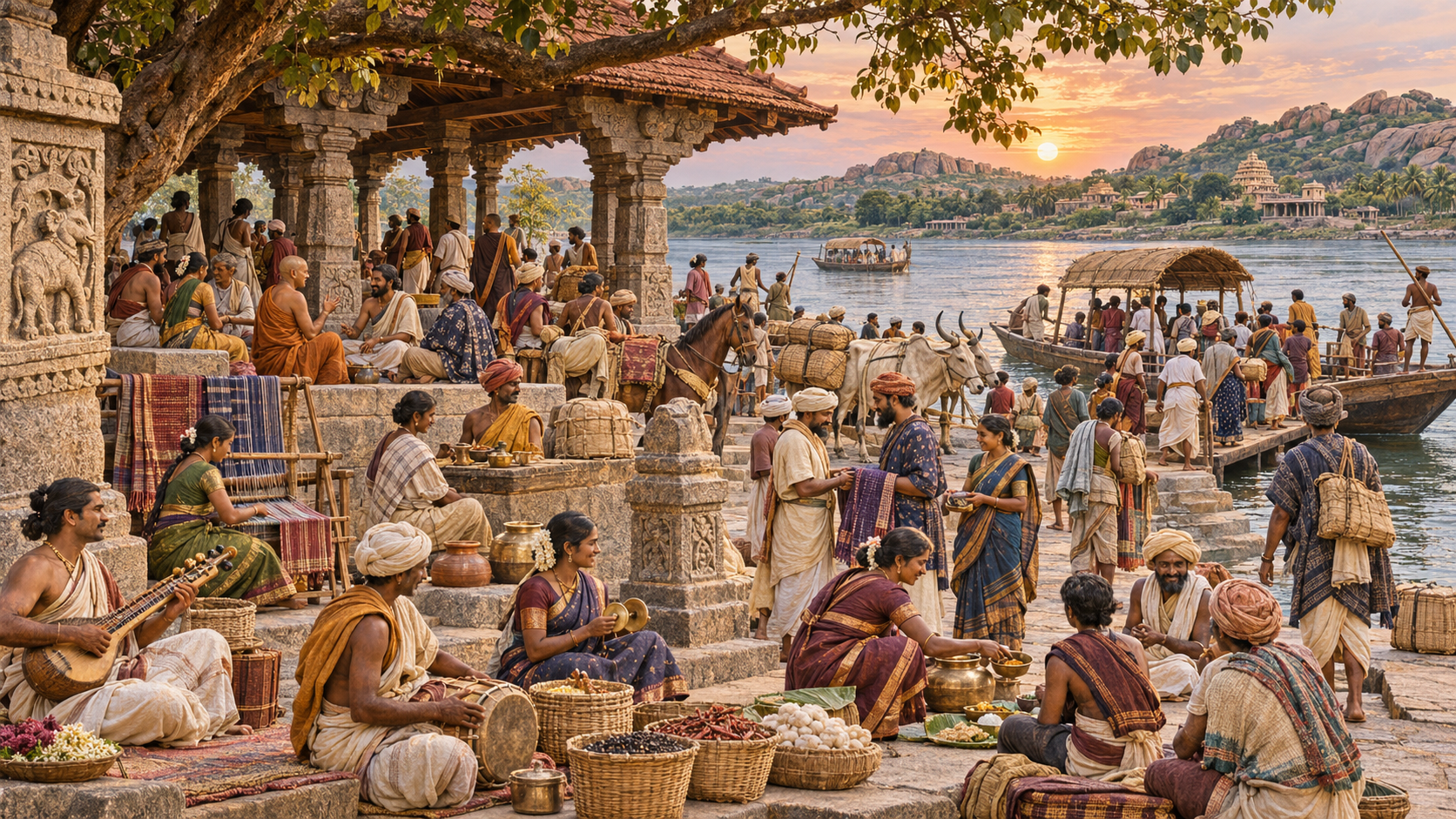
A mature view of Karnataka does not ask you to choose between affection for the region and belonging to Bharat. Karnataka names a particular inheritance. Bharat names a wider civilizational field in which many such inheritances have lived. They operate at different scales and need not compete for the same space.
That distinction also gives regional pride something more substantial to do. Instead of treating identity as a slogan, you can preserve the things through which it remains alive: learn and use Kannada, understand local names in their historical setting, support the transmission of regional traditions, and examine political claims with the same care whether they flatter your loyalties or attack them.
A pro-Bharat outlook should not demand a colourless uniformity. Unity built by denying real regional memories is brittle. A pro-Karnataka outlook should likewise resist the claim that dignity requires political antagonism toward the larger civilization. Pride becomes distortion when it can survive only by inventing an enemy.
The next time you see Karnataka’s past used as a weapon, rewrite the claim in one exact sentence. Identify whether its evidence proves cultural identity, political authority, territorial continuity or sovereignty. Accept the part that holds and refuse the leap that does not. That small discipline lets you honour Karnataka’s depth without forcing its history into a modern ideological mould.
References

Leave a Reply
You must be logged in to post a comment.