

You may know a place through a family pilgrimage, a village name, an annual katha, or a practice handed down at home. Then a textbook or public debate tells you that the same memory is merely legend. You are pushed toward a false choice: defend everything literally or distrust everything inherited.
You don’t have to choose either. You can treat civilizational memory seriously without turning it into unquestionable proof. The practical task is to identify what kind of claim a memory makes, trace how it travelled, test it against other evidence, and state only as much as the combined record can bear.
First ask what kind of claim the memory is making
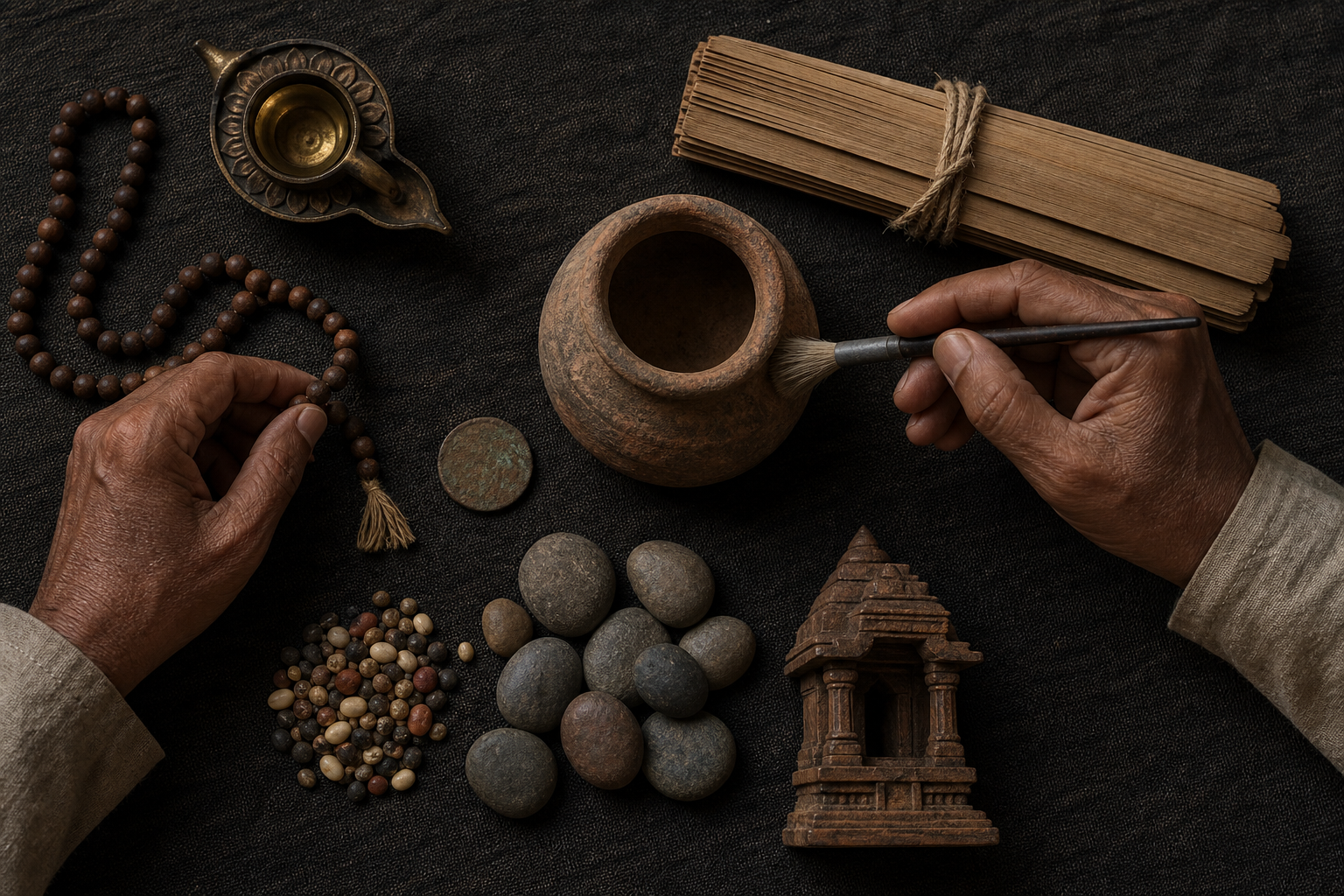
A modern historical argument usually asks whether an event occurred, when it occurred, and who participated. A living tradition may preserve something different: a connection between a community and a place, a route through sacred geography, a pattern of conduct, or an ethical judgement about power. Confusion begins when every kind of memory is forced to answer the same question.
Indic memory is often accumulative rather than neatly divided into sealed periods. A place can retain an older name while acquiring new institutions. A story can move between Sanskrit, Prakrit, Pali, regional languages, performance, pilgrimage, and household instruction. The form changes, but identifiable relationships may endure.
Before deciding whether a claim is true, classify it:
- Event claim: A named action occurred at a particular place or within a particular period. This requires the closest scrutiny of chronology, material remains, inscriptions, textual layers, and plausible alternatives.
- Continuity claim: A name, practice, route, institution, or association persisted across generations. Toponyms, genealogies, recurring performances, pilgrimage circuits, and community records are directly relevant here.
- Identity claim: A community understands itself as connected to a person, teaching, site, or lineage. That self-understanding is historically real even when the antiquity or literal detail of its origin story remains unsettled.
- Meaning claim: A narrative teaches what the community considers dharma, adharma, sacrifice, restraint, justice, or good rule. Archaeology cannot by itself confirm or disprove that normative meaning.
- Transmission claim: A society selected, adapted, and carried a memory because it judged the memory worth preserving. Variations between recensions or performances become evidence of transmission rather than automatic evidence of corruption.
This distinction stops two common errors. A preserved village name does not prove every detail of an epic episode. Conversely, uncertainty about an episode’s date does not make the village’s continuing association with that episode imaginary. Ask the evidence to do the job it can actually do.
Treat living memory as a witness, not a verdict
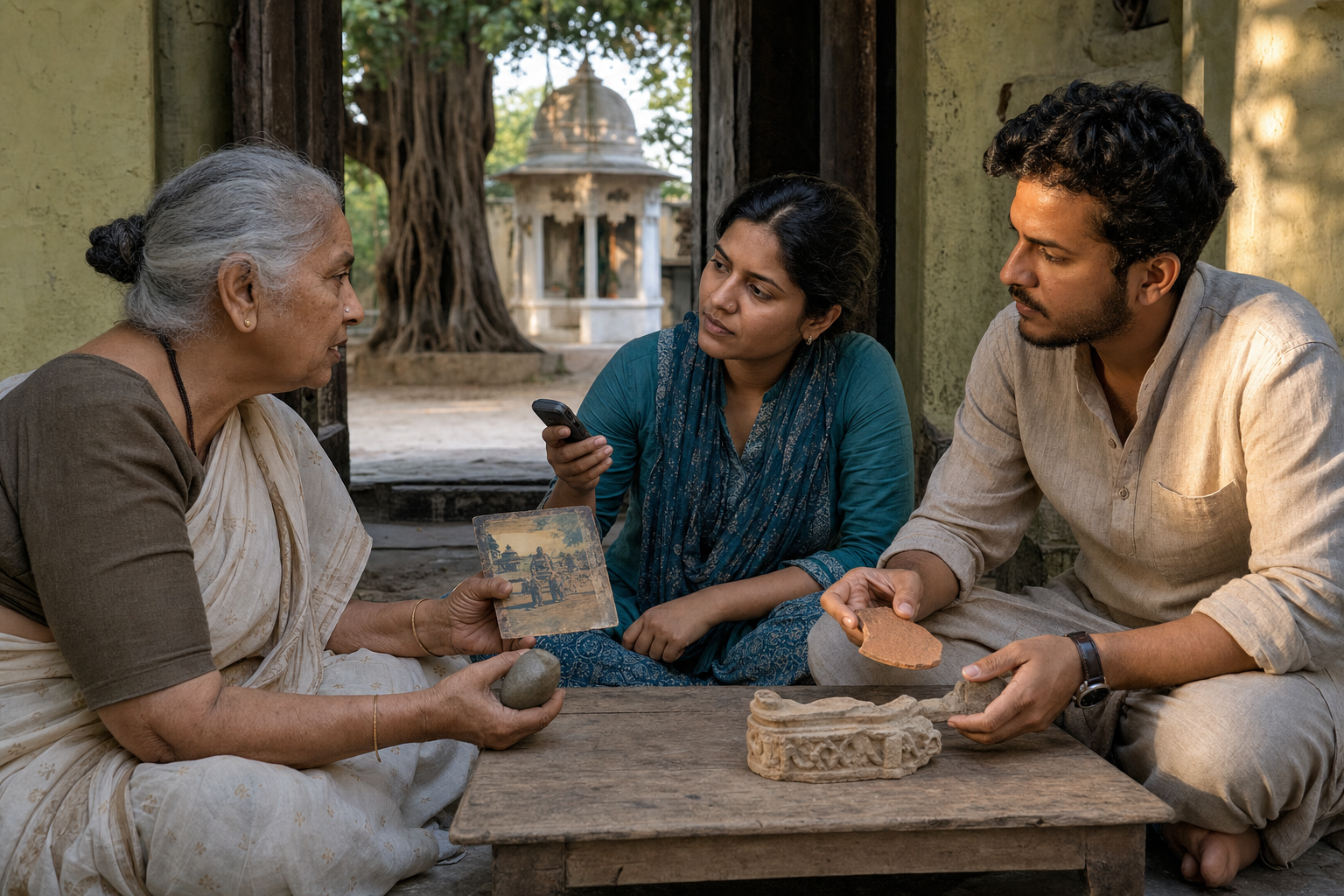
Kampil offers a useful model. Long before archaeological work in the 1990s, the village name and the local name Drupad kila preserved an association with Kampilya and King Drupada. Excavation did not manufacture the identification. It gave investigators material evidence with which to test a geographical memory already carried by the community.
The correct inference is modest but important. Local memory can preserve a testable lead. It can tell you where to look, which name variants matter, what relationship the community remembers, and which physical feature may deserve investigation. It cannot declare its own chronology or certify every attached narrative detail.
Saraswati presents the same method on a larger and more contested scale. The Rig Veda’s river sequence places Saraswati within a recognisable northwestern geography, while geomorphology, satellite imagery, stratigraphy, and Harappan settlement patterns have strengthened the proposed connection with the Ghaggar-Hakra system. That convergence makes the remembered river a serious geographical question. It does not, by itself, settle the date of every hymn, the identity of every Harappan community, or the competing Indo-European migration and homeland models.
Use four tests whenever you encounter a living historical memory:
<!– wp:list {