-
Rebuilding Sonar Bangla: Bengal’s Powerful Path Back as India’s Eastern Gateway

West Bengal’s decline was not inevitable; it followed Partition, policy errors, institutional weakness, labour conflict, and missed industrial opportunities. The article explains how Bengal once combined ports, factories, railways, finance, education, and cultural confidence to become one of India’s strongest economic regions. It highlights the rupture of the jute economy after Partition and the long-term…
-
West Bengal Day 2026: Historic Unity Celebrations as Suhrawardy Avenue Becomes Gopal Mukherjee Road

West Bengal Day 2026 was observed statewide on 20 June with a strong focus on historical literacy, civic service, and unity across Hinduism, Buddhism, Jainism, and Sikhism. A major urban decisionrenaming Suhrawardy Avenue as Gopal Mukherjee Roadwas framed as equitable memory-making that honors community courage during 1946. The government highlighted Dr. Syama Prasad Mookerjee’s contributions…
-
How Kali Kalkattewali Became Kolkata’s Soul: History, Symbolism, and Sacred Identity

“Jai Kali Kalkattewali!” captures Kolkata’s enduring bond with Goddess Kali, uniting history, symbolism, and civic life. This article traces how Kalighat and Dakshineswar shaped the city’s sacred geography and how Ramakrishna and Vivekananda deepened its Shakti-centered identity. Readers learn the meaning of Kali’s iconography, the social significance of Kali Puja and Durga Puja, and the…
-
Calcutta to Bhagalpur: Valentia’s Journey Reveals Empire’s Privilege, Policy, and Paradox

Marquess Wellesley’s 1803 itinerary for Viscount Valentia reveals how rank and Company machinery fused to enable elite travel across the Bengal Presidency. From Chitpore Ghat to Bhagalpur, the journey exposes the infrastructures of empirepalanquins, cantonments, escortsand the social circuits that sustained privilege. Stops at Palashi, Berhampore, Murshidabad, and Jangipur become lenses on military power, administrative…
-
Inside Marquis Wellesley’s 1803 Calcutta Banquet: Plunder-Fueled Opulence and Power

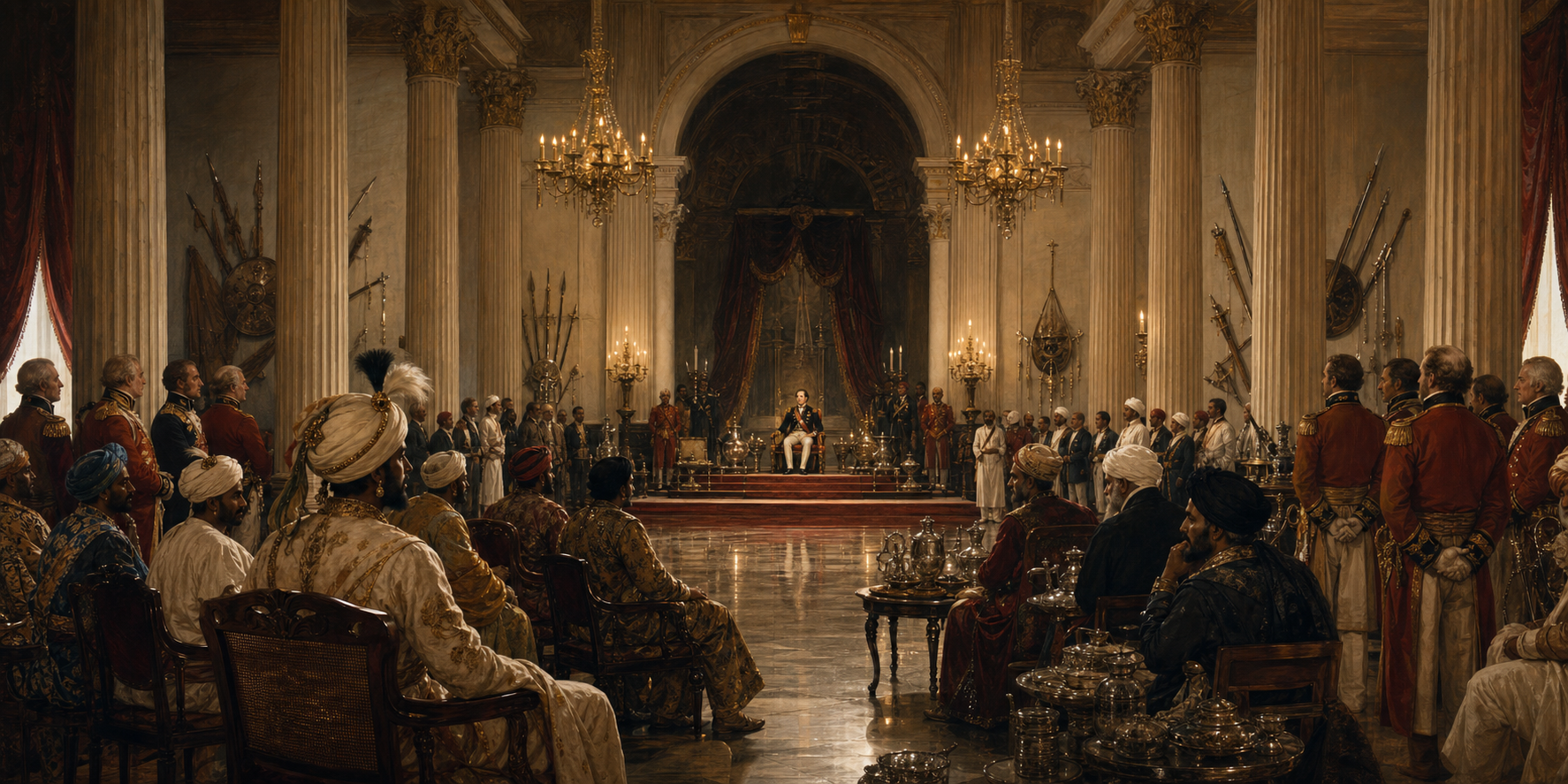
In January 1803, Viscount Valentia entered the newly built Government House in Calcutta and witnessed a meticulously staged display of colonial authority under Marquis Wellesley. The palace itselfannounced as a seat of rule rather than a mere residenceprojected power through architecture, ritual, and spoils of conquest, including a musnud drawn from Tipu Sultan’s throne. Elaborate…
-
How Macaulay and William Bentinck Demolished the Calcutta Golisri Sanskrit School

Explore the devastating impact of Thomas Babbington Macaulay’s role in undermining India’s rich educational heritage, supported by Governor General William Bentinck and other British officials in the 19th century. Their actions led to the destruction of centuries-old Sanskrit schools and colleges across Bengal, with the Golishri Sanskrit School in Calcutta among the earliest casualties. The…