
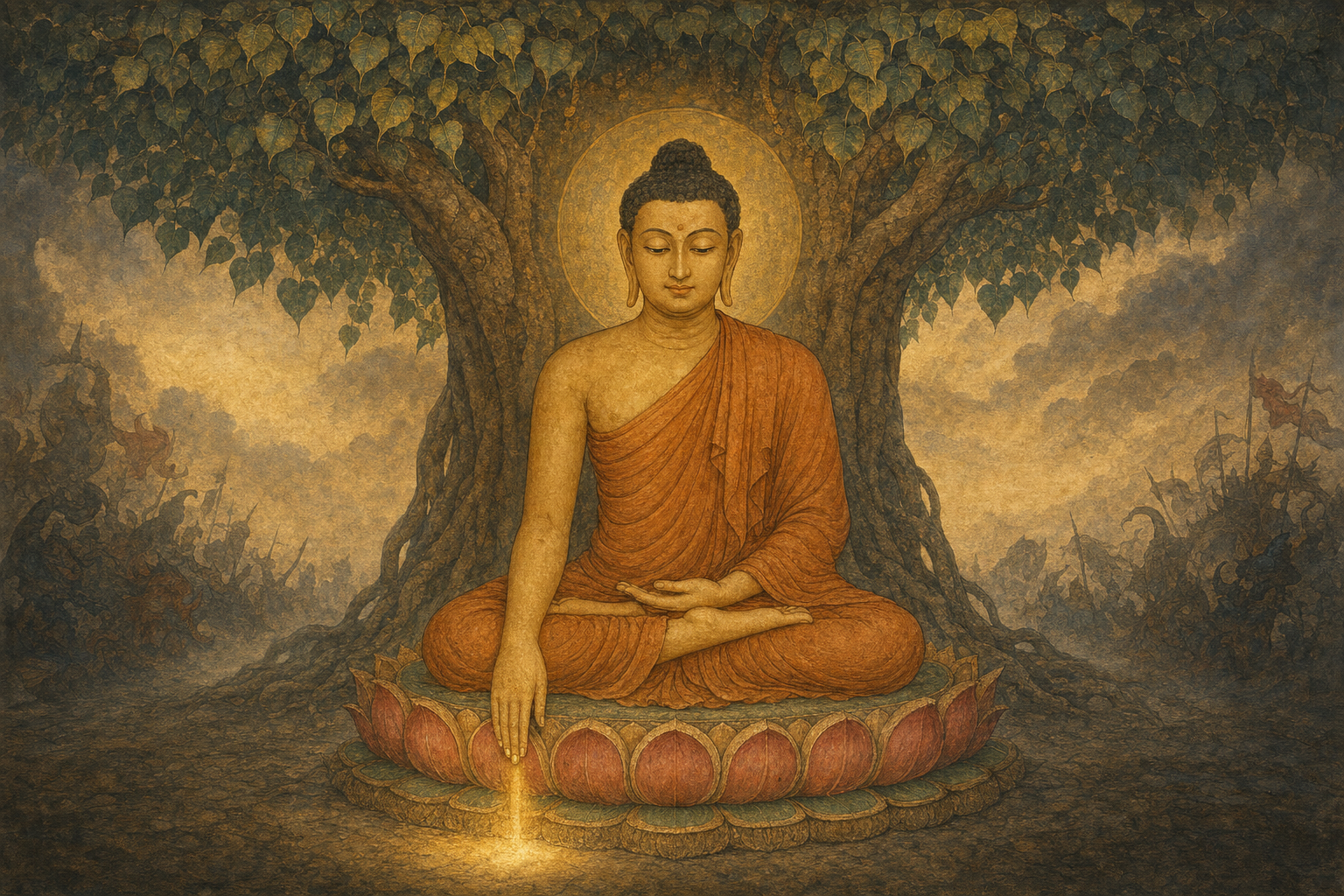
A hand descending toward the ground can turn a seated Buddha image into a complete account of moral preparation, challenge, and awakening. Bhumi Sparsha Mudra is therefore more than a sign of calm or a general symbol of connection with nature: it identifies a decisive moment in Buddhist sacred narrative.
Reading the gesture accurately requires attention to the whole composition, the story it condenses, and the wider Indic setting in which Buddhist artists worked. That context also helps explain why comparisons with Hindu reverence for the Earth can be illuminating without making the gesture itself Hindu.
How to recognize the Earth-touching Buddha
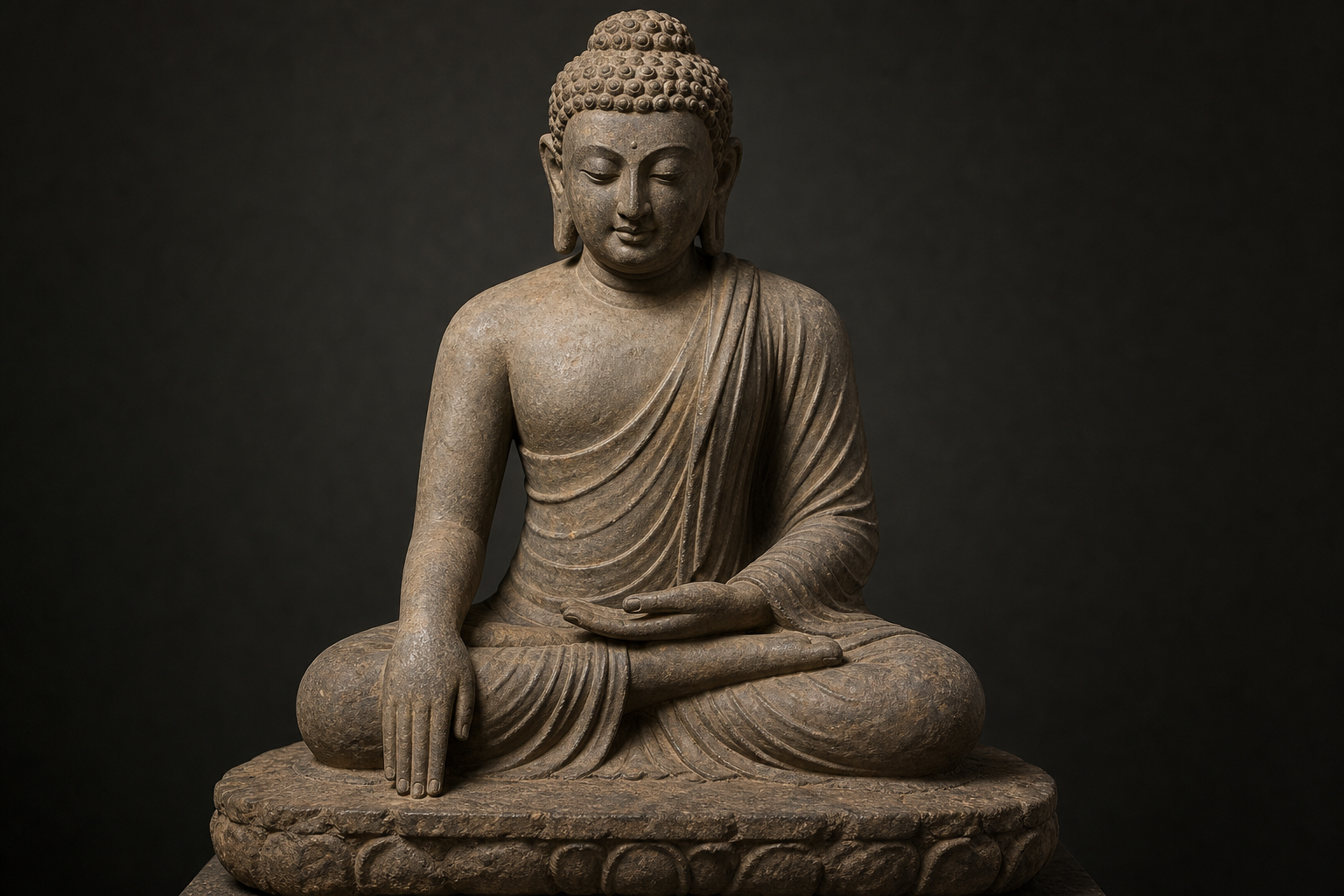
The supplied DharmaRenaissance account explains the Sanskrit name through three elements: bhūmi, meaning Earth or ground; sparśa, meaning touch or contact; and mudrā, meaning a formal sign, seal, or gesture. Together, they identify the Earth-touching gesture.
In the standard composition described by the source, the Buddha sits in meditation with the left hand resting palm-up in the lap. The right arm passes over the right knee, and its fingers extend toward the ground. In a frontal view, that right hand usually appears on the viewer’s left. Depending on the image’s material, region, period, and present condition, the fingertips may meet the pedestal or stop just above it.
The identification depends on this relationship between posture and hands, not merely on downward-pointing fingers. The collected left hand sustains the meditative pose while the extended right hand connects the seated figure to the world outside that inward stillness. The image consequently presents contemplation and a decisive response at the same time.
The awakening narrative compressed into one gesture
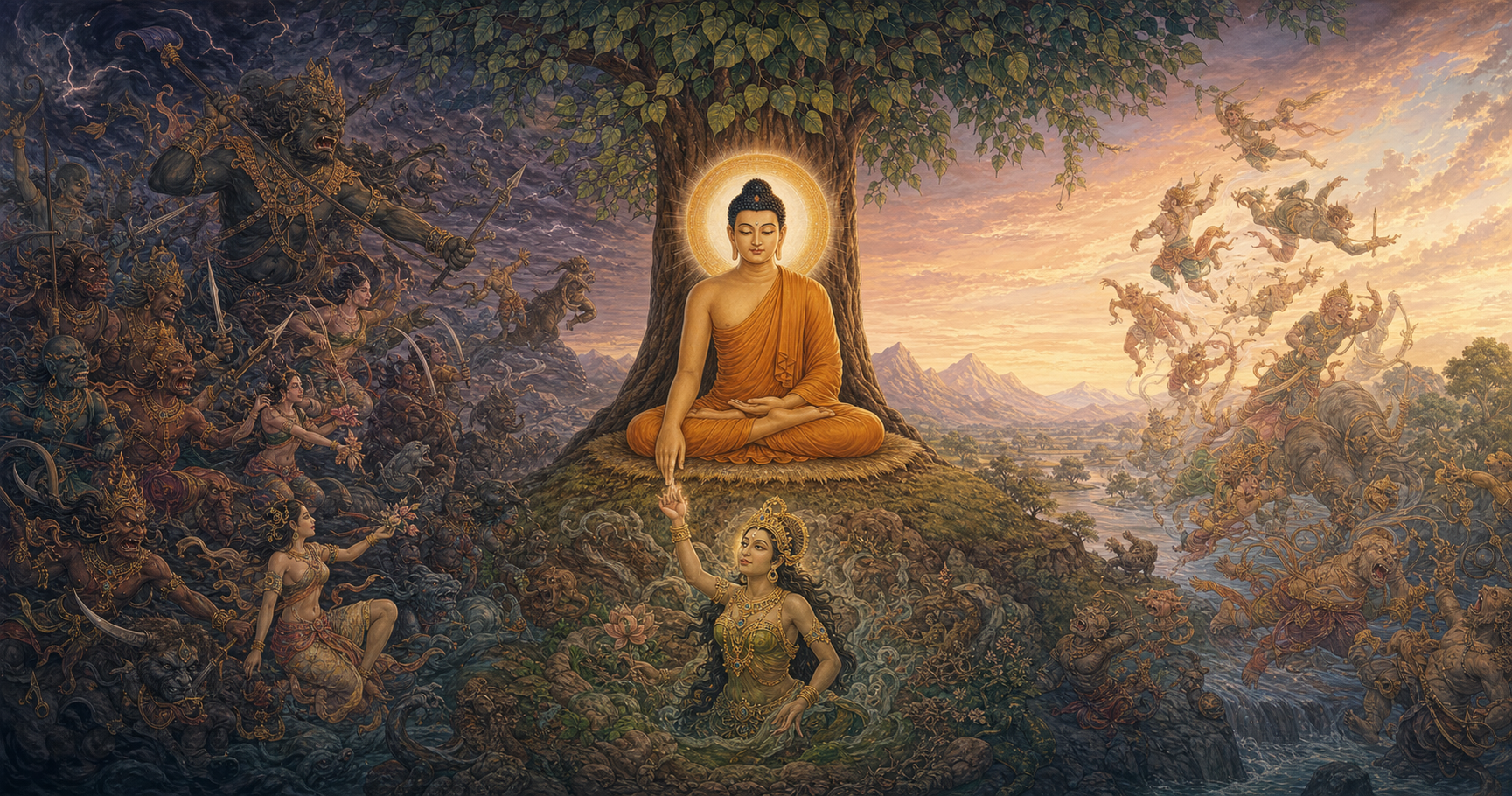
Bhumi Sparsha Mudra refers specifically to Siddhartha Gautama’s confrontation with Māra before awakening at Bodh Gaya. As reported in the source article, Buddhist accounts arrange the episode in different ways, associating Māra with such obstacles as fear, desire, pride, doubt, hostile forces, and challenges to Siddhartha’s spiritual authority.
When Māra demands evidence that Siddhartha is worthy of the seat of awakening, the answer is neither a speech nor an assertion of status. Siddhartha reaches down and invokes the Earth as witness to the generosity, discipline, and meritorious conduct accumulated along his path. The gesture thus refers backward to sustained ethical practice even as it marks the threshold of enlightenment.
This distinction prevents a common misreading. The touch is not depicted as a technique that suddenly produces awakening. It is the visible culmination of conduct and contemplation already tested over time. The DharmaRenaissance article points to a twelfth-century devotional plaque in the Metropolitan Museum of Art as an example in which this episode occupies the center of a condensed visual narrative of the Buddha’s life.
Artistic and textual versions do not all stage the witness identically. Some emphasize the physical touch and a trembling Earth; others personify the witness as an Earth goddess who appears or responds. Such differences show how an iconographic form can emerge from several interacting forces, including narrative transmission, devotion, pilgrimage, regional aesthetics, and artistic choice.
Why the witness is the Earth
Within the source’s interpretation, the Earth functions as the enduring field on which actions occur and acquire consequences. Invoking it moves Siddhartha’s claim beyond private testimony: worthiness rests upon a history of conduct rather than the force of self-description. That gives the downward movement of the hand its moral weight.
The direction also complicates the idea that spiritual realization must be pictured as departure from matter. The Buddha remains seated upon the ground, and awakening is represented through contact with the conditions of embodied life. Transcendence and Earth are not arranged as simple opposites in this image.
Modern viewers may interpret that movement as an invitation to return to the body, the breath, observable consequences, or the next responsible action when confronted by anxiety and doubt. The source presents this as a contemporary contemplative application, not as a substitute for the traditional Buddhist narrative. Keeping those levels distinct preserves both the historical meaning and the image’s continuing suggestiveness.
Shared Indic vocabulary does not erase Buddhist specificity
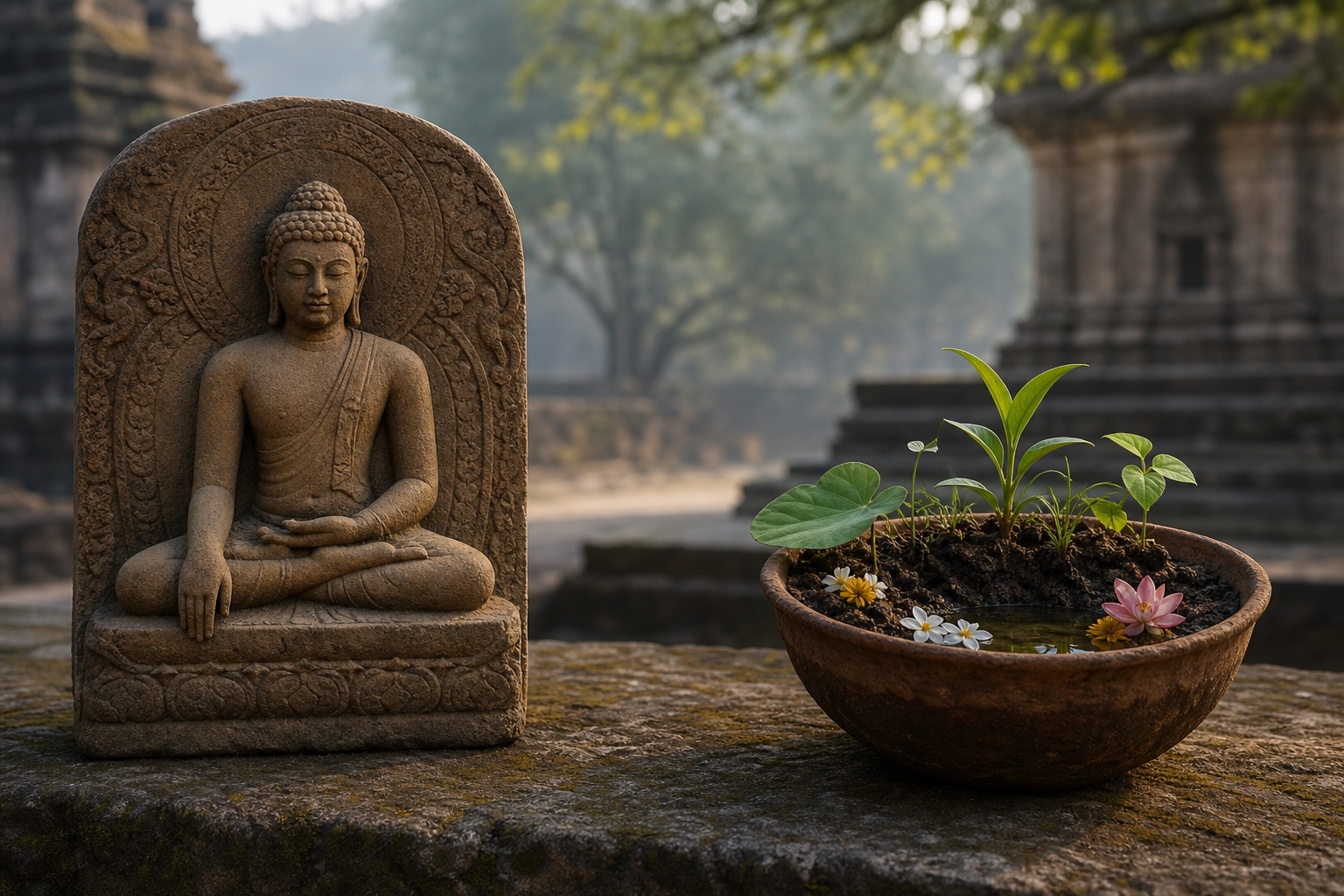
Mudras appear across Indian ritual, yoga, dance, and sacred art, but the term does not carry one uniform function in every setting. The fully developed Bhumi Sparsha Mudra discussed here belongs most specifically to Buddhist representations of Gautama’s awakening; it is not ordinarily the identifying gesture of a Hindu deity.
That boundary need not obscure the shared South Asian environment in which Hindu, Buddhist, and Jain communities used related artistic languages while assigning them different doctrinal meanings. The DharmaRenaissance source places the Buddhist image beside Hindu traditions concerning Bhumi, Bhu, and Prithvi, where Earth can signify physical ground, a sustaining principle, or a divine mother. It also identifies the Bhumi Sukta as Atharvaveda 12.1 and notes Bhudevi’s association with Vishnu in Vaishnava iconography.
These parallels clarify the cultural intelligibility of an Earth witness, but they do not establish that figures or gestures are interchangeable. A careful reading asks who is represented, how both hands are positioned, what narrative episode is being invoked, and which tradition produced or used the work. Comparative context is most useful when it reveals connections while preserving those distinctions.
Key takeaways
- Bhumi Sparsha Mudra identifies the Buddha’s invocation of the Earth as witness immediately before awakening.
- The complete pose combines a meditative left hand in the lap with a right hand extending over the knee toward the ground.
- The gesture represents the confirmation of prior ethical and contemplative preparation, not an isolated shortcut to enlightenment.
- Earth-goddess, earthquake, and direct-touch versions reflect variation among narratives and artistic traditions.
- Hindu traditions of sacred Earth provide valuable Indic context, but the awakening gesture remains specifically Buddhist iconography.
Future encounters with the image can begin with close observation rather than a generalized label. Reading posture, narrative, and religious setting together allows the lowered hand to recover its full significance as an assertion that awakening is answerable to a life of practice.