
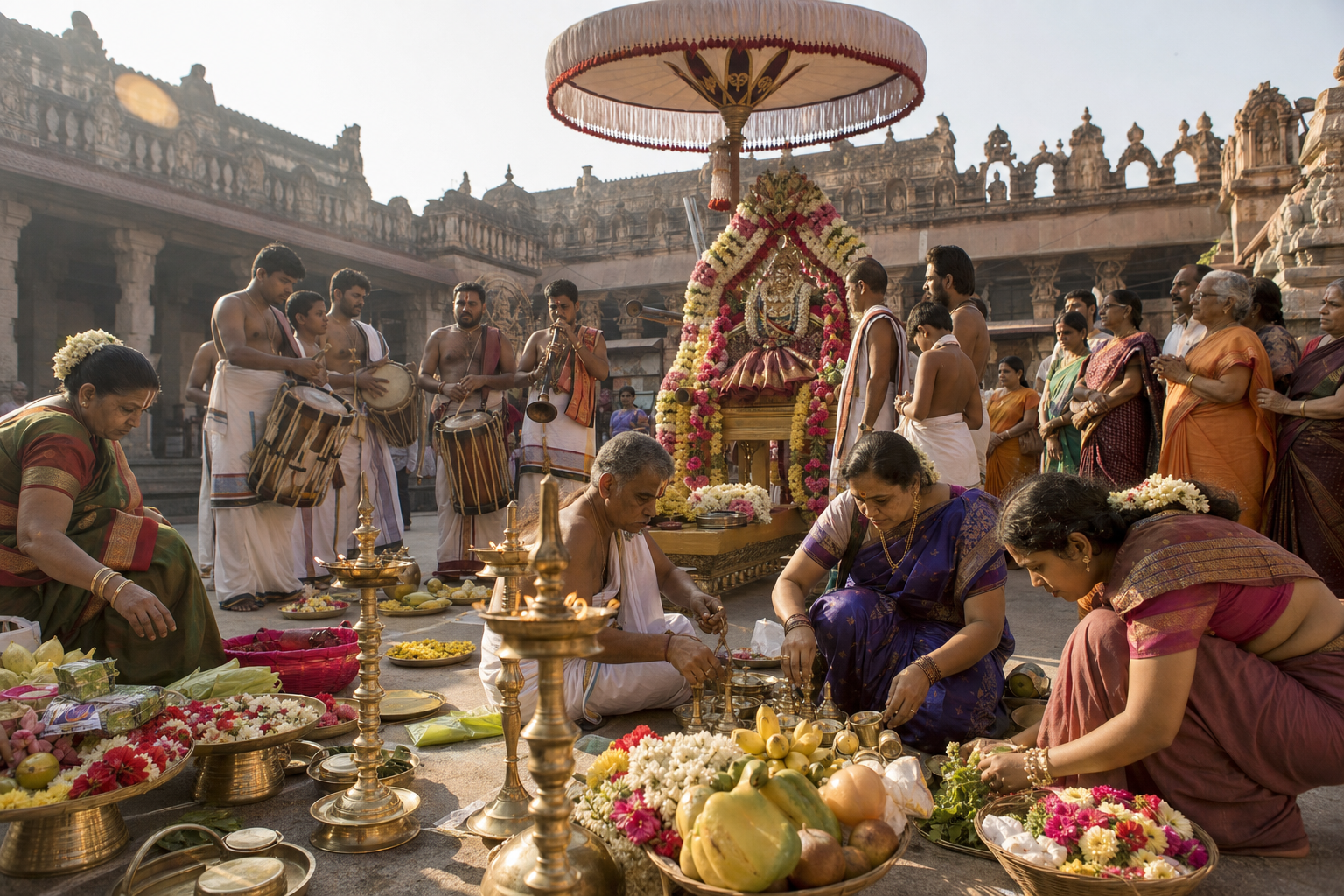
Living Indic sacred festivals endure by connecting inherited meanings with practices that communities can still recognize and transmit. The two source reports illuminate that process from different directions: Pachare through ritual language and divine relationship, and the ISKCON Juhu Gundicha Marjanam festival through contemporary cultural presentation.
Read together, they reveal two layers of continuity. A festival has a sacred grammar expressed through ideas such as hospitality, protection, service, and shared presence. It also has outward forms through which those ideas reach participants and wider audiences. Keeping those layers distinct helps explain how traditions can adapt without becoming interchangeable.
The ritual grammar of receiving and serving the sacred
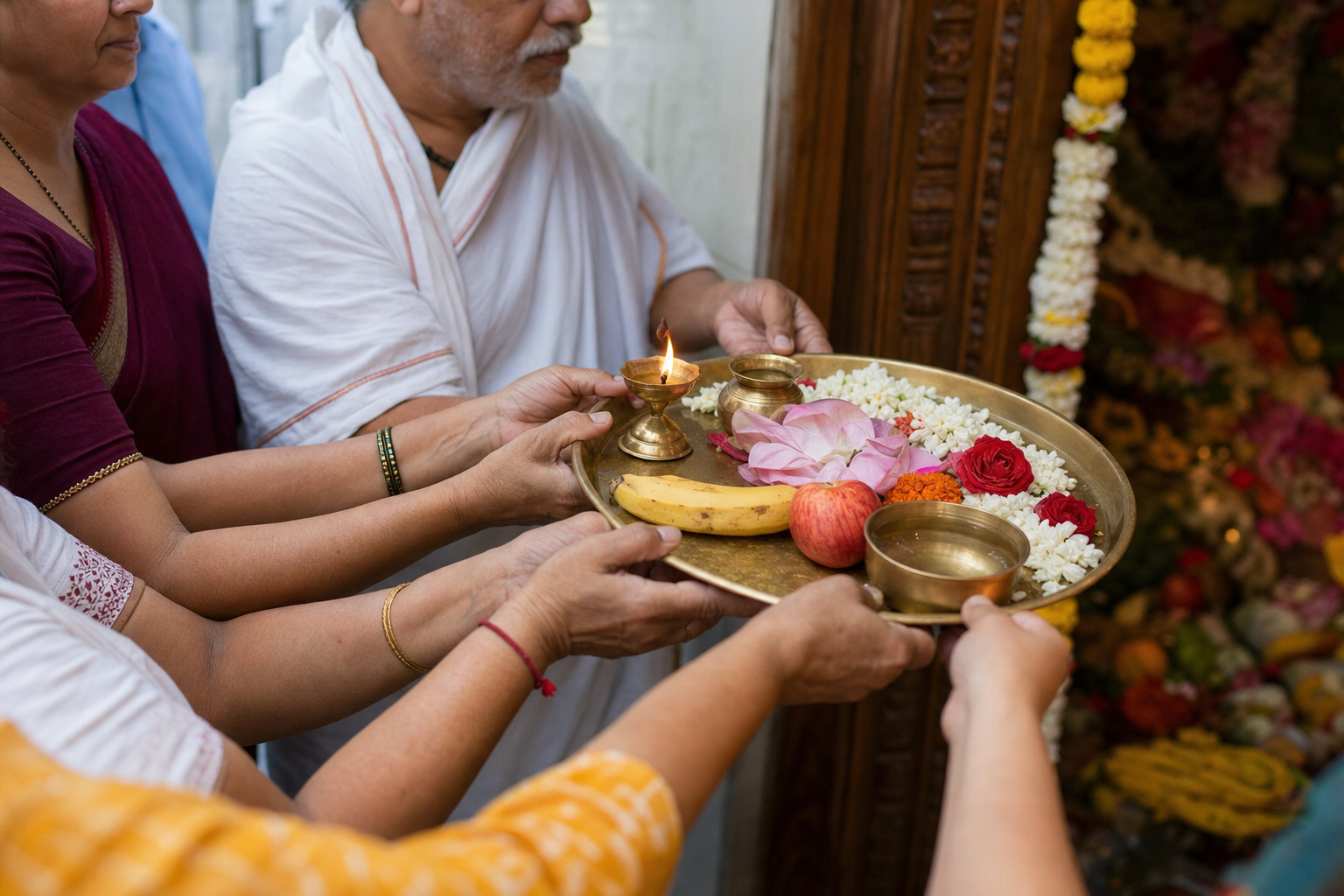
Hindu Blog presents Pachare, also called Pahachare, as a festival grounded in sacred hospitality. Its account explains that “Paha” means guest and “Chahre” refers to Chaturdashi, the fourteenth lunar day. The combined name therefore evokes welcoming the divine as an honored guest on a particular lunar occasion. The calendar is not merely a way to date the observance; it structures a relationship between the community and the sacred.
The same source’s headline describes Pachare as the sacred union of five goddesses, while its introductory framing emphasizes divine feminine power, protection, and Newar tradition. These elements connect plurality, guardianship, and hospitality within one festival vocabulary. The divine is approached not as an abstraction but through named relationships and a communal act of reception.
The Dandavats source approaches its subject differently. Its headline identifies the ISKCON Juhu Gundicha Marjanam festival as the subject of ITV’s first cinematic musical production. As general linguistic context, marjanam is commonly associated with cleansing. The supplied source material, however, provides no further account of the rite, production, participants, or reception, so conclusions about those details would be unwarranted.
The contrast is instructive. The Pachare report explains the meaning encoded in a festival’s name, while the Dandavats headline foregrounds a new vehicle for presenting a festival. One makes the inner ritual logic legible; the other points to a contemporary form through which sacred practice can be represented.
Place and community are part of the religious meaning
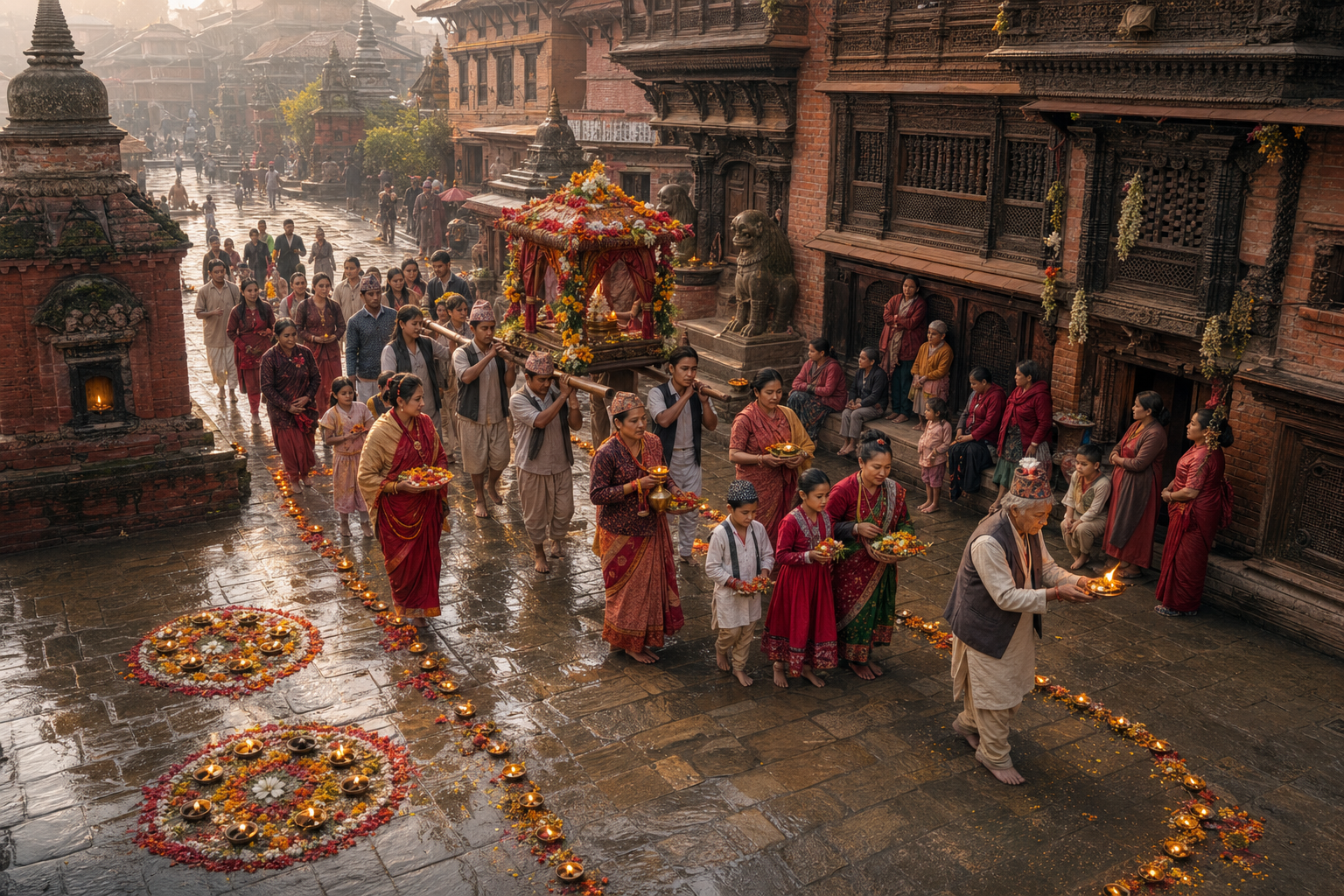
According to Hindu Blog, the name and symbolism of Pachare are rooted in the Newar civilization of the Kathmandu Valley. That setting is not incidental background. The reported meanings of guesthood, the lunar date, the five goddesses, and protection form a locally coherent pattern. Removing the Newar context would leave a general account of goddess worship but obscure what makes Pachare distinctive.
The Dandavats headline likewise places its festival within a named setting: ISKCON Juhu. The available material does not establish how this observance compares with Gundicha Marjanam celebrations elsewhere, and it should not be used to suggest that every community presents the festival in the same way. What it does establish is that the report concerns a particular devotional institution and a particular cultural production.
Together, the sources caution against describing Indic festivals as a single uniform system. Related sacred concepts may travel across regions and institutions, but their living expression depends on local language, inherited relationships, community memory, and the forms considered meaningful in a given setting. Local variation is therefore not peripheral to continuity; it is one of continuity’s principal mechanisms.
New media can extend a festival without replacing it
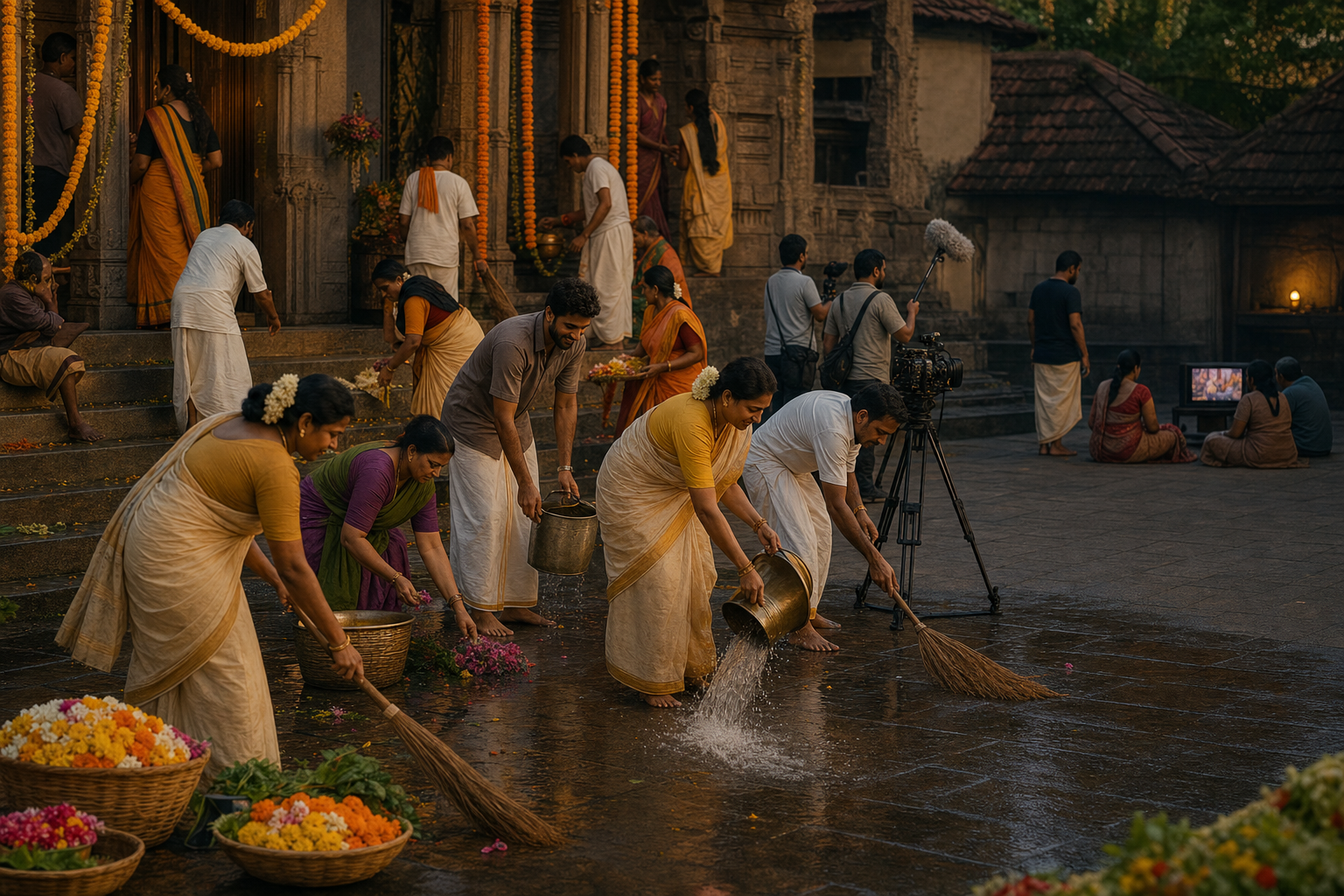
Calling the Gundicha Marjanam presentation a cinematic musical production makes mediation part of the Dandavats story. Film and music can potentially introduce sacred narratives to people who are not physically present, preserve aspects of a presentation, and give an institution a vocabulary suited to contemporary audiences. Those are possibilities of the medium, not reported outcomes of this particular production.
Representation also adds interpretation. Choices about narration, imagery, music, sequence, and emphasis shape what an audience understands the festival to mean. A mediated version should therefore be read as a presentation of a tradition rather than as the totality of the tradition itself. The rite, its community setting, and the artistic work may be closely connected while remaining distinct.
The Pachare article performs a comparable interpretive function through text rather than cinema: it translates a local name and draws attention to its theological symbolism. Both cases show that transmission always involves explanation. The important question is not whether a festival uses an old or new medium, but whether the medium preserves the relevant sacred relationships, identifies the community context, and avoids presenting one rendition as universally definitive.
Key takeaways
- Hindu Blog interprets Pachare as sacred hospitality, linking its name to the ideas of guesthood and Chaturdashi.
- Its account places the union of five goddesses, divine feminine power, and protection within the Newar tradition of the Kathmandu Valley.
- Dandavats identifies the ISKCON Juhu Gundicha Marjanam festival as the subject of ITV’s first cinematic musical production, demonstrating how contemporary media can enter the public presentation of an observance.
- The sources illuminate different dimensions of a living tradition: one explains ritual meaning, while the other highlights a medium of transmission.
- Adaptation is most intelligible when local context, sacred purpose, and artistic representation are examined separately and then related carefully.
What careful festival documentation should preserve
Responsible accounts of sacred festivals need to distinguish reported detail from interpretation. For Pachare, the supplied source provides an etymology, lunar association, regional setting, and theological framing. For the ISKCON Juhu event, the supplied evidence supports only the festival and production description contained in the Dandavats headline. Maintaining that difference prevents a thin record from being expanded into unsupported claims.
Future documentation can strengthen understanding by recording how participants explain a festival, which elements they consider indispensable, how local identity shapes the observance, and how artistic presentations relate to ritual participation. Such work would allow new audiences to encounter living traditions through contemporary forms while keeping the communities and sacred relationships at their center.
References
- Hindu Blog – Pachare Jatra: The Sacred Union of Five Goddesses and Their Timeless Symbolism
- Dandavats – ITV First Cinematic Musical Production – ISKCON Juhu Gundicha Marjanam Festival