
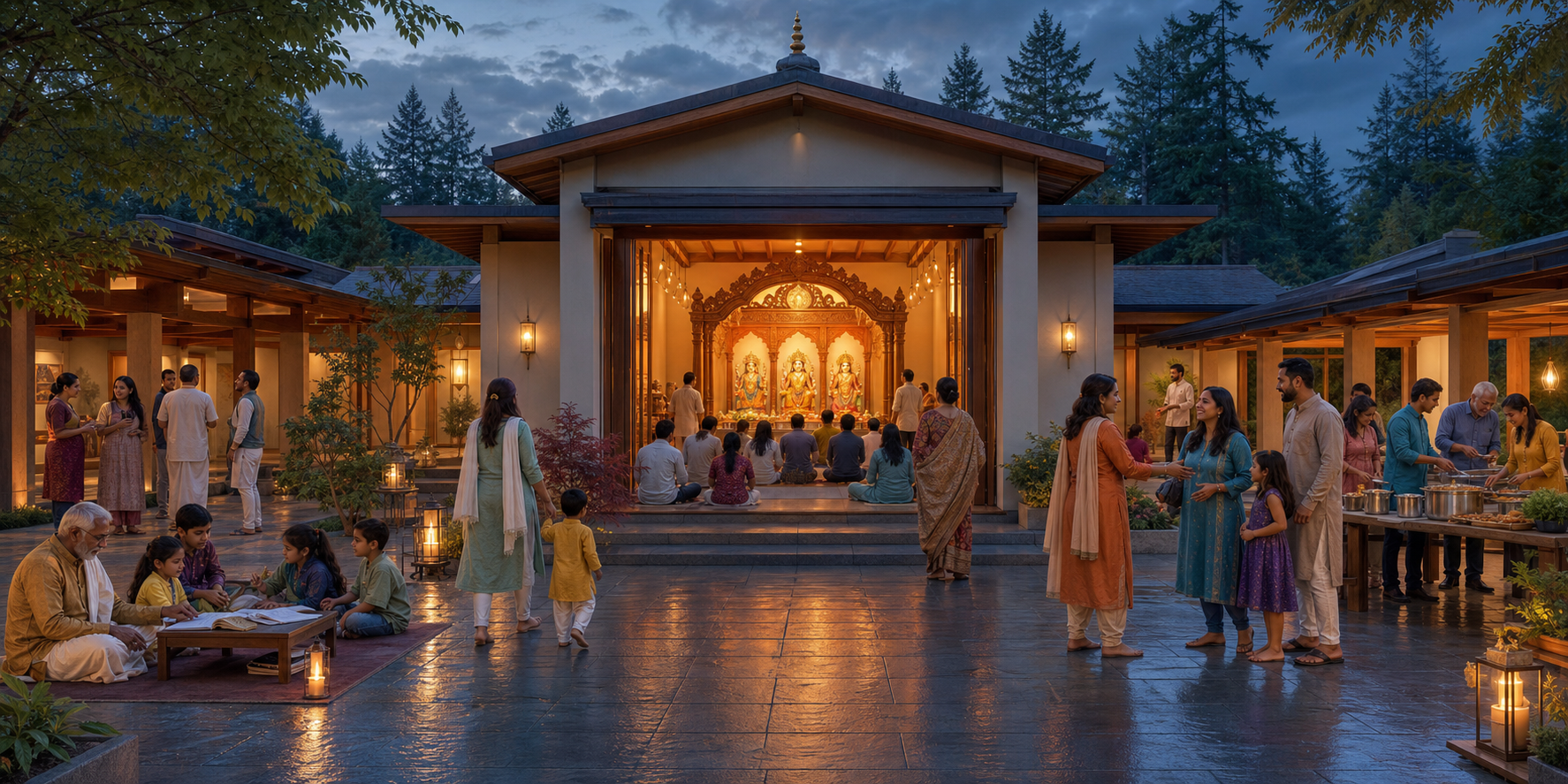
A temple’s community role begins with a religious question: what is the sacred space for? Its social strength then depends on whether that purpose becomes a dependable pattern of worship, learning, hospitality and shared responsibility.
The two source articles approach this relationship from different directions. Hindu Blog offers a conceptual comparison of temple purposes, while Dandavats reports how a renovated property near Seattle began serving devotee families. Read together, they connect theological identity with the practical work of building a living institution.
Sacred purpose determines what a temple community builds
Hindu Blog frames a Hindu temple as a residence of the Divine and a Buddhist temple around the path of the Dharma. It notes that Hinduism and Buddhism share roots in the Indian subcontinent, respect sacred spaces, encourage ethical conduct and support spiritual growth. At the same time, it identifies differences in purpose, structure, symbolism and religious function.
That distinction has practical consequences. A temple is not merely a neutral venue to which religious activities are added. Its understanding of the sacred shapes the practices it prioritises, the way participants relate to the space and the kind of community it seeks to sustain. Traditions may share broad ethical or contemplative aims without treating their temples as interchangeable institutions.
Contemporary community planning therefore works best when it begins with clarity about religious function. Programs should arise from the temple’s spiritual purpose instead of becoming an unrelated collection of events. Architecture, teaching, collective practice and hospitality can then reinforce one another.
The Lynnwood account shows purpose becoming a program
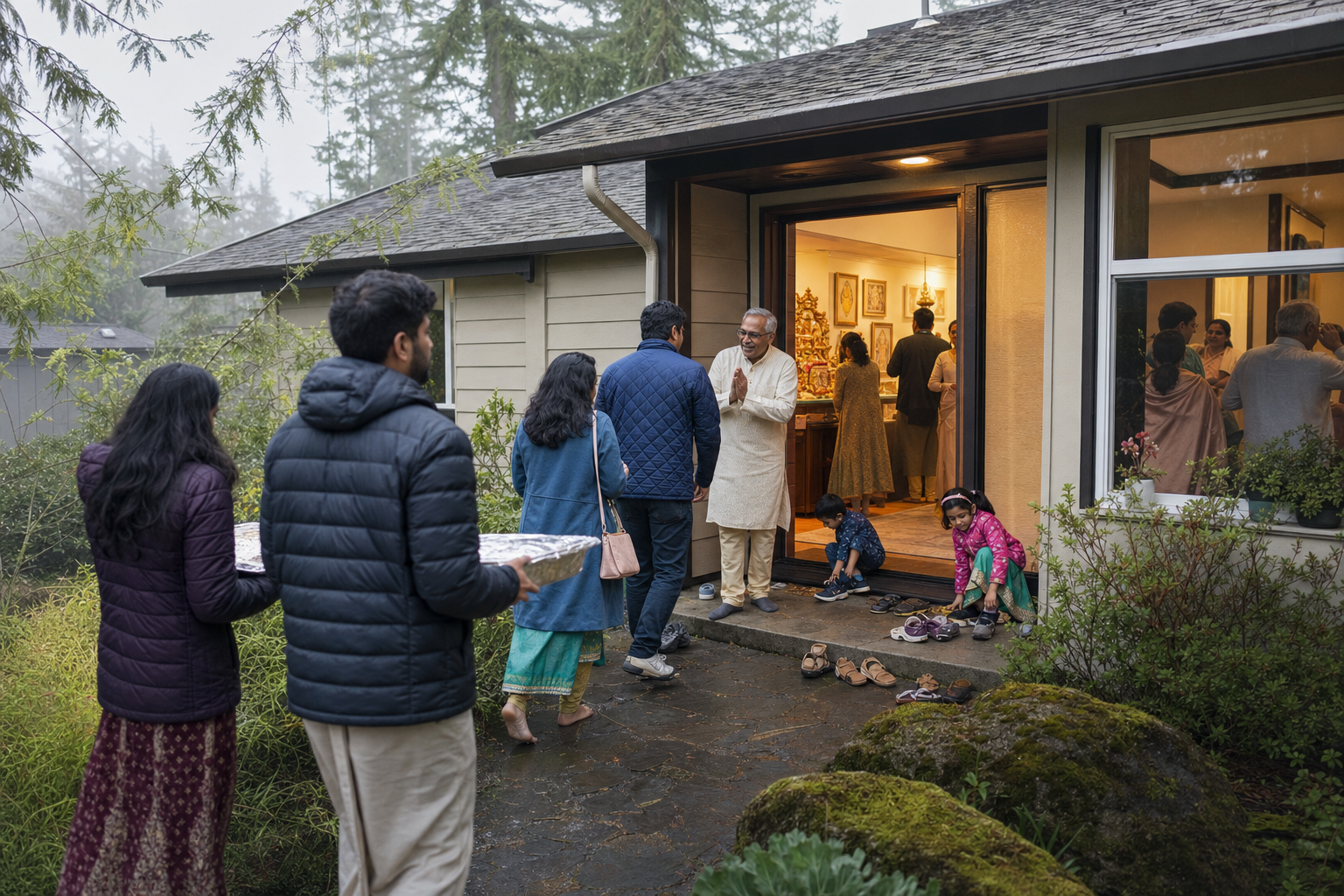
Dandavats supplies a small but concrete example. It reported that a church property had been purchased the previous year in the Lynnwood area, described as a family-friendly suburb about 26 kilometres north of downtown Seattle and a practical alternative to Seattle’s high living costs. The article also said that many devotee families lived nearby.
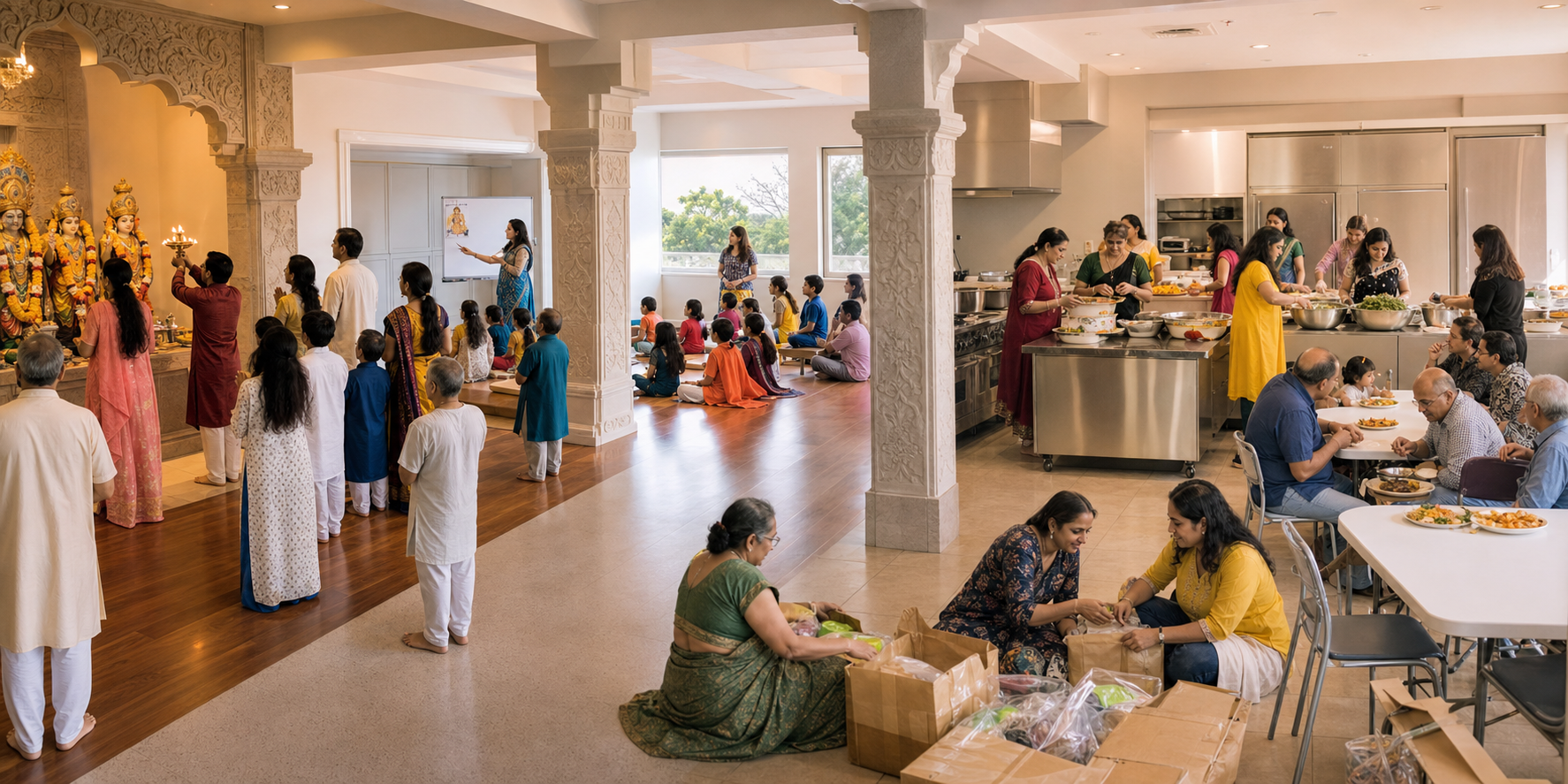
After renovation, according to the report, the building hosted kirtan, classes and prasadam programs, as well as instruction for children. The account further described a visit by Hari Vilasa and the article’s author to lead kirtan and a class and to encourage the local devotees.
The significance lies in the combination rather than any single activity. Kirtan establishes a shared devotional practice; classes support understanding; prasadam gives gathering a hospitable and relational dimension; and children’s instruction addresses continuity between generations. Proximity to devotee families makes sustained participation more plausible than a location chosen only for symbolic prominence.
The report is a brief account, not a long-term assessment. It does not provide attendance figures, financial information, governance arrangements or evidence about lasting outcomes. It nevertheless illustrates an important transition: acquiring and renovating a building created capacity, but recurring practices began turning that capacity into community life.
Key takeaways
- A temple’s programs should express its religious purpose rather than treating the building as a generic event venue.
- Location matters because regular participation is easier when the centre is accessible to the families it intends to serve.
- A balanced rhythm can connect collective devotion, teaching, shared food and formation of children.
- Adaptive reuse can provide a practical home for a community, but renovation alone does not create an institution.
- Reports of early activity show momentum; claims of durable impact require evidence about participation, responsibility and continuity over time.
Community building requires coherence, cadence and continuity
Coherence asks whether the activities belong together. Hindu Blog’s comparison makes clear that the answer must come from the tradition’s own account of temple purpose. In a devotional setting such as the one reported in Lynnwood, collective practice, instruction and hospitality can operate as related expressions of that purpose.
Cadence concerns repetition. A special visit can encourage a community, but ordinary, dependable programs give participants a reason to return and relationships time to deepen. The relevant question is not simply whether an event occurred, but whether a sustainable pattern of participation is taking shape.
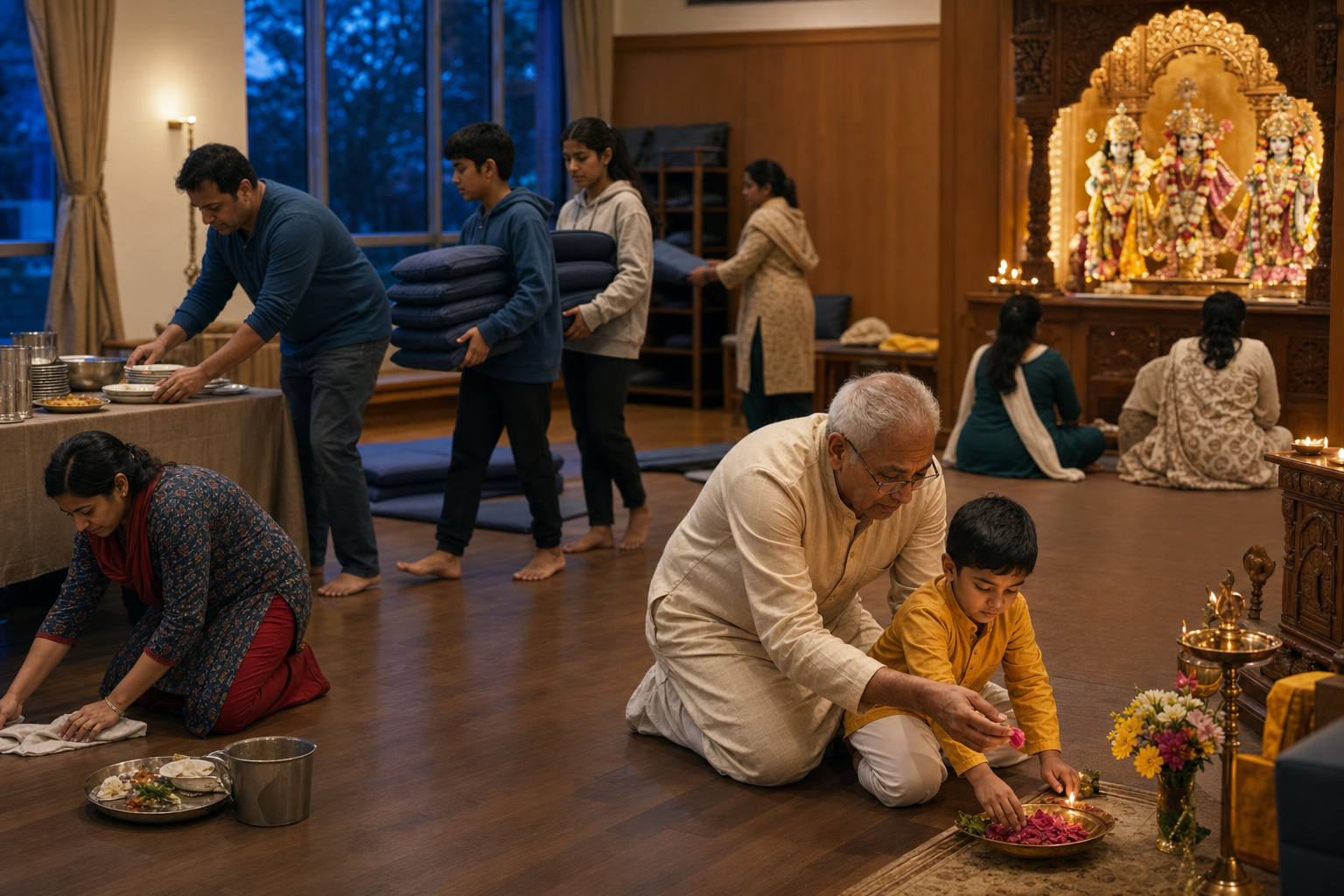
Continuity concerns the future. Children’s education is one visible element, but continuity also depends on whether participants learn to welcome others, share work and carry programs without relying indefinitely on a few organisers. A healthy temple community develops contributors as well as attendees.
This framework also helps prevent two common reductions: treating a temple only as a monument, or treating it only as a community centre. The sources together suggest a more integrated view. Sacred purpose supplies direction, while accessible space and recurring programs give that purpose a durable social form.
The next stage for contemporary temples is therefore institutional maturity: preserving a clear spiritual centre while widening the circle of people capable of sustaining worship, learning, hospitality and service across generations.
References
- Hindu Blog — Difference Between A Hindu Temple And A Buddhist Temple
- Dandavats — New Lynnwood Temple | Ramai Swami