-
Tara Devi Mahatmyam: Unveiling the Compassionate Power of Tara Mahavidya for Courage and Unity

Tara Devi, honored as one of the Mahavidyas and a form of Durga Devi, is celebrated for protective compassion and transformative guidance. The Adbhuta Ramayana and Buddhist texts both acknowledge her presence, reflecting a shared dharmic reverence that fosters interfaith harmony. In Shakta traditions, Tara’s Mahatmyam emphasizes the courage to “cross” life’s difficulties through wisdom…
-
Anagha Devi, Shakti of Lord Dattatreya: Radiant Compassion, Iconography, and Devotional Significance

Anagha Devi is venerated as the Shakti of Lord Dattatreya, embodying purity, protection, and compassionate grace. Her iconography—serene radiance and the symbolism of amrita—expresses healing and spiritual renewal. Devotees often experience a motherly bond with Maa Anagha, finding steadiness and hope in challenging times. The Anagha–Dattatreya relationship highlights a key dharmic insight: consciousness and Shakti…
-
Lord Shiva’s Calm Power: Inspiring Patience, Courage, and Dharmic Unity in Daily Life

Lord Shiva is portrayed in Hindu philosophy as the tranquil Mahayogi whose calmness and compassion motivate ethical living. Rather than anger, the scriptures emphasize patience, forgiveness, and adherence to dharma, offering a practical model for modern life. Simple practices—such as chanting Om Namah Shivaya, mindful breathing, and daily meditation—can steady attention and reduce stress. The…
-
Matangi Mahatmyam: Unveiling the Tantric Saraswati’s Power for Wisdom, Music, and Courage

Matangi Devi, honored among the Mahavidyas, is celebrated as the Tantric Saraswati who governs education, music, eloquence, and wisdom. Matangi Mahatmyam highlights how devotion refines speech, steadies the mind, and strengthens courage. Practitioners value her blessings for academic excellence, artistic mastery, and ethical discernment. Protective aspects are interpreted as resilience against both outer adversity and…
-
Darbha Sayana Murthy: Sri Rama’s Yoga Nidra Before Lanka—Symbolism, Strength, and Serenity

Darbha Sayana Murthy recalls the moment Sri Rama, poised to reach Lanka, prays to Lord Varuna and enters Yoga Nidra upon a bed of Darbha grass. The scene blends disciplined patience with strategic resolve, presenting leadership as calm strength before decisive action. Darbha symbolizes purity and protection, turning the earth into a sacred altar that…
-
Unmasking the Golden Deer: The Ramayana’s Allegory of Desire, Maya, and Dharma

The golden deer episode in the Ramayana functions as a refined allegory of human desire, maya (cosmic illusion), and ethical vigilance. By tracing Sita’s captivation, Rama’s pursuit, and Ravana’s exploitation, the narrative shows how alluring appearances disperse attention and compromise dharma. Read symbolically, the deer represents desire’s shimmer—radiant yet elusive—while the episode models the need…
-
Silent Power of Vidura: How Strategic Restraint Became Ethical Resistance in the Mahabharata

Vidura’s leadership in the Mahabharata shows how restraint can function as ethical resistance when counsel is ignored and adharma gains ground. Drawing on Vidura-niti and Udyoga Parva, this analysis highlights how calibrated speech, principled silence, and timely withdrawal form a coherent framework for just action. The approach resonates across Hindu, Buddhist, Jain, and Sikh traditions…
-
Sixty Years On: Srila Prabhupada’s Inspiring Global Bhakti Legacy and London’s ISKCON Community

Sixty years after Srila Prabhupada’s arrival in the West, the global reach of bhakti yoga is evident in vibrant communities like ISKCON London. Visitors to Vaishnava centres observe how kirtan, prasadam, and study of the Bhagavad Gita create cohesion and purpose. Framed within a broader dharmic context, this growth affirms unity in spiritual diversity across…
-
ISKCON Press Origins: Boston’s Joyous Welcome for Srila Prabhupada and a Movement in Transition

Devotees from Buffalo, Columbus, New Vrindaban, Pittsburgh, Philadelphia, and Washington, D.C. convened in Boston to greet Srila Prabhupada, revealing a pivotal moment in early ISKCON history. A school bus from 38 N. Beacon Street to the airport underscored grassroots organization and shared purpose. Photographs of a banner reading “ISKCON New York Welcomes Prabhupada,” with Swarup…
-
From Despair to Sacred Acceptance: A Dharmic Journey Through Grief, Faith, and Growth

This reflective narrative examines a parent’s movement from grief to Acceptance after a child’s diagnosis of autism and intellectual disability. It shows how self-pity, encapsulated in “Why me, God?”, can be transformed through Krishna-bhakti, inner discipline, and dharmic values into the empowering perspective of “Why not me, God?”. Readers gain practical insight into Emotional resilience…
-
Rethinking Advanced Civilization: A Vedic Lens on Technology, Wealth, and Inner Consciousness

Modern metrics often define advanced civilization by technology, comfort, and wealth, but Vedic philosophy—especially the Bhagavad-Gita—broadens the lens to include consciousness, ethics, and dharma. This perspective views the person as an eternal, conscious entity (jiva/atman) animating the body, much like a driver guides a car. By integrating material progress with inner development, societies gain resilience,…
-
From Celebrity Tattoos to Sacred Texts: How a Closed Gita Sparked Bhakti and Unity

A contemporary symbol—like a celebrity tattoo—can become a threshold to timeless wisdom. This reflection examines how the Bhagavad-Gita functions as a living conduit for guidance in the bhakti tradition while resonating with the reverence offered to sacred texts in Sikhism, Buddhism, and Jainism. It explains why the saying, “Give someone one of Srila Prabhupada’s books,…
-
Letting Go Like the Sacred Tree: Dharmic Wisdom on Release, Renewal, and Inner Freedom

A tree’s effortless shedding of leaves models the dharmic discipline of letting go. By aligning with Aparigraha and acting without rigid attachment to outcomes, practitioners cultivate inner freedom and clarity. Parallel teachings in Buddhism, Jainism, and Sikhism reinforce a shared ethic of balance, compassion, and resilient optimism. Practical steps—such as breathwork, meditation, and seva—translate symbolism…
-
From Discord to Dialogue: Hindu Wisdom to Prevent Animosity and Heal Modern Divides

Modern public debate often slips from critique into personal animosity. Dharmic teachings offer a corrective: examine ideas rigorously while honoring the dignity of persons. Hindu philosophy’s commitment to Ahimsa and the Bhagavad Gita’s portrait of equanimity encourage clarity without cruelty. Jainism’s Anekantavada reframes disagreement as a many-sided search for truth. Buddhist Right Speech and Sikh…
-
Shakti and Sacred Balance: What Hindu Scriptures Teach About True Gender Equality

Hindu scriptures present gender equality as a sacred metaphysical truth grounded in the unity of Shiva and Shakti, not as a modern concession. Vedic and Puranic sources—from the Devi Sukta to the image of Ardhanarishvara—affirm complementarity rather than hierarchy. Everyday practices like Navaratri and Saraswati puja translate these ideals into lived culture that honors women’s…
-
December 13, 2025 Panchang: Krishna Paksha Navami to Dashami, Tithi, Nakshatra & Shubh Muhurat

On Saturday, December 13, 2025, the Hindu Panchang notes Krishna Paksha Navami until 7:38 PM, followed by Krishna Paksha Dashami. The day’s waning-moon rhythm supports quiet devotion, study, and steady completion of tasks. Shubh Muhurat varies by location; Brahma-muhurta and Sandhya are commonly observed for prayer and meditation. Nakshatra and Rashi details should be taken…
-
Lalita Tripura Sundari Mahatmyam: Unveiling the Mahavidya’s Transformative Grace and Wisdom

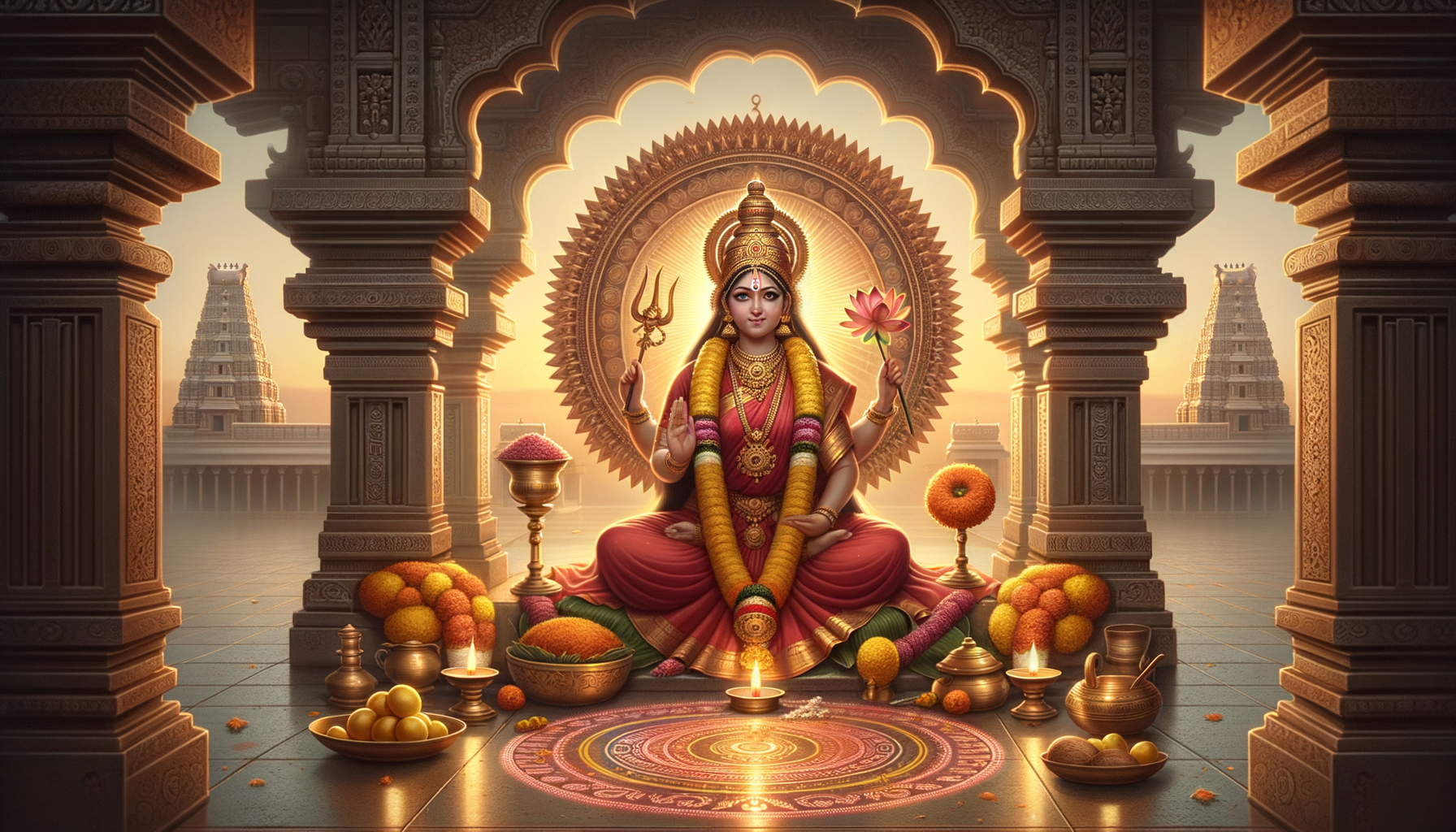
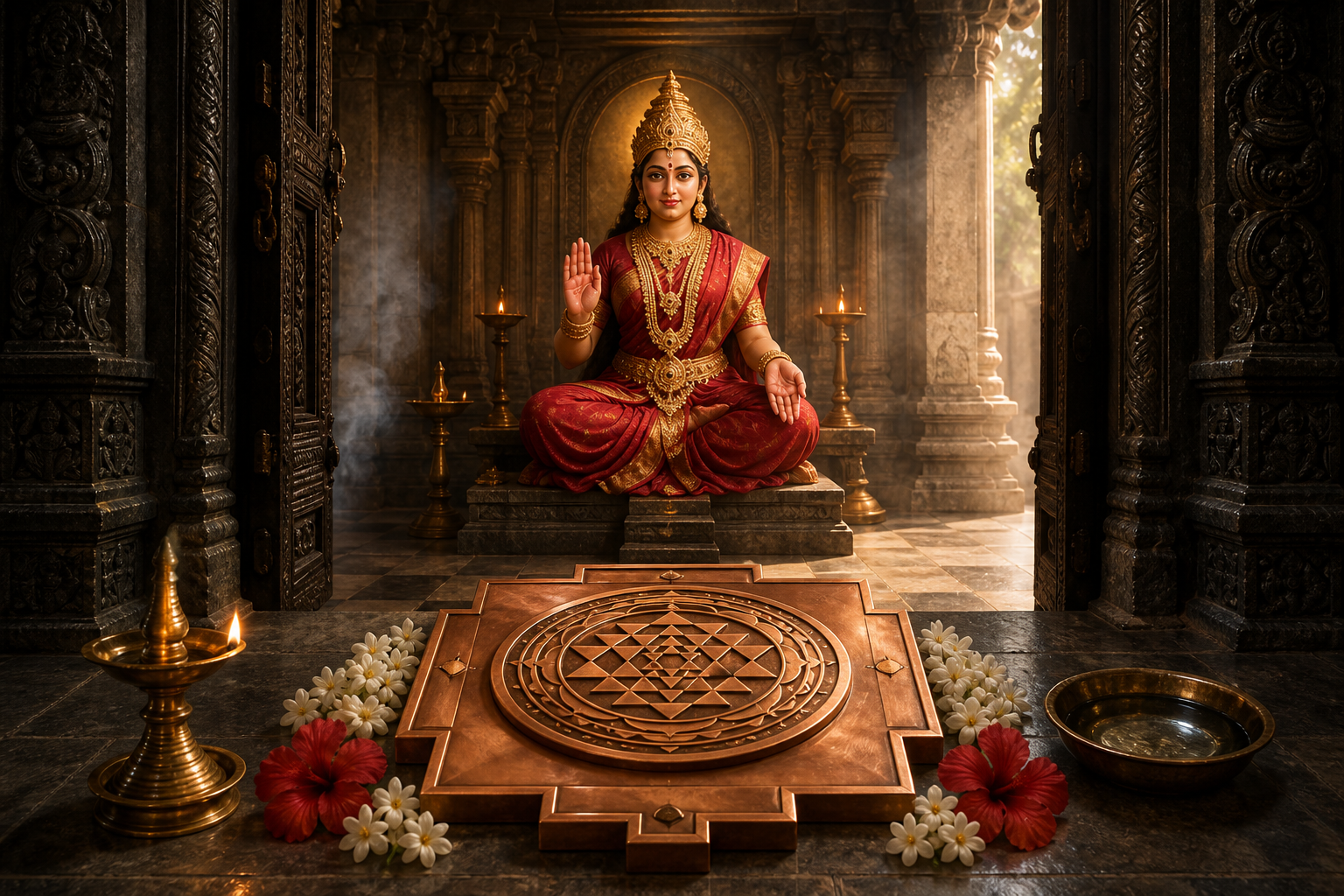
Lalita Tripura Sundari, one of the Mahavidyas, is revered as a unified expression of Devi Shakti—non-different from Pārvatī, Sati, Durga, and Mahakali. Rooted in Sri Vidya, her worship centers on the Śrī Cakra and practices like the Lalita Sahasranama, guiding seekers toward inner clarity and ethical strength. Devotees describe everyday rituals—especially on Fridays and during…
-
Kali Devi Mahatmyam: Transformative Power of Kali Mahavidya for Courage and Healing

Kali Devi Mahatmyam presents Kali as a transformative Mahavidya who dissolves fear and restores balance. Devotees turn to Kali for protection from malefic influences, support during prolonged illness, and the cultivation of enduring mental and physical strength. Practices such as mantra japa and dhyana on Amavasya, Navaratri, and Kali Chaudas reinforce focus, courage, and emotional…
-
Thiruvathirai’s Sacred Radiance: Arudra Darshan, Nataraja’s Cosmic Dance, and Devotee Joy

Thiruvathirai (Ardra) honors a celestial nakshatra revered as a consort of Lord Chandra Bhagavan and is celebrated during Margazhi as Arudra Darshan. Devotees visit Chidambaram Nataraja Temple and Thiruvalangadu Shiva Temple to witness rituals that highlight Nataraja’s cosmic dance. Temple abhishekams, deepa aradhana, and Thiruvempavai recitations foster an atmosphere of serenity and devotion. Home observances…