
-
Beyond the Brain: Transformative Dharmic Wisdom on Mind, Universal Consciousness, and Well-Being

Where is the mind? This essay bridges Hindu philosophy and contemporary science to show why the mind cannot be reduced to the brain alone. Drawing on Advaita Vedanta, Sāṅkhya-Yoga, and the Pañca Kośa model, it explains mind as a subtle instrument illuminated by universal consciousness. It highlights shared dharmic insights from Buddhism, Jainism, and Sikhism…
-
Mukkoti Ekadashi 2025: Dates, Significance, and Grand Temple Celebrations in Andhra & Karnataka

Mukkoti Ekadashi 2025, observed on January 10 and December 30, is a deeply revered Dhanurmasa Ekadashi dedicated to Lord Vishnu. Celebrations reach a devotional peak in Andhra Pradesh and Karnataka, especially at Tirumala Tirupati Sri Venkateshwara Temple and Bhadrachalam Sri Sita Ramachandra Swamy Temple. The vrata emphasizes fasting, prayer, and darshan, drawing families and pilgrim…
-
Krishna–Arjuna’s Sacred Friendship: Choosing Companions Who Challenge and Elevate the Soul

The Krishna–Arjuna friendship in the Mahabharata showcases how authentic companionship challenges, clarifies, and elevates. It models truth with empathy, accountability without humiliation, and steadfast alignment with dharma. The same ideal appears across dharmic traditions: kalyāṇa-mitra in Buddhism, sādhu-saṅgha in Jainism, and sangat in Sikhism, alongside Hinduism’s satsang and Bhakti Tradition. Readers gain practical criteria for…
-
Power and Tapas in Kalidasa: Tagore on Raghuvamsha and Kumarasambhava’s Lesson

Rabindranath Tagore’s reading of Kalidasa reveals a profound dialogue in Sanskrit literature between worldly power and inner discipline. Raghuvamsha maps the ascent born of tapas and the decline that follows indulgence, using dawn-and-dusk imagery to frame a moral architecture. Kumarasambhava then proposes the remedy: harmonize renunciation and enjoyment so that strength is born from balance.…
-
Trusting Time: kāla as tuṣṭi in Sankhya Karika to cultivate calm, patience, and mukti

This article explores kāla as a form of tuṣṭi in Sankhya Karika (verse 50), showing how trust in time can cultivate calm, patience, and steady progress toward mukti. It clarifies the philosophical role of tuṣṭi as both a stabilizing force and a potential pitfall when mistaken for fatalism. Readers gain practical ways to embody engaged…
-
Sanyasa Yoga: A Powerful Path of Inner Renunciation toward Self‑Realization in Hinduism
Samnyasayoga in Hinduism emphasizes inner renunciation over external withdrawal, directing attention to self-realization and Brahman. Grounded in the Kaivalya Upanishad and Vedanta, it unites śraddhā, bhakti, and dhyāna to reveal Ātman as Brahman and guide seekers toward moksha. In contemporary life, Sanyasa Yoga appears as simplicity, mindful limits, and aparigraha rather than asceticism for its…
-
Why People‑Pleasing Fails: Dharma‑Aligned Priorities Prevent Chronic Disappointment

Trying to please everyone guarantees disappointment because competing priorities cannot all be met at once. An academic, dharmic perspective reframes the issue: action should follow values and context, not approval‑seeking. Principles shared across Hinduism, Buddhism, Jainism, and Sikhismdharma, Karma Yoga, ahimsa, aparigraha, Right Action, and sevaoffer a coherent framework. The result is clearer boundaries, compassionate…
-
Healing Together for Kishori Mataji: Compassion and Dharmic Solidarity Across Traditions

A community update notes that Kishori Mataji has been hospitalized in Chateauroux, France following recent surgery, prompting a reflective and compassionate response across dharmic traditions. Readers gain a clear account of the situation while seeing how Hindu, Buddhist, Jain, and Sikh practices can converge around shared values of karuna, ahimsa, and seva. The post highlights…
-
First English Release of Kavya-kaustubha: Unlocking Sri Baladeva Vidyabhusana’s Poetics

Kavya-kaustubha, composed by Sri Baladeva Vidyabhusana, is now available in English for the first time, opening a precise gateway to Sanskrit poetics. The work’s rigorously defined concepts, each paired with clear examples, make complex ideas accessible for students, educators, and researchers. This edition enhances classroom teaching and self-study while supporting comparative literary analysis. It also…
-
Nothing to Lose or Gain: Advaita’s Liberating Insight and Unity of Dharmic Paths

This post explores the Advaita insight that there is nothing to lose or gain because a single, supreme truth pervades all. It shows how this view aligns with the Upanishads and the Bhagavad Gita’s ideal of equanimity. It highlights convergences across Buddhism, Jainism, and Sikhism, emphasizing unity in spiritual diversity. Readers gain practical ways to…
-
Ego and the Vast Cosmos: A Dharmic Reflection on Humility, Unity, and Inner Freedom

This reflection explores how Hindu philosophy situates ahankara (ego) within the vast Brahmanda, revealing the fragility of pride and the wisdom of non-attachment. It connects Vedantic insights with parallel teachings in Buddhism, Jainism, and Sikhism, emphasizing a shared dharmic commitment to humility, compassion, and Aparigraha. Readers gain practical pathwaysjapa, pranayama, dāna, mettā, Naam Simran, and…
-
Viscount Valentia’s India Voyage: A Candid Colonial Chronicle and Dharmic Unity Lessons

This analytical retelling situates Viscount Valentia’s 1802–1806 voyage within the accelerating arc of British East India Company power and the late-Mughal political landscape. It highlights the work’s value as a meticulously dated primary source that blends geography, society, and statecraft across India, Ceylon, the Red Sea, Abyssinia, and Egypt. Readers gain a clear view of…
-
Viral Video Explained: Temple Elephant Yashaswini Nudges Policeman at Kukke Subramanya

A recent viral video from Karnataka’s Kukke Subrahmanya Temple shows temple elephant Yashaswini nudging a uniformed man into the water during the Theerthavaari ritual on the final day of Neeru Bandi Utsavam. Verified reports identify the man as a policeman or staff member managing crowds, with no injuries reported. The clip highlights the importance of…
-
Alchemical Foundations of Bhakti: Guru, Diksa, and the Soul’s Transformative Journey
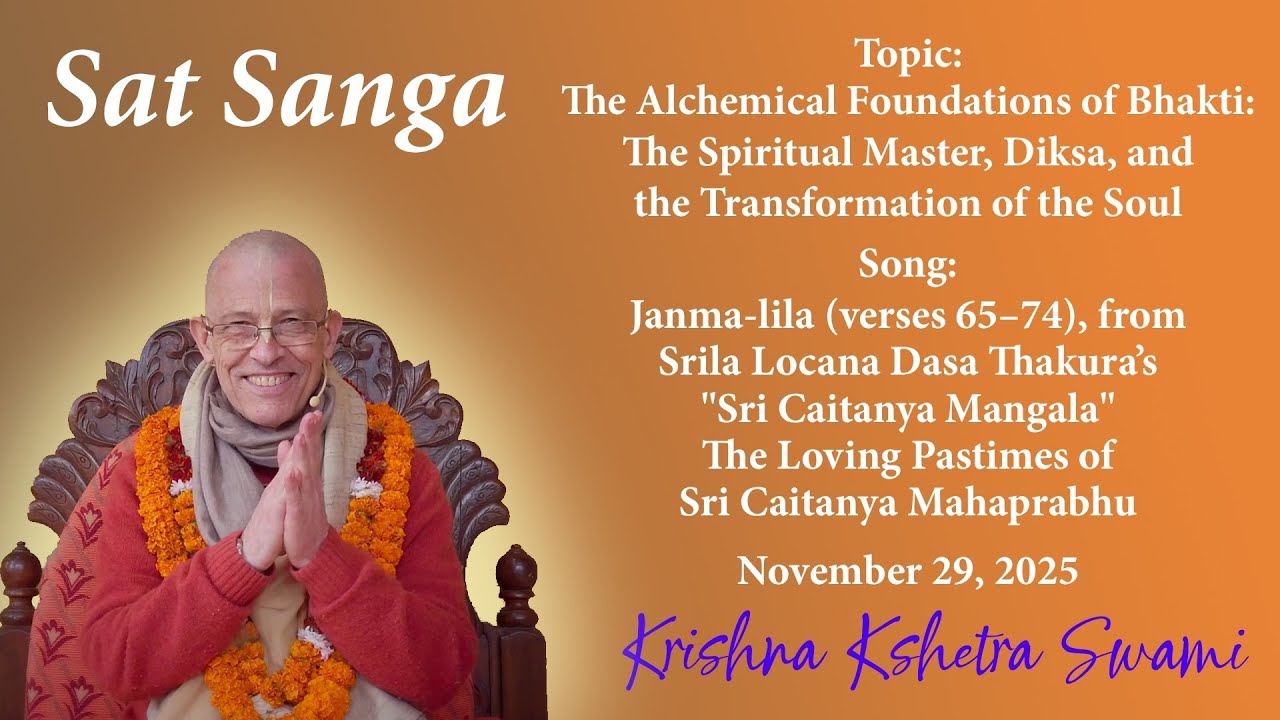
Presented at Go-druma Bhavan, Mayapur, this Sat Sanga with HH Krishna Kshetra Swami explored how guru-guided practice and diksa form the “alchemical” pathway of Bhakti. The talk showed how disciplined devotion, ethical vows, and community association catalyze inner transformation. Drawing on Janma-lila (verses 65–74) from Srila Locana Dasa Thakura’s Sri Caitanya Mangala, it highlighted how…
-
Vishnu and Lakshmi in Dreams: Decode Sacred Signs, Find Peace, and Invite Prosperity

Dreams of Vishnu and Lakshmi are treated in Hindu tradition as sacred messages that connect the subconscious with the divine. This guide explains common symbolslike Vishnu’s Sudarshana Chakra or Lakshmi’s lotusand how they relate to protection, balance, and sattvic prosperity. It offers practical steps for integration, including journaling, mantra, meditation, and compassionate action. The approach…
-
When Honor Is Misplaced: Skanda Purana’s WarningFear, Famine, and Death Follow

Skanda Purana, Kedara Khanda (3.45), links misplaced honor to societal breakdown symbolized as fear, famine, and death. The teaching, conveyed through Lord Vishnu, gains clarity when read alongside the narrative of Daksha’s transgression and the disruption of ritual order. Interpreted as a diagnostic model of dharma and adharma, it explains how fear rises when moral…
-
How Shiva Turns the Inauspicious into the Sacred: Transformative Symbolism, Rituals, and Hope

Hindu tradition teaches that in Shiva’s presence, even the inauspicious becomes sacreda principle grounded in scripture, ritual, and philosophy. The Nīlakaṇṭha narrative shows how poison transforms into protection, while cremation grounds, vibhūti, and serpents become powerful symbols of impermanence, mastery, and inner awakening. Practices such as Pradoṣa worship, Bilva offerings, and meditation on “Om Namaḥ…
-
Deathbed Visions or Hallucinations? A Compassionate Dharmic Guide to the Final Journey

This article clarifies the difference between deathbed visitations and hallucinations through a Hindu and broader Dharmic lens, combining scriptural insights with contemporary hospice observations. It outlines clear phenomenological markerssuch as serenity, coherence, and value alignmentthat can help families distinguish spiritually meaningful visions from delirium. The discussion highlights convergences across Hinduism, Buddhism, Jainism, and Sikhism, fostering…
-
Mastering Purushaartha: A Transformative Guide to Dharma, Artha, Kaama & Moksha

Purushaartha offers a complete frameworkDharma, Artha, Kaama, and Mokshafor a life that is ethical, prosperous, joyful, and inwardly free. Rather than rejecting wealth or desire, it refines them through Dharma so they support higher clarity. Practical steps include right livelihood, generosity, mindful restraint, and steady yoga-meditation practice. The Bhagavad Gita and the Upanishads inform a…
-
Sacred Stillness, Lasting Clarity: A Dharmic Guide to Mindful Observation over Endless Seeking

Modern life rewards endless seeking, yet dharmic wisdom demonstrates that mindful observation offers deeper clarity and freedom. Drawing from Hindu philosophysakshi-bhava, pratyahara, dhyana, and aparigrahathis piece shows how observation refines attention and aligns action with dharma. Convergences with Buddhism’s vipassana, Jainism’s samayik, and Sikhism’s simran and sehaj reveal a shared contemplative core that nurtures unity…