
-
Why Gods Dwell Amid Gold: Symbolic Wealth, Aesthetics, and Moksha in Hindu Scriptures

Why do fulfilled divine beings dwell amid gold and gems in Hindu scriptures? The answer emerges through Dharmic hermeneutics, aesthetics, and soteriology: opulence functions as a language of sovereignty, purity, and radiance rather than material need. Mīmāṃsā frames jewel-strewn heavens as purposeful praise, Vedānta situates beauty within a ladder from form to formlessness, and Purāṇic…
-
Muzaffarnagar Eatery Attack: Unraveling Halal, Kanwar Yatra, and Evidence‑Based Peace Steps
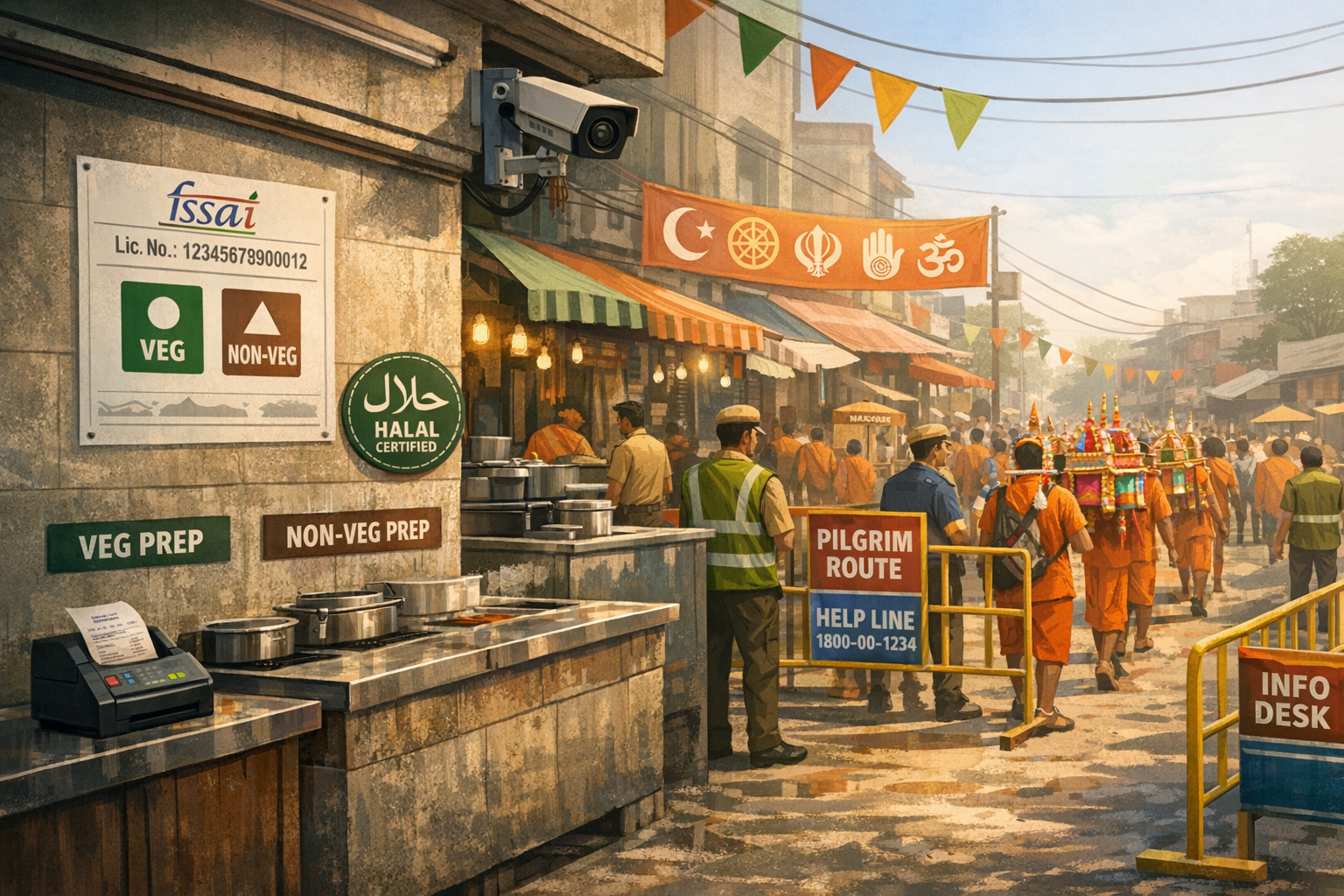
A reported attack on a non-vegetarian eatery in Muzaffarnagar, Uttar Pradesh, amid Kanwar Yatra and halal-labeling debates, highlights how pilgrimage-season sensitivities intersect with marketplace practices. This analysis explains the difference between voluntary halal certification and statutory FSSAI food safety rules, and why transparent licensing, signage, and proprietor identification are crucial trust signals. It outlines lawful…
-
Jnana Yoga and Karma Yoga: A Definitive, Heart-Centered Guide to Wisdom, Duty, and Moksha

Jnana Yoga and Karma Yoga are complementary yogic disciplines in Hinduism that unite liberating insight with selfless duty. Grounded in the Upanishads and the Bhagavad Gita, Jnana clarifies reality through viveka and nididhyasana, while Karma refines character via nishkama karma, isvararpana buddhi, and prasada buddhi. The two paths interpenetrate: ethical action purifies the mind for…
-
A Sacred Farewell at 2:40 am: Honoring HG Raksana Prabhu ACBSP and the Vaishnava Path

HG Raksana Prabhu ACBSP’s passing at 2:40 am is being observed with solemnity and gratitude across the ISKCON and broader dharmic community. In the Gaudiya Vaishnava view, to “leave the body” emphasizes the soul’s continuity and the sacredness of the final transition. The ACBSP designationwidely understood to signal initiation in the line of Srila Prabhupadasituates…
-
From Pain to Grace: Melpathur Bhattathiri’s Narayaneeyam and the ‘Fish First’ Healing

Set in sixteenth-century Kerala, this account explains how Melpathur Narayana Bhattathiri’s Narayaneeyam arose at the intersection of rigorous Sanskrit learning and deep bhakti. It clarifies the famed counsel to “begin with fish” as a poetic-theological cue to start with Matsya, the first avatara of Vishnu, not a dietary instruction. The narrative situates Bhattathiri’s suffering and…
-
Nipani Hindu Ekta Sabha: Pramod Muthalik invokes Savarkar to galvanize Dharmic unity

A Hindu Ekta Sabha in Nipani (Belagavi, Karnataka) spotlighted Swatantryaveer Savarkar’s ideas as a civic blueprint for unity, as conveyed by Pramod Muthalik’s assertion that his ideology continues to inspire Hindu society. The forum broadened “Hindu Unity” to include the Dharmic familyHindus, Buddhists, Jains, and Sikhsanchoring cooperation in constitutional rights and Sanatana Dharma’s plural ethos.…
-
A Temple Room Stilled: Srila Prabhupada’s Ecstatic SymptomsScripture, Science, and Practice
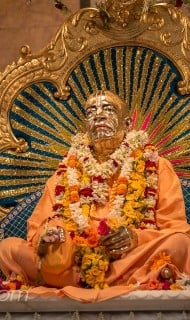
An eyewitness account describes a packed temple room falling into profound silence as Srila Prabhupada paused, eyes closed, before gently remarking, “I do not do that very often.” The analysis situates this rare episode within Gaudiya Vaishnavism’s technical framework of ecstatic symptoms (sattvika-bhavas) and rasa theory as outlined in Bhakti-rasamrta-sindhu and the Caitanya-caritamrta. It explains…
-
Compassion as Sadhana: Tamil Nayanars’ Timeless Blueprint for Charity, Seva, and Welfare
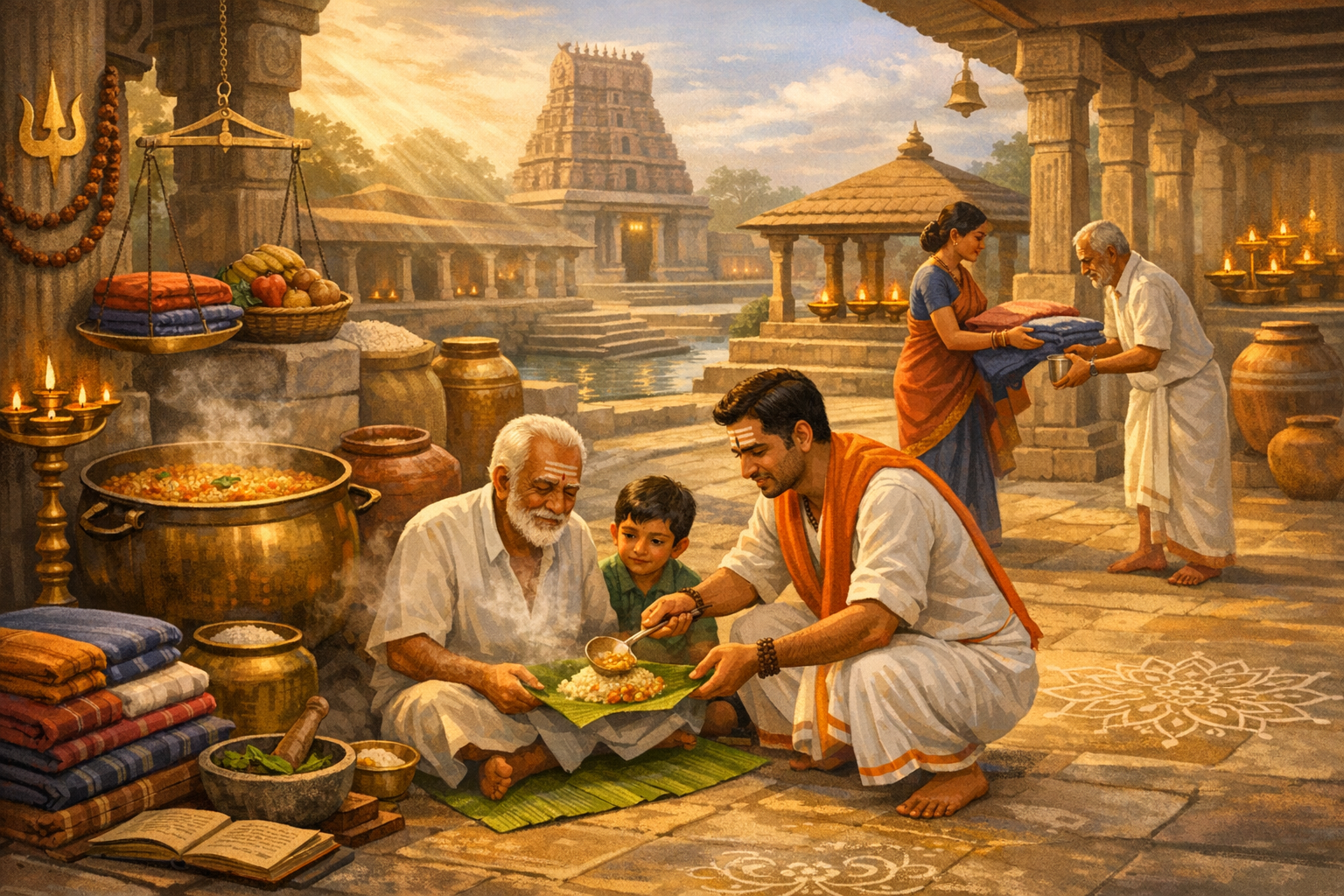
The Tamil Nayanars placed charity (dāna) and seva at the core of spiritual life and public welfare, as preserved in the Tevaram hymns and the Periyapuranam. Their blueprint prioritizes Ahara (Food) through Annadāna, honoring the principle that nutritious, dignified meals stabilize lives and cultivate devotion. Exemplars such as Ilayankudi Maranar (food charity), Amarneethi Nayanar (clothing…
-
June 2026 Vishesha Pujas at Kanchi Kamakoti Peetham: Ashrama Sweekara Day & Pradosha Guide

June 2026 at Kanchi Kamakoti Peetham, Kanchipuram, features a distinguished cycle of Vishesha Pujas: Ashrama Sweekara day on 2 June and Pradosha Pujas on 12 (Shukra Pradosham) and 27 (Shani Pradosham), with an additional observance on 29 June as per temple notifications. This guide explains the theological and calendrical foundations of Pradosham, showing how Trayodashi…
-
When Wolves Rose from Krishna’s Pores: Decoding Harivamsa’s Eco-Dharma and Land Ethics

The Harivamsa preserves a vivid account in which Krishna manifests wolves from His pores to impel Gokul’s relocation, a scene that rewards careful textual and symbolic analysis. Read as eco-dharma, the episode models responsible settlement, carrying-capacity awareness, and compassionate, minimum-force leadership. Cross-text comparison with the Bhagavata Purana shows how different sources converge on the same…
-
Krodha Bhairava Unveiled: Iconography of the Fourth Circle of the Sixty-Four Bhairavas
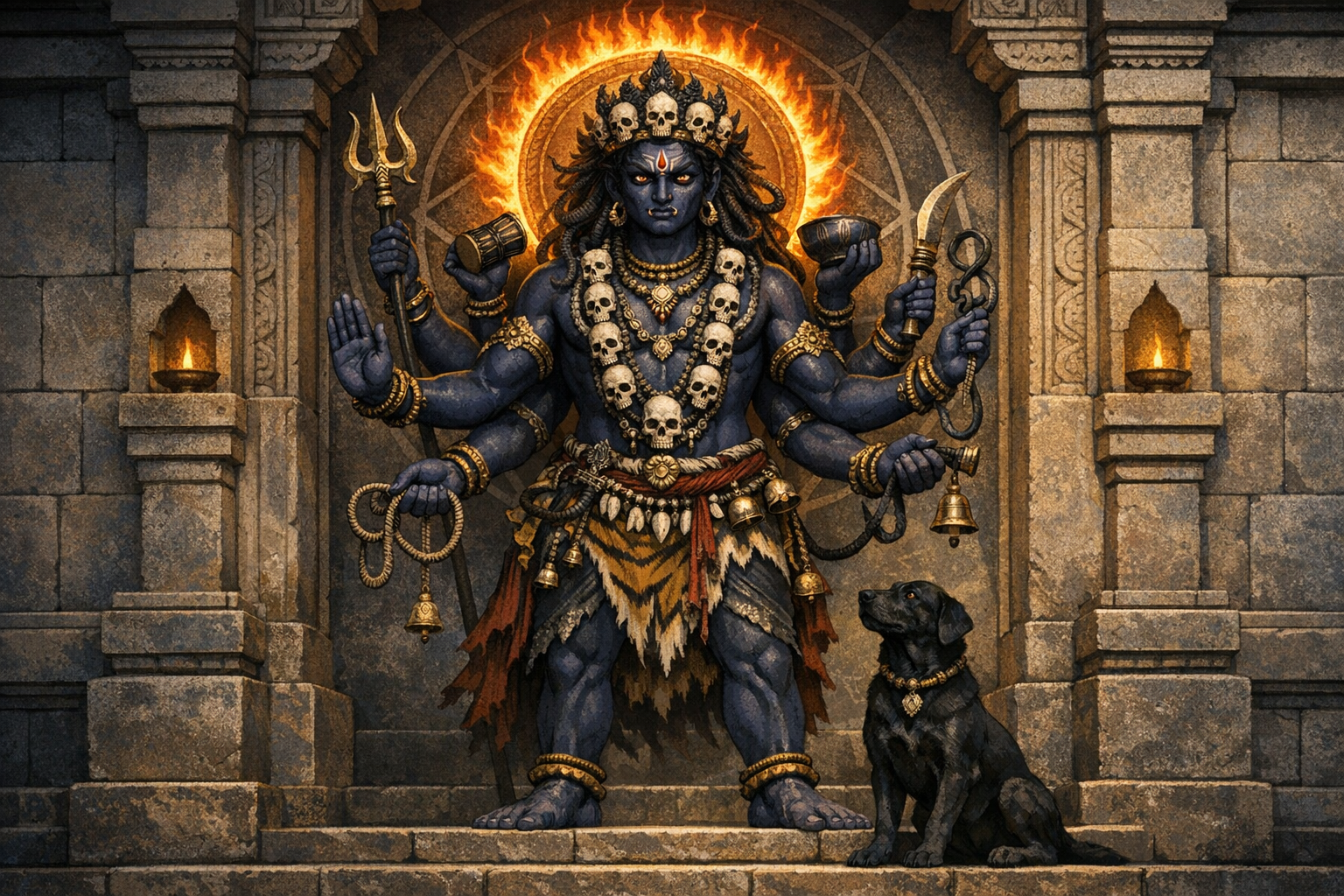
Krodha Bhairava, a fierce and protective manifestation of Shiva, presides over the fourth circle of the Sixty-Four Bhairavas, uniting wrathful compassion with precise Hindu sculptural grammar. Drawing on Agamas, Shilpa Shastras, and Puranic echoes, this in-depth overview explains his stance, weapons, ornaments, vāhana, and cremation-ground motifs. Readers learn how to visually “read” the iconstarting from…
-
Kamakhya’s 16-Day Navratri 2026: Definitive Guide to Assam’s Unique Shakta Puja and Darshan

Kamakhya Temple in Guwahati, Assam, hosts a rare sixteen-day observance of Durga Puja and Navratri in 2026, rooted in Shakta-tantric tradition and the temple’s aniconic yoni-pitha. Unlike the mainstream nine-night format, Kamakhya’s Shodasha-dinātmak Navaratri integrates Shodasha Upachara, daily Chandi Path, Kumari Puja, Sandhi Puja, and homa, culminating in Vijayadashami. The complex’s Daśa Mahāvidyā shrines and…
-
Reimagining Mumbai’s Slums: A Data-Driven Blueprint to Replace Informality with Dignity

Mumbai’s clearance of slums can be a turning pointif matched by a rigorous plan that both preserves urban livelihoods and ends unsafe, illegal housing. This analysis explains why slums form, how they subsidise city life through labour and logistics, and why a law-aligned city must replace them. It proposes a practical blueprint: mixed-income housing tied…
-
Decoding Vishnudharmottara Purana: The Awe-Inspiring Vyuha Manifestations of Vishnu
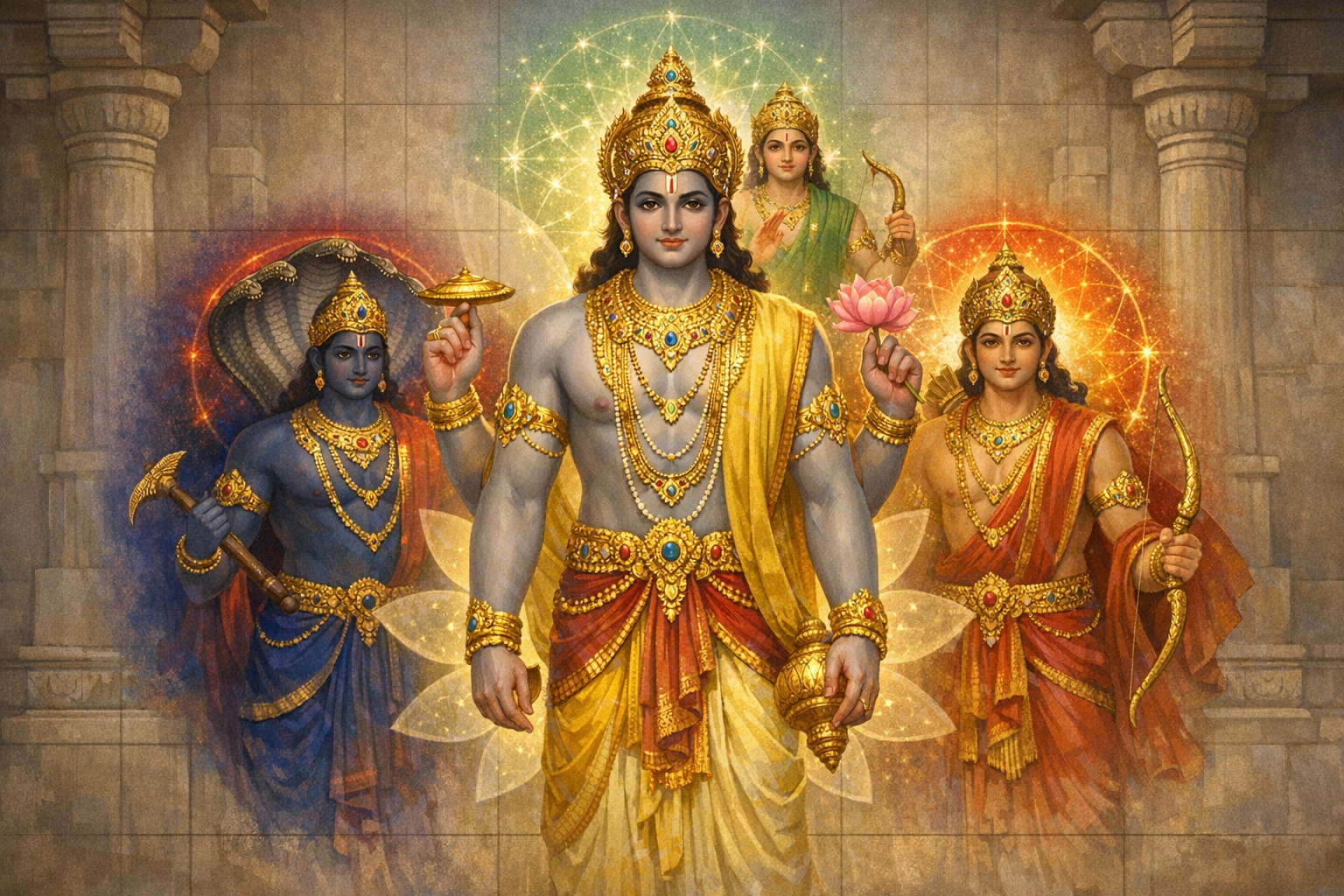
This article decodes the Vyuha doctrine of Vaishnava theology through the lens of the Vishnudharmottara Purana and the Pancharatra–Vaikhanasa traditions. It explains the fourfold emanationsVasudeva, Sankarshana, Pradyumna, and Aniruddhaand the classical distribution of the six divine excellences across them. It shows how the Purana’s image-making canons turn metaphysics into clear, teachable iconography, especially in Caturvyuha…
-
Abhinavabharati Unveiled: Abhinavagupta’s Masterwork on Bharata’s Natyashastra and Rasa Theory

Abhinavabharati, Abhinavagupta’s celebrated commentary on Bharata Muni’s Natyashastra, clarifies how drama, dance, and music yield rasa through vibhavas, anubhavas, and vyabhicari-bhavas in the receptive sahridaya. It accepts śānta rasa as the apex, harmonizing aesthetic passion with contemplative calm in line with dharmic ideals shared across Hinduism, Buddhism, Jainism, and Sikhism. By integrating dhvani (suggestion) from…
-
Lal Kitab Remedies for Sun in the 4th House: Transform Home, Heal Lineage, Restore Peace

Lal Kitab remedies for Sun in the 4th house work best when simple, consistent, and ethically grounded. This comprehensive guide explains how Surya in the 4th impacts home, mother, property, and inner peaceand how daily sunrise arghya, Raviwar vrata, Aditya Hridayam, and east-facing ghee lamps can stabilize the domestic field. Practical seva for mothers and…
-
Inside the Impregnable: Golden Walls, Iron Gates, and Hanuman’s Reconnaissance of Lanka

This long-form analysis situates Hanuman’s reconnaissance in the Yuddha Kāṇḍa of the Valmiki Ramayana as a precise military assessment of Lanka’s defenses. It explains Lanka as a classic jala-durga (water fort), where golden walls and iron gates combine spectacle with deterrence. Readers gain a technical view of fortification-in-depth, early-warning systems, ordnance such as śataghnī, and…
-
Alidhasana Unveiled: The Warrior Stance Powering Hindu Iconography and Yoga

Alidhasana (Alīḍha/Ālīḍha) is the subcontinent’s signature warrior stance, a diagonal lunge that encodes heroic intent in Hindu iconography, dance, and yoga. Grounded in the Nāṭyaśāstra and Śilpa-śāstra, it appears in temple sculpture for Durgā, Bhairava, and Vīrabhadra to signal protective, dharmic power. The same geometry informs Bharatanatyam karaṇas, kalaripayattu lunges, and modern haṭha alignments akin…
-
Gajasurasamhara: Shiva’s awe-inspiring conquest of ego – history, symbolism, style
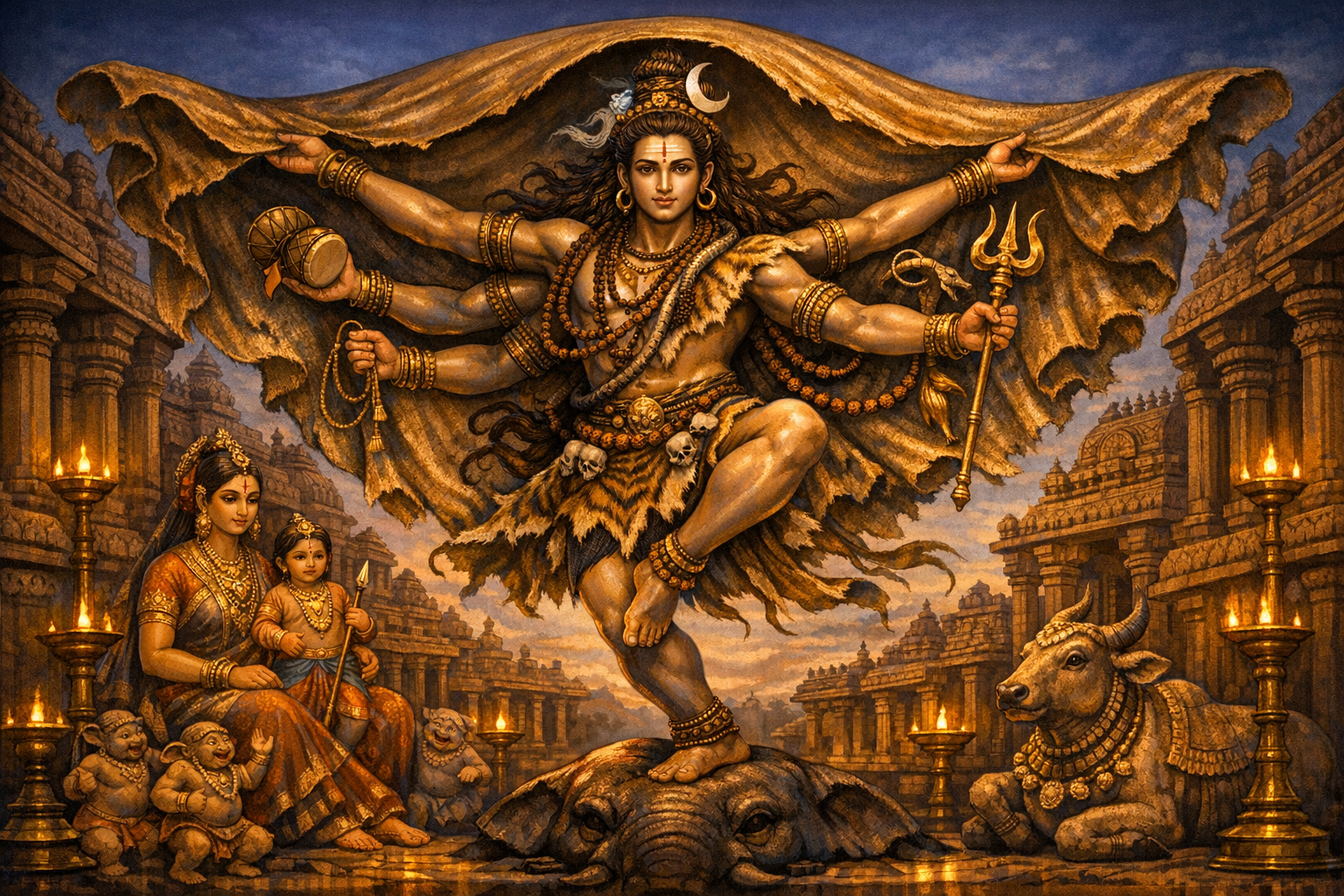
Gajasurasamhara presents Shiva in a fierce, transformative dance that subdues the elephant demonan enduring visual lesson on conquering ego. This long-form, research-driven overview traces the form’s Purāṇic and Āgamic foundations and explains its technical iconography, from multi-armed attributes and the distinctive elephant-hide canopy to posture, ornaments, and attendant figures. It maps stylistic evolutions across Pallava,…
-
Somvati Amavasya (Monday New Moon): Sacred Timing, Pitru Rites, and Transformative Rituals

Somvati Amavasya, the Amavasya falling on Monday (Somvar), is revered for aligning lunar stillness with Chandra’s calming influence, making it a powerful day for vrata, snana, tarpana, and daana. Classical sources, including the Mahabharata’s teachings to Dharma Raj and Puranic references, affirm the day’s efficacy for ancestor remembrance and ethical renewal. The Panchang determines observance…