
-
Panchamundi Asana Symbolism: The Goddess’s Awe-Inspiring Throne and the Triumph Over Human Limits

The Panchamundi AsanaGoddess Kali or Durga seated upon five skullsfunctions as a precise Tantric statement about transcendence in Hindu temples. The five can represent senses, elements, sheaths, or afflictions, each pointing to mastery of inner limitations. Rather than glorifying death, the icon uses mortality as a mirror that cultivates fearlessness, clarity, and compassion. The symbolism…
-
Tiruchanur Ratha Saptami 2026: Sacred Vahana Sevas, Surya Prabha Darshan Timings, and Blessings
Ratha Saptami (Surya Jayanti) at Tiruchanur on 25 January 2026 will feature Sri Padmavati Devi’s procession on seven vahanams, beginning with Surya Prabha Vahanam darshan between 7:00 and 8:00 am IST. The day’s sacred rhythm traditionally includes Hamsa Vahanam and other vahana sevas that highlight purity, radiance, and dharmic virtues. The observance emphasizes health, vitality,…
-
Sri Umapathi Sivam: A Luminous Shaivite Sage from Chidambaram’s Sacred Tradition

Sri Umapathi Sivam, a 13th-century Shaivite sage of the Dikshithar lineage, embodied the living fusion of Vedic learning and devotional practice in Chidambaram’s sacred ecosystem. His mastery of the Vedic scriptures and contributions to Shaiva literature exemplify how scholarship and bhakti can mutually reinforce spiritual clarity. Rooted near the Thillai Natarajar Temple, his life highlights…
-
January 19, 2026 Panchang: Amavasya to Shukla Paksha Pratipada TimingsEssential Guide

January 19, 2026 features a significant lunar transition in the Hindu calendar: Amavasya tithi lasts until 1:08 AM, then shifts to Shukla Paksha Pratipada until 1:59 AM (local time; subsequent date not specified). The day balances introspection with renewed beginnings, aligning well with household rites and community observances. As auspicious periods vary by locality, readers…
-
New Mayapur’s Living Legacy: Srila Prabhupada’s Vision of Bhakti, Community, and Self‑Sufficiency

This concise documentary offers a focused window into New Mayapur in France, where Srila Prabhupada’s vision of rural community life and self‑sufficiency is actively practiced. It highlights how bhakti, kirtan, and seva shape daily rhythms, linking sacred spaces to practical responsibilities. The narrative shows how Hare Krishna traditions can adapt to European settings without diluting…
-
Rama’s Radiant Restraint: How the Ramayana Redefines Heroism Beyond Brutal Force

Popular culture often equates heroism with dominance, yet the Ramayana presents a higher ideal: power disciplined by restraint. Rama demonstrates that true courage is self-mastery first and calibrated action second, aligning kshatra dharma with ahimsa. Episodes such as the Kākāsura incident, the acceptance of Vibhīṣaṇa, and compassion after victory show justice without cruelty and strength…
-
Srila Bhaktisiddhanta on Fault-Finding: A Powerful Call to Compassion and Dharmic Unity
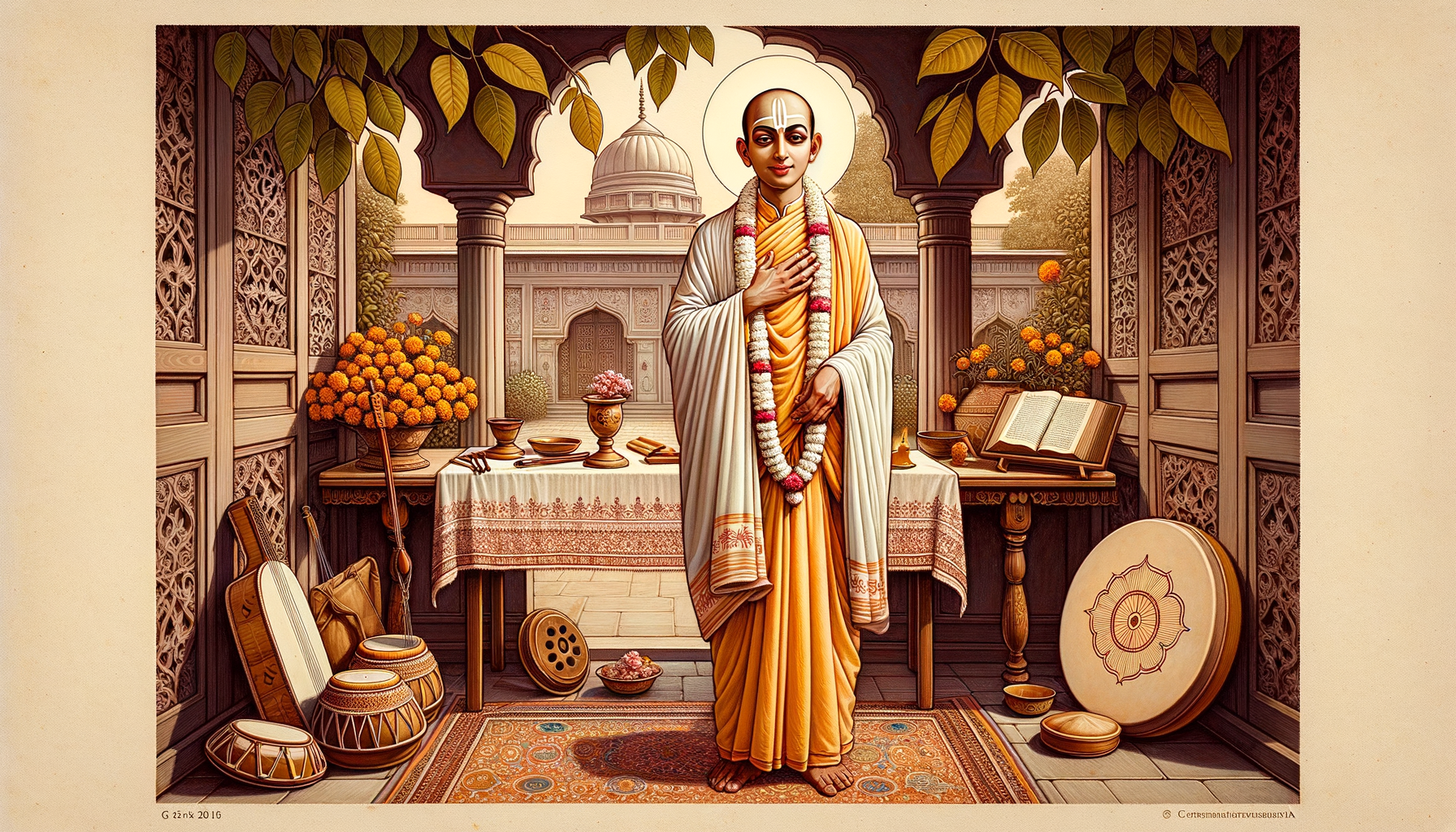
Srila Bhaktisiddhanta Sarasvati’s guidance on fault-finding centers on compassionate discipline and the hard work of uplifting others. His reminder“In this world we spend hundreds of gallons of blood to bring a person out of the clutches of maya”clarifies why criticism should yield to constructive service. An anecdote from a preaching center in Bengal illustrates that…
-
Mastering the Warrior Within: Self-Control in Hindu Philosophy for Courage and Clarity

The adage that true warriors first conquer themselves captures a core insight of Hindu philosophy. Self-control anchors dharma, allowing action to be guided by clarity, courage, and compassion. Drawing on the Bhagavad Gita and the disciplines of YogaPranayama, Pratyahara, and Dhyanathis exploration shows how inner mastery transforms reactions into thoughtful responses. The principle resonates across…
-
Shri Shivpratishthan Hindusthan’s Dharatirth Yatra 2026: Four Sacred Days from Lohagad to Bhivgad

Shri Shivpratishthan Hindusthan’s Dharatirth Yatra 2026 will be held from 23 to 26 January 2026, traveling from Fort Lohagad to Bhivgad via the Rajmachigad route. The route highlights Maharashtra’s cultural heritage and sacred geography while encouraging mindful, community-oriented travel. As a Tirtha-Yatra, it welcomes diverse dharmic traditionsHindu, Buddhist, Jain, and Sikhwithin a shared ethos of…
-
Dharma vs Adharma: The Inner Battle Shaping LifePractical Wisdom from Dharmic Traditions

Dharma and Adharma describe an inner moral struggle that shapes choices, character, and destiny. Drawing on the Bhagavad Gita, the Upanishads, and allied Dharmic wisdom, this piece explains how clarity (buddhi), the gunas, and steady practice (abhyasa) tip the balance toward ethical action. It shows how Hindu, Buddhist, Jain, and Sikh traditions converge on shared…
-
Best of 2025: Unmissable Indian History, Dharmic Heritage, and Spiritual Insights

This best-of-2025 collection curates ten most-read essays spanning Indian history, cultural heritage, and spiritual insight. Readers encounter a Vijayanagara inscription that documents dam-building and temple ecology in the 14th century. A cultural analysis of Dhurandhar maps a shift toward a more assured Indian cinematic voice. Historical studies revisit Parāvartana, a Lampsacos engraving of Bharata Mata,…
-
January 9, 2026 Panchang: Sashti to Saptami Tithi Timing, Auspicious Cues, Spiritual Insights

January 9, 2026 spans two tithis in the Hindu calendar: Krishna Paksha Sashti until 10:21 AM (local time in most regions) and Krishna Paksha Saptami thereafter. Readers benefit from confirming local Panchang timings because tithi shifts and the Moon’s Rashi or Nakshatra can vary by place and time. The day’s reflective tenor suits simple, steady…
-
Stop Harsh Self‑Judgment: Reframe Your Year with Reflective Journaling, Mindfulness, and Grace

This piece presents a calm, evidence-based method to reduce harsh self-judgment at year’s end by replacing a critical lens with an empowering one. Reflective positive journaling is introduced as a practical tool to highlight strength, nourishment, and meaningful moments otherwise missed. Clear prompts guide attention toward subtle growth, appropriate pride, fulfillment, peace, energizing activities, and…
-
Why Book Distribution Reignites Devotion: HH Niranjana Swami at ISKCON Mayapur

This reflection from ISKCON Mayapur captures HH Niranjana Swami’s core insight: inspiration in book distribution flows from sevapleasing Srila Prabhupada by sharing Krishna consciousnessrather than from taking breaks. By compelling compassionate dialogue about Krishna, the service aligns with Lord Chaitanya’s instruction to tell everyone about Krishna and “become a guru.” Practitioners commonly report that outreach…
-
Rantideva’s Radical Compassion: Reclaiming Boundaries, Dharma, and Everyday Kindness

This reflection reframes King Rantideva’s radical compassion as disciplined generosity rather than co-dependency. It addresses modern skepticism about politicians’ promises and charity by proposing dharmic discernmentviveka, vairagya, and svadharmaas tools for balanced kindness. Readers gain practical guidance on giving with boundaries: verify organizations, calibrate support to capacity, and serve through trustworthy community networks. The analysis…
-
Why Humans Hurt Each Other: Dharmic Wisdom on Violence, Ahimsa, and Inner Healing

Human violence has evolved from survival struggles to conflicts over identity and ideology. Dharmic wisdomacross Hinduism, Buddhism, Jainism, and Sikhismoffers a rigorous, compassionate framework to reduce harm without denying responsibility. Concepts such as dharma-yuddha, ahimsa, and Anekantavada set ethical constraints, cultivate pluralism, and challenge absolutist thinking. Psychological insights into krodha, lobha, and moha pair with…
-
Baahubali Reexamined: Untangling Timelines, Honoring Tradition, and Rediscovering Classicism

This reexamination of Baahubali highlights how its mythic ambition sometimes clashes with historical coherence, especially in geography, periodization, and nomenclature. It explains how the film’s use of Mahishmati and Kuntala, the presence of a Persian arms dealer, and the inclusion of Pindaris amplify a sense of timelessness while challenging viewers who value historical accuracy in…
-
Varuna’s Pasha Unveiled: How the Celestial Noose Sustains Dharma and Cosmic Order

Varuna’s pasha, the sacred rope, symbolizes the bonds that sustain dharma and cosmic order in Vedic thought. Far from punitive, it represents restorative justice: transgression entangles, truth and repentance release. The symbol extends to the natural world, where cycles of rain, rivers, and seasons reveal a universe held together by relation. Ethically, the pasha calls…
-
Paush Purnima Explained: Profound Vishnu Worship, Sacred Rituals, and Life-Enriching Benefits

Paush Purnima, the full moon of the Paush month, is an auspicious day for Vishnu worship, snan, and dana, marking the onset of Magha Snan in many regions. Rituals such as Vishnu Sahasranama recitation, Satyanarayana Puja, and tulsi offerings are complemented by community charity, especially annadanam and sesame donations. Many practitioners report emotional lightness, clarity,…
-
Bhogi 2026 on 13 January: Sacred Bonfires, Renewal Rituals, and Sankranti Harvest Joy

Bhogi 2026 is on 13 January and opens the four-day Sankranti/Pongal season in Andhra Pradesh. The day centers on Bhogi Mantalu, a sacred bonfire symbolizing the removal of negativity and the welcoming of auspicious beginnings. According to regional Panchang traditions, this Bhogi aligns with Krishna Paksha Dashami in Pushya masam (Poush Month) in 2025 and…