

If you are trying to determine whether ‘urban Naxal’ was invented as a recent BJP slogan, the answer is no. In November 2013, the Congress-led UPA’s Home Ministry placed essentially this security concern before the Supreme Court.
That fact does not make every later use of the label accurate. It gives you a more disciplined starting point: the UPA was warning about people and organisations allegedly connected to the CPI (Maoist), not declaring that every academic, activist, human-rights advocate or government critic was part of a Maoist network. The difference between evidence of an organisational link and mere political disagreement is the difference that matters.
What the UPA government actually warned about
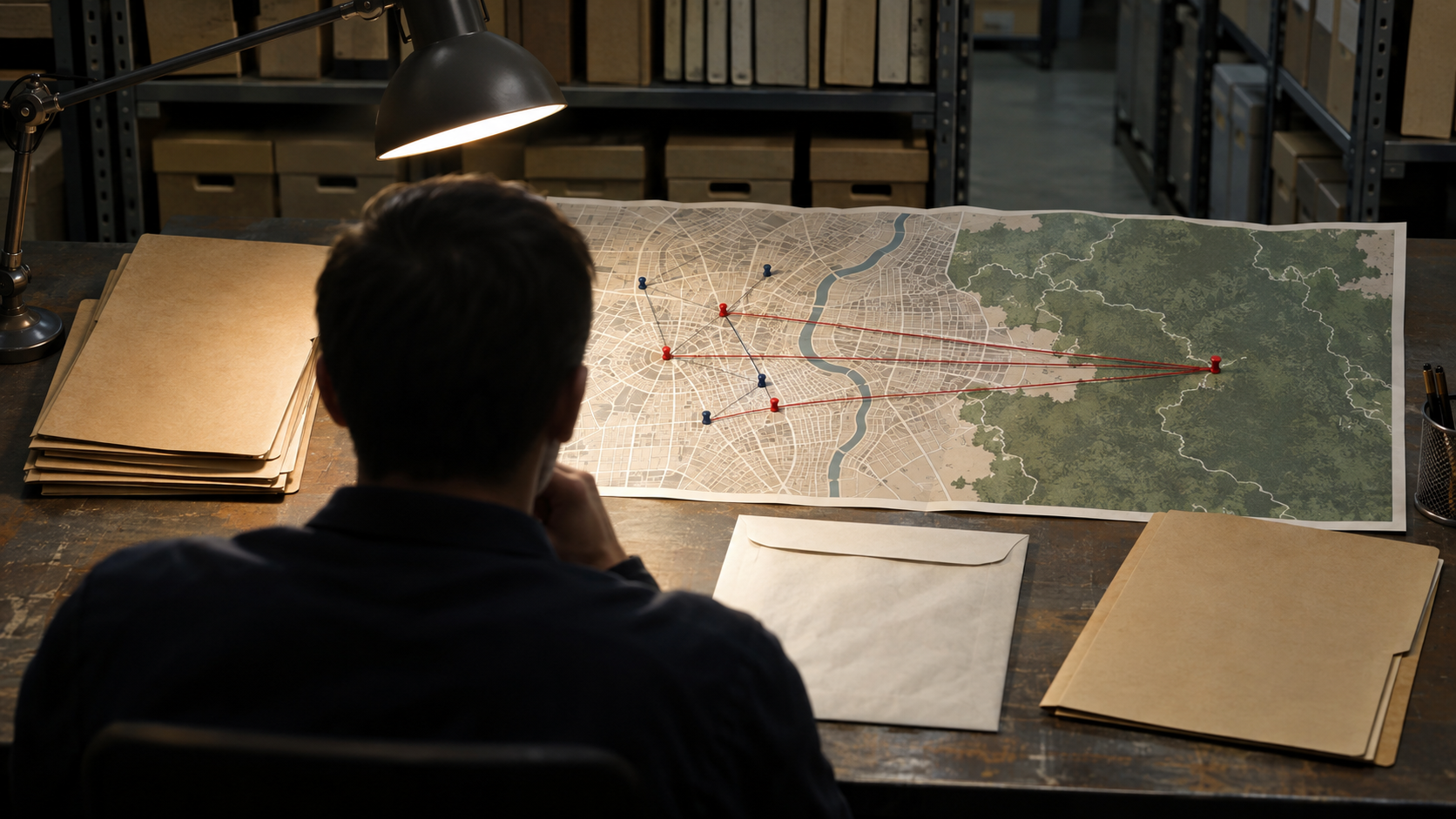
The Union Home Ministry, then headed by Sushil Kumar Shinde, presented its position in the case of Kishore Samrite v. Union of India. It alleged that ideologues working in urban centres had gained control of mass organisations connected to the CPI (Maoist), while operating publicly through the language and institutions of human rights.
The ministry identified a mechanism with several connected parts:
- Academicians and activists could operate in cities rather than alongside armed guerrillas.
- Some could exercise influence or control over mass organisations linked to the CPI (Maoist).
- Human-rights advocacy could provide public legitimacy or institutional cover.
- Propaganda and legal proceedings could be used to weaken or obstruct enforcement action.
- Proceedings against urban ideologues could produce negative publicity for the government.
This was why the ministry characterised such ideologues as, in some respects, more dangerous than the cadres of the People’s Liberation Guerrilla Army. The comparison was not a claim that every person writing, organising or litigating in a city posed a greater physical threat than an armed combatant. It concerned reach, legitimacy and influence: an armed cadre can conduct violence, while an urban network can allegedly protect, amplify or normalise the movement supporting that violence.
There is also an essential procedural distinction. By submitting a counter-affidavit, the executive placed its position before the Supreme Court; the Court had not thereby adopted every allegation as a judicial finding. You should therefore describe the claims as the UPA Home Ministry’s assessment, not as guilt conclusively established by the Supreme Court.
Why ‘more dangerous’ referred to leverage, not firepower

An armed formation is comparatively visible. Its weapons, attacks and territorial activity make the nature of the threat easier to recognise. An urban support structure is harder to assess because many of its outward methods – public meetings, campaigns, publications, associations and litigation – are also ordinary features of democratic life.
The UPA government’s concern was that an ideologue could work through lawful-looking institutions while remaining organically connected to the Maoist organisation. In that model, the strategic value comes from mediation. The urban actor can carry a militant movement’s preferred account into spaces the guerrilla cadre cannot easily enter: universities, civil-society organisations, public campaigns, courts and the wider political conversation.
This is also where careless state action becomes self-defeating. The Home Ministry itself recognised that proceedings against such figures could generate negative publicity. A weak, sweeping or poorly supported accusation can turn attention away from the alleged network and toward the government’s conduct. It can also make a genuine security case look like an attack on dissent.
The practical lesson is exacting. If authorities allege an organisational link, they should identify and substantiate that link. If the available case consists only of unpopular opinions, criticism of the state or the use of legal remedies, the label has outrun the evidence. Human-rights language can be exploited, but using that language is not itself proof of exploitation.
What the 2013 date settles – and what it cannot settle
The date settles an important dispute about political origins. The institutional concern now commonly described through the term ‘urban Naxal’ was present inside a UPA administration in 2013. It therefore cannot honestly be dismissed as a security concept manufactured from nothing by the BJP.
That conclusion is narrower than many partisan arguments make it. The 2013 position does not automatically validate every person later branded an urban Naxal. It does not prove a present-day connection between a named activist and the CPI (Maoist). It does not establish that human-rights organisations as a class are fronts. It also cannot, by itself, establish what Congress or any other political party is doing now.
Two different questions are often collapsed:
- Did the UPA government recognise the possibility of urban organisations and ideologues supporting the Maoist movement? Yes.
- Does that recognition prove any particular contemporary allegation? No; each allegation still requires its own evidence.
This distinction applies in both political directions. Congress cannot plausibly treat the underlying security concern as wholly invented when its own government presented it to the Supreme Court. The BJP and its supporters cannot use the UPA’s position as a blank cheque to attach the label to anyone on the ideological Left. Historical continuity establishes that the concern crossed party lines; it does not remove the burden of proof.
How to evaluate an ‘urban Naxal’ allegation

When you encounter the label in a speech, headline or social-media argument, do not begin by asking which party used it. Test the allegation through five questions.
- What specific relationship is alleged? Look for a claim of direction, coordination, organisational control or another concrete connection to the CPI (Maoist). Ideological similarity is not the same thing as an organisational link.
- What conduct supports the claim? Separate evidence about actions and relationships from quotations showing only that a person holds radical, unpopular or anti-government views.
- Is lawful advocacy being confused with covert coordination? Litigation, academic criticism and human-rights campaigning are legitimate activities. If someone allegedly used them on behalf of a Maoist network, the networked purpose still has to be demonstrated.
- What is the procedural status? An executive allegation, an arrest, a formal charge and a judicial finding are different things. Do not report one as though it were another.
- Is responsibility individual or merely associative? A person’s presence in an organisation, campaign or academic circle should not be inflated into responsibility for everything said or done by everyone nearby. Ask what that person is specifically alleged to have controlled, coordinated or enabled.
This method prevents two opposite errors. The first is naivety: assuming that civil-society language can never conceal support for an armed movement. The second is collective suspicion: treating dissent, scholarship or rights advocacy as sufficient evidence of Maoist affiliation. The UPA’s warning concerned the first problem; it should not be distorted into permission for the second.
Key takeaways
- The Congress-led UPA’s Home Ministry raised the urban-network concern before the Supreme Court in November 2013.
- Its assessment concerned academicians and activists allegedly controlling mass organisations organically connected to the CPI (Maoist).
- The ministry considered such ideologues especially dangerous because influence, propaganda, legal action and public legitimacy could support the movement beyond the armed battlefield.
- The government’s counter-affidavit expressed an executive position; it did not automatically make every allegation a Supreme Court finding.
- The 2013 history disproves the claim that the underlying concept was simply invented by the BJP, but it does not validate every later use of the term.
- A credible allegation requires evidence of conduct and organisational connection, not merely dissenting opinions or human-rights advocacy.
The next time you hear ‘urban Naxal’, ask for the link that turns rhetoric into a security claim: who was connected to whom, through which organisation, and by what conduct? If those answers are missing, you are hearing a political label. If they are supported by specific evidence, you are looking at the narrower network problem that the UPA government warned about in 2013.
References

Leave a Reply
You must be logged in to post a comment.