
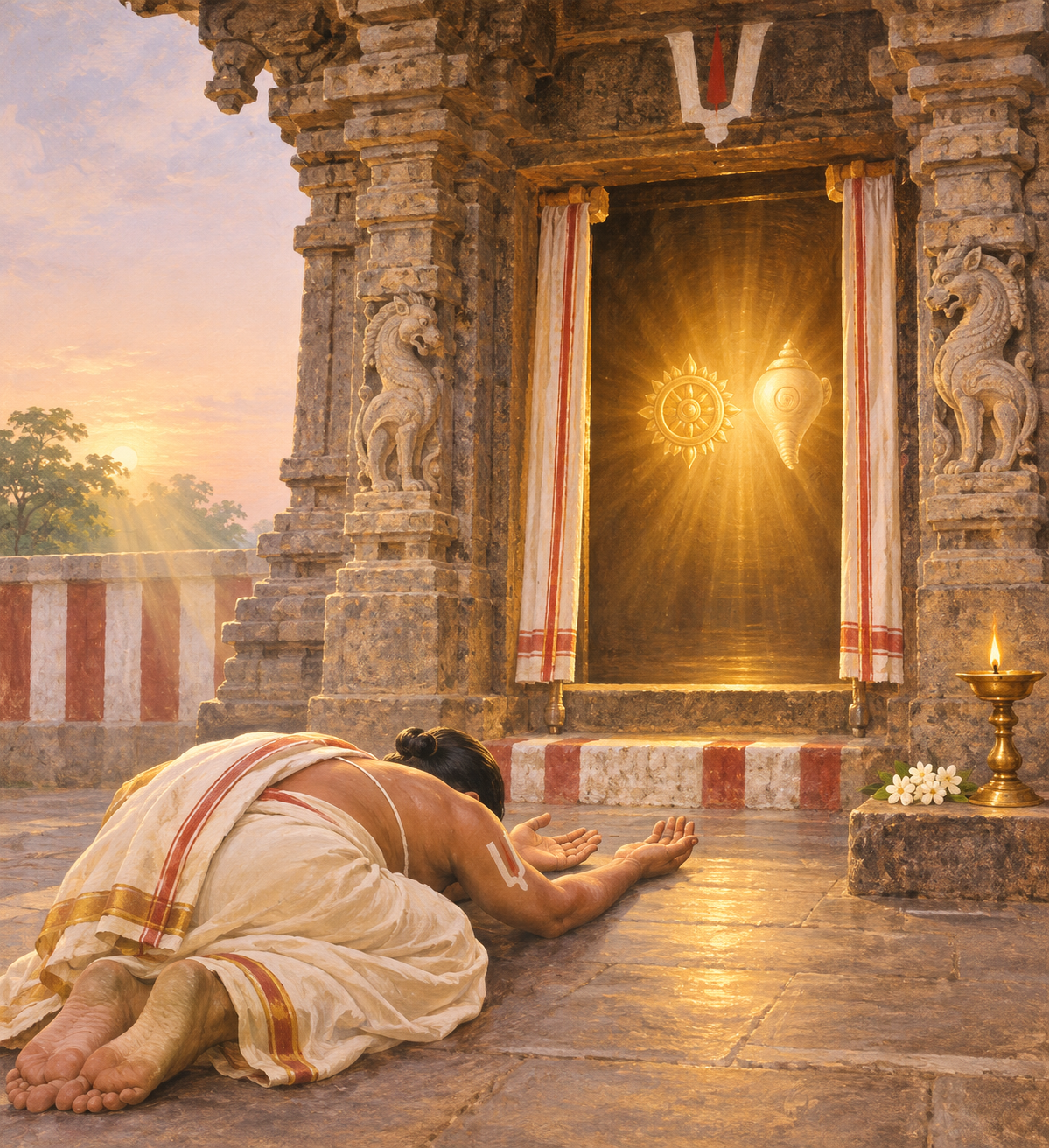
You may feel drawn to liberation yet doubt your ability to master demanding spiritual disciplines. Perhaps your concentration is uneven, your learning is limited, or every attempt at devotion becomes another test of whether you are good enough.
Prapatti answers that anxiety by changing the question. Instead of asking whether your effort can make you worthy of liberation, you ask whether you are willing to entrust yourself wholly to the Lord. In Ramanuja’s Visishtadvaita, that is not an escape from spiritual life. It is a decisive way of entering it.
Prapatti begins where spiritual self-reliance ends
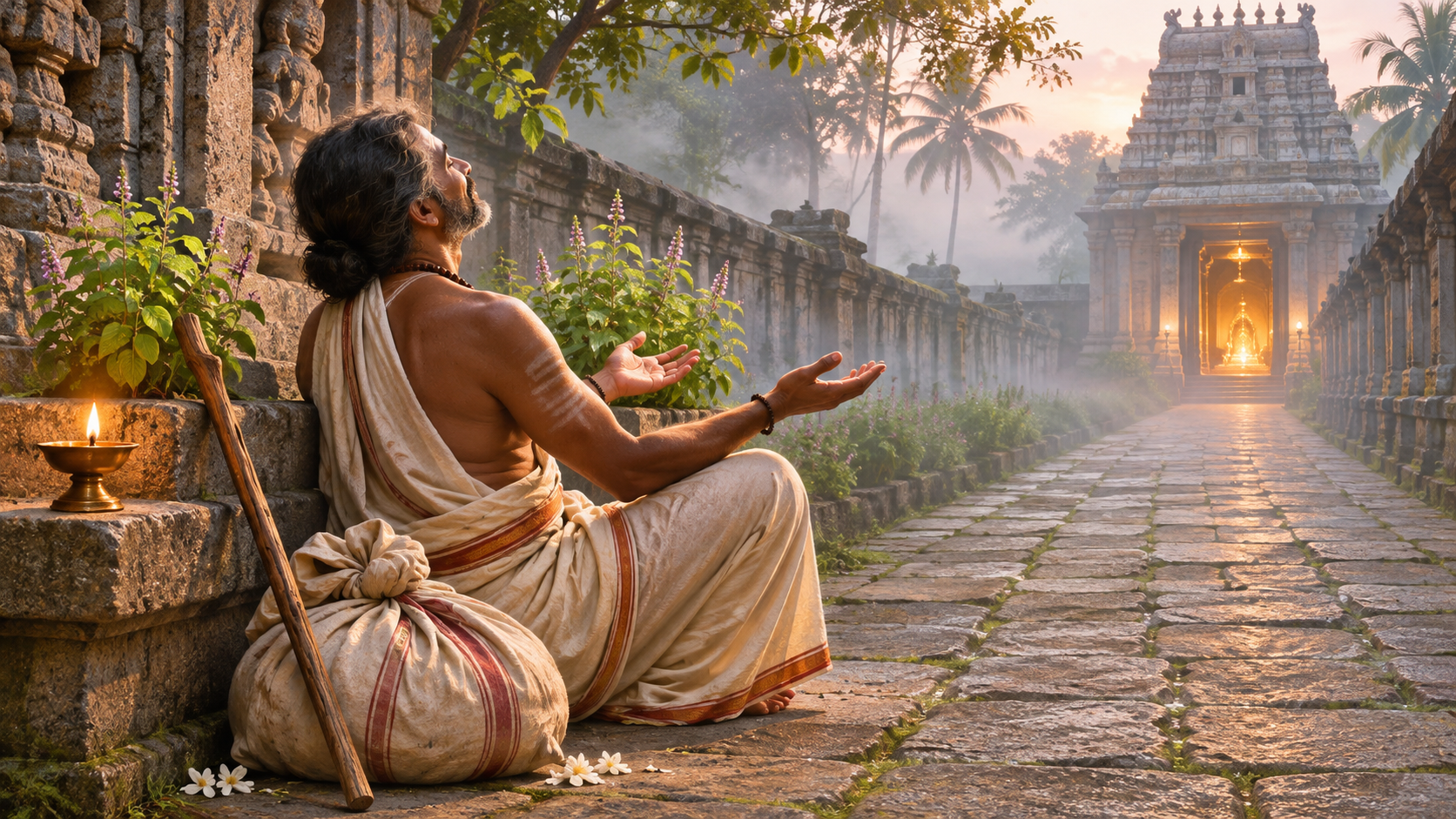
The Sanskrit term prapatti conveys taking refuge, surrendering, or placing oneself in the care of the Divine. Its practical force becomes clear when you notice the burden it removes: the belief that liberation must be manufactured through your own spiritual competence.
That burden can hide inside apparently sincere practice. You may count prayers, compare your concentration with someone else’s, or treat every failure as proof that the goal has moved farther away. Discipline then becomes a private economy in which effort purchases divine acceptance.
Prapatti breaks that economy. It offers a path of divine surrender for those overwhelmed by rigorous disciplines, but it does not teach that discipline is worthless. It teaches that no accumulation of discipline makes the finite soul spiritually self-sufficient.
This fits the structure of Visishtadvaita. The individual soul is real, Brahman is real, and the world is real; yet the soul and world exist in complete dependence upon Brahman. You are neither an illusion to be dismissed nor an independent power capable of securing the highest end alone. Prapatti turns that metaphysical dependence into a conscious religious relationship.
What total surrender does and does not mean
The word total can make prapatti sound like an extraordinary emotional state. You might imagine that genuine surrender requires uninterrupted serenity, perfect faith, or a dramatic inner experience. That interpretation creates the same problem prapatti is meant to resolve: surrender becomes another achievement you must produce.
Totality concerns the object of your trust, not the intensity of your present emotion. You cease reserving some imagined spiritual independence for yourself. You acknowledge that the Lord, rather than your performance, is your refuge and the ground of liberation.
- Prapatti is not self-contempt. Dependence upon the Divine does not make the soul worthless.
- Prapatti is not passivity. You still act, choose, repair harm, and fulfil your responsibilities.
- Prapatti is not fatalism. Trusting divine grace does not require you to pretend that your conduct has no consequences.
- Prapatti is not a bargain. It does not mean offering a devotional act in exchange for a guaranteed worldly result.
- Prapatti is not an emotional performance. Fear, doubt, or distraction do not automatically prove that surrender is false.
The soul surrendered in Visishtadvaita remains a real soul. Its agency is not annihilated; its agency is properly situated. You act as one who belongs to the Lord, not as an isolated self trying to conquer liberation.
Grace changes the purpose of spiritual effort
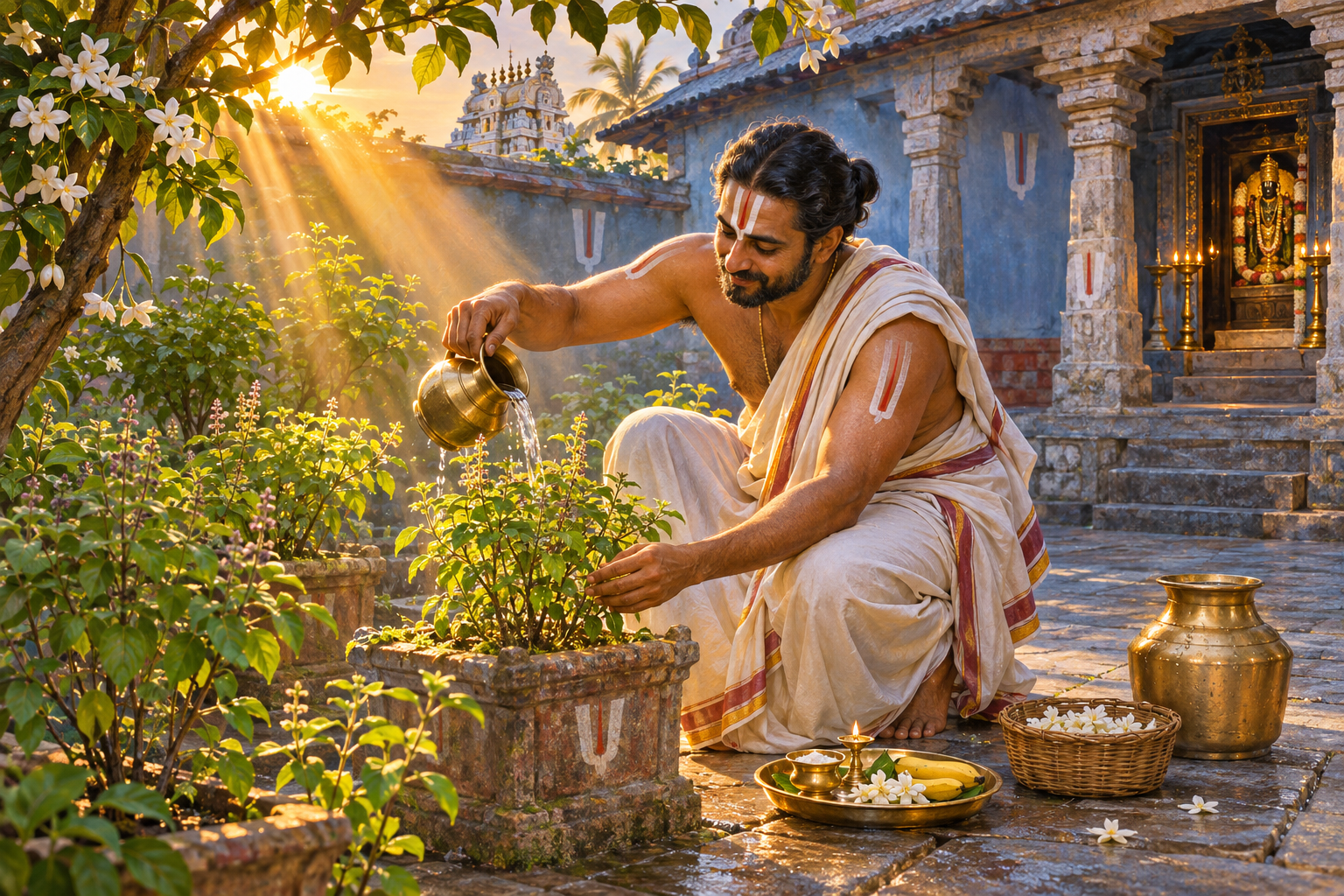
The most common misunderstanding is that grace and effort must compete. If liberation depends upon divine grace, why pray, study, worship, serve, or cultivate virtue? If effort matters, why surrender?
Prapatti changes what effort means. Before surrender, you may regard practice as the price of divine favour. After surrender, practice becomes an expression of belonging, gratitude, obedience, and service. The outward action may look similar, but its spiritual logic is different.
Consider an apology. If you have wronged someone, surrender does not allow you to say that the Lord will take care of the consequences. You apologise because truthfulness and repair belong to faithful conduct. What you give up is not the responsibility to act; you give up the claim that correct action places God in your debt.
The same distinction applies to worship. You can perform a ritual carefully without imagining that technical correctness forces a divine reward. You can study without turning knowledge into a measure of superiority. You can serve without secretly treating service as spiritual currency. Effort remains, but entitlement goes.
This is why prapatti should not be called an easy shortcut. It is accessible to someone unable to sustain demanding yogic disciplines, but surrender reaches directly into pride, control, fear, and possessiveness. A difficult practice may still leave the ego convinced that it is the achiever. Prapatti asks the ego to relinquish that claim.
How to examine prapatti in your own life
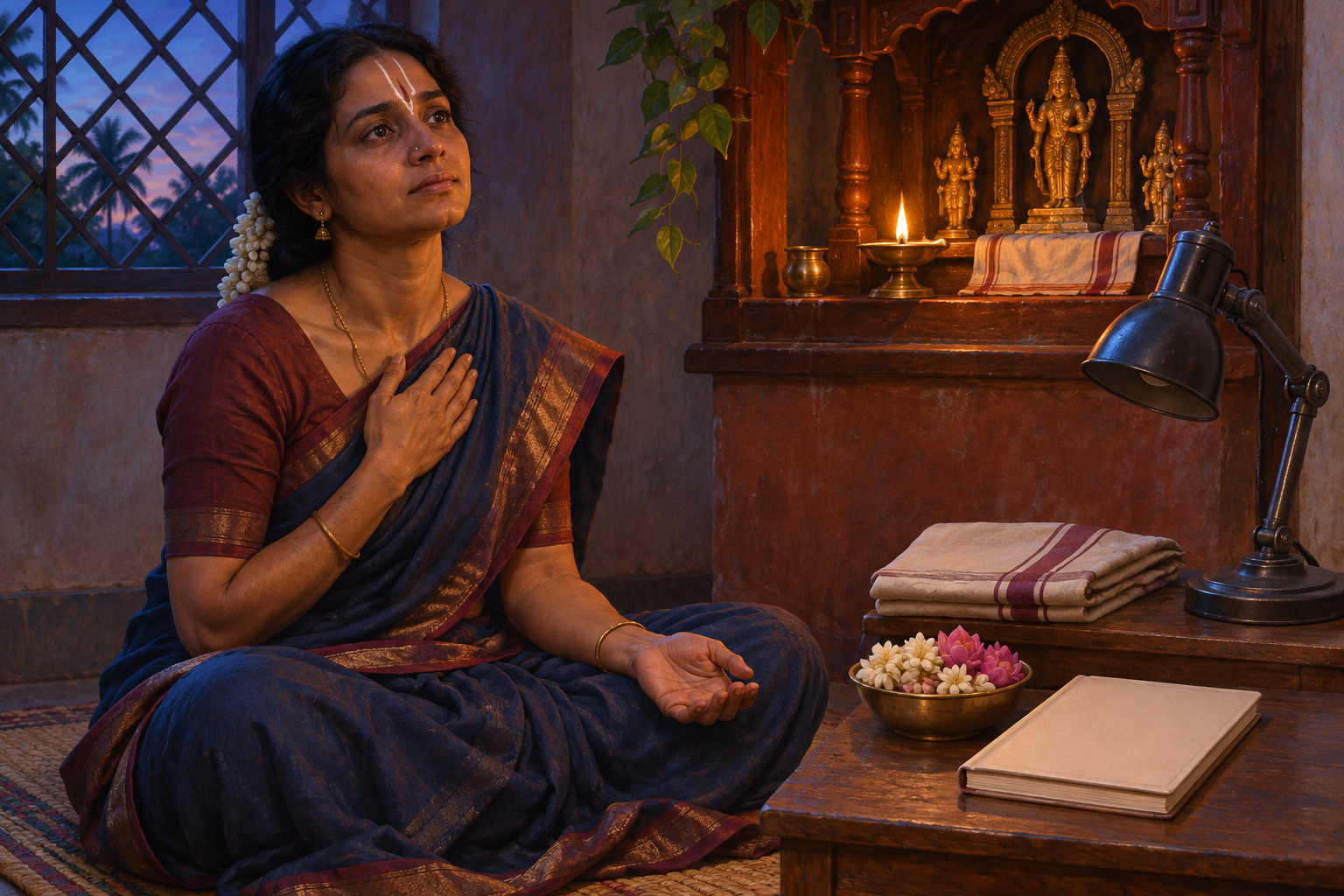
Begin with an honest prayer
You do not need to manufacture a special mood before examining surrender. Begin with the point at which you are trying to control your spiritual standing. It may be fear that you have not practised enough, pride in what you have accomplished, or anxiety that one failure has placed you beyond grace.
- Name the spiritual outcome you are trying to secure through your own power.
- Acknowledge plainly that your effort cannot make the Lord indebted to you.
- Place your fear, merit, failure, and hoped-for liberation under divine care.
- Ask what faithful action is required of you now, without using that action as a bargain.
- Carry out that action and release the demand to control its spiritual reward.
The wording need not be ornate. What matters is the movement from self-reliance to refuge. If you notice yourself trying to sound devout, say what is actually true instead. A prayer such as, “My trust is incomplete, but I still turn toward you,” is more consistent with surrender than pretending to possess perfect confidence.
Test surrender in ordinary conduct
A claim of surrender becomes visible in what happens after prayer. When corrected, can you listen without defending a spiritual self-image? When a duty is inconvenient, do you perform it without declaring yourself helpless? When practice goes badly, do you return to the Lord, or do you retreat into shame because your performance has disappointed you?
These are useful tests because false surrender usually appears at one of two extremes. At one extreme, you attempt to control everything and call the anxiety devotion. At the other, you abandon reasonable effort and call the neglect trust. Prapatti occupies neither position. It joins dependence upon grace with responsible service.
Do not turn surrender into another scorecard
You may catch yourself asking whether you have surrendered completely enough. That question can be helpful once, but repeated self-measurement soon recreates the old economy of achievement. The better response is renewed refuge: acknowledge the fear, entrust even your imperfect surrender to the Lord, and resume the duty in front of you.
There is also a difference between using this reflection privately and undertaking prapatti in a formal Srivaishnava setting. A living tradition can give surrender theological, devotional, and liturgical precision that a private exercise cannot supply. If you seek formal initiation or a binding traditional observance, learn from a qualified acharya within that lineage rather than constructing the rite from fragments.
Key takeaways for practising surrender without passivity
- Prapatti places your ultimate trust in the Lord rather than in your ability to accumulate spiritual merit.
- Total surrender concerns wholehearted refuge, not the production of a flawless emotional state.
- Grace does not remove action; it changes action from a price paid for liberation into service offered without entitlement.
- Dependence is not worthlessness. Visishtadvaita affirms the reality of the soul while locating it in complete dependence upon Brahman.
- Failure in concentration or discipline should lead you back to refuge, not into despair or spiritual bargaining.
- A surrendered person remains responsible for duties, moral choices, truthful repair, worship, and service.
At your next prayer, notice the one result you are most anxious to control. Entrust that result to the Lord, identify the duty that still belongs to you, and perform it without treating it as payment. That small movement from possession to refuge is where prapatti becomes more than an idea.
References

Leave a Reply
You must be logged in to post a comment.