
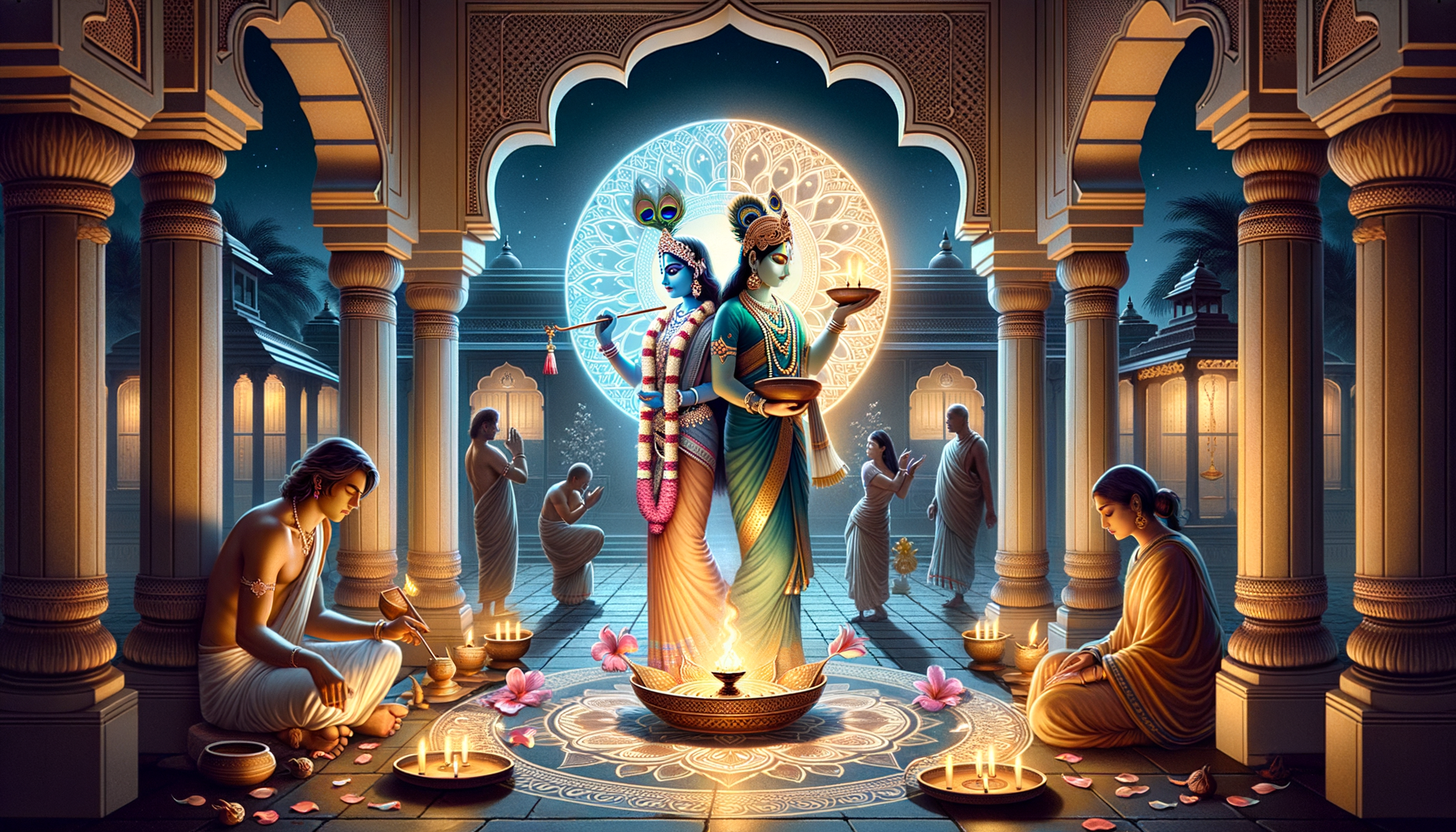
Krishnakalirevered across Bengal and the eastern parts of Indiadenotes a compelling synthesis of Sri Krishna and Goddess Kali. In regional folklore and devotional memory associated with Radharani, this combined form exemplifies Hinduism’s enduring ethos of unity in diversity, where multiple paths of bhakti coexist harmoniously. The narrative reflects a distinctive Bengal heritage in which Krishna’s playful compassion and Kali’s protective shakti are understood as complementary, not contradictory.
At the level of spiritual philosophy, Krishnakali illuminates the Ishta concept in Hindu traditions: seekers may approach the divine through the form most resonant with their inner nature. Rather than prescribing a single route, this vision celebrates personal freedom in worship, ethical responsibility, and deep respect for varied devotional sensibilities. Such pluralism, central to Hinduism’s spiritual tapestry, also nurtures mutual understanding across the broader dharmic familyHinduism, Buddhism, Jainism, and Sikhismby valuing compassion, self-discipline, and service as shared foundations.
Folkloric tellings in Bengal often situate the episode on a dark Amavasya night, during Kali Puja. When Jatila and Kutilamother-in-law and sister-in-law to Radharani’s husband, Ayangrow suspicious of Radharani’s private devotions, Sri Krishna assumes an awe-inspiring form resembling Goddess Kali. In this transformed presence, the household’s anxiety softens into reverence; lamp-light rituals (arati) are offered, and devotion flows unbroken. The moment, remembered as Krishnakali, entwines Krishna’s sweetness (madhurya) with Kali’s fierce guardianship (raudra), revealing a single divine reality manifest in diverse ways.
The figures of Jatila and Kutila stand as familiar archetypes in Gaudiya-inspired narrativesembodying social scrutiny and conventional restraintwhile Ayan represents the formal bounds of household life. Against this backdrop, Radharani signifies the heart of bhakti: steadfast, compassionate, and dignified. The Krishnakali episode thus becomes a parable about protecting the sanctity of devotion through wisdom and grace, not confrontation, and about how divine compassion resolves worldly tension.
In Bengal’s cultural memory, Krishnakali has inspired kirtans, local festivals, and home altars that honor Sri Krishna and Goddess Kali together. While literary references vary and modern usages of the term appear in multiple contexts, devotional communities consistently uphold Krishnakali as a symbol of spiritual synergy. This synthesis mirrors the region’s broader history of inclusive worship, where village shrines and family traditions embody a living dialogue between forms of the divine.
For many families, elder storytellers recall Krishnakali to teach children that different expressions of the sacred can guide a single ethical life: kindness toward neighbors, courage in adversity, and humility in practice. These values resonate with the dharmic emphasis on inner transformationakin to the compassion central to Buddhism, the nonviolence and self-mastery cherished in Jainism, and the seva (selfless service) celebrated in Sikhism. The story’s emotional power lies in its accessibility: households recognize themselves in the tensions and reconciliations it portrays.
Contemporarily, Krishnakali offers a gentle methodology for spiritual life: honor one’s chosen Ishta with sincerity, and extend respect to all sincere paths. In communities shaped by diverse customs, this approach fosters trust and cooperation, keeping devotion grounded in empathy rather than dogma. Festivals like Kali Puja and Janmashtami can thus become occasions for shared reflection on common ethical goals, even when liturgical details differ.
Ultimately, the story of Krishnakali expresses a mature spiritual insight: apparent differences in divine form serve a unified purposeawakening love, courage, and moral clarity. By affirming personal freedom in worship and reverence for others’ devotion, this Bengal-born legacy strengthens the bonds across dharmic traditions and offers a practical path to harmony in everyday life.
Inspired by this post on Hindu Blog.
