
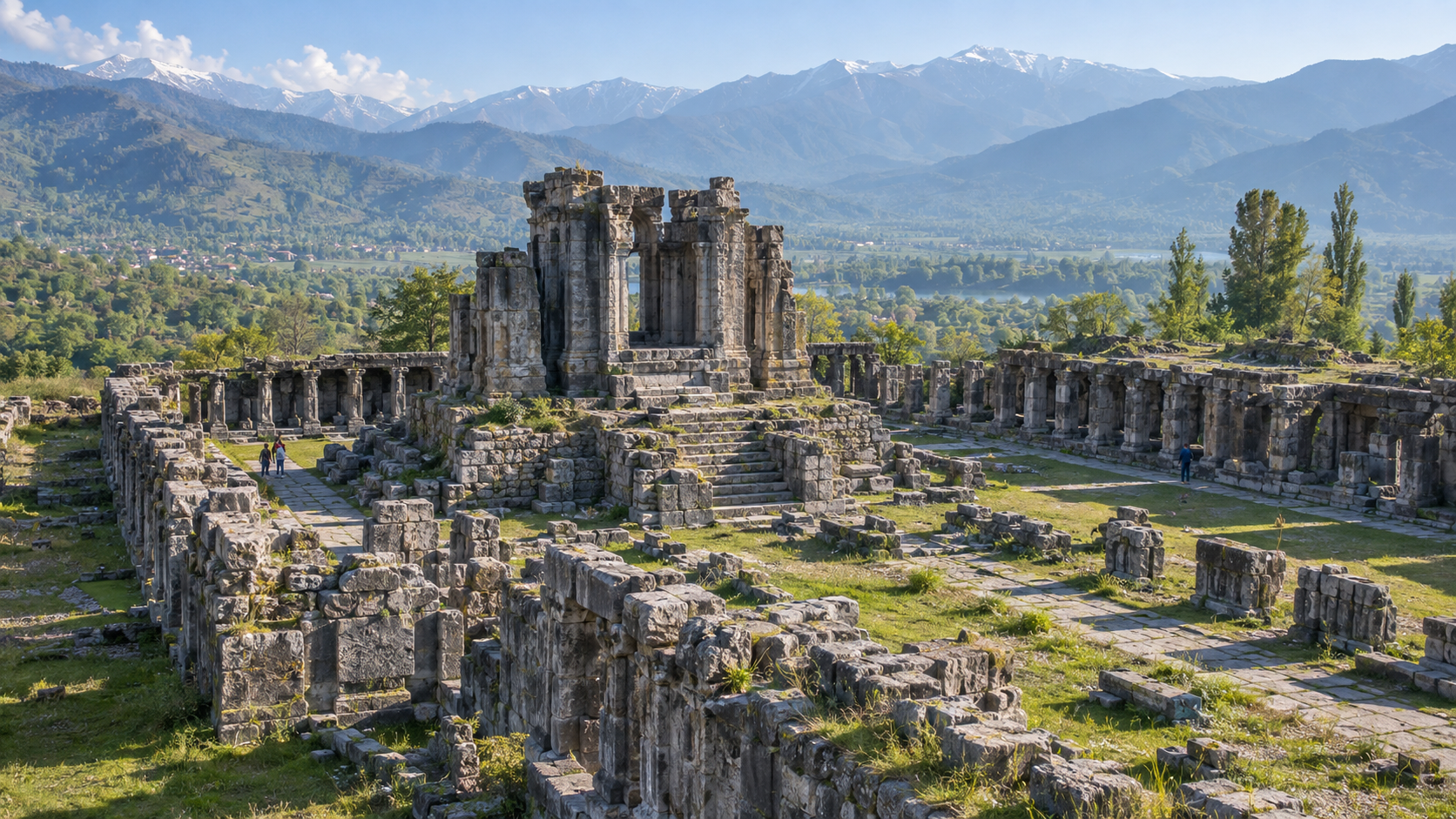
You want to visit the ancient temples of Jammu and Kashmir, but a collection of famous names won’t tell you which places are genuinely old, what part of a complex carries the history, or how to look without reducing a living shrine to a monument. A better visit begins with three questions: what is ancient here, what makes the location sacred, and what is still practised?
Jammu and Kashmir contains numerous temples, both ancient and modern. That distinction matters. Fame, spiritual importance and architectural age can overlap, but they are not interchangeable. If you keep them separate, you can plan a more meaningful yatra and describe the heritage more honestly afterward.
Start with the right question: what exactly is ancient?
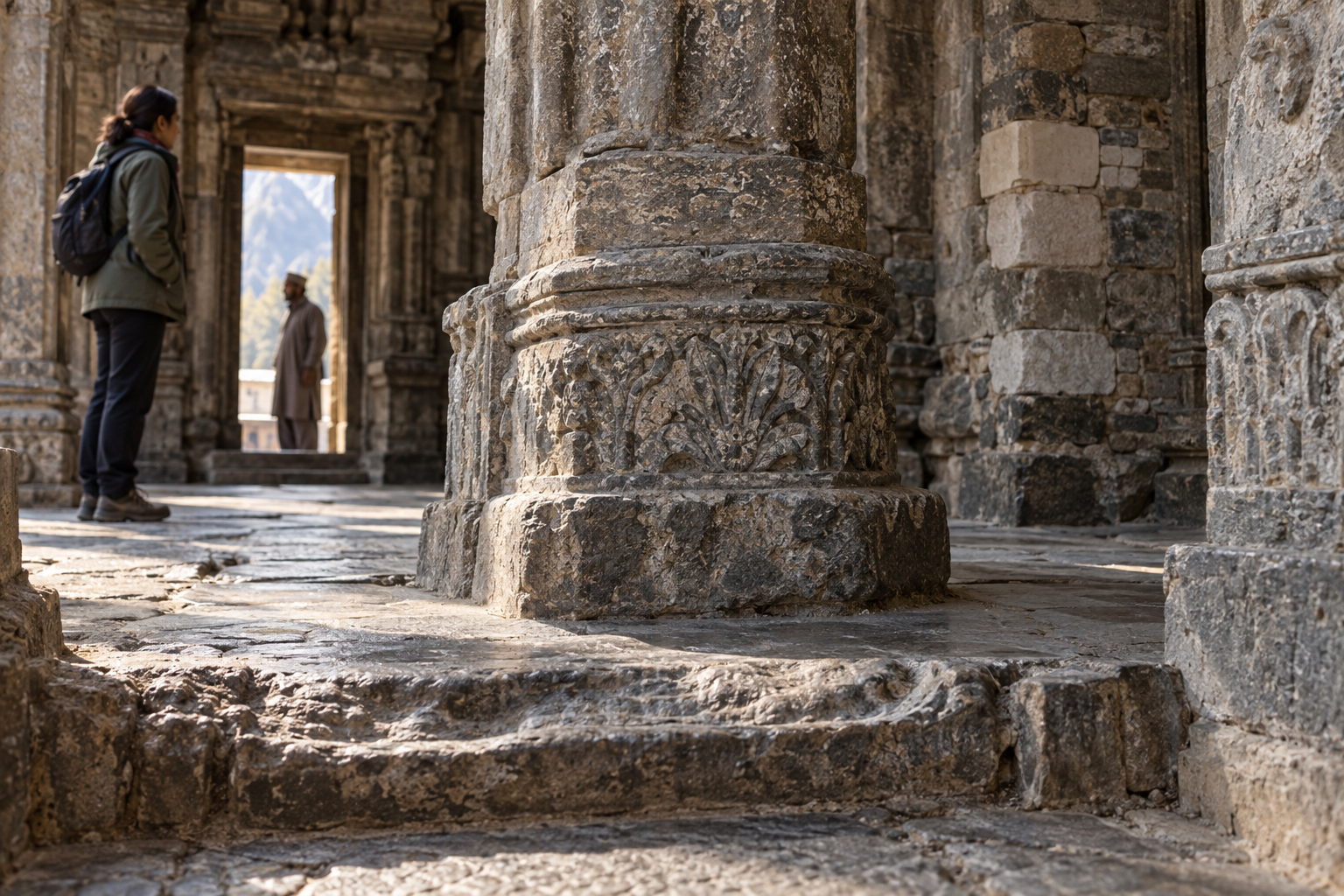
When someone calls a temple ancient, ask what the word modifies. A sacred place can have a very old remembered association while its present buildings are later. An image, inscription, foundation, enclosure or rebuilt shrine can belong to a different period from everything around it. Even the continuing community of worshippers has its own history.
Separate four layers before accepting or repeating an age claim:
- The sacred place: the mountain, cave, spring, grove, route or other feature around which devotion has formed.
- The physical fabric: the surviving walls, pillars, carvings, foundations and later repairs.
- The remembered tradition: the account through which worshippers understand the shrine’s origin and significance.
- The living institution: the rituals, caretakers, pilgrims and local community that sustain the place now.
This prevents the most common mistake in temple writing: assigning one unsupported date to the whole complex. An inscription may show that a donation, image or structure existed by a certain time; it does not automatically date every visible wall. A traditional origin account conveys sacred memory; it should be preserved as tradition rather than presented as an archaeological measurement.
Vaishno Devi offers a useful orientation point. The shrine is in the Trikuta Mountains near Katra, in the Jammu region. That establishes its geographic setting. It does not, by itself, date every element a visitor sees. Prominence is not proof of age, just as weathered stone is not a calendar.
Use a five-line record for every historical claim you encounter:
- Claim: Copy the wording accurately instead of strengthening it.
- Basis: Note whether it comes from an inscription, a sign, local tradition, architectural interpretation or a modern retelling.
- Object: Identify what is actually being dated: the site, image, inscription, building phase or renovation.
- Continuity: Record whether worship remains active and what can be observed respectfully.
- Uncertainty: Leave unresolved points unresolved. Use phrases such as “traditionally associated with,” “the inscription records” or “the present structure appears later” when those are the limits of the evidence.
A careful qualification is more valuable than an impressive but unsupported century.
Let sacred geography shape the way you see a temple
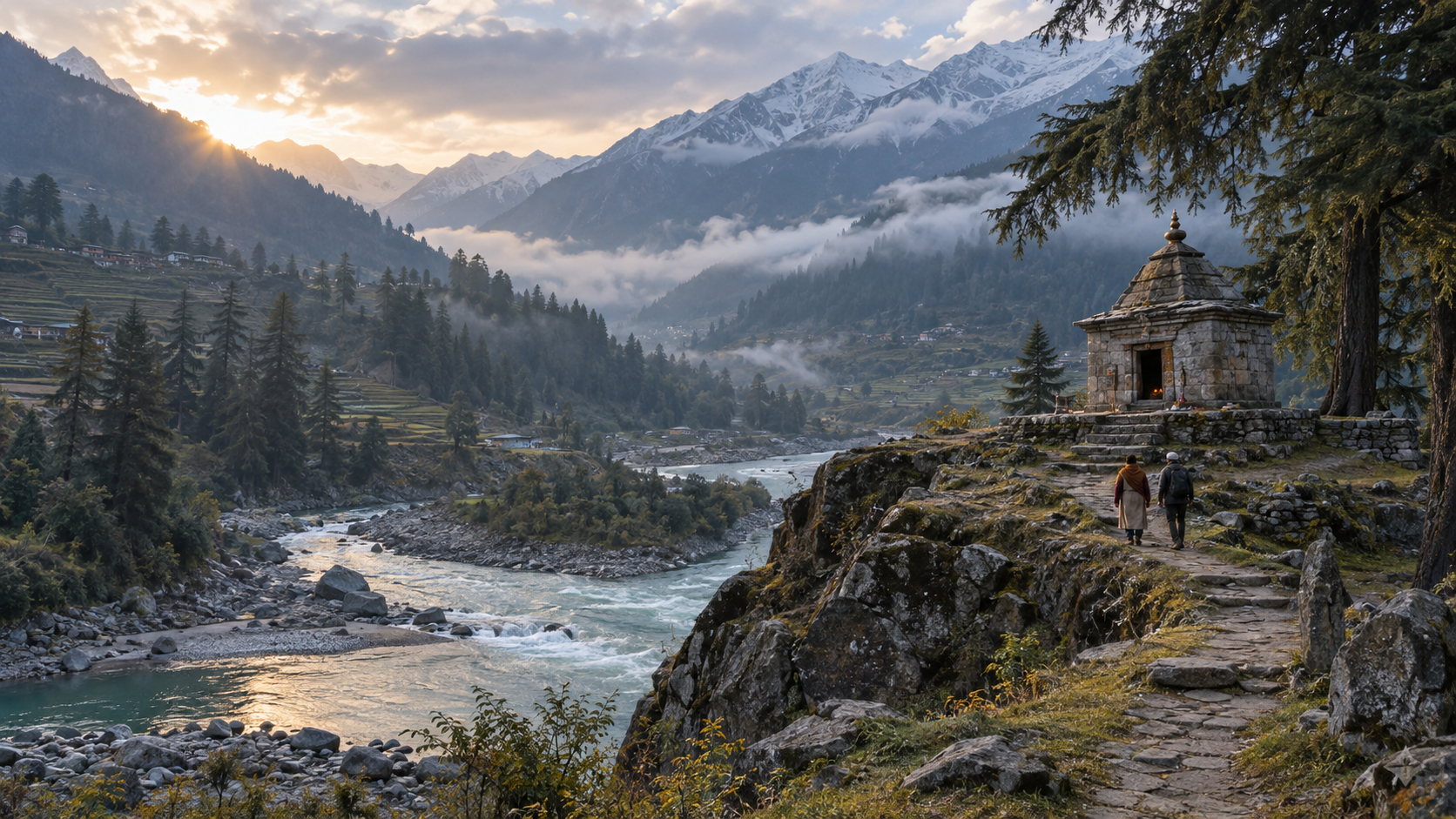
A temple is not always best understood as a building isolated from its surroundings. At a mountain shrine, the approach may help form the devotional experience. Elsewhere, a path, water feature, settlement, subsidiary shrine or natural threshold may explain why worship developed at that location.
Pause before entering and make four observations:
- Approach: Does the route reveal the shrine gradually? Notice ascent, turns, pauses and formal gateways.
- Thresholds: Look for the point at which an ordinary route becomes sacred space. A gateway, step, bell, water point or change in conduct may mark it.
- Relationship to terrain: Ask whether the shrine occupies a ridge, hollow, cave, terrace or another distinctive setting. Record what you see without inventing symbolism.
- Wider network: Note associated shrines, paths, gathering places and community spaces when they are present. They may show that the main sanctuary is only one part of the religious landscape.
This changes how you photograph and remember the visit. A close image of a facade preserves ornament. A permitted view of the approach, threshold and surrounding terrain preserves relationships. Both matter, but the second can explain why the place cannot be understood from architectural details alone.
Do not force every observation into a symbolic interpretation. First write the physical fact: “the path turns before the entrance.” Only then record a ritual explanation if a caretaker, sign or established tradition supplies one. Keeping observation and interpretation in separate lines protects both.
Build your route around purpose, not a count of temples
Before choosing stops, decide what kind of journey you are making. A pilgrimage prioritises darshan, worship and the discipline of the route. A heritage visit needs time for inscriptions, building phases and landscape. A family journey may require simpler access and longer pauses. None is inherently superior, but trying to do all three at once usually produces a hurried visit.
Plan in this order:
- Write your primary purpose in one sentence. Use it to decide what deserves time and what can be left for another journey.
- Group stops geographically. A famous-name ranking can send you back and forth while concealing smaller places that belong to the same sacred landscape.
- Verify present access. Check current information from temple management or the relevant administration for opening arrangements, route conditions, photography rules and local advisories. A historical description cannot tell you what is operational on the day of travel.
- Give each major stop uncommitted time. Queues, worship and conversations do not fit neatly into a sightseeing schedule. A smaller list seen attentively is more useful than a longer list remembered only through hurried photographs.
- Choose one question for each site. You might investigate the oldest visible element, the role of the approach, the relationship between tradition and surviving fabric, or the form of worship practised now.
Keep a compact worksheet for every planned stop: confirmed location, reason for visiting, current access information, one historical question, worship or conduct rules, and the place from which each claim came. This turns scattered notes into a record you can check before publishing or sharing them.
Leave room for living practice. If worship is under way, your research task waits. Darshan, offerings and local conduct are not obstructions around the “real” monument; they are part of what makes a temple different from an abandoned structure.
Read each site carefully without treating it as an exhibit
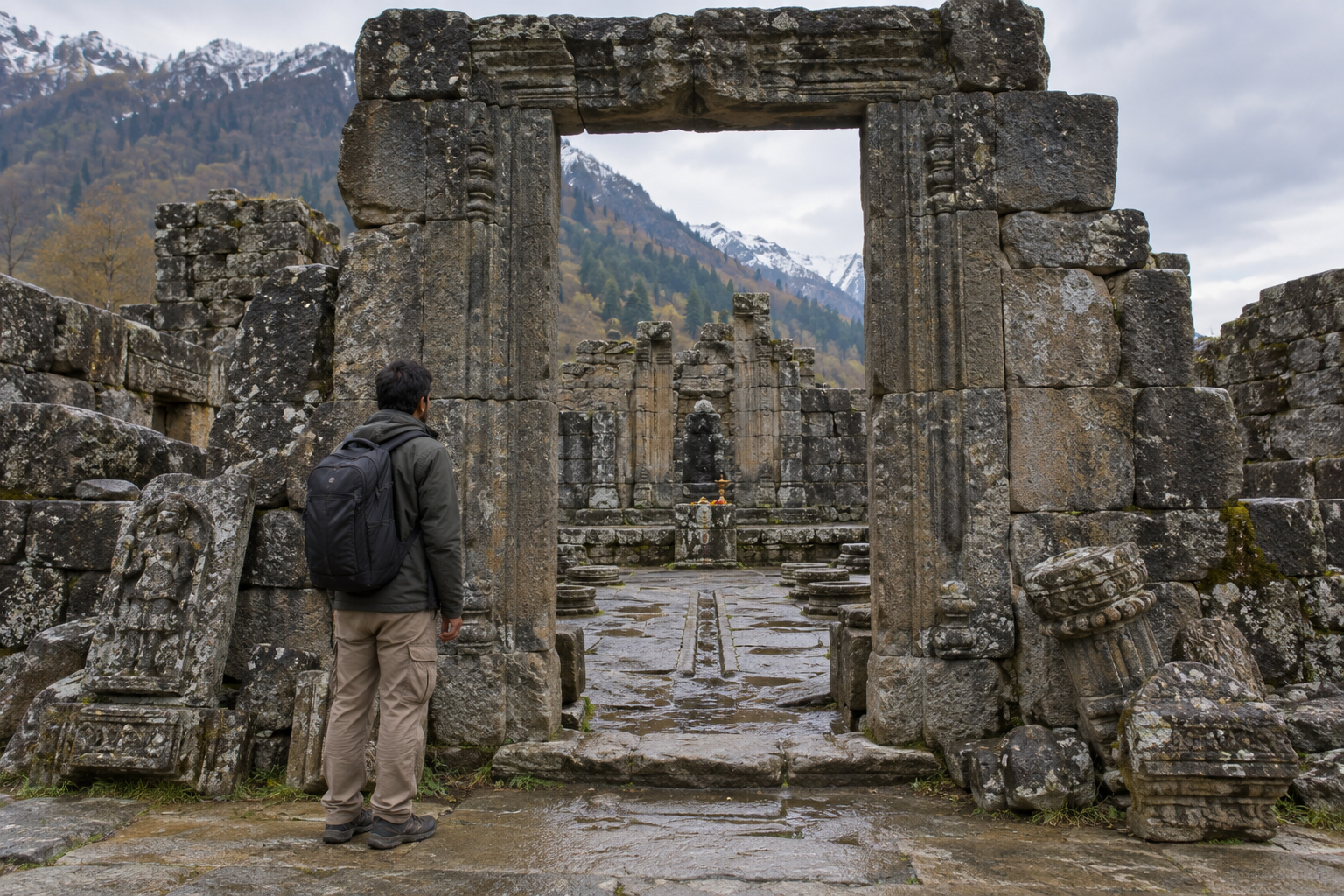
You can learn a great deal without touching anything. Look for changes in masonry, blocked openings, repaired roofs, reused carved pieces and differences between the sanctuary and surrounding construction. Such differences can indicate multiple building phases, but they do not establish dates on their own. Record them as observations for later verification.
Use this sequence on site:
- Read the rules before taking out a camera. Permission at the outer complex does not necessarily apply inside the sanctuary.
- Observe the whole setting first. Record the approach, thresholds and relationship to the terrain before concentrating on ornament.
- Copy inscriptions and signboards exactly. Put your interpretation in a separate note so that memory cannot merge the two later.
- Ask open questions. “What does local tradition remember about this place?” is better than proposing a date and asking someone to confirm it.
- Record repairs as part of the history. Restoration and rebuilding are not embarrassments to hide. They can show how a community kept a sacred place usable.
- Cross-check after the visit. Distinguish what you personally observed from what you were told and from what remains uncertain.
Never climb on architectural fragments, move offerings, rub an inscription, trace a carving with pencil, apply water or chalk to make letters visible, or remove even a loose-looking piece. These actions can damage the very evidence you came to understand. When photography is allowed, an undistorted image and a separate location note are safer than physical contact.
The most responsible account of a temple holds two truths together: the place may preserve historical fabric, and it may also be an active home of devotion. Neither role cancels the other. Your behaviour should reflect both.
Key takeaways
- Do not use “ancient” as a blanket label. Separate the age of the sacred place, surviving structure, image, inscription and institution.
- Treat tradition as sacred memory and inscriptions or fabric as historical evidence; record each in its proper category.
- Read the approach and terrain along with the building. Sacred geography can be essential to understanding a shrine.
- Plan around pilgrimage, heritage study or family needs rather than trying to maximise the number of stops.
- Confirm present access and conduct rules through current official or temple-management information before travelling.
- Observe without touching, and mark every note as observation, testimony, written claim or inference.
Begin with one temple, not an ambitious catalogue. Prepare the five-line claim record, confirm current access, and arrive with one question you genuinely want the place to answer. That small discipline will give you a more honest encounter with Jammu and Kashmir’s temple heritage and a record worth passing on.
References

Leave a Reply
You must be logged in to post a comment.