
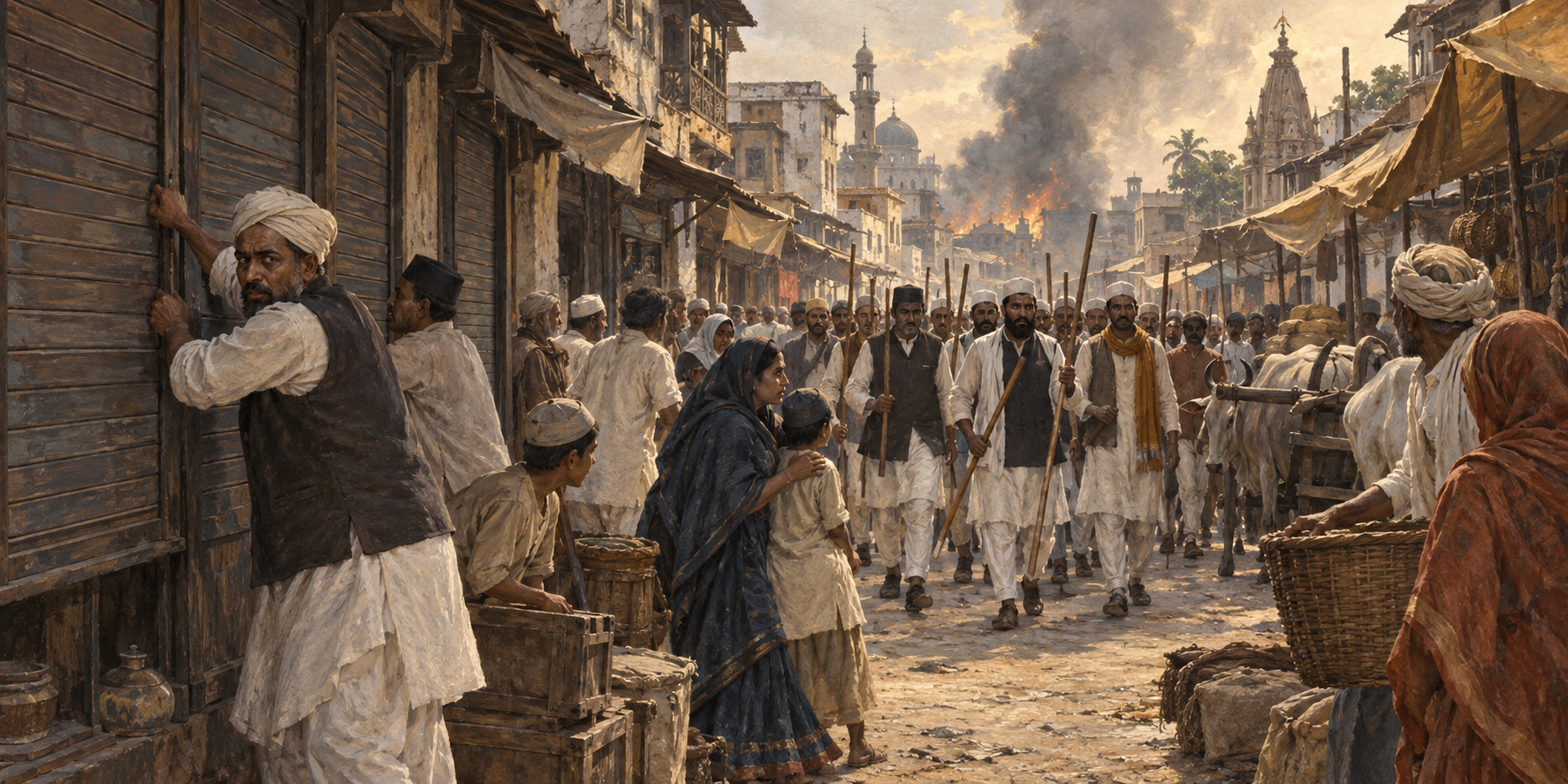
If you have encountered Malegaon only as a footnote to the 1921 violence in Malabar, the useful question is not whether the two places were controlled by a single conspiracy. It is whether Malegaon exposed a danger within Khilafat mobilisation before the later bloodshed in Malabar.
The careful answer is yes, but in a precise sense. In Malegaon, a transnational religious cause became a local funding demand. The demand became a commercial boycott. The boycott acquired armed enforcement. The punishment of six volunteers was then followed by murder, arson and looting. That sequence makes Malegaon an unmistakable warning. It does not, by itself, prove that the same men directed every later act in Malabar.
The national alliance contained a fault line from the beginning
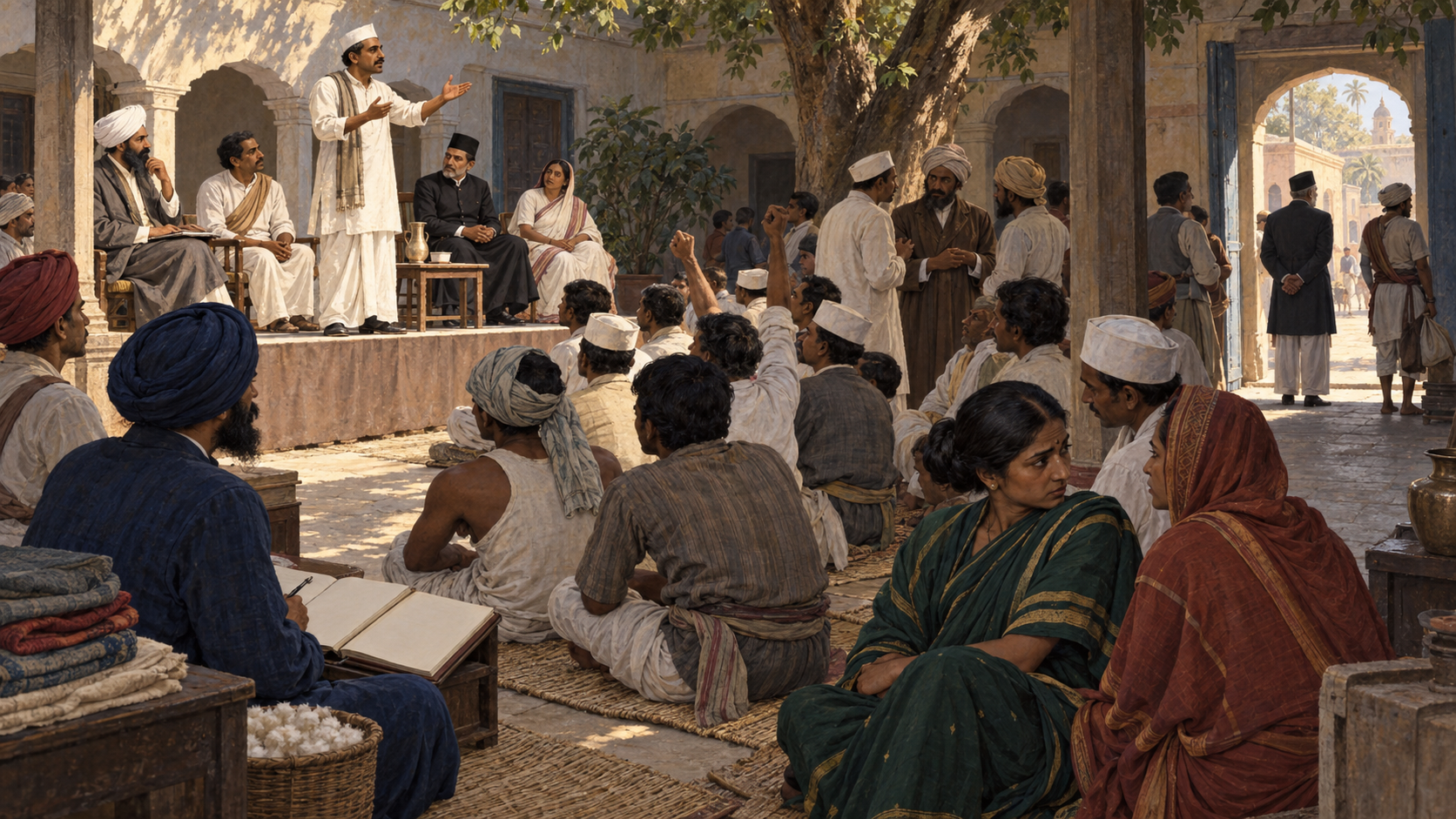
At the end of the First World War, the Ottoman Empire stood defeated and subject to partition by the victorious powers. Some Muslims regarded the Turkish sultan as their caliph and feared both for his position and for Muslim holy places. Indian Khilafat leaders sought the restoration of Turkey to its pre-war standing, going beyond the more limited demand that Turkish-majority regions remain under Turkish rule.
Mohammad Ali and Shaukat Ali became leading voices of this campaign. Their position joined resistance to British power with an explicitly pan-Islamic political commitment. In court, the brothers maintained that a law prohibiting acts required by their religion had no validity for them. This matters because it shows that their dispute with colonial law was not merely constitutional. They asserted a religious authority higher than the law under which they were being judged.
Gandhi connected this mobilisation to his non-cooperation movement. He supported the Khilafat demand, while the Ali brothers and their followers supplied Muslim support for the wider campaign against British rule. The alliance created a powerful common platform, but it did not erase the partners’ different convictions or ultimate political aims.
The disagreement over nonviolence reveals the limit of that unity. At the 1921 Khilafat Conference, a resolution calling for independence was adopted, while speakers described nonviolence as an accommodation that had to be followed temporarily in pursuit of Swaraj. Gandhi had promised Swaraj by 1921, so the method could be presented to these audiences as a tactic for the immediate campaign rather than a permanent moral discipline.
You should not turn those speeches into a claim about all Muslims or about Islam as a whole. The relevant point is narrower: influential Khilafat activists were not all describing nonviolence in the same terms as Gandhi. When you assess the celebrated language of Hindu-Muslim unity, therefore, ask whether the participants shared a destination or merely an immediate opponent. Malegaon shows what could happen when that distinction was ignored.
Malegaon’s escalation can be followed step by step
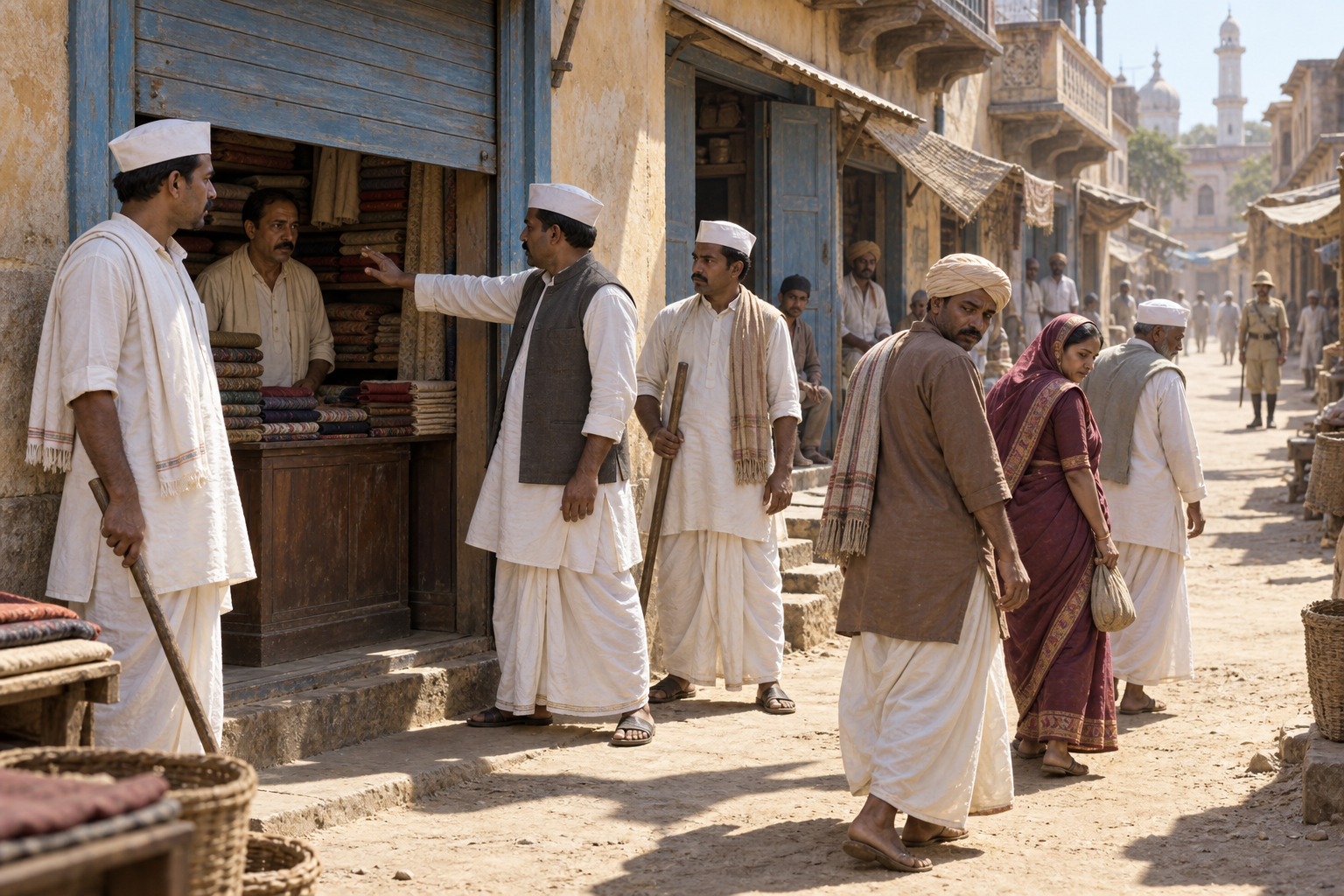
The local crisis began with institutions, money and pressure rather than with a sudden street clash. Malegaon’s Beitujullum and Anjuman schools received government grants. Khilafat members decided that the schools should refuse this support as part of the campaign against cooperation with the government. The refusal created a practical question: who would replace the lost funds?
The answer was a paisa fund collected from the sari trade. A quarter of an anna was demanded for every sari sold, placing the burden on the town’s weavers and sellers. What appeared to be movement fundraising ceased to be voluntary when dissent brought boycott, picketing and hostility.
| Date | Development | What you should notice |
|---|---|---|
| 15 March 1920 | A Khilafat committee was formed in Malegaon to organise lectures and religious sermons. | The later crowd action grew out of an established local organisation, not an issue invented on the day of the riot. |
| Nine months later | Shaukat Ali visited Malegaon, giving the local political campaign a stronger religious impetus. | National leadership and local mobilisation had become connected before the funding conflict intensified. |
| 27 February 1921 | A public meeting announced a commercial boycott against people who resisted the paisa fund. | The movement crossed from requesting support to imposing an economic penalty on dissenters. |
| 13 March 1921 | The Sub-Divisional Officer convened a meeting over the enforced collection. Voluntary collection boxes were suggested, and fund leaders were asked to affirm Gandhi’s nonviolence. | Officials recognised the danger and attempted a less coercive arrangement before the final outbreak. |
| 30 March 1921 | After volunteers appeared with swords and cudgels, the District Magistrate prohibited the carrying of weapons. | The threat was visible weeks before the killings. The presence of weapons changed the meaning of picketing and boycott. |
| 1 April 1921 | An agreement supporting nonviolence was published. | Movement leaders had been given an explicit opportunity to restrain their volunteers. |
| 4 April 1921 | One signatory publicly apologised for having signed the agreement, while the boycott continued. | The declaration did not settle the conduct on the streets, and adherence to restraint was already breaking down. |
| 24 April 1921 | A leading speaker invoked divine assistance for the volunteers to promote their religion. | The immediate atmosphere remained religiously charged on the eve of the court decision. |
| 25 April 1921 | Six volunteers received a penalty of Rs. 50 or four weeks in prison. The fines were not paid. A crowd then attacked police officers, killed the Sub-Inspector of Police, burned a temple and looted the homes of people who had opposed the fund. | The targets expanded far beyond the magistrate or the legal proceeding. Police, a Hindu religious site and local dissenters all became objects of retaliation. |
The crowd shouted "Allah-ho-Akbar" as the violence began. Residents who had resisted the collection fled for their lives. The religious slogan should neither be erased from the event nor misused as a verdict on an entire faith. Its historical significance lies in the way the mob framed its own action at that moment.
The decisive change was from persuasion to coercion
Malegaon is useful because its dates prevent two opposite evasions. The violence cannot be reduced to a spontaneous reaction against the fines on 25 April: enforced collection, commercial punishment, inflammatory sermons, armed volunteers and the collapse of a nonviolence pledge were already visible. Yet warning signs do not prove that the final attack had been planned in every detail. The chronology establishes escalation; it does not establish an undisclosed operational plan.
Five threshold crossings turned a political campaign into a danger for ordinary residents:
- A boycott of government grants created a local financial obligation.
- The paisa fund transferred that obligation to every sari transaction and therefore to the livelihood of weavers and sellers.
- Commercial boycott and picketing made refusal costly, converting a contribution into an enforced levy in practice.
- Swords and cudgels gave physical force to the volunteers’ demands, while public sermons intensified hostility.
- The conviction of six volunteers became the occasion for violence against a much broader set of people and institutions.
The choice of victims is central. The mob did not confine itself to protesting the court’s decision. It attacked police, killed an officer, burned a temple and looted residents who had opposed the fund. That movement from a specific grievance to collective punishment is one of the clearest signs that political protest has become sectarian coercion.
When you encounter another movement described simply as popular, anti-colonial or nonviolent, test the description against conduct on the ground:
- Could a trader decline to contribute without losing access to customers?
- Did picketers persuade people, or did they prevent ordinary business?
- Were volunteers unarmed, or did they carry weapons while enforcing demands?
- Did leaders’ promises of restraint govern their followers after the promise was published?
- When the government acted, was anger directed at the responsible officials, or were dissenting residents and religious sites attacked?
In Malegaon, the answers place the movement beyond peaceful non-cooperation before 25 April. The court judgment triggered the final eruption, but it did not create the coercive structure that made the eruption possible.
Calling Malegaon a precursor requires precision
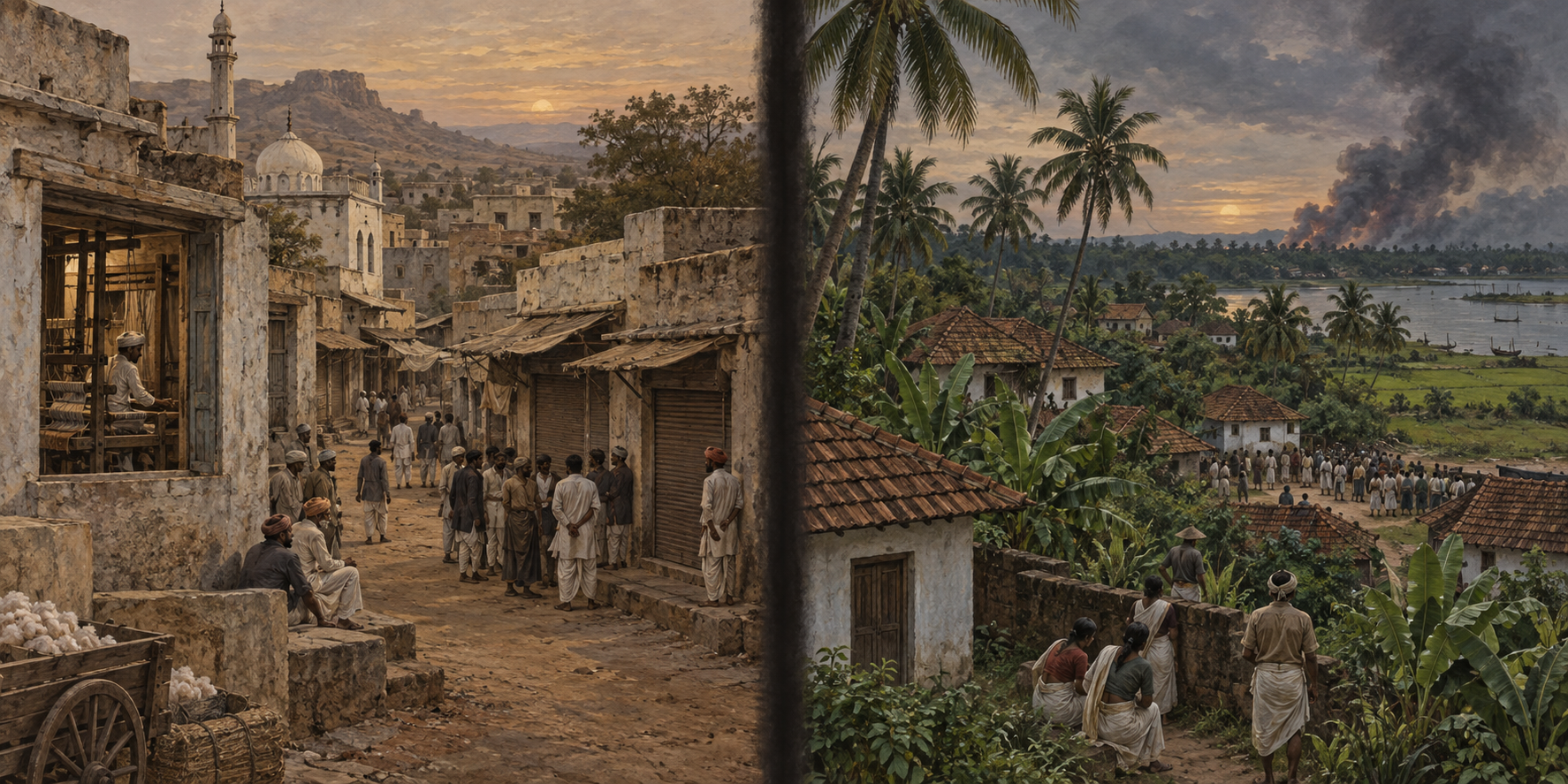
The later mass violence against Hindus in Malabar did not make Malegaon important only in retrospect. Malegaon had already demonstrated that mobilisation under the Khilafat banner could turn against local dissenters, police and a Hindu temple. It showed this before the larger catastrophe in Malabar.
That is the strongest meaning of precursor: an earlier manifestation of a dangerous tendency. It is not automatically proof of a direct chain of command from Malegaon to Malabar, nor proof that identical local conditions produced both outbreaks. A shared ideological banner can connect events without making their organisers, immediate causes or local histories interchangeable.
Keep three levels of claim separate:
- Established in Malegaon: Khilafat organisation preceded the violence; its school-funding campaign produced the paisa collection; dissenters faced boycott and picketing; some volunteers carried weapons; and the 25 April crowd attacked police, killed a sub-inspector, burned a temple and looted opponents of the fund.
- Reasonable historical inference: coercive fundraising, religiously charged mobilisation and armed enforcement made wider violence more likely, while the public commitment to nonviolence lacked effective control over the crowd.
- Not established by the Malegaon chronology alone: that the same organisers planned the Malabar violence, that every Khilafat supporter approved of killing, or that every local cause in Malabar can be reduced to what happened in Malegaon.
This distinction protects the history from both sanitisation and exaggeration. Gandhi’s support for the Khilafat alliance cannot turn the Malegaon mob into a nonviolent movement after the fact. Conversely, the mob’s acts do not prove that Gandhi ordered them. Responsibility should be assigned at the level at which conduct and decisions can actually be shown.
The same discipline applies to religious responsibility. It would be false to convert the actions of identified leaders, volunteers and a mob into inherited guilt for every Muslim. It would be equally false to strip the conflict of its religious content when sermons, Khilafat leadership, religious promotion and the crowd’s own slogan formed part of the escalation. Historical fairness requires both moral clarity and a refusal to generalise beyond the people and institutions involved.
Key takeaways
- Malegaon’s Khilafat committee was formed on 15 March 1920, well before the fatal outbreak of 25 April 1921.
- The immediate local dispute arose when refusal of government school grants led to a paisa fund demanding a quarter anna for every sari sold.
- The collection became coercive through commercial boycott, picketing and hostility toward people who refused to pay.
- Armed volunteers, heightened religious rhetoric and the failure of a published nonviolence agreement made the danger visible before the court imposed penalties.
- Malegaon is best understood as an earlier warning of coercive Khilafat mobilisation, not as automatic proof of a single operational plan governing Malabar.
If you are writing, teaching or discussing this history, begin with the chain of decisions rather than with a slogan about either national unity or permanent communal conflict. Record what was demanded, whether refusal remained safe, when weapons appeared, how leaders responded and who was ultimately attacked. That method keeps ordinary victims – the pressured weavers, the slain sub-inspector, the residents whose homes were looted and the community whose temple was burned – in the centre of the history.
Then examine Malabar at the same local resolution before claiming a direct organisational line between the two places. The next time you see the word non-cooperation applied to this period, ask one concrete question: could an ordinary person safely decline to cooperate? In Malegaon, the answer was no.
References
- DharmaRenaissance Blog – Malegaon 1921 – a precursor to the Moplah Riots
