-
Malegaon Flashpoint: FIRs After Hanuman Chalisa Post-Namaz—Legal Clarity and a Roadmap to Harmony

Police in Malegaon reportedly registered a case after Hanuman Chalisa was recited inside the Malegaon Municipal Office following Namaz on the premises, renewing debates on worship in government spaces. This analysis explains how Articles 25–26 of India’s Constitution protect devotion while permitting content-neutral, time–place–manner rules. It outlines the typical legal toolkit used nationally (e.g., IPC…
-
Explosive claim: K P Raghuvanshi alleges pressure to arrest Shiv Sena–RSS leaders

Former Maharashtra ATS chief K P Raghuvanshi has alleged that political pressure was exerted to arrest “Hindutva leaders” linked to Shiv Sena and the RSS, as reported in connection with accounts in “The Troubleshooter: The Untold Encounters of IPS Officer.” Presented here is a rigorous, evidence-first analysis of why such claims matter for the rule…
-
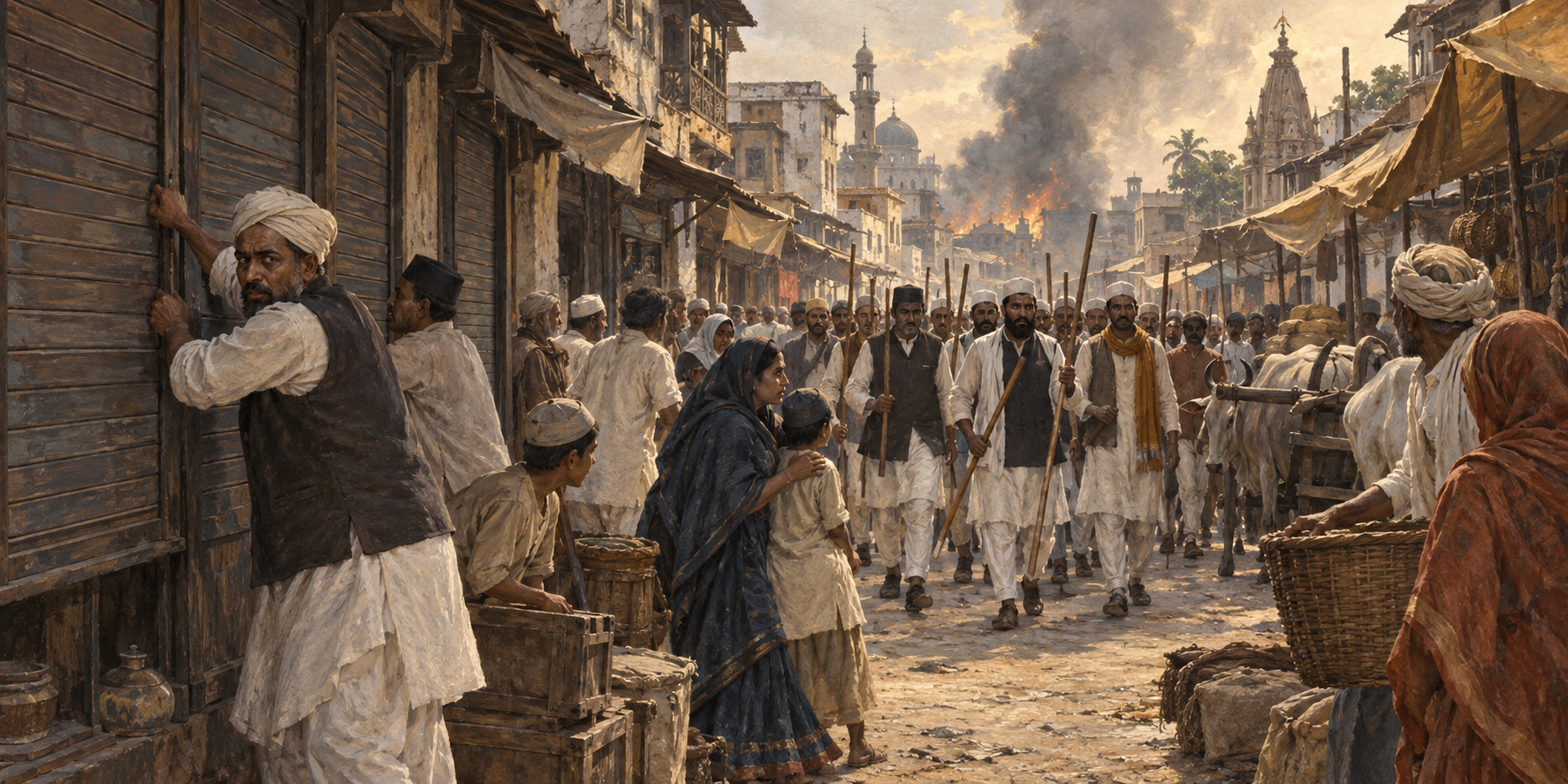
Malegaon 1921: Untold Lessons from the Khilafat Unrest, Gandhi’s Strategy, and Communal Healing

This historically grounded analysis re-examines the Malegaon riots of April 1921 in the context of the Khilafat Movement and British colonial rule. It explores Gandhi’s strategic alignment with Khilafat leaders, the public stature of the Ali Brothers, and claims about a fatwa attributed to Mohammad Ali and several hundred ulema. Readers gain a nuanced perspective…
-
Discover the Proven Truth: Kolhapur Event on the ‘Saffron Terror’ Narrative, 13 Oct

A special event in Kolhapur on 13 October examines the ‘Saffron Terror’ narrative through a rigorous, evidence-based lens. It contextualizes the 2008 Malegaon blast discourse and the 31 July 2025 NIA Special Court acquittal of seven Hindu accused. Attendees gain a clear legal timeline, insight into evidentiary standards, and a framework to assess media narratives…
-
Malegaon 1921 – a precursor to the Moplah Riots

The Khilafat violence of 1921 is a forgotten event. It was a precursor to the Malabar Riots of 1921. On March 15th, 1920, a Khilafat committee was formed in Malegaon to conduct lectures and religious sermons. Nine months later, one of the Khilafat leaders, Shaukat Ali, visited Malegaon and political activities got a religious boost.…