
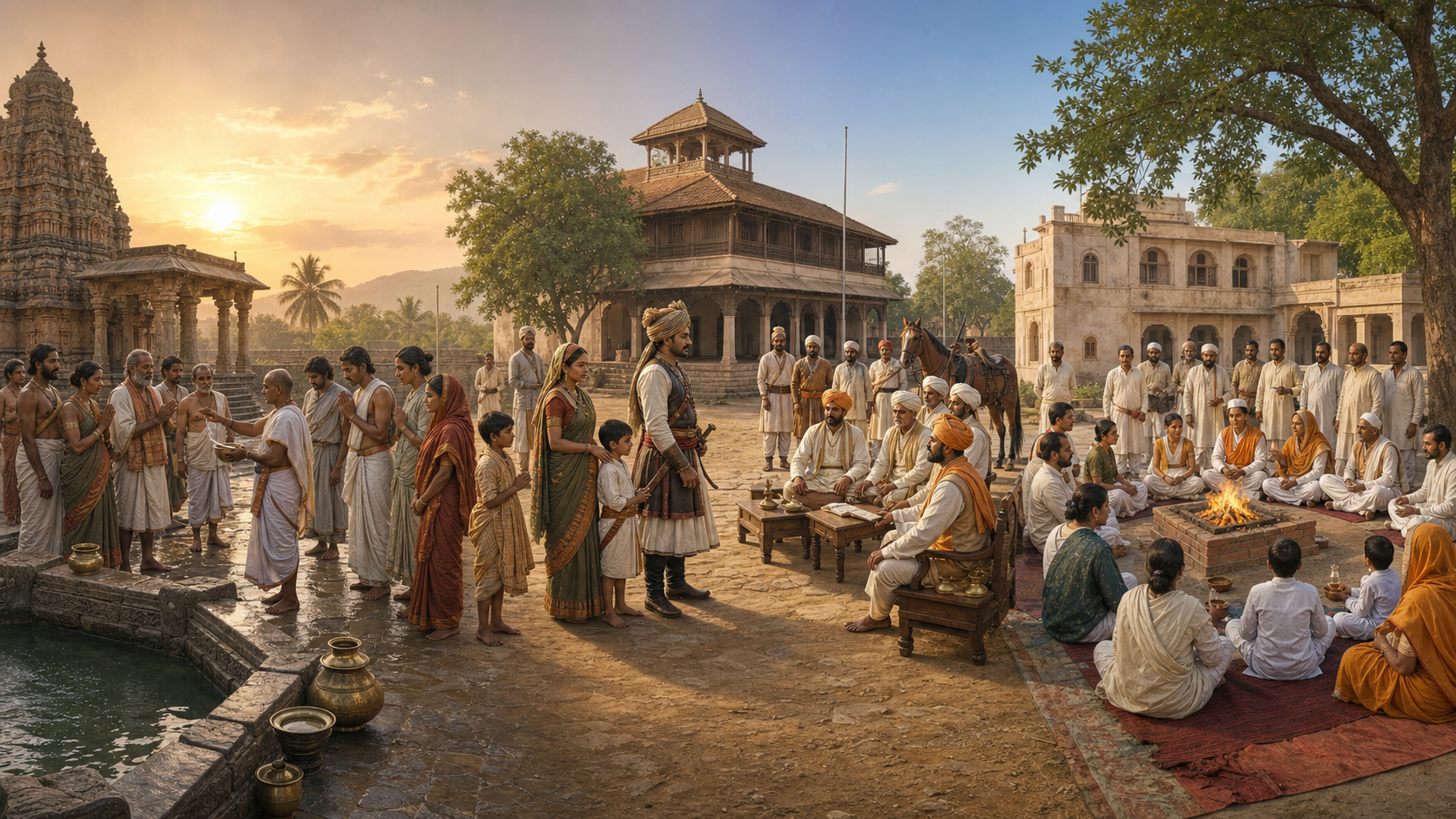
If you are trying to decide whether Hindu reconversion is a recent political invention, the short answer is no. But saying that the same institution has existed unchanged for centuries would also be poor history. What survives is a sequence of different Hindu responses to religious rupture: collective readmission after coercion, case-by-case restoration under a Hindu state, and organized Shuddhi through a modern reform movement.
You will understand that history more clearly if you ask four practical questions: Why had people left the Hindu fold? Who recognized their return? What rite or penance was required? And did the return restore social belonging as well as religious identity?
Do not treat Paravartana, Shuddhi and Ghar-Wapsi as synonyms
The language can obscure more than it reveals. Reconversion is a useful umbrella term, but it should not make three related ideas appear identical.
- Paravartana describes a turning or return. It places the emphasis on coming back after a break.
- Shuddhi refers more specifically to the purificatory or expiatory process through which return was recognized. Depending on the setting, that could involve a collective ceremony or a case-specific prayaschitta.
- Ghar-wapsi, literally a return home, is the popular contemporary expression. It can summarize the civilisational idea, but it should not be projected backwards as though Vijayanagara rulers, Maratha officials and Arya Samaj reformers all operated one organization under one name.
The distinction matters whenever you discuss a historical claim. For a premodern episode, identify the actual mechanism first: release from captivity, ritual purification, official religious adjudication, restoration to caste or community acceptance. Apply the modern label only after you have described what happened.
Vijayanagara shows collective return after coercion
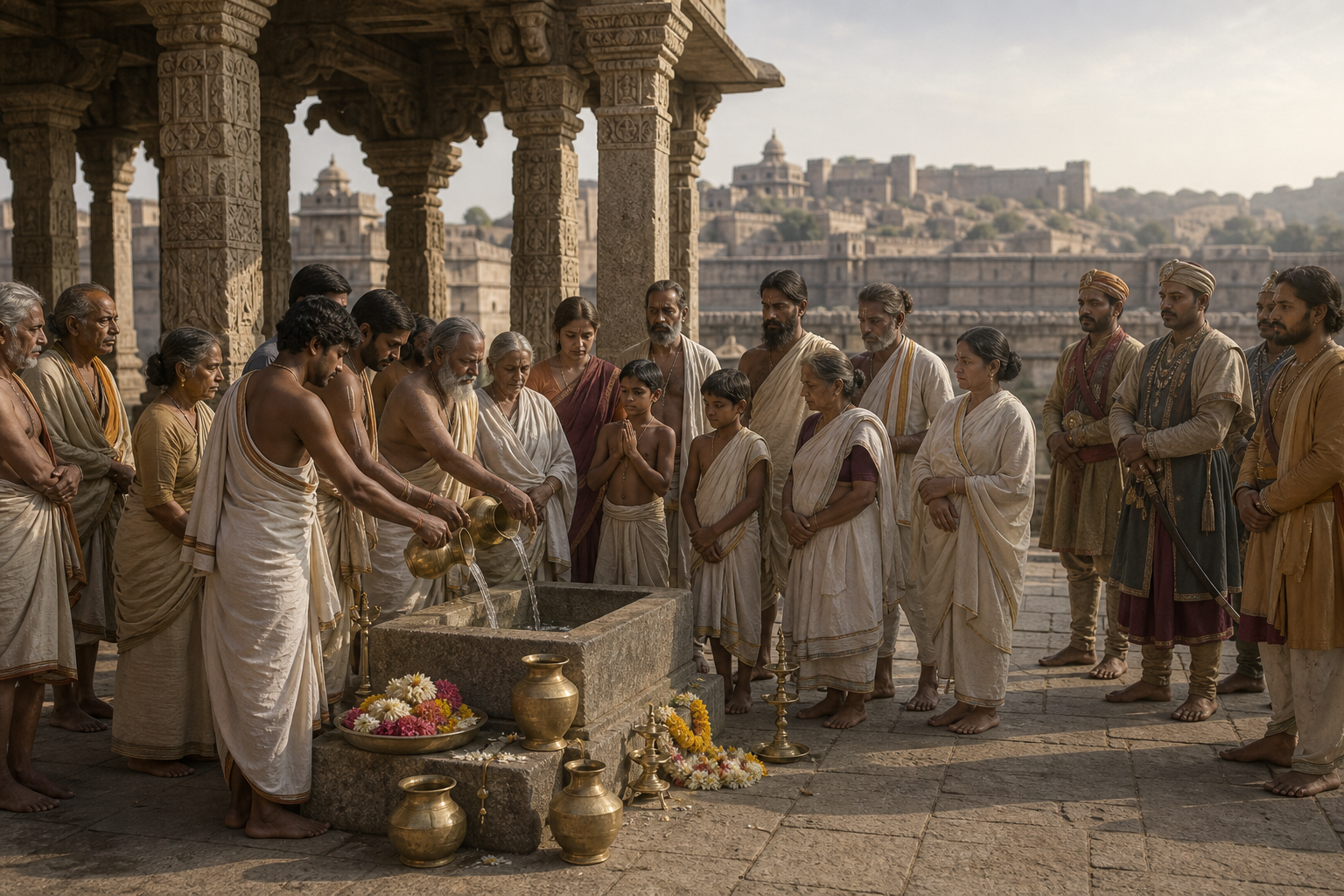
The Vijayanagara episode arose from war rather than missionary debate. After the Bahmani-Vijayanagara conflict ended in 1398 CE, Bahmani ruler Tajuddin Firuz is recorded as having seized thousands of Hindus near Vijayanagara, subjected them to forced conversion, inflicted sexual violence on women and retained the captives as leverage against Harihara II. The ruler accepted a treaty under which their release required payment of ten lakh honnu in gold coins.
The religiously significant act came after the political settlement. When the captives returned, men and women were received through a mass Shuddhi ceremony. The sequence is important:
- A military power removed people from their community by force.
- A negotiated settlement ended their captivity.
- A collective rite addressed the religious consequences of coerced conversion.
- Hindu society welcomed the returnees rather than treating the coercion as an irreversible choice.
This is more than a story about personal belief. The ceremony answered a social question: Would the wider community receive people whose religious status had been altered under duress? Including both men and women in the ceremony indicates that the response was directed at the affected population, not merely at prominent male captives.
At the same time, one mass ceremony does not establish an empire-wide code or a permanent Vijayanagara department for reconversion. The defensible conclusion is narrower and stronger: in this crisis, coercion was not treated as an unalterable severance from Hindu society, and a public ritual supplied a way back. When you encounter a broader claim, ask for evidence that the same practice operated beyond this particular emergency.
The Marathas gave readmission an institutional channel
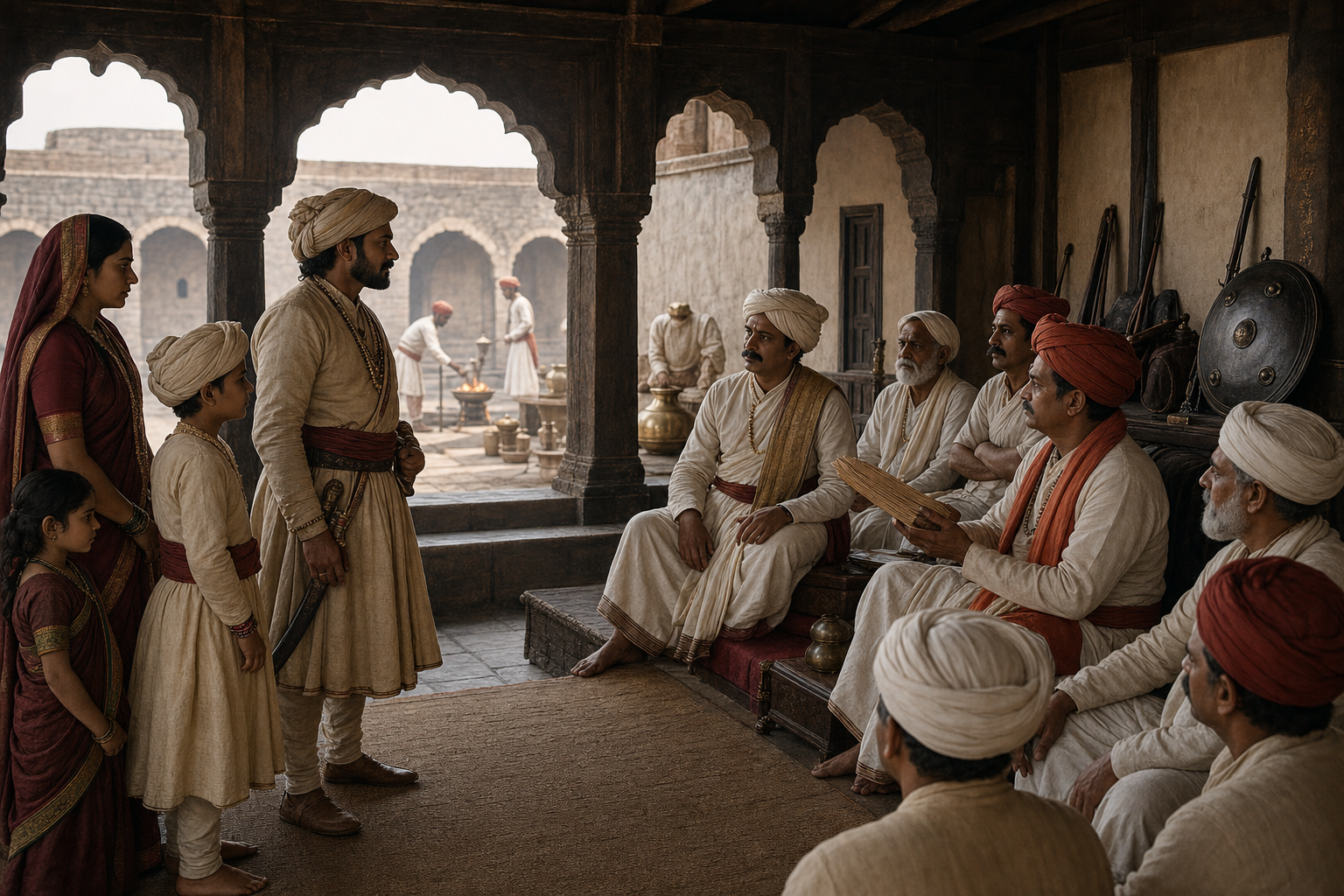
The Maratha response took a different form. Under Chhatrapati Shivaji Maharaja, religious questions fell within the jurisdiction of the Panditrao, one of the eight ministers. P.V. Kane described letters in which the Panditrao convened learned Brahmanas and obtained their approval for prayaschitta before a Hindu forcibly converted by Muslims was restored to caste.
The process had several identifiable parts:
- The consequences of forced conversion were treated as a religious matter requiring an authoritative decision.
- The Panditrao did not simply improvise a verdict; learned Brahmanas were assembled for deliberation.
- An approved prayaschitta created the ritual route to restoration.
- The declared outcome included return to caste, showing that social status mattered alongside personal profession of faith.
Maratha rulers and ministers could also consult learned Brahmanas at Paithan, Nasik and Karad. The holders of Shankaracharya seats at Sankeshwara and Karavira were available for consultation as well, although they were approached less often. This network joined political authority to recognized religious expertise without making the king the sole interpreter of dharma.
Notice how this differs from the Vijayanagara emergency. Vijayanagara presents collective readmission after the release of a captive population. The Maratha material reveals a repeatable channel for deciding particular cases. It therefore supports a claim about institutional capacity, not necessarily a claim that every Maratha territory followed one uniform rule.
It also exposes a weakness in modern discussions. Saying that someone was free to call himself Hindu does not answer whether his family, caste or local religious authorities accepted the return. The Maratha process confronted that harder question directly. If you are evaluating any alleged reconversion, look for the recognized social outcome, not just the performance of a rite.
Arya Samaj transformed Shuddhi into organized public work
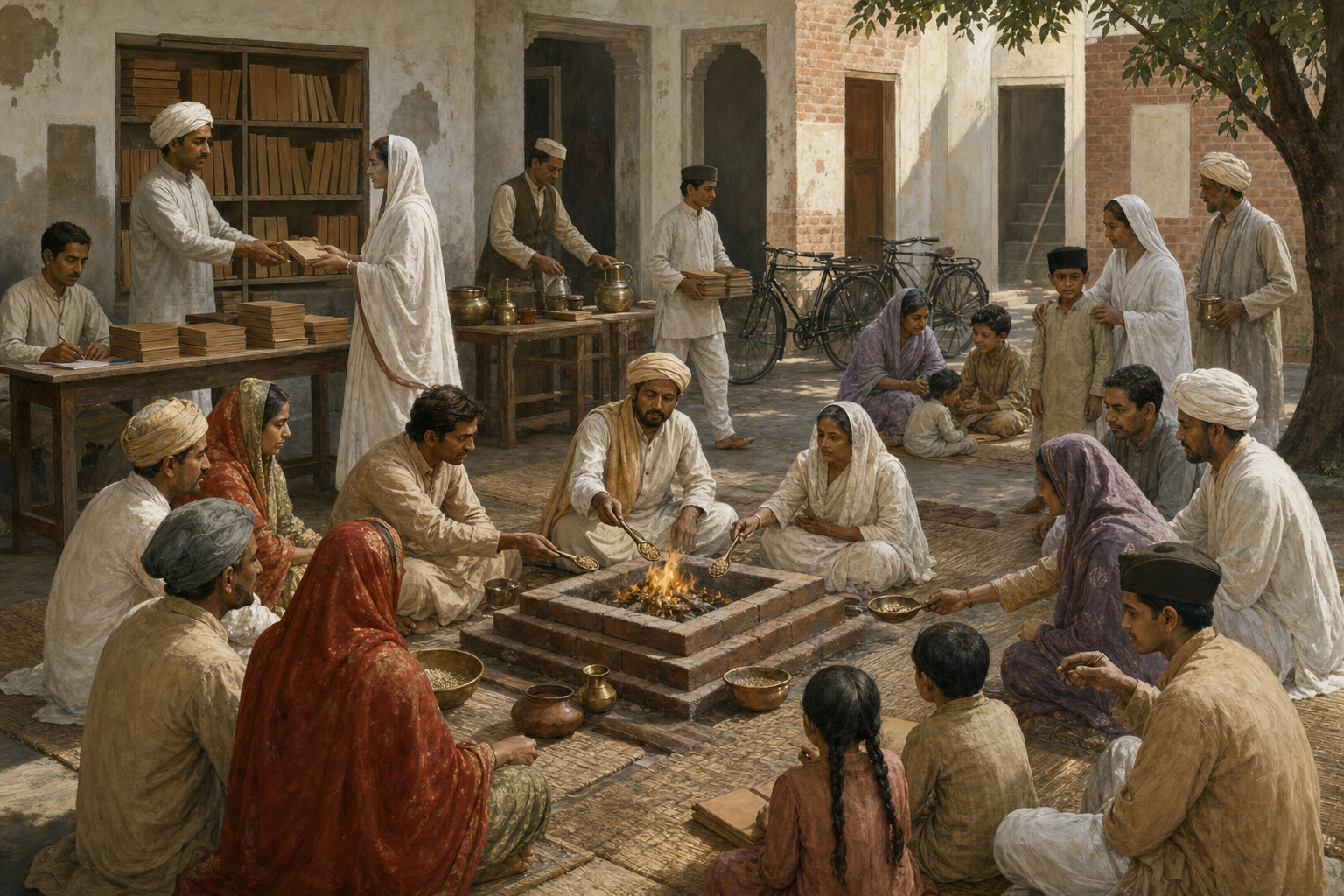
Swami Dayananda Saraswati and the Arya Samaj shifted Shuddhi into a new organizational setting. Dayananda’s Vedic renewal supplied an intellectual and religious basis for return, while his disciple Swami Shraddhananda carried that work into mass Shuddhi campaigns across northern India.
The important change was not ritual alone. A reform organization could teach a public doctrine of return, mobilize workers, reach communities beyond a royal court and make readmission a sustained programme. The unit of action had changed: Vijayanagara responded to a body of released captives, the Maratha administration adjudicated cases through religious officers, and the Arya Samaj deliberately organized Shuddhi on a wider public scale.
That work generated fierce opposition. Swami Shraddhananda was assassinated in his own home by Abdul Rashid, and no successor matched his stature or sustained the campaigns with the same intensity. His death helps explain the loss of momentum, but martyrdom should not be used as a substitute for historical analysis. To understand the movement, you still need to examine what counted as return, how participants were received and which institutions supported them after the ceremony.
The political memory of Shuddhi is also entangled with wider arguments about communal relations and national leadership. Keep those arguments separate from the basic chronology. First establish what the Arya Samaj organized and what happened to its leading organizer. Then assess claims about praise, blame or political responsibility on their own evidence. This prevents a defensible history of Hindu return from becoming dependent on a disputed judgement about another figure.
Key takeaways: six questions that test a reconversion claim
- What caused the original rupture? Forced conversion during war is not the same historical problem as a voluntary change of conviction. The earlier cases considered here concern coercion, so do not silently extend their logic to every kind of conversion.
- What did return actually restore? Look separately at worship, religious identity, family relations, caste status and community participation. A ceremony may address one or several of these, but you should not assume it addressed all of them.
- Who had authority to recognize the return? The answer might be a body of learned Brahmanas, a religious officer such as the Panditrao, established acharyas, a reform organization or the receiving community. Naming the authority tells you how durable the decision was likely to be.
- Was the procedure collective or case-specific? The Vijayanagara ceremony received a released population collectively. The Maratha process used deliberation and prayaschitta in particular cases. Arya Samaj developed organized mass campaigns. These are related responses, not interchangeable procedures.
- How large is the evidence? A single successful readmission proves that return was possible in that setting. It does not prove that the practice was universal, uncontested or continuously available across Bharat. Match the size of your conclusion to the size of the record.
- Does the terminology belong to the period? Modern expressions can help readers recognize a theme, but they can also conceal changes in authority, ritual and social structure. Describe the historical action before applying a contemporary label.
Use these questions the next time someone claims either that Hindu society never accepted returnees or that one timeless Ghar-Wapsi system operated everywhere. Precision protects civilisational memory from denial as well as exaggeration. It lets you make the stronger case: Hindu communities repeatedly created routes of return, while the authority controlling those routes changed with political and institutional circumstances.
References
