
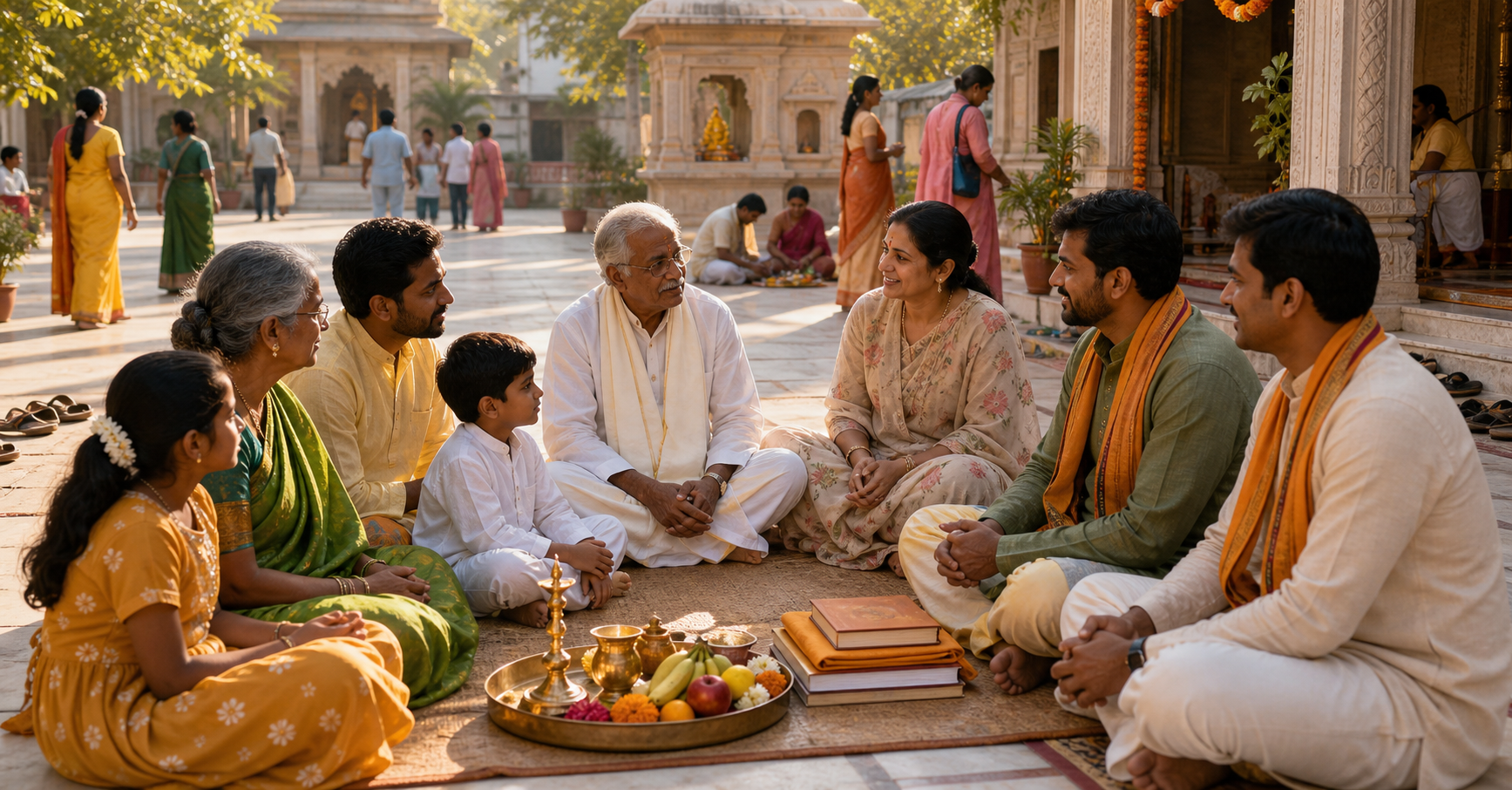
If you are considering Ghar-Wapsi for yourself, supporting a relative, or building a programme through a temple or matha, do not begin with the public ceremony. Begin with the morning after it. Who will answer the person’s questions? Where will the family worship? What happens when they need schooling, healthcare, work, or legal guidance?
Those questions separate a symbolic event from Dharma revival. A homecoming restores belonging only when it is voluntary, spiritually intelligible, and supported by a community that remains present after the ritual.
Make belonging the measure, not a conversion count
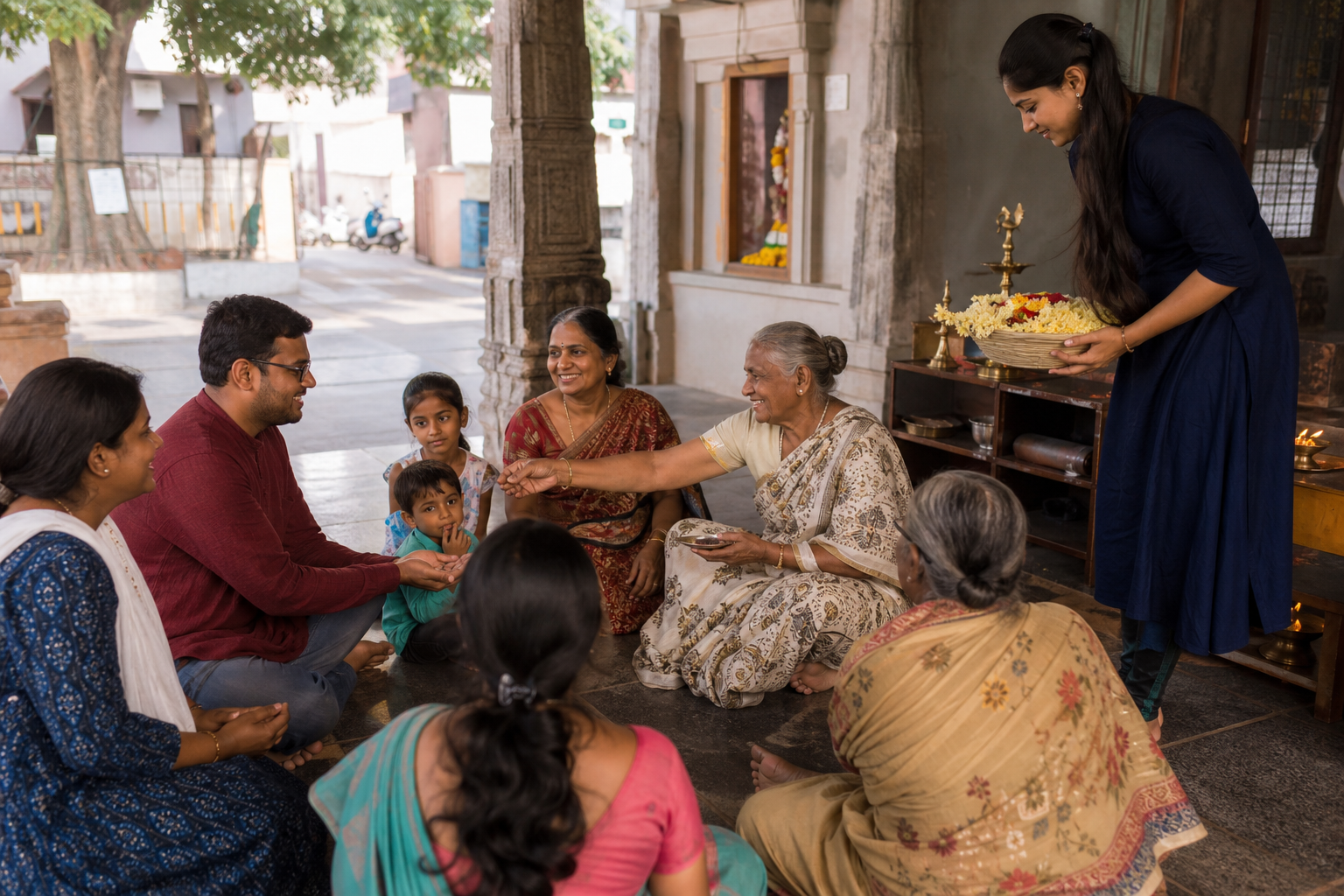
Ghar-Wapsi literally presents itself as a return home. That meaning is lost if the person is treated as a trophy, a statistic, or evidence in a political argument. A sound programme must therefore pass a simple test: the person must be able to decline, postpone, ask difficult questions, or choose privacy without losing respect or practical assistance.
Start with a private conversation, preferably away from relatives, organisers, cameras, and donors. The purpose is not to secure an immediate yes. It is to discover what the person is actually seeking.
- Are they returning because they believe in the Dharma, or because someone else expects it?
- Which form of worship, philosophical school, guru-parampara, temple, or family tradition do they understand and wish to follow?
- Do they expect the ceremony to produce a legal, financial, marital, or social benefit that it may not produce?
- Could the decision expose them to threats, domestic conflict, loss of housing, or another immediate safety problem?
- Do they want the event to remain private, be witnessed by family, or be made public?
Consent to return is not consent to publicity. Never publish a name, photograph, testimony, or family history without separate and explicit permission. A person may sincerely embrace Dharma while refusing to become the face of a campaign.
Do not make jati assignment the gate through which a returnee must pass. The practical task is to help the person enter a living spiritual and social home: a practice they understand, an acharya or mentor they can approach, a temple or satsanga where they are welcomed, and opportunities for seva. Forcing a speculative caste label onto someone can turn homecoming into another experience of exclusion.
Build a complete path from inquiry to daily sadhana
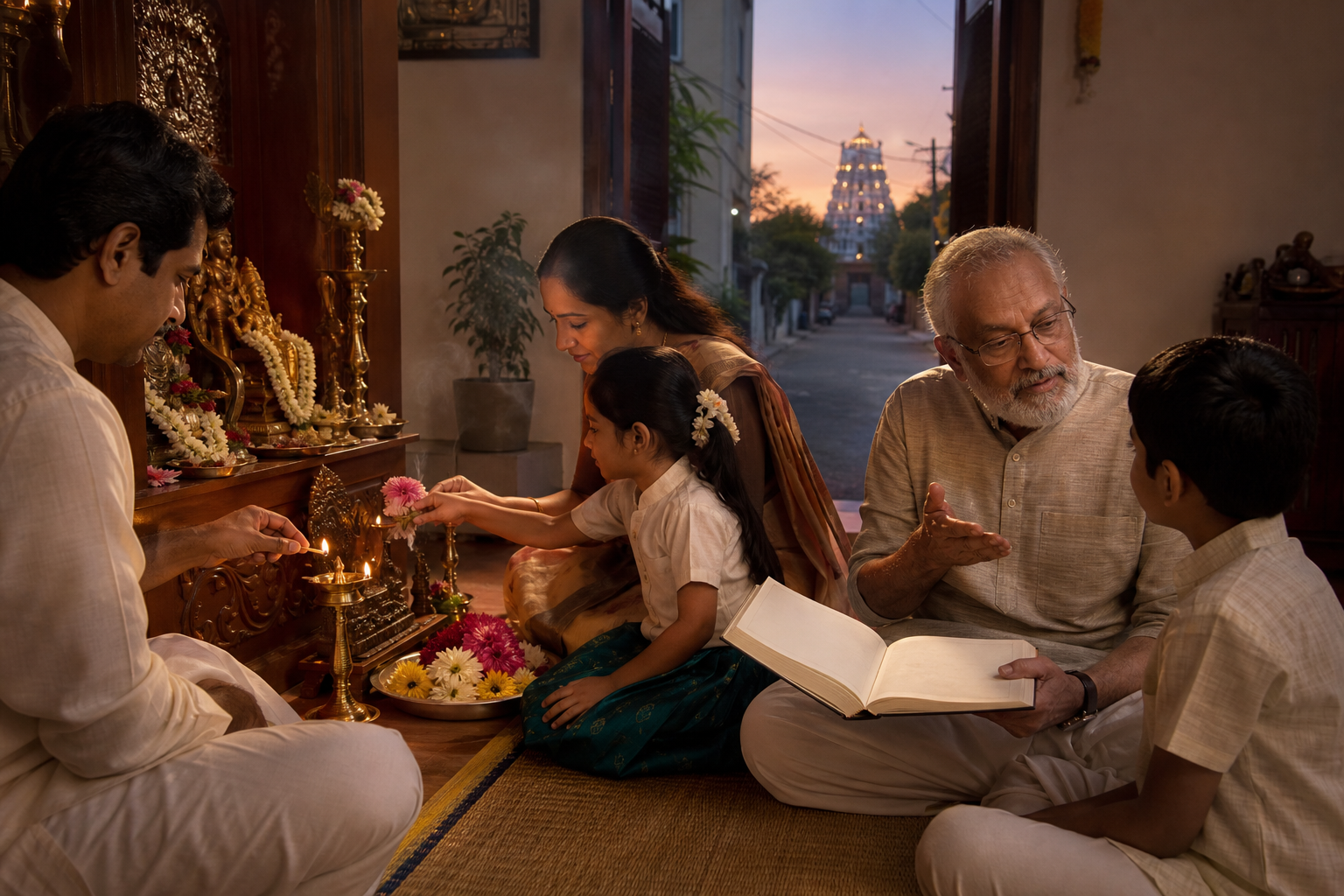
A ceremony has value. It marks intention, gives the return a sacred form, and places the person in a community of witnesses. But the ritual should sit inside a complete path rather than carry the entire burden of reintegration.
- Listen before teaching. Let the person describe their religious history, doubts, family relationships, and present convictions in their own words. Do not supply a dramatic story for them.
- Explain the commitment. Discuss the practices, ethical expectations, festivals, food disciplines, forms of worship, and philosophical outlook relevant to the tradition they are entering. Give them time to ask questions without treating uncertainty as disloyalty.
- Confirm independent consent. Ask again after preparation, in private, whether they wish to proceed. Help offered for food, schooling, health, or safety must not depend on the answer.
- Conduct an intelligible ritual. A qualified acharya should determine the rites. Every major act should also be explained in a language the participant understands, so that the ceremony expresses an inward decision rather than becoming an unexplained performance.
- Arrange the next point of contact. Before the ceremony ends, identify the mentor, temple visit, study gathering, family observance, or seva activity through which the person will continue. Do not leave follow-through as an unnamed intention.
Paravartana has a longer intellectual and ritual background than a modern campaign slogan. Its development has been connected with Devala Muni and the Arya Samaj, while P.V. Kane’s History of Dharmasastra, Volume IV, outlines a simplified form capable of thoughtful adaptation to contemporary circumstances. That flexibility is useful, but it is not a licence for untrained volunteers to invent rites casually. Adaptation should remain accountable to the sampradaya, the presiding acharya, and the informed wishes of the participant.
Keep spiritual initiation and official paperwork separate. Changes to names, identity records, marriage documents, inheritance arrangements, or other legal records may carry consequences that a temple volunteer is not qualified to assess. Before filing anything, the person should obtain advice from a qualified professional familiar with the law in the relevant jurisdiction. No organiser should promise a particular legal outcome.
Counter predatory pressure without abandoning Dharmic conduct
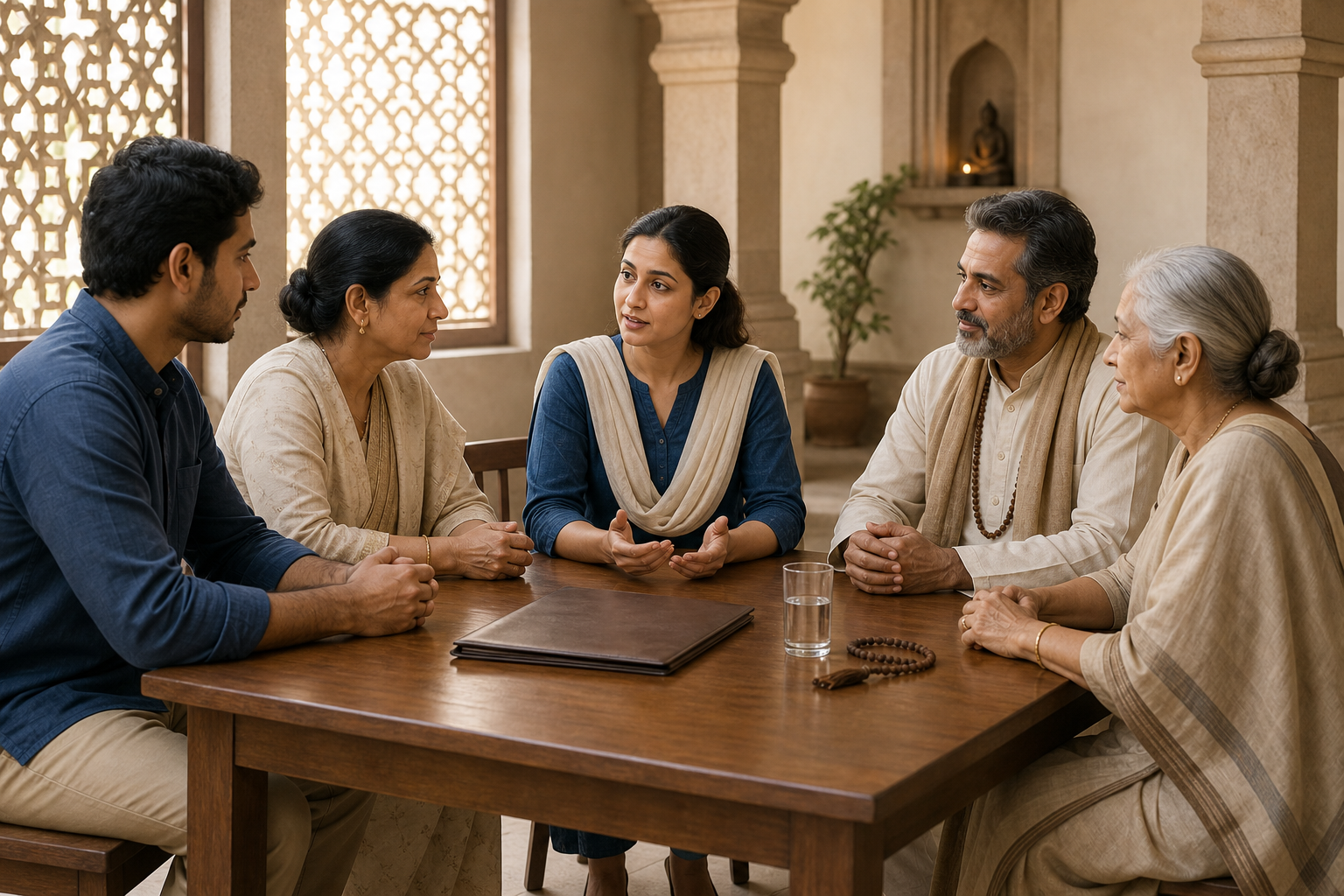
Concern about proselytisation becomes useful only when it is translated into observable conduct. Calling every interfaith conversation a conspiracy produces rumours, weakens legitimate complaints, and confuses adult religious freedom with coercion. Focus on what happened, not merely on the religious identity of the people involved.
- Was urgently needed aid made conditional on religious participation or profession?
- Was the identity or religious purpose of an organisation concealed from the recipient?
- Were threats, repeated harassment, deliberate deception, or pressure during a personal crisis involved?
- Was the person free to leave the conversation, refuse attendance, or continue relationships with their family and community?
- Is the allegation based on direct evidence, or only on a forwarded message and communal suspicion?
If misconduct may have occurred, document the date, place, people present, exact representations made, messages received, and any material supplied. Preserve evidence privately. Do not circulate accusations, faces, or personal details through public groups while facts remain uncertain. Public shaming can endanger the affected person and create legal exposure without establishing the truth.
Where there is an immediate physical threat, seek help from the competent local authorities rather than staging a confrontation. Where a complaint or public allegation is being considered, consult qualified local counsel because applicable laws and evidentiary requirements can differ. Legal awareness is part of community defence; improvised vigilantism is not.
The same ethical standard must govern Ghar-Wapsi. We cannot condemn conditional charity and then make our own assistance depend on a religious declaration. We cannot object to deception while hiding our purpose. We cannot defend freedom of conscience while humiliating an adult who chooses differently. Dharma revival loses its moral centre when the method contradicts the values being defended.
Turn social support into durable civilizational capacity
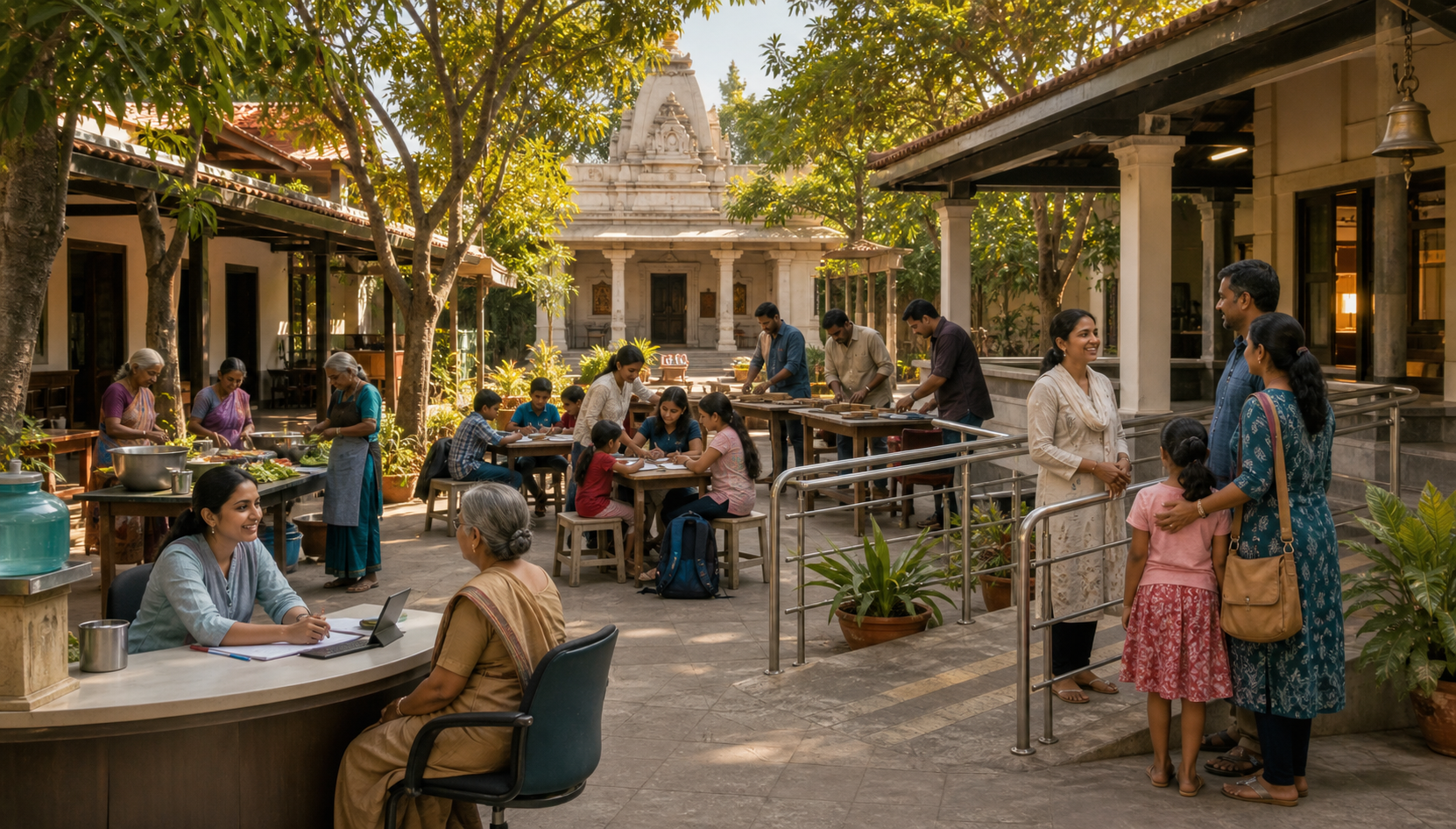
A community should ask why a vulnerable family might feel that dignity, opportunity, and religious continuity cannot coexist. When school admission, hospital care, or small-business credit becomes the practical pressure point, a ritual by itself cannot remove the underlying dependence. The durable answer is to build institutions that serve people before a crisis forces a desperate choice.
- Education: maintain accurate admissions information, tutoring networks, book support, language classes, and transparent need-based scholarships. Publish eligibility rules so access does not depend on personal influence.
- Healthcare: organise referral lists, transport assistance, blood-donor coordination, help navigating hospitals, and accountable emergency support. Keep medical decisions with qualified clinicians.
- Livelihoods: connect people with skills training, apprenticeships, employment leads, business mentors, and lawful financial guidance. Do not advertise credit that the institution is not equipped or authorised to provide.
- Cultural continuity: make temples, festivals, study circles, music, art, local languages, and seva accessible to families rather than assuming that identity will sustain itself through sentiment.
A matha, temple, or community organisation can create a dedicated Paravartana team, but its responsibilities should be divided. The acharya safeguards spiritual integrity. A trained coordinator handles private inquiries and consent. A welfare liaison connects families with legitimate services. A legal referral contact knows when professional advice is needed. A community mentor remains available after the ritual. One person should not control spiritual approval, personal data, money, publicity, and documentation.
Traditional mathas and newer service organisations have complementary strengths. A matha can provide lineage, ritual authority, teaching, and continuity. A service organisation may have better local reach, professional networks, or administrative capacity. Collaboration works when roles, privacy rules, funding, and accountability are settled before individual cases arrive.
The family remains the most regular school of Dharma, but it teaches through repetition rather than slogans. Establish a visible place of worship at home. Put sacred days and temple visits on the family calendar. Teach the meaning of a mantra, story, food observance, or festival instead of demanding unexplained compliance. Let children ask about atheism, conversion, caste, interfaith relationships, and historical wounds without treating the question itself as betrayal. An identity that cannot survive a sincere question has not yet become understanding.
Beauty also matters. A clean and welcoming temple, intelligible teaching, good music, disciplined ritual, gracious hospitality, and literature people can actually read make spiritual life attractive without manipulation. The aim is not cosmetic branding. It is to let aesthetic care reveal the joy and seriousness already present in the tradition.
Civilizational expansion need not mean domination. It can mean building credible platforms, telling Bharatiya stories well, supporting scholarship, maintaining institutions in the diaspora, and establishing living temples that combine worship, teaching, service, and fellowship. Stewarding community data is part of that work, but ownership must not become surveillance: collect only what is necessary, restrict access, and never turn a confidential list of returnees into publicity material.
Key takeaways
- Judge Ghar-Wapsi by voluntary belonging and sustained practice, not by the size or publicity of the ceremony.
- Separate consent to the ritual from consent to photography, testimony, fundraising, or official paperwork.
- Give every participant an intelligible spiritual path, a trusted human contact, and a concrete next step after the ceremony.
- Answer coercive proselytisation with evidence, lawful action, social strength, and Dharmic restraint rather than rumours or counter-coercion.
- Build education, healthcare, livelihood, family, and cultural networks that make religious continuity compatible with dignity.
If this decision is personal, meet the acharya and the community that will accompany you before agreeing to a public event. If you lead an institution, put consent, privacy, divided responsibility, and long-term follow-through on the agenda before planning the next ceremony. Make Ghar-Wapsi a doorway into lived Dharma, not a day of spectacle.
References
