
If you are checking May 18 before arranging a puja, beginning a project, travelling, or holding an important conversation, one boundary matters first: Shukla Paksha Dwitiya lasts until approximately 8:46 PM IST, after which Shukla Paksha Tritiya begins. Monday’s date remains the same at that moment, but the operative tithi changes.
Use 8:46 PM IST as a dependable planning reference for India, not as a complete city-specific muhurta. Your local sunrise, sunset, Nakshatra, Moon Rashi, Yoga, Karana, and regional calculation method still matter. For ordinary worship and daily work, the framework below is enough to make a sensible plan. For a wedding, samskara, major vrata, or another consequential undertaking, confirm the final window with a Panchang configured for your city and, where customary, your family purohit.
Key takeaways for May 18, 2026
- May 18, 2026 falls on Monday, or Somavara, a weekday traditionally associated with Shiva-upasana.
- The prevailing lunar phase is Shukla Paksha, the waxing half of the lunar cycle.
- Shukla Dwitiya continues until approximately 8:46 PM IST; Shukla Tritiya follows for the remainder of the night.
- Use Dwitiya for measured beginnings, reconciliation, arranging resources, and the first step of a practice. Use Tritiya for disciplined continuation, training, and skill-building.
- Do not copy Rahu Kalam, Yamaganda, Gulika, Choghadiya, or solar muhurtas from another city. Calculate them from your own sunrise and sunset.
- Do not guess the day’s Nakshatra or Moon Rashi from the tithi alone. Verify them for your location and intended start time.
Why the 8:46 PM tithi change matters more than midnight
A tithi is not a civil date and does not wait for midnight to change. It is determined by the changing angular separation between the Moon and the Sun. Each tithi occupies 12 degrees of that separation: Dwitiya covers the interval from 12 to 24 degrees, and Tritiya covers 24 to 36 degrees. The boundary occurs as soon as the separation crosses the next 12-degree threshold.
That mechanism explains why one Monday can contain two tithis. It also gives you a better way to use the day. Instead of searching for one verdict declaring the entire date auspicious or inauspicious, match the stage of your activity to the tithi operating when you begin it.
Before approximately 8:46 PM IST, Dwitiya’s traditional character suits a beginning that needs steadiness rather than spectacle. You might reconnect with a mentor, resolve a modest family misunderstanding, organise study material, begin the first lesson of a course, or establish the opening step of a routine. The practical word is measured: define a manageable first action instead of loading the occasion with expectations that no muhurta can guarantee.
After approximately 8:46 PM IST, Tritiya supports continuation and the cultivation of ability. Use the later period to schedule the second study session, practise a skill, refine work already begun, or make a written commitment to repeat the effort. If your household worships Gauri or Lakshmi on Tritiya, the night may also be used for Shri Sukta or Lakshmi Ashtottara Sata Namavali according to your family tradition.
Somavara adds a Shiva-centred devotional frame. A simple abhishekam, an offering of bilva leaves, japa, or observance of a customary Monday vrata can give the week a deliberate beginning. You do not need to turn an ordinary weekday practice into an elaborate ceremony. Choose one observance you can perform attentively, then connect it to one concrete duty you will carry into the week.
Calculate Monday’s caution periods from local daylight
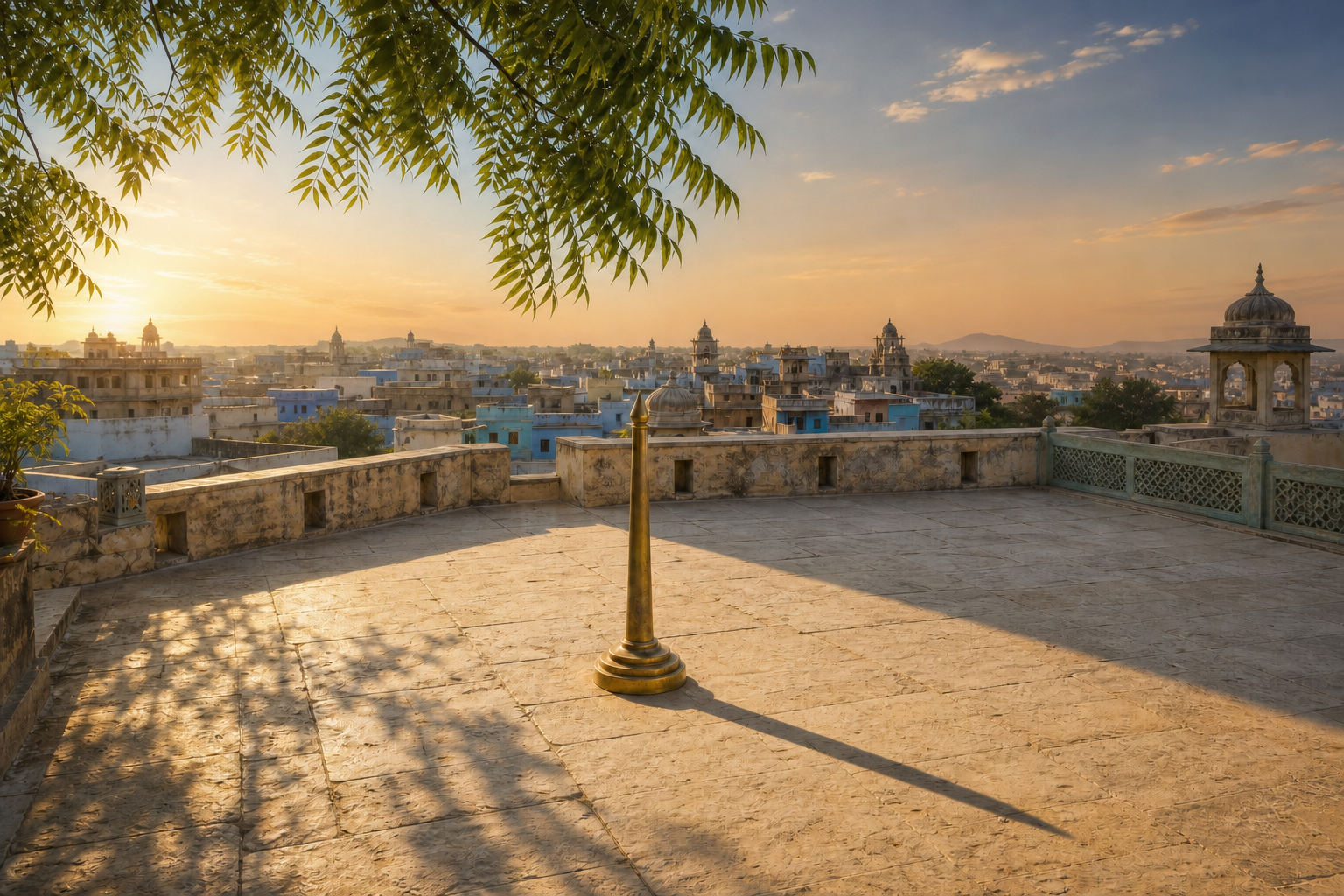
Fixed clock tables are the most common source of avoidable error. Rahu Kalam, Yamaganda, and Gulika are based on eight equal portions of the daylight period from local sunrise to local sunset. Because daylight length changes with location and season, the duration and clock time of each portion change as well.
- Find the May 18 sunrise and sunset for the city where the activity will occur.
- Convert the interval between sunrise and sunset into minutes. Call that daylight duration D.
- Divide D by eight. Call the resulting segment length Q.
- Count forward from sunrise using Q. On Monday, Rahu Kalam is the second segment, Yamaganda the fourth, and Gulika the sixth.
| Monday period | Daylight segment | Local-time formula | How to use it |
|---|---|---|---|
| Rahu Kalam | Second | Sunrise + Q to sunrise + 2Q | Avoid placing the formal beginning of an important new undertaking here when a practical alternative exists. |
| Yamaganda | Fourth | Sunrise + 3Q to sunrise + 4Q | Prefer another interval for a sensitive departure, inauguration, or first step. |
| Gulika | Sixth | Sunrise + 5Q to sunrise + 6Q | Check the full muhurta before using this period for a consequential beginning. |
These periods are chiefly relevant to beginnings. Do not abandon an existing responsibility merely because it continues into one of them. If a meeting, journey, or duty cannot move, begin your prayer or preparatory act earlier where appropriate, keep the unavoidable commitment, and avoid treating the calendar as a cause for fear.
Several constructive windows can then be considered alongside the caution periods. Brahma Muhurta is roughly the final 96 minutes before local sunrise and is especially suited to meditation, japa, and study. Abhijit Muhurta is centred on local solar noon and can be useful for an urgent undertaking when other choices are constrained. Do not assume that local solar noon is automatically 12:00 PM on the clock.
Vijay Muhurta is placed approximately two hours before local sunset and traditionally supports decisive action or an important presentation. Godhuli Vela falls around sunset and suits prayer, devotional singing, family gathering, and reflective closure. Calculate or verify each one locally before combining it with the tithi boundary.
Choghadiya offers a simpler filter when you cannot perform a complete muhurta analysis. Daylight and nighttime are each divided into eight locally calculated segments. Amrit, Shubh, and Laabh are preferred for new work, travel, outreach, or a small ceremony; Chal is generally neutral; Rog, Kaal, and Udveg are normally avoided for a new start. Use the night calculation after sunset rather than carrying the daytime segment length into the night.
When two rules point in different directions, start by looking for a clean non-overlapping interval. If no such interval is possible for an ordinary but urgent task, Abhijit or Vijay Muhurta can provide a practical alternative, accompanied by a brief prayer or dana if that belongs to your practice. That fallback is reasonable for everyday scheduling; it is not a substitute for a complete electional assessment of a wedding, major samskara, or solemn vow.
Verify Nakshatra, Rashi, Yoga, and Karana before precision work
A Panchang has five limbs: Tithi, Vara, Nakshatra, Yoga, and Karana. The Moon’s Rashi is also commonly displayed because it helps describe the broader lunar setting. Knowing that May 18 is a Monday with a Dwitiya-to-Tritiya transition does not, by itself, establish every other component for every place and time.
Nakshatra and Moon Rashi must be checked for the intended activity window. Yoga and Karana also depend on the operative lunar-solar positions and exact time. A label copied without its reference city, time zone, or calculation method may look precise while giving you the wrong basis for a decision.
- Set the location: use the city where the puja, departure, signing, or ceremony will actually occur, ideally through a Panchang calibrated to nearby coordinates.
- Set the intended start time: checking the value at sunrise is not enough if the activity begins many hours later and a Nakshatra, Rashi, Yoga, or Karana boundary intervenes.
- Confirm the time zone: the 8:46 PM boundary in this guide is stated in IST. Do not read it as 8:46 PM in another time zone.
- Notice the computational tradition: Drik and Vakyam methods can produce small differences. Use one trusted system consistently instead of combining isolated timings from several calendars.
- Notice the month convention: Amanta and Purnimanta calendars label lunar months differently. This need not change your daily devotion, but it can explain why two regional calendars appear to disagree.
- Use local horizon data: small differences in sunrise, sunset, and moonrise affect derived windows, especially when an intended start lies near a boundary.
This distinction prevents two opposite mistakes. The first is false precision: presenting one universal Nakshatra-Rashi pair without defining place and time. The second is unnecessary paralysis: refusing to perform ordinary japa, study, seva, or household worship because every technical value has not been assembled. Use the broad Dwitiya-to-Tritiya structure for daily alignment; demand the full local Panchang when the decision genuinely warrants it.
Turn the Panchang into a usable Monday plan

The best preparation happens before the desired window begins. On the evening before May 18, make one short schedule rather than repeatedly consulting different calendars during the day.
- Record local sunrise and sunset for the place where you will act.
- Mark the Dwitiya-to-Tritiya boundary at approximately 8:46 PM IST, converting it carefully if you are outside that time zone.
- Calculate the eight daylight segments and block Monday’s second, fourth, and sixth segments as Rahu Kalam, Yamaganda, and Gulika.
- If timing matters, verify Nakshatra, Moon Rashi, Yoga, Karana, and Choghadiya for the precise intended start.
- Choose the window that fits the activity: Brahma Muhurta for meditation or study, Abhijit for an urgent undertaking, Vijay for confident action, Godhuli for evening devotion, or Amrit, Shubh, or Laabh Choghadiya for a practical new start.
- Match the work to the tithi: initiate gently during Dwitiya, then use Tritiya after 8:46 PM IST for repetition, training, refinement, or sustained follow-through.
- Prepare everything beforehand. If a puja begins at the selected time, the water, bilva leaves, lamp, text, and seat should already be ready. If a work task begins then, open the required material and remove avoidable interruptions before the window arrives.
If you want a simple devotional rhythm, rise during the locally calculated Brahma Muhurta for japa or quiet study, perform your customary Monday Shiva worship, and choose one restrained Dwitiya beginning during a suitable daytime period. Around sunset, use Godhuli for prayer or family reflection. After the Tritiya boundary, spend a defined block of time practising or refining what you began rather than starting several unrelated tasks.
For business outreach or travel, calculate the Monday caution periods first and then look for Amrit, Shubh, or Laabh Choghadiya outside them. For an important presentation, examine Vijay Muhurta along with the locally operative Nakshatra, Yoga, and Karana. For repairing a relationship, Dwitiya’s gentler character may be more relevant than finding the most technically elaborate window: decide what you need to say, speak without accusation, and leave room for the other person to respond.
Before May 18 arrives, save one location-correct Panchang, write down your three Monday caution periods, and choose one act that belongs to Dwitiya or Tritiya. A Panchang serves you best when it gives action an intelligent sequence: prayer, preparation, beginning, and follow-through.