-
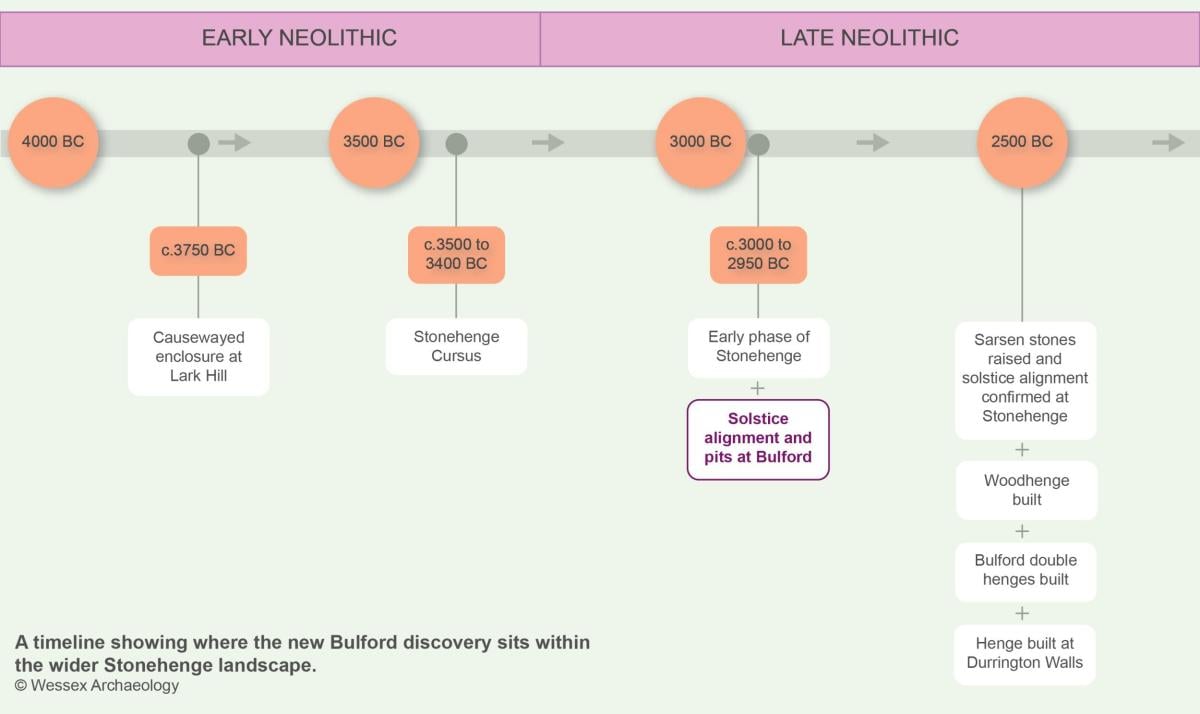
Powerful 5,000-Year Solstice Find Reveals Stonehenge’s Deeper Sacred Origins

Wessex Archaeology’s Bulford discovery places Stonehenge within a deeper sacred and astronomical landscape. The 5,000-year-old timber alignment, dated to around 2950 BC, appears to have marked the summer sunrise and winter sunset centuries before the famous sarsen stones. The find shows how Neolithic communities used observation, ritual, feasting, and landscape design to relate human life…
-
Aryabhata Misused? Why ‘Amazon India’ Faces Backlash and How to Respect Scientific Heritage

A recent ‘Amazon India’ advertisement featuring a likeness of Aryabhata sparked criticism, highlighting the need for historically accurate and culturally sensitive marketing. This analysis explains Aryabhata’s verified contributionssuch as the Aryabhatiya, trigonometric tables, and the insight on Earth’s rotationwhile clarifying the multi-century evolution of the zero concept in India. It outlines how ethical frameworks like…
-
Bhadra in Hindu Astronomy: Unveiling the Two Bhadrapadas and Their Timeless Celestial Significance

Bhadra in Hindu astronomy refers to a paired lunar mansionPurva Bhadrapada and Uttara Bhadrapadarooted in the 27-nakshatra system that has guided observation and calendrics since Vedic times. The two Bhadrapadas occupy consecutive spans from late Aquarius into mid-Pisces, blending empirical sky-mapping with rich symbolic and ethical meanings. Classical Jyotiṣa associates them with Jupiter (Aja Ekapada)…
-
Do Planets Shape Our Destiny? A Timeless Vedic Guide to Jyotisha, Karma, and Free Will

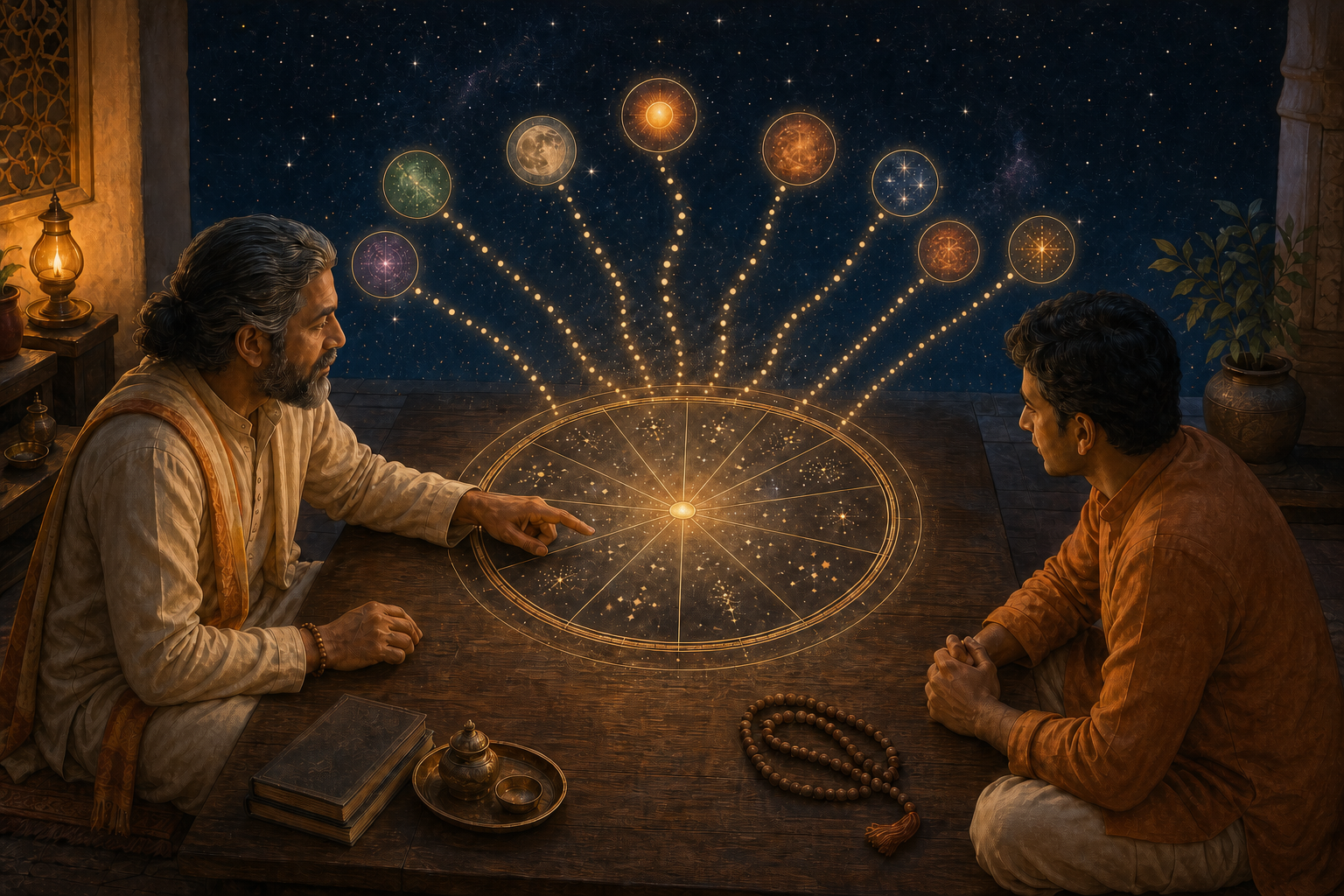
Is astrology truly the “eyes of the Vedas,” and do planets govern human fate? This in-depth, academically grounded guide clarifies what Vedāṅga Jyotiṣa is, how it historically joined astronomy and ritual timing, and why life is physically and culturally entangled with celestial cycles. Readers learn the technical building blocksrāśi, nakṣatra, lagna, pañcāṅga, daśā, gochara, and…
-
Decoding Nakshatras: A Timeless Vedic Star Map Uniting Dharmic Traditions and Skywatchers

Nakshatras, the 27 lunar mansions of Vedic astronomy, form a precise star map that has guided Hindu Dharma and related dharmic traditions for millennia. Each mansion spans 13°20′ along the Moon’s path and is anchored by recognizable stars such as the Pleiades (Krittika), Aldebaran (Rohini), Spica (Chitra), and Antares (Jyeshtha). Classical sourcesfrom the Rigveda and…
-
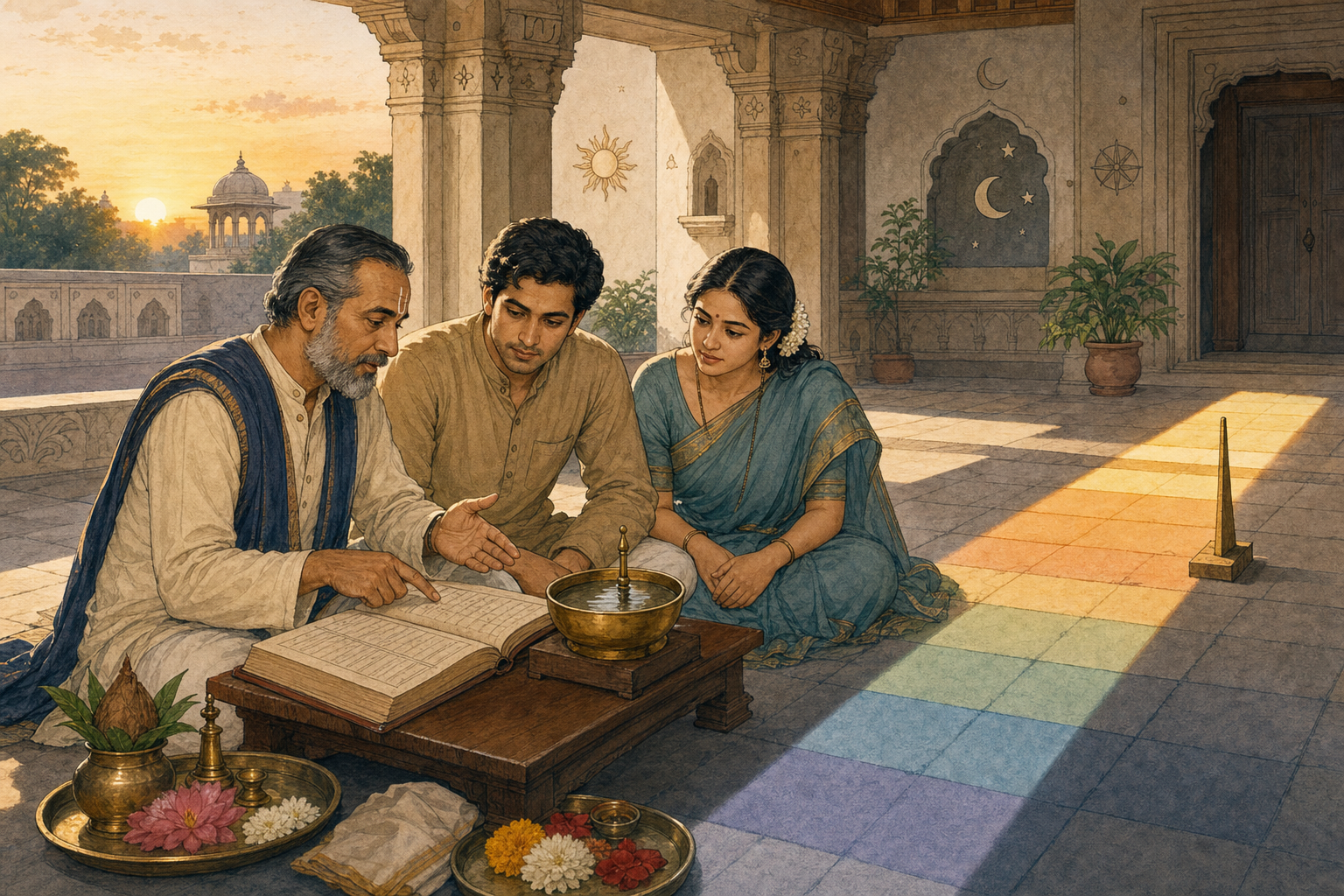
Darbar Sahib’s Historic Sundial: What It Reveals About Sikh Science and India’s Astronomical Legacy

The historic sundial at the Darbar Sahib (Harmandir Sahib) in Amritsar embodies Sikh scientific heritage and India’s long tradition of astronomy. As a precise instrument of time reckoning, it unites devotion with disciplined observation, demonstrating how faith communities historically organized daily life through empirical knowledge. Visitors experience it as both an open-air classroom and a…
-
Master the Panchanga: A Complete, Proven Guide to Hindu Timekeeping’s Five Limbs

The PanchangaHinduism’s five-limbed almanaccombines Tithi, Vara, Nakshatra, Yoga, and Karana to guide daily life with precision and meaning. Rooted in Vedic astronomy and refined by scholars like Aryabhata and Varahamihira, it aligns rituals, festivals, and personal decisions with celestial rhythms. Readers discover how the lunisolar calendar stays seasonally accurate through adhik maas and why regional…
-
Discover Changadeva: The 11th‑Century Astrologer-Mathematician Shaping India’s Legacy

I share how discovering Changadeva (also known as Chandradeva) opened my eyes to the seamless blend of mathematics and astronomy in medieval India. I highlight his reputation as an 11th-century astrologer-mathematician and note his familial link to Bhaskaracharya (Bhaskara II) as part of a rich scholarly lineage. Readers will find a personal reflection on the…
-
The Aryabhata Number System

The **Aryabhata Number System** showcases the ingenuity of ancient Indian mathematicians, with Aryabhata inventing a unique method of numerical representation using Samskritam letters. His seminal work, the **Aryabhatiya**, composed in 499 CE, is divided into four sections covering astronomical constants, mathematics, time reckoning, and celestial geometry. Aryabhata’s notable contributions include the use of the decimal…