

If you are trying to decide whether the denial of bail to Hindu monk Chinmoy Krishna Das proves persecution, represents an ordinary court decision, or falls somewhere between those conclusions, resist the fastest answer. The responsible test is narrower and more demanding: what legal risk justified continued detention, what reasons were put on record, and what protection exists for communities that fear reprisals?
The High Court Division’s rejection of the bail petition was reported on May 10, 2026. That decision does not determine guilt. It does make transparency especially important because a religion-adjacent prosecution in a country with recurring communal violence can affect far more people than the accused. You can defend due process for Das and demand credible protection for Bangladesh’s minorities at the same time.
Key takeaways
- Bail concerns liberty before trial. A refusal of bail is not a conviction, and it does not prove that every allegation is well founded.
- Without a publicly available charge sheet and a complete reasoned order, confident claims about the court’s motives or the strength of the prosecution outrun the available facts.
- Bangladesh’s history of attacks on Hindu homes, temples, and festivals gives minority families a rational reason to scrutinize the ruling. That history is relevant context, but it cannot substitute for evidence about this case.
- A useful response has three parts: verify the legal status precisely, prepare communities for physical and digital threats, and demand measurable action from courts, prosecutors, police, and rights institutions.
- Dharmic solidarity is strongest when it combines firm advocacy with ahimsa: no unverified rumors, no collective blame, no exposure of vulnerable people, and no silence about institutional failure.
Bail denial is not a judgment of guilt

A bail hearing asks whether an accused person must remain in custody while the case proceeds. It is not the trial itself. The court may consider the seriousness of the allegation, the apparent basis of the case, the risk of flight, possible interference with witnesses or evidence, the likelihood of repetition, and public-order concerns. None of those inquiries permits outsiders to replace an interim ruling with a verdict of their own.
In Bangladesh, Sections 496-498 of the Code of Criminal Procedure, 1898 give courts, including the High Court Division, authority over bail. Discretion does not mean an unexplained choice. A sound order should connect continued custody to an identifiable risk and show why available conditions would not manage that risk adequately.
When you read a bail update, look for four things:
- The exact procedural status. Was bail rejected, deferred, withdrawn, or granted subject to conditions? Do not convert any of these outcomes into a finding of guilt or innocence.
- The claimed need for custody. A concrete concern about absconding, intimidation, evidence, or repetition carries a different legal meaning from a broad appeal to communal sensitivity.
- The alternatives considered. Reporting duties, restrictions on travel or contact, and other enforceable conditions may sometimes address a risk without continued detention. The important question is whether the court examined a less restrictive option, not whether every accused person must receive one.
- The reasons and the next review point. A reasoned order allows counsel to identify the governing findings, challenge errors through the proper process, and tell the public what the court actually decided.
The constitutional frame is equally important. Articles 27, 31, 32, and 35 of Bangladesh’s Constitution protect equality, the protection of law, life and personal liberty, and fair-trial rights; Article 41 protects freedom of religion. Bangladesh’s obligations under Articles 9 and 18 of the International Covenant on Civil and Political Rights add protections for liberty and freedom of thought, conscience, and religion.
These guarantees do not create automatic bail in every prosecution. They do require a genuine balance between liberty and a demonstrated state interest. Public order cannot become a phrase that ends the inquiry. The order should explain how release would create the asserted danger and why proportionate conditions would not control it.
A public charge sheet and complete reasons were not available when the rejection was described. Outsiders therefore lack essential material needed to assess the prosecution case, the defense response, and the court’s reasoning. Until those records are available, use exact language: say that bail was rejected, not that Das was found guilty; call an accusation an allegation, not an established offense; and distinguish concern about political influence from proof of it.
If you or someone you support is directly involved in the proceeding, obtain advice from a lawyer qualified in Bangladesh. Counsel needs the actual order, case diary, filings, and procedural history. A headline, public campaign, or general legal checklist cannot safely replace that examination.
Why the ruling is also a minority-safety test

The legal decision is case-specific, but the fear around it is cumulative. Hindus account for less than a tenth of Bangladesh’s population, while Buddhist communities, including Chakma and Barua populations in the Chittagong Hill Tracts, live alongside much smaller Jain and Sikh communities. For a family deciding whether to attend a public puja, or a temple committee deciding how openly to announce a gathering, minority safety is not an abstract index. It is the ability to worship, travel, report a threat, and seek legal protection without becoming a target.
That anxiety has a documented historical foundation. Bangladesh has experienced post-election attacks in 2001, violence amid political turmoil in 2013-2014, the 2016 Nasirnagar incidents, and the October 2021 Durga Puja violence that spread from Cumilla to multiple districts. Temples, homes, and people were harmed during those episodes. Digital rumor and incitement repeatedly helped local tension move faster than verification or official protection.
This history explains why the detention of a prominent Hindu monk can be read as a signal about the status of the wider community. It does not prove that the present court acted with an anti-Hindu motive. Treating historical fear as proof of a disputed legal claim would weaken the demand for evidence-based justice. Treating that fear as irrational would ignore the conditions in which Hindu families make real safety decisions.
The state therefore has several duties that must operate together. It must preserve Das’s right to a fair process, protect witnesses from genuine interference, prevent attacks on Hindu and other minority communities, investigate threats or violence impartially, and ensure that lawful religious activity does not become hostage to mob pressure. Failure in one area cannot be excused by success in another.
This distinction gives you a better way to judge what happens next. A bail refusal could be legally supportable yet accompanied by inadequate public reasons. A later grant of bail could be legally proper yet followed by poor security around courts, temples, or gatherings. Minority protection and the merits of the bail application should be examined side by side, but neither should be used to prejudge the other.
The digital dimension needs the same discipline. Bangladesh’s Digital Security Act was superseded by the Cyber Security Act, 2023, following recurring concern about broad use of provisions involving religious sentiment and online incitement. That background matters when evaluating speech, rumor, and custodial necessity. It does not establish that either statute governs the case against Das; no such inference should be made without the actual allegation and charging documents.
Verify claims before they become another source of danger

When a case touches religion and politics, an inaccurate post can cause two kinds of damage. It can weaken a legitimate legal campaign by making its claims easy to dismiss, and it can expose people on the ground to retaliation. Before forwarding an update, build a simple claim ledger.
- Record the exact event. Note the court, the disposition, the reported date, and the procedural stage. If all you know is that a bail petition was rejected, stop there.
- Separate status from allegation. Label what the court has done, what the prosecution alleges, what the defense argues, and what remains unknown. Do not merge those categories into a single narrative.
- Preserve the record. Save the URL, page title, publication time where shown, and an unedited copy or screenshot. Keep corrections with the original record so an outdated claim does not continue circulating after the facts change.
- Check the controlling document. Where possible, obtain the order or a reliable legal summary based on it. If the record is in Bangla, ask a Bangla-reading lawyer or qualified legal translator to check operative terms. A rough machine translation can blur the difference between an allegation, a finding, and a procedural direction.
- Verify incident media separately. A genuine bail update does not authenticate every photograph or video posted beside it. Check the earliest available upload, location indicators, date cues, and independent corroboration before describing media as evidence of a current attack.
- Remove details that create risk. Do not publish a witness’s address, a threatened family’s refuge, a child’s identity, private telephone numbers, or an unannounced security route. Give unredacted material to counsel or an appropriate investigating body through a safer channel.
A public update becomes much clearer when it follows this order: known fact, attributed allegation, material not yet available, and next verification point. For example: the High Court Division rejected the bail petition; the complete reasons are not yet available publicly; guilt has not been adjudicated by that decision; the next update will follow an authenticated order or a statement from counsel. That wording is less dramatic than speculation, but it is harder to manipulate.
Apply the same standard to claims that favor your own conclusion. If an image appears to show anti-Hindu violence but its place or date is uncertain, do not circulate it as confirmation. If an official statement promises safety but gives no contact route, deployment plan, complaint record, or follow-up, do not treat the promise as proof of protection. Credibility comes from using one evidentiary standard for allies, opponents, and institutions.
Turn concern into a safety and accountability plan
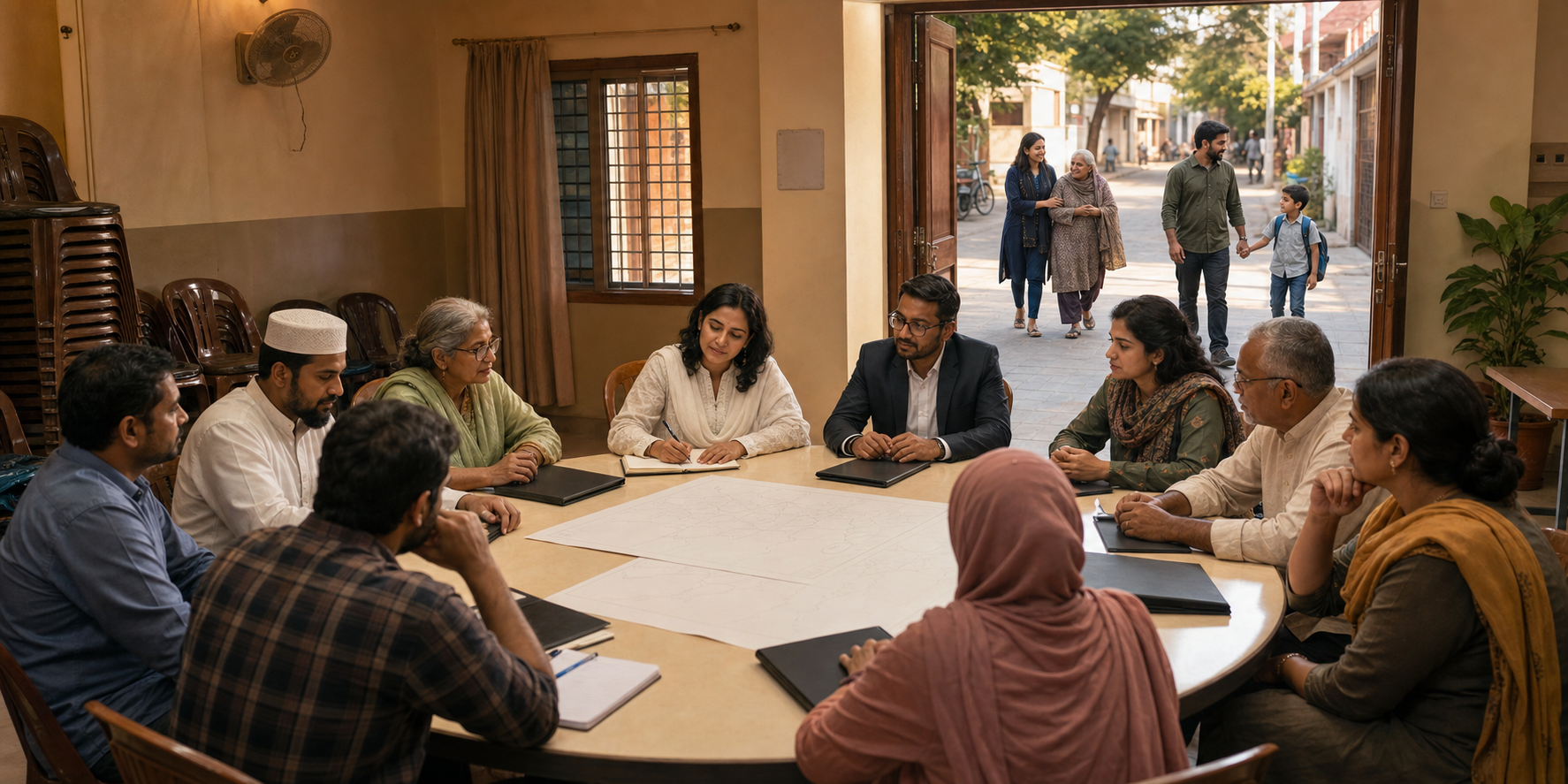
If a threat is immediate, move people away from confrontation, use the safest available exit, and contact local emergency authorities and trusted local contacts. Do not delay evacuation to film, argue with a crowd, or verify a rumor online. No community plan can guarantee safety or replace professional emergency response, and local organizers should adapt every measure to the site and current advice.
For temples, families, and community committees
Prepare before the next hearing, procession, festival, or public meeting. A workable plan should assign responsibility rather than merely tell everyone to remain alert.
- Name a lead and a deputy. They should know who can pause an event, contact authorities, communicate with families, and initiate an evacuation if conditions change.
- Keep a written contact sheet. Include local police and district contacts, medical assistance, transport, legal counsel, trusted faith leaders, and people responsible for checking on elders, children, or attendees with mobility needs. Store an offline copy in case connectivity fails.
- Walk the site. Identify usable entrances and exits, lighting gaps, crowd bottlenecks, fire hazards, a meeting point away from the venue, and a method for accounting for people after dispersal. Do not publicize sensitive movement details.
- Create one rumor-control channel. Designate a person to verify urgent claims and issue corrections. Ask members not to forward voice notes, screenshots, or location claims into the main group until that check is complete.
- Agree on escalation roles. One person should contact authorities, another should guide people, and another may document events only when it is safe. A person filming should never stand between a crowd and an exit.
- Prepare an incident packet. Record the date, time, location, exact words or acts, property affected, witness contact details with consent, complaint or case number, and relevant medical or repair records. Preserve original files and make separate copies for annotation or public release.
After an incident, send the complete packet to qualified counsel or a suitable rights body. A public chronology should be redacted so it informs without identifying people who could face intimidation. Evidence handling and reporting rules can affect legal proceedings, so ask local counsel before publishing sensitive documents or witness material.
For courts, officials, and rights institutions
General promises of harmony are not enough. Communities and advocates can ask each institution for a concrete product that can later be checked.
| Institution | Concrete request | Evidence of a serious response |
|---|---|---|
| Courts | Publish timely, reasoned bail orders with an accessible summary where lawful. | The reasons identify the custody risk, the evidence relevant to it, and whether less restrictive conditions were considered. |
| Prosecutors and investigators | Connect requests for custody to the case diary, procedural stage, and a specific risk. | The submission relies on case facts rather than an undefined appeal to religious sensitivity or public order. |
| Police and district administrations | Co-design festival and gathering protocols, a verified rumor channel, and a clear complaint route with local faith committees. | Residents receive a named contact path, know how to report a threat, and receive a documented follow-up after an incident. |
| National Human Rights Commission, bar associations, and faith leaders | Conduct periodic joint reviews and support publication of anonymized bail data by jurisdiction and offense category. | Public findings identify procedural gaps without exposing witnesses, victims, or an active investigation. |
Longer-term reform should also address the mechanisms that turn tension into impunity. Reasoned orders, prosecutorial guidance for hate-crime elements, witness protection, faster trials, investigator training, verified rumor channels, and anonymized bail statistics would make both fairness and failure easier to see. These measures do not require authorities to prejudge Das’s case. They require institutions to show how they are applying rules that already protect liberty, equality, and religion.
Dharmic solidarity has a practical role here. Hindu, Buddhist, Jain, and Sikh networks can coordinate legal aid, trauma support, property restoration, and education in nonviolent civic action. Assistance should be organized around verified need and delivered without inflaming collective blame. Ahimsa in this setting is not passivity. It is the discipline to protect vulnerable people, document injustice accurately, and refuse the rumor cycle that has aggravated communal violence before.
Your next move should be modest and verifiable. Obtain the authentic order or a reliable summary from qualified counsel. Correct any message that treats the bail refusal as a conviction. Update the safety contact sheet before the next public gathering. Then ask institutions for reasons, records, protection, and follow-up that can actually be checked. That is how concern over one bail decision becomes a durable defense of minority dignity and equal law.