The kamandalu and kundika occupy the same broad field of sacred water vessels, yet they do not convey precisely the same meaning. Distinguishing them can clarify whether an image emphasizes ascetic discipline, ritual action, purification, blessing, or consecration.
The most reliable identification does not rest on a single feature. Form matters, but so do the bearer, gesture, setting, material, and implied use. Read together, these clues reveal how a modest vessel can locate a figure within an entire spiritual and ritual world.
A distinction of use rather than an absolute boundary
The DharmaRenaissance account characterizes the kamandalu primarily as the portable water pot of a sage, ascetic, monk, or ritual specialist. It can supply drinking water and support purification, achamana, sprinkling, and other daily observances. Because it is one of the few possessions associated with a renouncer, its practical usefulness cannot be separated from its symbolism of restraint and simplicity.
The same account presents the kundika as a vessel more specifically suited to controlled ritual pouring. A neck, narrow opening, lip, spout, or nozzle can regulate the flow of water during libations, purification, consecration, abhishekam, and related ceremonial acts. Its symbolism consequently grows from liturgical precision: water is dispensed deliberately within an ordered sequence of mantra and gesture.
These are prevailing associations rather than inflexible definitions. Regional terminology and living practice can blur the names, while artists may simplify a vessel or represent it according to local conventions. It is therefore safer to ask what the object is doing within an image than to classify it by silhouette alone.
| Iconographic clue | Kamandalu | Kundika |
|---|---|---|
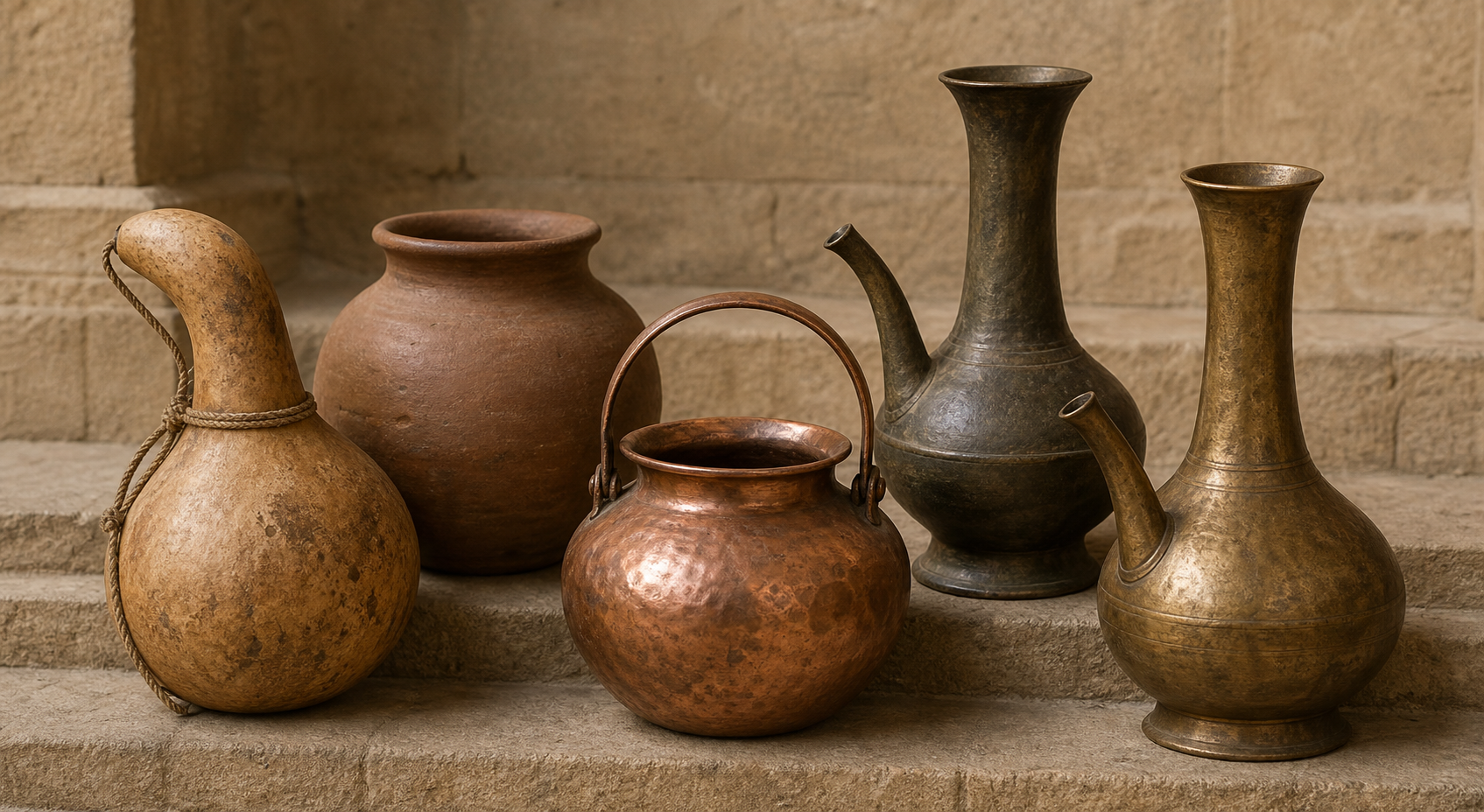
| Typical form | Portable pot, sometimes simple or gourd-like | Vessel with a controlled opening, neck, lip, or spout |
| Primary association | Renunciation, tapas, restraint, and spiritual independence | Purification, libation, consecration, and ceremonial order |
| Common bearer or context | Sage, ascetic, guru, or wandering renouncer | Priestly figure, ritual attendant, deity, or monastic figure in a ceremonial setting |
| Representative materials | Gourd, coconut shell, wood, clay, brass, copper, or other metals | Copper, brass, bronze, silver, or another ritual metal |
| Emphasis | Carrying sacred water as a minimal personal implement | Directing sacred water through a precise ritual action |
Reading the vessel through form, gesture, and setting
Form provides the first clue. A plain, rounded, portable pot is more likely to be read as a kamandalu, especially when its appearance suggests a gourd or another humble material. A pronounced neck or pouring feature favors identification as a kundika. Material can reinforce this impression: an unadorned natural vessel suits the visual language of ascetic simplicity, while an engineered metal vessel suits repeated ceremonial use. Neither clue is conclusive by itself, because kamandalus can also be made from metal and artistic representations do not always display functional details.
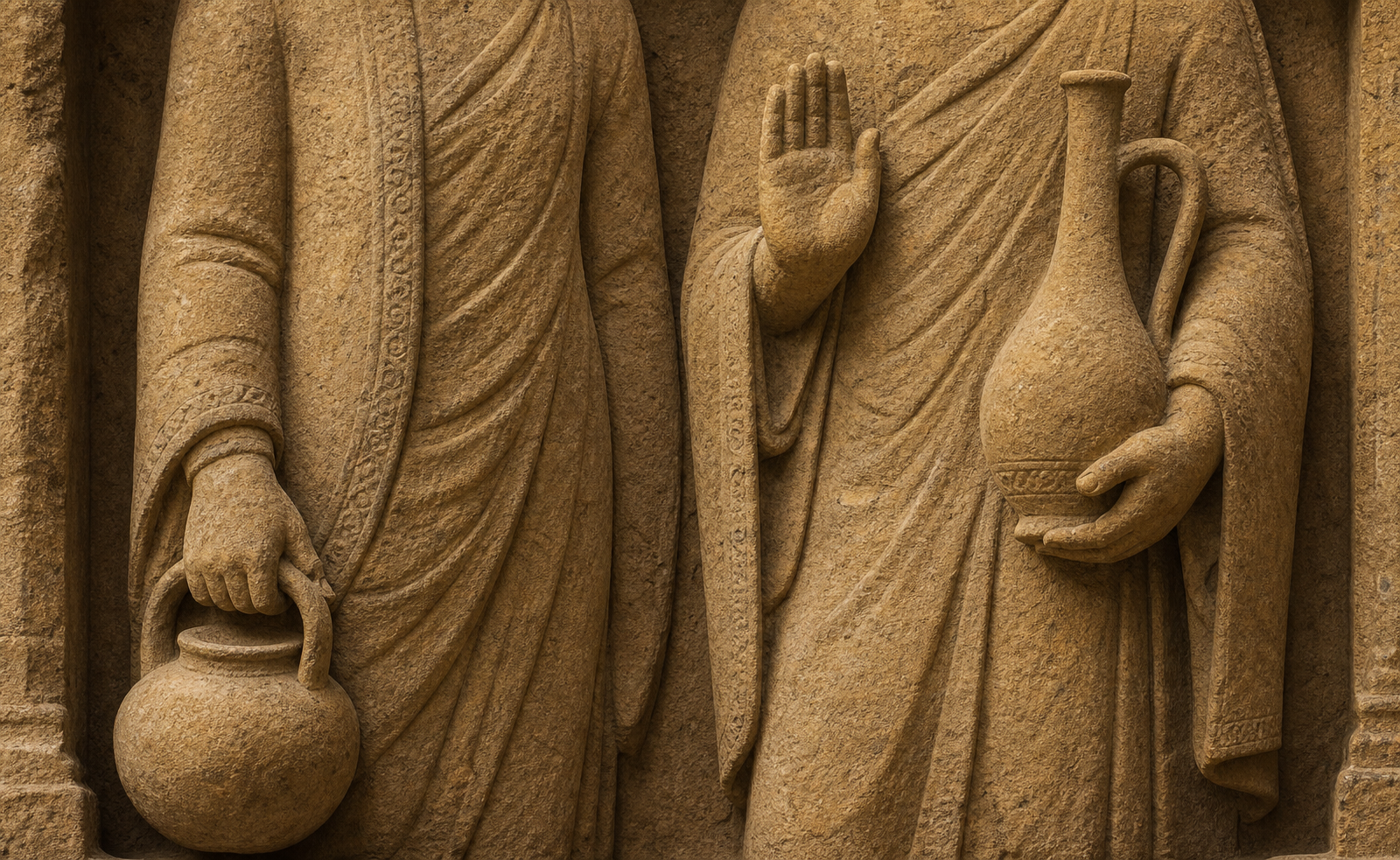
The identity of the bearer supplies the next layer. A vessel carried as one of a sage’s few personal possessions points toward the kamandalu. The source associates it with Brahma, ascetic forms of Shiva, Dakshinamurti, Dattatreya, Agastya, Narada, and rishis more generally. When the vessel appears in the hands of a priestly or attendant figure and seems ready to pour, sprinkle, cleanse, or consecrate, a kundika reading becomes more persuasive.
Gesture distinguishes possession from performance. A kamandalu held quietly beside the body can identify a disciplined way of life even when no rite is underway. A kundika tipped toward a murti, altar, recipient, or ritual space places greater emphasis on the act of transferring sanctified water. The contrast is not between a sacred object and a utilitarian one; both are sacred and useful. It is between water kept ready within an ascetic discipline and water directed through a formal ceremonial action.
Setting completes the reading. A forest, hermitage, teaching scene, or wandering figure strengthens the ascetic interpretation. An altar, yajna environment, temple service, abhishekam, or consecration scene strengthens the ritual-pouring interpretation. Where the form remains ambiguous, the relationship among vessel, bearer, action, and setting is more informative than any isolated feature.
Water connects renunciation with consecration
The two vessels differ in emphasis, but their symbolism begins with the same substance. The source describes water in Hindu thought as a bearer of life, fertility, purification, memory, and sacred transition. Its place in worship extends from cleansing the practitioner and ritual implements to bathing a murti, receiving mantra, and marking an offering. A water vessel consequently holds potential action, not merely liquid.
The kamandalu carries this potential beyond the temple. In the hands of a renouncer, it supports bodily need and religious discipline without implying material abundance. It makes purification and daily observance portable, suggesting that a practitioner can carry the essentials of a ritual life into a forest, hermitage, or journey. Its smallness is therefore meaningful: reduced possession becomes compatible with sustained sacred practice.
The kundika places the same element within a carefully structured rite. Its controlled flow suits a context in which the manner of pouring is part of the offering. Water used in abhishekam, sprinkling, or consecration is framed by intention, mantra, and sequence; the vessel’s design supports that precision. Iconographically, the kundika can therefore direct attention from the holder’s personal discipline toward a sacred action being performed for a deity, recipient, or consecrated space.
This produces a useful interpretive pairing. The kamandalu shows sacred water retained as the companion of tapas, while the kundika shows sacred water released through liturgical service. One foregrounds disciplined sufficiency and the other ordered transmission, without placing them in opposition.
Bearers give the vessel its particular message
When Brahma carries a kamandalu, the DharmaRenaissance account connects the vessel with creation, sacred knowledge, and life-bearing waters. In ascetic representations of Shiva, it supports a different emphasis: supreme consciousness is shown as independent of worldly abundance. With rishis and gurus, the vessel marks an authority grounded in learning, tapas, purity, and self-mastery rather than wealth or political status.
This is why the kamandalu can function as condensed biography. Even without a narrative scene, it helps identify its bearer as someone who lives lightly and remains prepared for purification, ritual, or blessing. Its meaning comes from the relationship between the vessel’s modest form and the disciplined identity of the person carrying it.
A kundika-like vessel shifts the message when it accompanies a deity, priestly figure, bodhisattva, Jain monk, or ritual attendant. According to the source, such appearances can emphasize blessing, cleansing, initiation, compassion, monastic discipline, sacred service, or ritual empowerment, depending on the tradition and context. The shared vessel type should not be taken to erase doctrinal distinctions among Hindu, Buddhist, and Jain settings. It instead demonstrates how controlled water-bearing and pouring can participate in several related visual languages of purity and discipline.
Terminology should consequently follow contextual evidence. A museum label, catalogue entry, or devotional explanation becomes more useful when it records both the proposed vessel name and the features supporting that identification. Where an image lacks a visible spout or a clear ritual action, acknowledging uncertainty is more accurate than forcing a rigid distinction.
Key takeaways
- The kamandalu is principally associated with the portable discipline, simplicity, and ritual readiness of sages and renouncers.
- The kundika is principally associated with controlled pouring in purification, libation, abhishekam, and consecration.
- Shape is only one clue; bearer, gesture, setting, material, and implied action should be considered together.
- Regional usage and artistic simplification can blur the boundary, so some identifications should remain qualified.
- Both vessels draw their sacred force from water, but one foregrounds ascetic sufficiency while the other foregrounds ceremonial transmission.
Closer cataloguing of sacred vessels can make future study more precise by documenting local names, visible design features, ritual gestures, and the identity of the bearer together. That contextual approach preserves meaningful distinctions without treating a flexible iconographic vocabulary as mechanically uniform.