
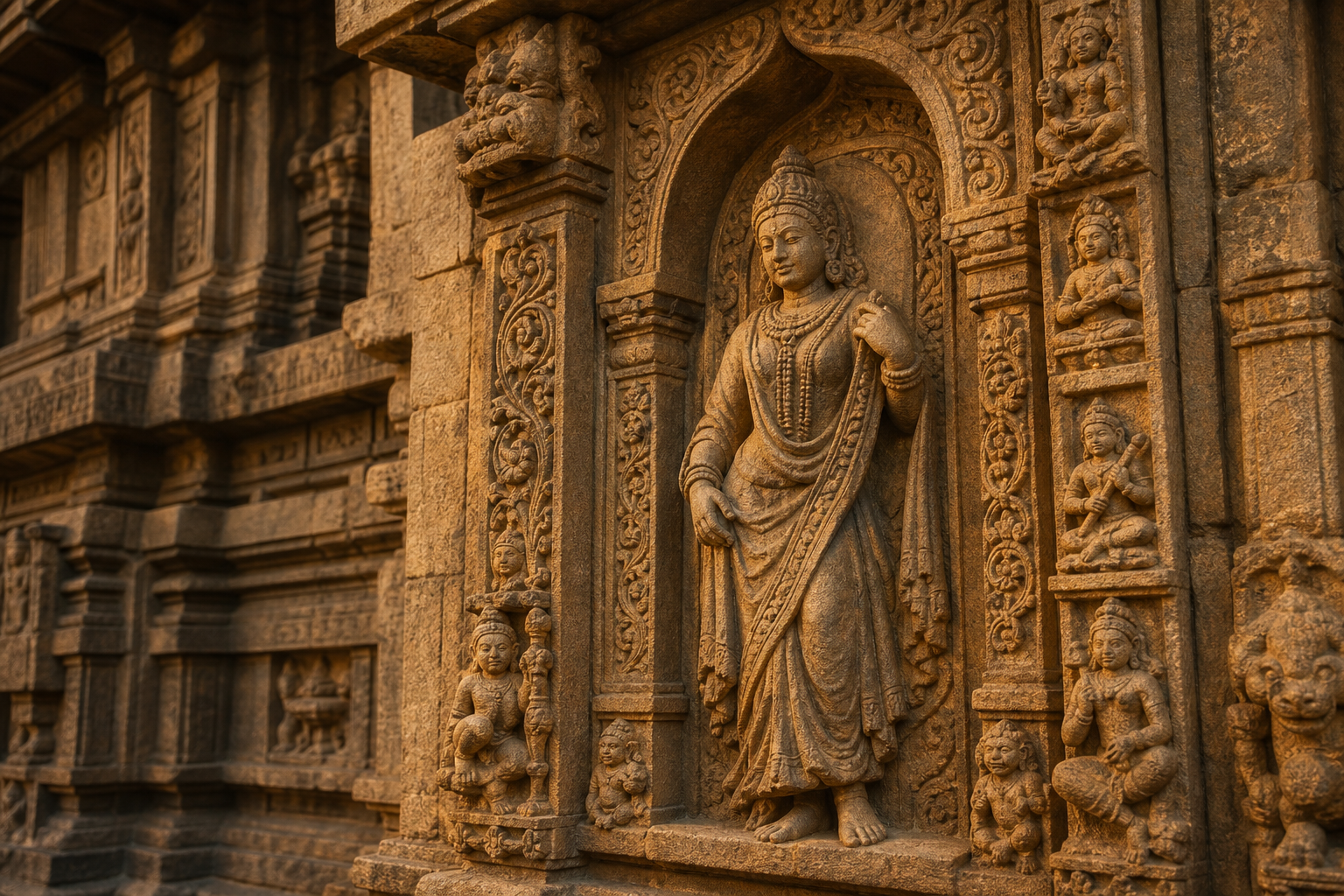
Urvashi is both a named figure of Sanskrit literary memory and an interpretive lens for understanding the celestial women carved on Hindu temples. The distinction matters: a graceful figure may evoke the world of Urvashi without being an inscribed or otherwise certain representation of her.
This article connects the literary, architectural, performative, and iconographic strands presented in the supplied DharmaRenaissance account. Because only that one source article was provided, the discussion does not claim independent corroboration across publications.
From a named celestial woman to a sculptural vocabulary
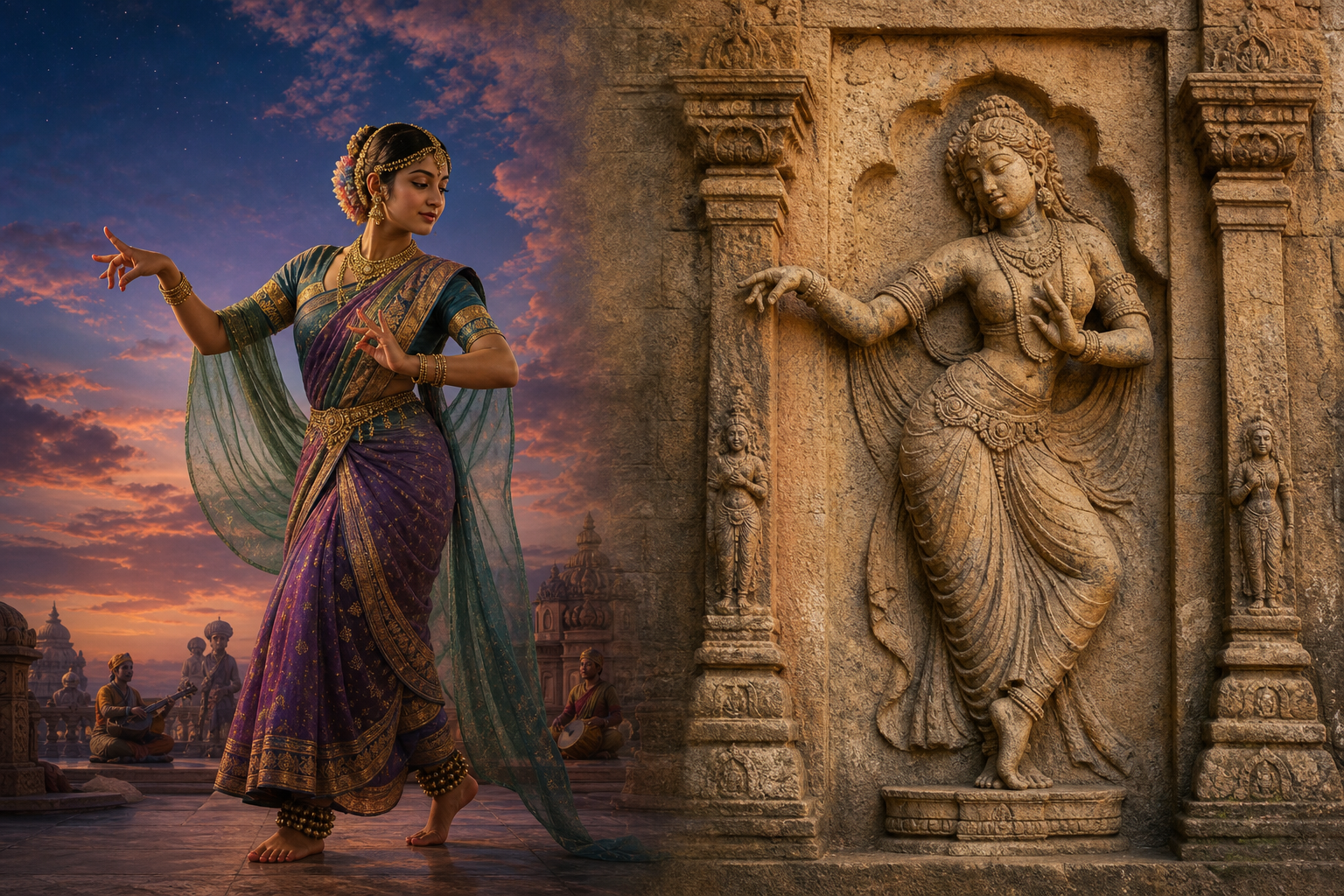
The supplied source traces Urvashi through the dialogue with Pururavas in the Rigveda, subsequent treatment in the Shatapatha Brahmana, the Mahabharata, Puranic tradition, and Kalidasa’s Vikramorvashiyam. Across this literary sequence, the article presents her as a celestial being who cannot be securely possessed by a mortal. Desire, separation, freedom, and the limits of control consequently become important parts of her remembered identity.
Temple sculpture introduces a different problem. As the source observes, celestial female figures are not always accompanied by inscriptions naming them as Urvashi. They may instead belong to broader categories described as apsara, surasundari, or devangana. A woman associated with a tree may also participate in the shalabhanjika motif, whose visual language the article connects with fertility, renewal, and auspicious presence.
These terms should therefore be treated as related interpretive categories rather than automatic synonyms for one individual. Urvashi supplies a powerful literary horizon, but an identification requires evidence from attributes, narrative setting, placement, comparison, or inscription. Without such evidence, the more careful description is an Urvashi-like apsara or celestial woman, not a definitive portrait of Urvashi.
Why celestial beauty belongs to the temple cosmos
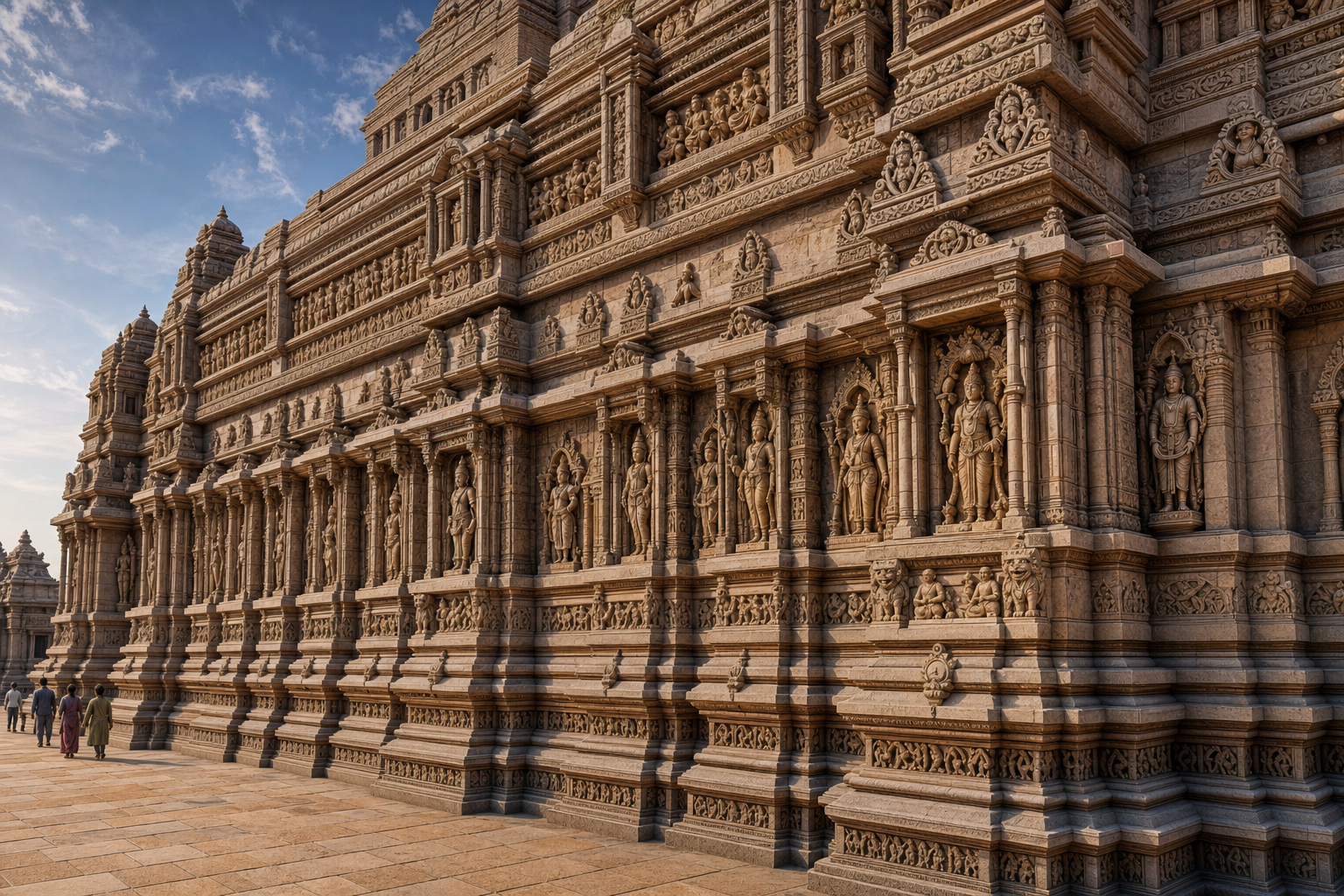
The DharmaRenaissance article describes the Hindu temple as a complete sacred environment rather than a building whose meaning is confined to the principal image in the garbhagriha. Its sculptural world can include deities, directional guardians, river goddesses, ganas, couples, musicians, dancers, animals, foliage, and celestial women. Within that ensemble, an apsara contributes movement, abundance, artistic refinement, and auspicious vitality.
This architectural setting changes how sensual form is read. Beauty is neither outside sacred life nor valuable only as decoration. In the source’s interpretation, it belongs to a theological aesthetic in which embodied existence can be ordered toward a sacred center. The apsara’s attractiveness may invite delight, but Urvashi’s literary elusiveness also complicates any possessive gaze: beauty can be encountered without being owned.
The source further places the tree-associated celestial woman within an artistic inheritance visible at Buddhist and Jain monuments as well as Hindu temples. That continuity supports comparison across Indic traditions, although a recurring form need not carry an identical meaning in every setting. Architectural location, accompanying figures, ritual context, and the larger sculptural program remain essential to interpretation.
How fixed stone suggests dance, sound, and rasa
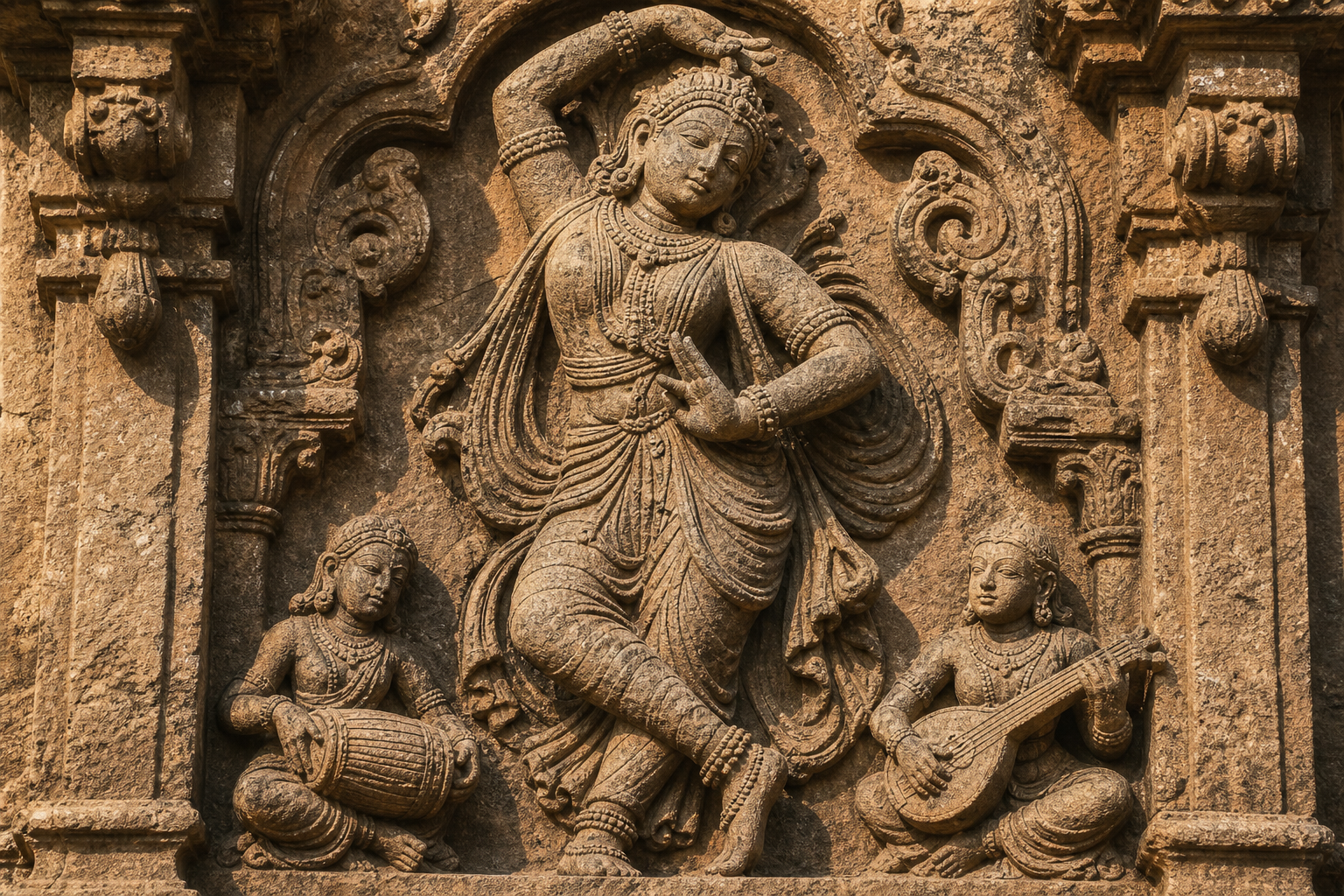
Apsara sculpture depends upon a productive contradiction: the material is still, yet the figure appears to move. The source emphasizes tribhanga, the three-bend posture in which the inclinations of the head, torso, and hip create a flowing rhythm. A flexed knee, tilted face, raised arm, curved waist, and carefully arranged ornaments can make a stationary body resemble a moment selected from an unfolding performance.
The article links this sculptural rhythm with Indian dance theory and the Natyashastra tradition. Its central interpretive bridge is rasa: emotion is shaped through artistic discipline into an experience that can be contemplated and enjoyed. Seen in this light, an apsara is not simply a dancer represented in stone. Her posture allows architecture to participate imaginatively in gesture, rhythm, music, and refined feeling.
The examples named by the source reinforce this connection in different architectural settings. It describes celestial women at Khajuraho dancing, preparing themselves, removing a thorn, wringing water from their hair, or interacting with companions. At Konark, it places dancers and musicians within a sculptural world organized around Surya and cosmic rhythm. It also identifies the Hoysala temples at Belur and Halebidu as important settings for refined celestial-woman sculpture. These sites should not be flattened into a single style; together, they show how bodily rhythm can operate within distinct temple programs.
Reading gestures and objects without forcing a single meaning
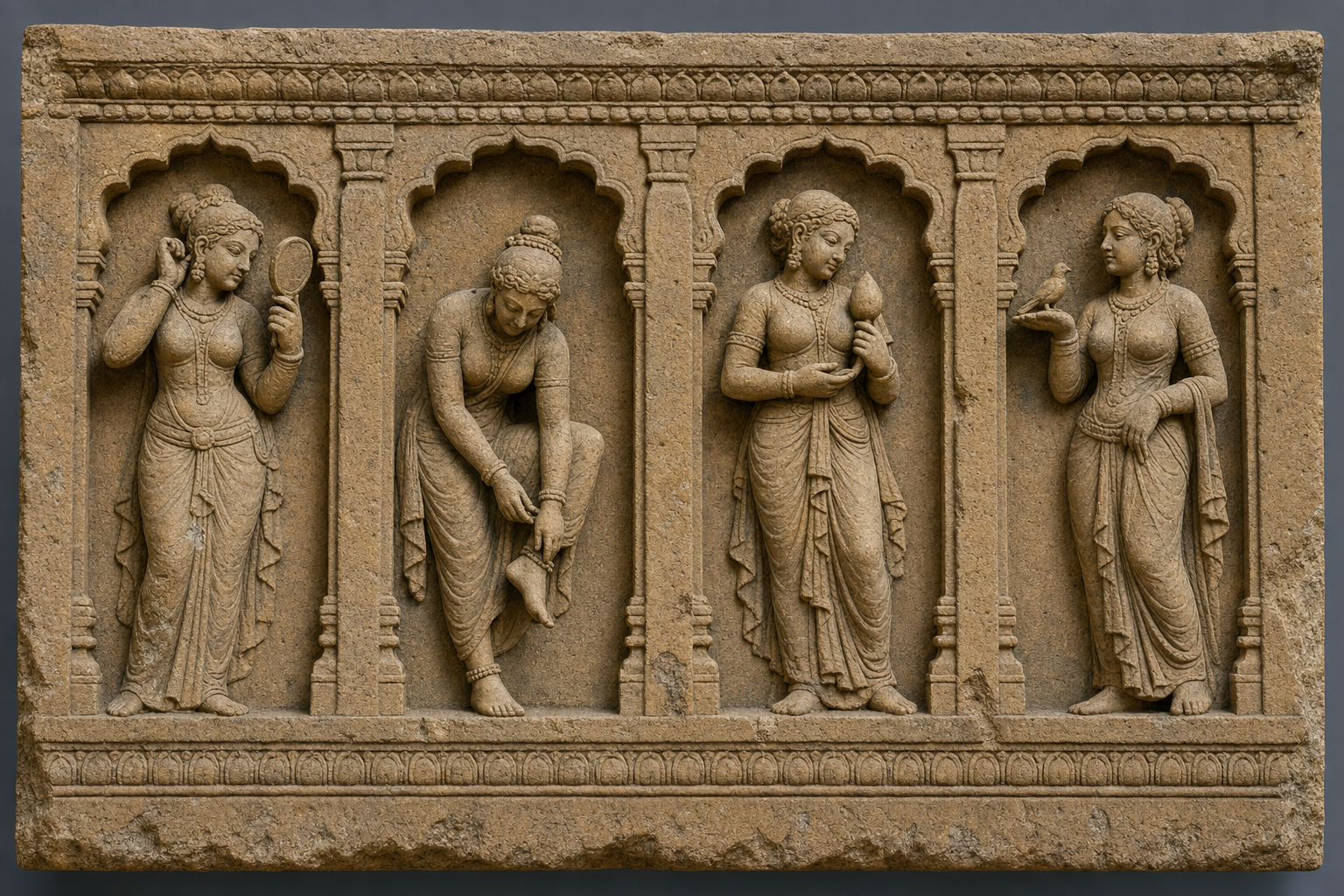
The supplied account mentions mirrors, anklets, musical instruments, parrots, lotuses, and attendants among the features associated with temple apsaras. It connects the mirror with possibilities such as preparation, self-awareness, beauty, or impermanence; the anklet with dance and rhythmic sound; the lotus with purity and water; and the parrot with speech, love, memory, or poetic cultivation.
These associations are most useful as interpretive possibilities, not as a rigid decoding chart. A mirror does not prove vanity, just as an instrument does not by itself identify a particular celestial musician. Meaning emerges from the relationship among pose, object, neighboring figures, architectural position, and the temple’s wider program. The same caution applies to ordinary-looking activities: adjusting an ornament or removing a thorn can animate the sacred exterior through recognizable human action without reducing the figure to a scene of daily life alone.
A disciplined reading therefore moves between three levels. It first describes what is actually visible, then considers the larger apsara vocabulary, and only afterward asks whether literary memory makes Urvashi a persuasive association. This sequence preserves the richness of interpretation while keeping the difference between observation, category, and identification clear.
Key takeaways
- Urvashi is a specific literary personality, whereas many temple figures belong to broader classes such as apsara, surasundari, or devangana.
- Celestial women participate in the temple’s sacred cosmos through auspiciousness, movement, abundance, and artistic refinement; they are not adequately explained as incidental ornament.
- Posture, especially tribhanga, connects sculpture with the visual logic of dance and the contemplative experience of rasa.
- Attributes such as mirrors, anklets, lotuses, parrots, and instruments are context-sensitive clues rather than fixed labels.
- A responsible identification separates visible evidence from symbolic association and from the literary memory of Urvashi.
Further study can sharpen this approach by pairing literary comparison with site-specific documentation of inscriptions, placement, neighboring imagery, and regional sculptural conventions. That combination would allow Urvashi’s enduring presence to illuminate temple art without turning every celestial woman into the same figure.
References
- DharmaRenaissance Blog — Urvashi in Hindu Sculpture: Sacred Apsara Beauty, Symbolism, and Temple Art