
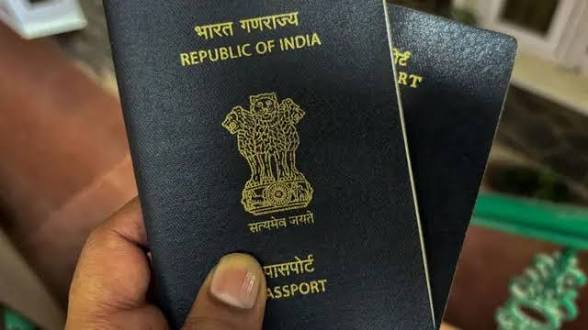
A technical clarification became a national question of belonging. At the 14th Passport Seva Divas on 24 June 2026, a senior official of India’s Ministry of External Affairs stated that an Indian passport is primarily a travel document and should not be treated as a standalone citizenship document. The reported clarification was legally significant but publicly unsettling. A passport bears the national emblem, identifies its holder as Indian in ordinary usage, enables international travel and is issued only after documentary scrutiny. It was therefore natural for citizens to ask what proves Indian citizenship if even this highly trusted document is not conclusive.
The emotional force of that question should not be underestimated. Citizenship is not merely an entry in a database; it is the legal expression of belonging to the Republic. It affects political participation, protection by the state and the confidence with which a person can say that the country is home. A passport holder who has submitted identity records, proof of address and, where applicable, undergone police verification reasonably assumes that the government has already examined citizenship. When officials later describe the same passport as insufficient on its own, the resulting anxiety is not irrational. The central problem is a gap between legal precision and ordinary public understanding.
Citizenship is a legal status, while documents are evidence of that status. Articles 5 to 11 of the Constitution addressed citizenship at the commencement of the Constitution and empowered Parliament to regulate the subject. The Citizenship Act, 1955 now governs the principal routes by which Indian citizenship is acquired, determined, renounced, terminated or withdrawn. These routes include birth, descent, registration, naturalisation and incorporation of territory. A passport, voter identity card or birth certificate may help prove facts relevant to one of those routes, but the legal status ultimately arises from the Constitution and the citizenship laws rather than from possession of a generally issued identity document.
This distinction becomes clearer when citizenship by birth is examined. A person born in India between 26 January 1950 and 30 June 1987 is generally a citizen by birth, subject to limited statutory exceptions. For births from 1 July 1987 until the commencement of the 2003 amendment on 3 December 2004, at least one parent had to be an Indian citizen. For later births, both parents must be citizens, or one must be a citizen while the other is not an illegal migrant at the time of birth. A birth certificate can establish date, place and parentage, but those facts must still be applied to the law governing the relevant period. This is why no single document answers every citizenship case.
Citizenship by descent has its own requirements, including rules concerning the date of birth, the citizenship of a parent and, in many cases, registration of an overseas birth at an Indian consulate. Citizenship by registration and naturalisation normally produces formal certificates because the status is granted through an application process. By contrast, most citizens by birth never receive a separate citizenship certificate. Section 13 of the Citizenship Act permits a certificate in a case of doubt, but it is not designed as a universal certificate issued automatically to every citizen. India therefore has citizenship law without a universal citizenship document.
The Passports Act contains both the rule and the exception. Under Section 6 of the Passports Act, 1967, lack of Indian citizenship is ordinarily a ground for refusing the relevant passport or travel document. This makes an Indian passport powerful evidence that the issuing authority previously treated the applicant as a citizen. Section 20, however, gives the Central Government an exceptional power to issue a passport or travel document to a person who is not an Indian citizen when the public interest requires it. The existence of that narrow power prevents every document issued under the Act from functioning as universally conclusive proof of citizenship.
The legally accurate conclusion is therefore more nuanced than the slogan that a passport proves nothing. In ordinary practice, an Indian passport remains among the strongest official pieces of evidence of citizenship. It reflects a governmental determination made for the purpose of international travel, and foreign authorities routinely rely on it as evidence of nationality. Yet it does not create citizenship, override the Citizenship Act or bind a court in every disputed case. It may also be revoked if obtained through suppressed or false information. Strong evidence and conclusive proof are not identical concepts.
Other familiar documents perform still narrower functions. Section 9 of the Aadhaar Act, 2016 expressly provides that Aadhaar does not by itself confer or prove citizenship or domicile. A PAN identifies a taxpayer, while a driving licence establishes authority to operate specified vehicles. A voter identity card is more closely connected to citizenship because only citizens are entitled to be registered as electors, but an electoral entry can be challenged, corrected or removed. Such documents may form part of an evidentiary record without becoming the legal source of citizenship.
This fragmented system also creates an equality problem. Most Indians do not hold passports, and many citizens acquired their status automatically by birth rather than through a certificate-bearing administrative process. Older people may possess handwritten records with inconsistent spellings. Women may have documents in different surnames before and after marriage. Migrant workers may live far from the offices holding ancestral records, while families affected by floods, displacement or administrative reorganisation may have lost important papers. A proof system that appears manageable to an urban passport holder may be far more difficult for a rural or economically vulnerable citizen.
The passport clarification does not, by itself, announce a nationwide NRC. It has understandably revived speculation that New Delhi may eventually introduce a dedicated citizenship card linked to a National Register of Indian Citizens. However, an inference is not a policy decision. A 2020 parliamentary response from the Ministry of Home Affairs stated that no decision had then been taken to prepare an NRIC at the national level. The June 2026 passport statement did not itself set out a nationwide registration programme, evidentiary standard, timetable, budget or appeal structure. Without a fresh notification or policy document, it cannot responsibly be treated as proof that a nationwide NRC is imminent.
Nevertheless, the legal architecture for a register already exists. Section 14A of the Citizenship Act authorises the Central Government to register citizens, maintain a National Register of Indian Citizens and issue national identity cards. The Citizenship Rules of 2003 establish national, state, district and local registration structures. They also distinguish a population register, which records usual residents, from a citizens’ register, which concerns legal citizens. The National Population Register and an NRC should therefore not be described as interchangeable exercises, even though the rules connect their administrative architecture.
A National Register of Citizens was prepared after the 1951 Census by copying enumerated particulars into registers. It did not develop into a continuously updated, universally accessible citizenship system for the entire country. Decades of births, deaths, migration, territorial changes and inconsistent civil registration reduced the practical value of treating that historical record as a complete contemporary answer. The gap between citizenship law and citizenship documentation consequently remained unresolved.
Assam became the decisive modern test case. Its NRC update arose from a history distinct from the rest of India, including the Assam movement, the Assam Accord of 1985, Section 6A of the Citizenship Act and concerns about migration across an international border. Eligibility was linked principally to the 1951 NRC, electoral rolls and other admissible records showing presence in Assam or elsewhere in India by midnight on 24 March 1971, together with proof of descent where required. Rule 4A created an application-based procedure for Assam that differed from the enumeration model contemplated for the rest of the country.
The scale was extraordinary. A total of 3,30,27,661 people applied for inclusion. The complete draft published on 30 July 2018 contained 2,89,83,677 names. After claims and objections were processed, the list published on 31 August 2019 included 3,11,21,004 people and excluded 19,06,657. The official Assam NRC website describes the 31 August publication as the Final NRC and records the involvement of 52,038 statutory and government officials. Those figures reveal both the administrative reach of the exercise and the life-changing consequences of even a small percentage of error.
Exclusion from the NRC did not automatically make a person a foreigner. The Ministry of Home Affairs clarified that only a competent Foreigners Tribunal could make that determination and that excluded individuals had a right to pursue the prescribed appellate process. This safeguard is crucial. A database may flag a case for examination, but it cannot replace an adjudicatory process in which evidence is disclosed, reasons are given and an affected person has a meaningful opportunity to respond.
The legal and administrative status of the 2019 publication has nevertheless remained contested. Government releases and the Assam NRC portal called it the final NRC, while the Comptroller and Auditor General later recorded that the Registrar General of India had yet to publish the final NRC. That institutional divergence is not a minor semantic dispute. It affects the activation of rejection orders, appeals, official use of the database and public confidence in whether the process has reached legal finality. A citizenship system cannot remain credible when different public institutions use the word final in materially different ways.
The project also illustrates the danger of uncontrolled expansion. The initial approved cost was ₹288.18 crore, but the revised project cost rose to ₹1,602.66 crore. Reported expenditure reached ₹1,579.78 crore by March 2022, excluding the full economic cost of deploying tens of thousands of government personnel. A project expected to conclude within roughly fourteen months continued for years. Changes in scope, repeated extensions and large technology requirements transformed a register into one of India’s most complex administrative exercises.
Prateek Hajela, then the State Coordinator, became closely identified with the update conducted under Supreme Court monitoring. On 18 October 2019, the Supreme Court ordered his inter-cadre transfer to Madhya Pradesh on deputation. The published order referred to the totality of circumstances but did not record a finding of wrongdoing against him. It is therefore inappropriate either to treat the transfer as proof of misconduct or to ignore the later administrative and audit questions associated with the project.
Hajela’s successor, Hitesh Dev Sarma, subsequently alleged that important verification controls, including Family Tree Matching, had been compromised and called for investigation by national agencies. Those allegations require formal investigation and evidentiary testing; they are not established facts merely because a former official made them. The essential distinction is between an allegation of actual manipulation and an independently documented weakness that made manipulation possible. Academic and journalistic analysis must preserve that distinction.
The national audit documented serious weaknesses without declaring every allegation proven. In its Report No. 4 of 2022 on Assam, the Comptroller and Auditor General found that 215 software utilities had been added to the core NRC system in an ad hoc manner without the expected software-development and vendor-selection procedures. The audit concluded that the absence of an adequate audit trail created serious risks of data tampering and weakened accountability for the accuracy of the register. A risk of tampering is not proof that particular records were altered, but a citizenship database should never be built so that consequential changes cannot be reliably reconstructed.
The CAG also found excess and inadmissible expenditure, deficient procurement controls and insufficient transparency in vendor payments. Wipro Limited served as the system integrator, while Integrated Systems & Services was involved in outsourced manpower. The audit recommended fixing responsibility within the Office of the State Coordinator and taking time-bound action concerning irregular payments. These are formal audit findings, but they are not criminal convictions. Terms such as theft, siphoning or conspiracy require proof through investigation and adjudication rather than rhetorical repetition.
The treatment of data entry operators was among the most troubling findings. According to the CAG’s examination of payment records, operators received ₹5,532 per month from February 2015 to September 2017 and ₹9,100 from October 2017 to November 2019. The rates released to the system integrator were substantially higher, averaging approximately ₹14,745 and ₹16,724 in the corresponding periods. After allowing a reasonable contractor margin, the audit estimated an undue benefit of ₹155.83 crore to the system integrator or labour contractor. It separately calculated that workers were deprived of ₹67.14 crore in wages due under the then-applicable minimum-wage framework.
Those two audit figures measure related but different aspects of the same payment structure and should not be casually added as though they represent wholly separate losses. Wipro contested the classification and argued that the amount received included labour-management costs, but the audit rejected that position after referring to the Labour Department’s classification of the operators as skilled workers. The CAG recommended penal action against Wipro for the minimum-wage violation and accountability for the principal employer. Whatever ultimately happens to the NRC, workers who performed the underlying public function should not bear the financial cost of procurement failures.
Supreme Court monitoring did not eliminate executive accountability. The Court supervised schedules, procedures and major legal questions in a constitutionally sensitive case. It did not thereby become the contracting authority, software auditor, wage-disbursing employer or custodian of every procurement file. Judicial supervision cannot be used as a shield against financial audit, labour law or administrative responsibility. The executive agencies that spent public money and managed vendors remained bound by ordinary standards of legality, propriety, cybersecurity and record-keeping.
In 2025, Hitesh Dev Sarma filed Writ Petition (Civil) No. 740 of 2025 seeking complete, comprehensive and time-bound re-verification of the draft and supplementary NRC records. The Supreme Court issued notice to the respondents on 22 August 2025, as confirmed by its official after-notice report. Issuing notice means that the Court has called for responses and will consider the dispute. It does not authenticate the petition’s allegations or predetermine the outcome. Only a reasoned order after hearing the parties can establish what relief, if any, is legally justified.
Political criticism has added another layer. Himanta Biswa Sarma has publicly described the 2019 NRC as faulty and supported correction or re-verification, arguing that errors could affect indigenous communities and national security. Such concerns deserve examination, but political declarations cannot substitute for a transparent audit methodology. Re-verification itself requires rules: the sample or population to be checked, the evidence to be reconsidered, protections against arbitrary reopening, the authority responsible and remedies for people affected by revised decisions.
The media’s responsibility is equally demanding. Reporting must distinguish the 2018 draft, the 2019 publication, the RGI’s formal role, audit findings, political claims and pending litigation. Assertions that individual media figures or officials personally benefited from wrongdoing require documentary evidence and due process. Repeating unverified accusations as established fact would reproduce the same failure of verification that critics identify in the NRC process. Independent journalism is most valuable when it follows money, procurement records, court filings and official notifications rather than factional loyalties.
The first lesson for any nationwide NRC is that the evidentiary standard must be published before the exercise begins. Citizens would need to know which documents are primary, which are corroborative, how name and age discrepancies will be handled, what rules apply to people without birth registration and how family relationships may be proved. The system must also explain whether a passport creates a presumption of citizenship, how strong that presumption is and what evidence would be required to rebut it. Ambiguity transferred to local officials would produce inconsistent decisions across districts.
The second lesson concerns accessibility. A fair system would need assisted-document centres, multilingual forms, mobile services, fee waivers, archival searches and special procedures for elderly people, persons with disabilities, orphans, displaced families and communities affected by natural disasters. Minor spelling variations or changes in transliteration should not become existential errors. The burden imposed on a citizen must remain proportionate to the state’s own historical failure to maintain complete civil records.
The third lesson is technological. Citizenship data should be protected by role-based access, encryption in transit and at rest, immutable audit logs, version control, independent security testing and documented change-management procedures. Every alteration affecting inclusion or exclusion should identify who made it, when it was made, under what authority and on the basis of which evidence. Vendors should be selected competitively, subcontracting should be disclosed and source-code or system changes should be independently auditable. A database that cannot explain its own decisions is unsuitable for determining a status as fundamental as citizenship.
The fourth lesson is procedural justice. No adverse conclusion should arise from an opaque algorithm or an unexplained database entry. Affected people should receive a reasoned notice in a language they understand, access to the material relied upon, adequate time to respond, affordable legal assistance and an appeal before an independent body. Exclusion should not automatically trigger detention, loss of livelihood or public stigma. The state must distinguish between a documentation deficiency, an unresolved citizenship question and a final legal determination that a person is a foreigner.
An inclusive civic lens is indispensable. A citizenship register should never use religious, linguistic or regional stereotypes as substitutes for evidence. Hindus, Buddhists, Jains, Sikhs and members of every other faith and community share an interest in accurate records, secure borders, equal citizenship and humane due process. Protecting indigenous communities and enforcing immigration law can be legitimate state objectives, but they must be pursued through transparent legal standards that preserve dignity and social harmony. Collective suspicion weakens national unity rather than strengthening it.
The fifth lesson is fiscal proportionality. Assam’s expenditure cannot simply be multiplied by population to predict the cost of a national programme, because economies of scale and different procedures would matter. Even so, the Assam experience demonstrates that nationwide verification would require immense public expenditure, trained personnel, archival capacity, secure digital infrastructure, tribunals and legal aid. Before authorising such an exercise, Parliament and the public would need a credible cost-benefit analysis explaining why existing civil registration, border management and targeted adjudication mechanisms are insufficient.
The passport debate should lead to clarity rather than panic. An Indian passport remains highly persuasive evidence of citizenship, but the legal status of citizenship is determined under the Constitution and the Citizenship Act. The exceptional power in Section 20 of the Passports Act explains why the document is not universally conclusive; it does not make the passport meaningless. Nor does the 2026 clarification, standing alone, prove that a nationwide NRC is about to begin.
The constructive response would be a publicly accessible evidentiary framework explaining the legal value of passports, birth certificates, voter records, Aadhaar and other documents in different citizenship contexts. If a national register is ever considered, Assam’s experience demands independent technology audits, transparent procurement, lawful wages, accessible appeals, formal institutional coordination and strict protection against discrimination. Citizenship administration should reinforce public trust in Bharat’s constitutional order. It should never make genuine citizens fear that an administrative inconsistency can erase their belonging.
Inspired by this post on Hindu Post.
