
Travel assumes the character of pilgrimage when movement across geography begins to correspond with movement within the self. In this journey through northern Karnataka and adjoining Maharashtra, the outer route moved from Vijayapura to Solapur, Akkalkot, Basavana Gudi, Hubballi, and Dharwad, while the inner route passed through silence, devotion, discipline, remembrance, and gratitude. Temples, ashrams, samadhi shrines, rural landscapes, rain-soaked roads, vegetarian meals, and brief encounters with strangers all became part of a larger experience of Hindu pilgrimage and India’s living spiritual traditions.
The itinerary began with arrival at Vijayapura by train. From there, nearby sacred spaces were visited by taxi before the journey continued toward Akkalkot and Basavana Gudi, eventually reaching Hubballi by rail. What may appear outwardly as a sequence of destinations was, in effect, a carefully unfolding encounter with dharma, bhakti, seva, and the saint traditions that continue to shape the spiritual geography of Bharat. The journey was not designed around spectacle. Its depth came from quietness: small ashram halls, temple bells, early morning prasada, elderly devotees, rural fields, and the unexpected kindnesses that often define pilgrimage more than monuments do.
Vijayapura: A Quiet Base for Living Spirituality
Bijapur, officially renamed Vijayapura in 2014, served as the first base. The town’s atmosphere was simple and measured. It did not impose itself on the visitor through noise or hurried movement. Its modest hotels, quiet roads, and unhurried rhythms created a suitable beginning for a pilgrimage concerned less with tourism and more with reflection. Vijayapura is widely known for Gol Gumbaz and its layered medieval history, but this journey consciously remained focused on temples, ashrams, and living Hindu spiritual institutions. That choice gave the experience a particular orientation: the emphasis fell not on political memory or architectural fame, but on the continuing power of worship, meditation, and community-based spirituality.
A seemingly minor detail also left an impression: the railway station code of Vijayapura is BJP. Such coincidences are not spiritually significant in themselves, yet pilgrimage often sharpens attention to small details. Place names, station codes, local speech, food, and passing conversations begin to appear as part of a wider cultural texture. In this way, even ordinary travel details can remind the pilgrim that history, language, memory, and contemporary public life often overlap in unexpected ways.
One of the important visits in Vijayapura was to Jnanayogashrama, founded by Sri Siddheshwar Swamiji (1926-2023), revered as Nadedaduva Devaru, the “Walking God.” His life has been remembered for its disciplined simplicity and its practical expression of Vedantic wisdom. The ashram reflected that ethos through ordered spaces, meditation halls, and an atmosphere of restraint. Though Sri Siddheshwar Swamiji had attained samadhi, the institutional culture around him retained the quiet force of his teachings. Devotees recalled his long walks, his accessibility to seekers, and his ability to communicate spiritual insight without theatricality. The breakfast offered there was received as prasada, and in that small act the ashram’s spirit of hospitality became visible.
Shanti Kuteer Ashram near Kannur village presented another dimension of living spirituality. It functioned not only as a place of meditation, but also as a centre of service and rural upliftment. The swamis spoke of disciplined living: rising early for prayers, eating simple food, practicing self-control, and serving without expectation. The ashram’s history of offering food and water to travellers during difficult drought years showed how dharma becomes concrete through compassion. In such institutions, spirituality is not reduced to private emotion. It takes shape through shelter, food, shared prayer, and the protection of human dignity.
Inside the main hall, devotees were singing keertans, and later gathered for the reading of the Ramayana. The sound of collective devotion gave the ashram an atmosphere of continuity. It also became clear that many elderly couples from Karnataka and Maharashtra spend their later years there, dedicating themselves to God and accepting a life of simple renunciation. The provision of decent accommodation for them reveals an important feature of ashram culture: the spiritual life is supported not only through teaching, but through care, routine, belonging, and community. For those in the later stages of life, the ashram becomes a dignified setting for turning inward.
Nearby Sivagiri, a modern temple dedicated to Lord Shiva, added another register to the journey. At its centre stands an 85-foot-tall statue of Shiva, softly illuminated by oil lamps and surrounded by the devotion of visitors. The shrine is not expansive in architectural scale, yet it possesses a strong devotional presence. Built by a private trust, Sivagiri has become one of the major pilgrimage centres in the Bijapur region. The massive statue, said to weigh around 1,500 tonnes, is regarded locally as the second-largest resting statue of Shiva in India. Beneath the form is a small Shiva Linga, anchoring the grandeur of the statue in the traditional focus of worship.
The temple walls carry the “Shiva Charite” in Kannada, allowing devotees to encounter Shiva not only through darshan, but also through sacred narrative. During Maha Shivaratri, the temple draws very large gatherings, reportedly more than 150,000 devotees annually. This combination of sculpture, local legend, public worship, and festival gathering makes Sivagiri a useful example of how modern temple construction can still participate in older patterns of Hindu devotion. It is both contemporary and traditional, public and intimate, monumental and inward.
Fields, Villages, and the Sacred Geography of Rural India
As the road moved out of Vijayapura, the landscape opened into rural Karnataka. Villages appeared and receded: houses grouped around small lanes, shrines near road junctions, elderly men seated under trees, women working in fields, irrigation channels glinting in the light, and distant hills holding the horizon. These details are easy to overlook during hurried travel, yet they are central to the experience of pilgrimage. They reveal the everyday world in which worship, labour, food, weather, and community remain closely connected.
The region is known as the grape capital of Karnataka, and its agricultural richness was visible in stretches of grapes, pomegranates, lemons, sugarcane, and cotton. The black soil of the region is especially suited to horticulture. Such landscapes provide more than scenery. They place pilgrimage within the material life of rural India, where cultivation, rainfall, temple festivals, local economies, and seasonal rhythms continue to shape social existence. The road thus became a form of instruction. It showed that sacred geography in Bharat is not limited to famous temples; it is woven through villages, fields, water channels, and wayside shrines.
Solapur and the Continuity of Bhakti
On the way to Akkalkot, the journey paused at Siddheshwar Temple in Solapur, dedicated to the 12th-century saint Sri Siddharameshwar. He is remembered as a yogi, Kannada poet, and contemporary of Basaveshwara. The temple stands beside a large lake traditionally associated with the saint, and the reflection of the shrine in the water created an atmosphere of depth and stillness. The site demonstrated how water bodies, temple architecture, saint memory, and collective worship often come together in Indian sacred spaces.
Time was spent in meditation near the saint’s samadhi, with worship offered at the shrines of Vishnu, Rukmini, Ganesha, and Lakshmi. The temple premises also contain 68 Shiva lingams, each carrying its own devotional presence. Sri Siddharameshwar Swami, though initially a devotee of Shiva, later became closely associated with the Lingayat tradition and the spread of vachanas. His memory is linked with equality, devotion, and spiritual practice grounded in social responsibility. The site therefore stands at an important intersection of Shaiva worship, saint tradition, Kannada devotional literature, and Lingayat religious history.
According to tradition, Sri Siddharameshwar built the temple under the guidance of his guru as a devotee of Shri Mallikarjuna of Srisailam. He is revered among the important spiritual figures of the Lingayat faith, and annual gatherings continue to draw large numbers of devotees. Standing at such a site creates a sense of historical continuity. The saint is not encountered merely as a figure from the past; he remains present through ritual, memory, architecture, and the living devotion of pilgrims.
Akkalkot: Silence, Strength, and the Datta Tradition
Akkalkot, about 38 kilometres from Solapur, formed one of the most powerful halts in the pilgrimage. The town is associated with Akkalkot Maharaj, also known as Shri Swami Samarth (1806-1878), who is widely revered as an incarnation of Dattatreya. The samadhi mandir carries a distinctive spiritual intensity. It is simple rather than ornate, but its simplicity does not diminish its force. On the contrary, the austerity of the place deepens its effect.
Shri Swami Samarth’s life is remembered as outwardly unconventional but inwardly established in the highest spiritual state. His reticence, cryptic utterances, and unpredictable behaviour are understood within the saint tradition as modes of instruction. His well-known assurance continues to inspire devotees: “Fear nothing. Whoever remembers me, I stand behind him like a mountain.” Such words belong not only to the vocabulary of consolation, but also to the discipline of surrender. They invite the devotee to cultivate courage, remembrance, and trust in the Divine.
The broader Datta Sampradaya links Shri Swami Samarth with the tradition of Shrimad Nrusimha Saraswati and the sacred geography of Ganagapur in Karnataka. The Shree Gurucharitra narrates episodes of guidance, miracles, tapas, and the transmission of grace through padukas and discipleship. Traditions associated with Kardali forests near Sri Sailam and the river Patalganga further place this lineage within a sacred map extending across regions. Such narratives are not merely biographical. They transmit a worldview in which the guru remains active as a principle of guidance, protection, and spiritual awakening.
The experience near the samadhi was marked by both crowd and intimacy. The large gathering initially created concern that entry into the sanctum sanctorum might not be possible. The air carried the fragrance of incense, temple bells echoed through the space, and the aarati lamps lit the sanctum with a golden glow. At that moment, a pujari unexpectedly beckoned the pilgrim couple forward, handed a dhoti, and led them into the sanctum. The event was not planned or requested, and for that reason it acquired the quality of grace. In pilgrimage, such moments often become decisive because they appear to arrive from beyond calculation.
Seated near the samadhi, the experience was one of deep and undisturbed peace. The silence was not empty. It carried presence: incense, bells, aarati flame, and the stillness of samadhi converged into an atmosphere that was felt rather than argued. On emerging, prasadam and flowers were received. The encounter demonstrated a recurring pattern in Hindu pilgrimage: the devotee travels toward a sacred place, but the defining moment often feels as though the sacred has moved toward the devotee.
The visit to Vatavruksha Mandir added another layer. This temple is associated with the banyan tree under which Swami Samarth is believed to have sat. Devotees narrated accounts of his grace and the transformative power of his words. The place did not overwhelm the senses; it steadied the mind. In that stillness, the teaching associated with surrender became inwardly vivid: “Perform your actions without attachment, keep your mind anchored in the Divine, and leave the fruits to Me. In time, you will realize that everything unfolds according to a higher will.” The statement draws together karma, bhakti, and trust in divine order, making it a concise expression of practical spirituality.
Basavanna, Anubhava Mantapa, and Devotion Anchored in Dharma
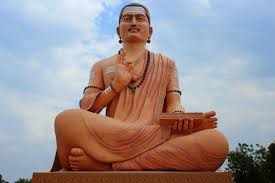
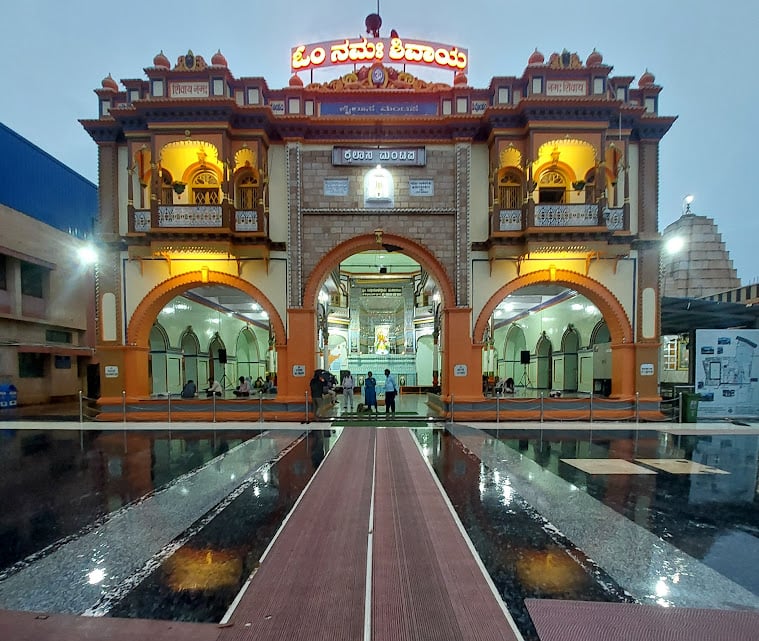
The next significant halt was Anubhava Mantapa, associated with Basavanna (1106-1167), the 12th-century saint-reformer and one of the central figures of the Lingayat tradition. Basavanna’s life marked a major moment in India’s social and spiritual history. He challenged rigid caste hierarchies and empty ritualism while emphasizing devotion as an inner and lived experience. His ideals of kayaka (work as worship) and dasoha (selfless sharing) linked spirituality with ethical labour and social responsibility.
Anubhava Mantapa is remembered as a forum that brought together seekers from different castes and genders for open spiritual dialogue. It is often described as an early experiment in spiritual democracy. The site became a major centre of the Vachana movement, whose literature articulated devotion, equality, criticism of social arrogance, and the immediacy of divine experience. Its importance lies not only in institutional memory, but in the continued relevance of its questions. What is true worship? How should social dignity be protected? How does labour become sacred? How can spiritual insight resist pride and exclusion?
Basavanna’s famous vachana remained central to the experience: “The rich will make temples for Shiva. What shall I, a poor man, do? My legs are pillars, the body the shrine, the head a cupola of gold. O Lord of Kudalasangama, the body itself is Your temple.” The words do not reject temples; rather, they expand the understanding of sacred space. They show that the human body, disciplined by devotion and ethical conduct, can itself become a temple. The visit to Basavanna’s birthplace nearby reinforced this insight. Its simplicity made the scale of his contribution more tangible, reminding the pilgrim that transformative ideas often arise in quiet and unassuming surroundings.
Hubballi: Rain, Aarti, and Living Grace
By evening, the journey reached Hubballi by train. The railway retiring room was simple, clean, and adequate. The station itself, Shree Siddharoodha Swamiji Hubballi Railway Station, is notable for housing the world’s longest railway platform, measuring 1,507 metres. This modern infrastructural fact stood beside the deeper purpose of the halt: a visit to Siddharoodha Swami Math, a place long associated with devotion, service, and the memory of saintly presence.
The math was already familiar through Swami Ramdas’s In Quest of God. In 1923, Swami Ramdas’s family traced him to Hubballi. His wife Rukmabai and daughter came there, and on the advice of Siddharoodha Swami, he agreed to return with them to Mangalore. Yet he did not resume ordinary household life. He withdrew to the nearby Kadri Hills, lived in the Panch Pandav Cave, continued intense spiritual practice, and wrote his first book, In Quest of God. This connection made the visit to Siddharoodha Swami Math not merely a local pilgrimage, but part of a wider map of modern Hindu spiritual literature.
Siddharoodha Swami (1837-1929) is remembered for humility, compassion, devotion, and selfless service. He rejected caste distinctions and upheld the spiritual equality of all. Having renounced worldly life at the age of six, he left home in search of a Satguru, eventually becoming a disciple at the ashram of Shri Gajadandaswami. He later travelled widely, from Kashmir to Kanyakumari, spreading spiritual awareness and guiding seekers. In time, he settled in Hubballi, where devotees gathered around him for solace, inner peace, and awakening. The math stands at the place where he attained samadhi in 1929 and continues to draw seekers in reverence.
When the ashram was reached, heavy rain was falling. Yet the evening aarti continued without interruption. The experience was striking: lamps flickered, chants rose, rain poured, and the soaked devotees joined the worship. The continuous chanting of “Om Namashivaya” lifted the atmosphere. In that moment, outer turbulence and inner stillness were not opposites. They met. Rain, flame, mantra, and samadhi formed a single field of attention.
Seated quietly before the samadhi, Sreelakshmi began chanting the familiar Shiva bhajan, “Hara Hara Hara Shankara, Nataraja Manohara…,” and nearby devotees listened with quiet interest. An elderly woman with her head draped in a red saree came forward and offered flowers that had earlier been placed at the samadhi mandir. The exchange required no explanation. It showed how devotion can cross differences of language and region through gesture, song, and shared reverence. In a world often trapped in argument, such wordless recognition becomes a lesson in the language of the heart.
When the couple stepped out around 8.30 p.m., the rain was still heavy and no buses or autos seemed available. A lone covered auto stood in front of the ashram. The driver, Gopal, immediately asked, “Where should I drop you?” and agreed to take them by the regular meter fare. This practical help was received as divine leela of Siddharoodha Swamiji. From an academic perspective, such moments show how pilgrimage interprets contingency through faith. From the devotee’s perspective, they reveal grace through the ordinary kindness of another person.
A Silence That Heals
The next morning brought a return to the ashram. The previous evening’s darshan had been intense, but not sufficient for a fuller understanding of the place. The rain had washed the surroundings clean, and the calm seemed clearer than before. Sitting quietly in the ashram produced a tranquillity that was steady rather than sentimental. This distinction is important. Pilgrimage can create emotion, but its deeper gift is often stability: a clarified mind, a softened heart, and a less agitated relation to the world.
The ashram was explored slowly. Worship was offered at various shrines, each carrying its own quiet sanctity. The Anjaneya temple invited silent prayer, while the sacred temple pond reflected the calm surroundings. The air felt fresh and charged with subtle presence. Nothing dramatic was required. The spiritual force of the place emerged through walking, pausing, observing, and absorbing. The math did not merely provide ritual moments; it drew the mind inward and left behind a quiet fullness.
Dharwad, Dattatreya Worship, and Chalukyan Memory
The journey also included Sri Dattatreya Temple in Dharwad, representing the Datta Sampradaya that links saints such as Swami Samarth within a broader tradition of guru worship and spiritual integration. Dattatreya, associated with the unity of creation, preservation, and dissolution, represents a theological vision in which the Divine is understood through multiple functions and forms. The visit extended the continuity already felt at Akkalkot, placing personal devotion within a wider lineage of teaching and remembrance.
A Shiva temple in Hubballi further reinforced the thread of continuity: simple worship, timeless presence, and the familiar stillness of the Linga. The ancient Chandramouleshwara Temple at Dharwad added historical depth. Believed to date back to the Chalukyan period, the temple is an example of early temple architecture marked by stone, restraint, and devotional clarity. The shivling worshipped as Chandramouleshwara, Lord Shiva adorned with the crescent moon, radiated a serene presence. With few devotees present, the temple permitted a long period of silent contemplation. Its value lay not in spectacle, but in the compression of time: ancient stone, continuing worship, and present gratitude occupying the same space.
Sweetness, Food, and the Cultural Texture of Pilgrimage
Before departure, Dharwad pedha brought a fitting sweetness to the journey. Such details may seem secondary, but food is rarely incidental in Indian pilgrimage. Prasada, simple vegetarian meals, local eateries, and regional sweets all contribute to the embodied experience of sacred travel. After long journeys, modest accommodation and clean, sattvic food become part of the discipline of contentment. The sweetness of Dharwad pedha therefore became symbolic: a gentle culmination of a pilgrimage shaped by rain, silence, darshan, and gratitude.
Reflections on Dharma, Bhakti, and Inner Movement
This route from Vijayapura’s quiet lanes and ashrams, through Solapur’s sacred continuity, Akkalkot’s austere power, Basavana Gudi’s ethical clarity, and Hubballi’s rain-washed grace, was not merely a journey between sites. It was an encounter with different modes of Hindu spirituality: Vedantic simplicity at Jnanayogashrama, service and rural care at Shanti Kuteer, Shaiva devotion at Sivagiri, saintly continuity at Siddheshwar Temple, surrender within the Datta tradition at Akkalkot, social ethics through Basavanna’s legacy, and healing silence at Siddharoodha Swami Math.
The pilgrimage also showed how India’s dharmic traditions remain rooted in plurality without losing coherence. Shiva worship, Datta Sampradaya, Lingayat vachanas, Ramayana recitation, bhajans, samadhi mandirs, ashram discipline, and rural seva all appeared as distinct yet connected expressions of spiritual life. Their unity did not require uniformity. Rather, it emerged through shared values: devotion, self-control, compassion, remembrance, surrender, service, equality, and reverence for the guru.
The journey returned with fewer photographs than memories, and fewer souvenirs than inner impressions. What endured was a serenity similar to the echo of a chant heard through rain. Each place, whether an ashram, temple, samadhi shrine, pond, roadside village, or quiet dining space, revealed one aspect of India’s enduring spiritual fabric. The final inheritance of the pilgrimage was not only memory, but quiet strength: the sense that stillness can speak, rain can purify, and grace can appear through the most ordinary forms of human kindness.
Inspired by this post on Pragyata.
