
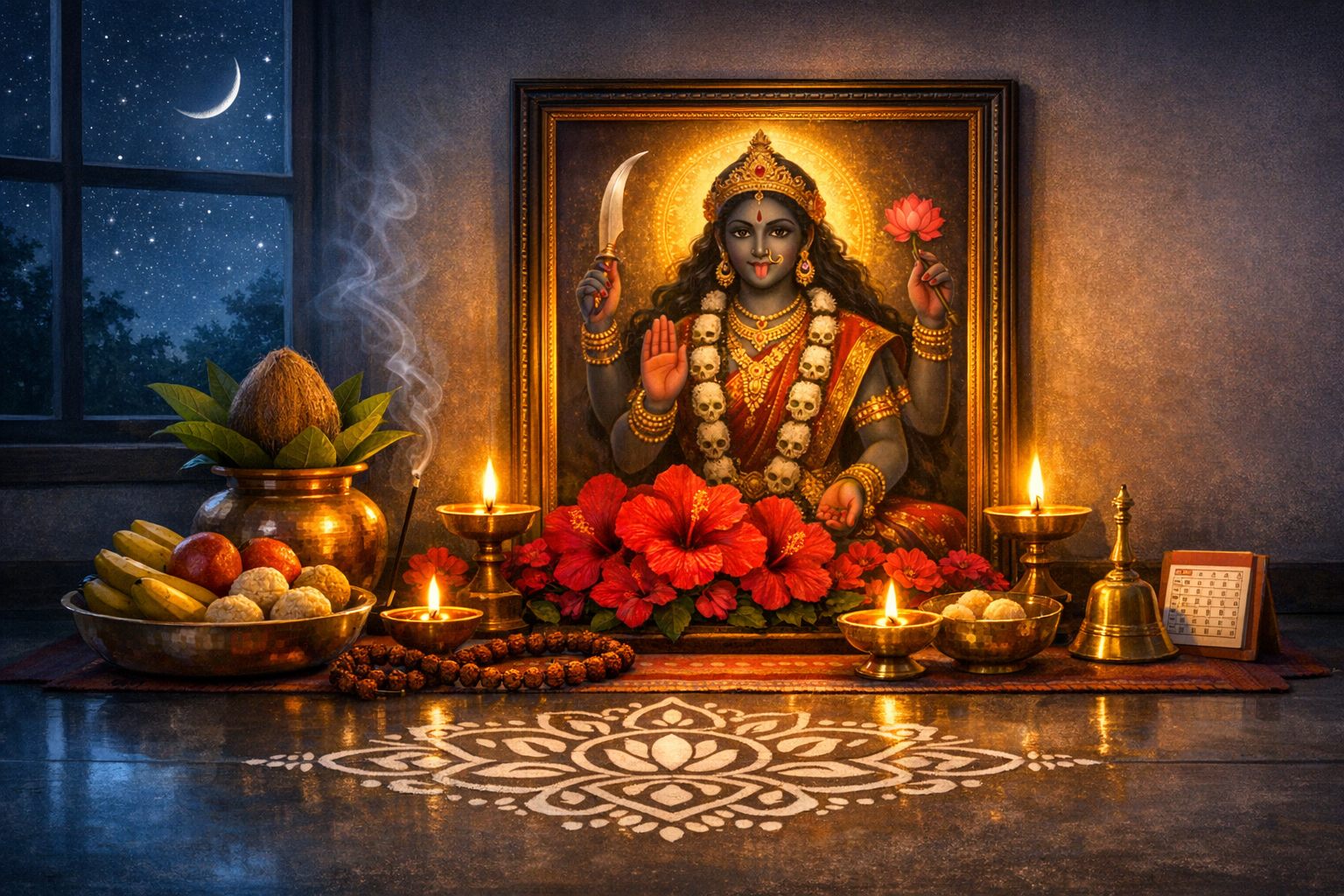
Ratanti Kalika Puja is a deeply revered Shakta observance centered on Goddess Kali and performed on Krishna Paksha Chaturdashi in the lunar month of Magha. While the more widely known Kali Puja coincides with Diwali Amavasya in Kartika, Ratanti Kalika Puja belongs to a quieter, inward-leaning ritual current in Bengal and adjoining regions, emphasizing contemplative sadhana, ethical offerings, and midnight worship during Nishita Kaal.
In calendrical terms, Magha occurs after Pausha, though regional almanacs differ between Purnimanta (North Indian) and Amanta (Western/Southern) reckonings. The observance anchors itself to Krishna Paksha Chaturdashi, the 14th lunar day of the waning fortnight, with core worship ideally aligned to Nishita KaalHindu midnightcalculated locally from sunset to sunrise. Devotees consult the regional Panchang for the precise window, ensuring that the principal upacharas and mantrajapa culminate within the tithi and the designated nocturnal muhurta.
Distinct from the festive, community-wide Diwali Kali Puja, Ratanti Kalika Puja is regional in practice and more ascetic in tone. The mood is solemn, lamps are fewer, and the emphasis rests on mantra, meditation, and a focused inner offering. This distinction in tithi (Magha Krishna Chaturdashi versus Kartika Amavasya) and tenor (meditative versus celebratory) makes Ratanti an especially meaningful date in the Shakta annual cycle.
The epithet ‘Ratanti Kalika’ points to a fiercely compassionate aspect of Kalitime, change, and the dissolving intelligence that removes tamas and fear. Chaturdashi itself is liminal: a threshold between the penultimate waning day and the new moon, a symbolic gateway for releasing burdens and invoking transformative Shakti. Within the broader dharmic family, this sadhana resonates with shared ideals of compassion, courage, self-discipline, and inner transformation found across Hinduism, Buddhism, Jainism, and Sikhism.
Geographically, Ratanti Kalika Puja is observed in West Bengal, Assam, Tripura, Odisha, and among Bengali communities elsewhere. Oral testimony and community chronicles describe home altars dressed with deep-red hibiscus, gentle incense, and a restrained lightscape that supports focus and introspection. Local Shakta temples may organize special mantrajapa or homa while households maintain a shorter, scripture-informed domestic puja.
Theologically, Kali embodies primal energy (Shakti), the power of discernment that cuts through avidya, and the fearless grace that protects sādhakas on the spiritual path. Ratanti emphasizes karuna (compassion) and abhayam (fearlessness) as lived virtuesvalues equally celebrated in the dharmic traditions: ahimsa and dana in Jain and Buddhist ethics, and seva and inner steadfastness celebrated in Sikh practice.
Traditional sources for Kalika worship in eastern India include Shakta Tantras and regional digests such as Brihad Tantrasara, alongside references to Kali bhakti and iconography in texts like Kalika Purana. While advanced Tantric rites require guidance from a qualified guru, domestic worship for Ratanti Kalika Puja remains accessible and ethically grounded, centered on universally accepted upacharas, mantras, and sattvic offerings.
Iconographically, Kali is commonly visualized as dark-hued, garlanded with severed heads symbolizing the transcendence of egoic identities, holding the sword of wisdom and a severed head representing the cutting of ignorance. Standing upon Shiva, she signifies dynamic power rooted in stillness; the outstretched tongue and wide eyes reflect her uncompromising revelation of truth and the urgency of inner awakening. In many Ratanti homes and shrines, a Shyama (benign) depiction is preferred to nurture quietude and devotion.
Preparations begin with shaucha (purification), a clean altar or mandala, and the arrangement of eco-friendly lamps. A simple altar may include a murti or image of Kalika, a copper kalasha with mango leaves and coconut, red cloth, kumkum, flowers (especially hibiscus), incense, water, fruits, and a sattvic naivedya. Practitioners often maintain mental silence before the puja to enter the night with clarity and intention.
Muhurta considerations are central. While Ratanti Kalika Puja can begin after sunset, many households center the core worship on Nishita Kaal. Practically, the night’s length (sunset to next sunrise) is halved to locate Hindu midnight; puja segments such as dhyana, mantrajapa, and bali-substitutes (strictly symbolic) are synchronized with this interval. If Nishita Kaal is not practical, Pradosh Kaal (early night) provides a valid alternative per local tradition.
A concise sankalpa may be articulated in transliterated Sanskrit: ‘asmin Magha-mase Krishna-paksha Chaturdashi tithau Ratanti Kalikayah pujam karisye’. This frames the place, time, deity, and intent, aligning the devotee’s inner resolve with the ritual sequence to follow.
A practical household Ratanti Kalika Puja vidhi can include: achamana; bhuta-shuddhi (inner purification); sankalpa; dhyana of Kalika; kalasha sthapana; a brief Ganesha avahana; and, where customary, Navagraha shanti mantras. Nyasa (such as kara-nyasa and anga-nyasa) may be performed by those familiar with the practice to prepare the subtle body for mantrajapa.
Shodashopachara (or a simplified Panchopachara) follows: avahana, asana, padya, arghya, achamaniya, snana/abhisheka (symbolically for images), vastra, alankara, gandha, pushpa, dhoopa, deepa, naivedya, tambula, pradakshina, and visarjana. Offer hibiscus, red flowers, sesame oil or ghee lamps, and a modest, sattvic naivedya suited to household discipline and regional norms.
For mantra practice, common recitations include the bija-based invocation ‘Om Krim Kalikayai Namah’ (or ‘Om Kreem Kalikayai Namah’) counted on a rudraksha or sphatik mala. A popularly used Gayatri formulation is ‘Om Kalikayai Vidmahe Smashanavasinyai Dhimahi Tanno Kali Prachodayat’, chanted with steadiness and humility. Householders may set achievable counts (108, 216, or 1008), emphasizing quality over speed.
Stotra selections that suit Ratanti’s contemplative tone include Mahakali Ashtakam, the Karpuradi-stotra (where familiar), and locally transmitted Kali stavanam. Recitation may be interspersed with silent breath awareness, allowing the mind to rest in the luminous presence evoked by the mantras.
Naivedya customarily reflects regional cuisine. In Bengal, households may prepare khichuri, payesh, fruits, or simple sweets, while maintaining a strictly ahimsa-guided selection. Hibiscus garlands, red sindoor (kumkum), and a small diya often remain the most visible offeringsquiet and understated, reinforcing the night’s meditative atmosphere.
Historically, some locales referenced bali; today, many communities consciously adopt symbolic, non-violent substitutes such as ash gourd, pumpkin, or sugarcane, in harmony with ahimsa. This aligns with the wider dharmic commitment to compassion: Jain, Buddhist, Sikh, and many Hindu lineages elevate a shared ethic that honors life while upholding spiritual rigor.
Fasting disciplines vary: some observe a day-long fast (phalahara or satvik annahara), others maintain a partial fast until the completion of Nishita Kaal worship. Core niyamas include truthfulness, restraint in speech, mindful consumption, and a commitment to seva (service), which many families express through annadanam or quiet acts of care.
Temple and community practices differ by region. In eastern India, Kalighat, Tarapith, and numerous Shakta shrines schedule special pujas, homas, or extended mantrajapa during Ratanti night. Safety remains paramount at home and in temples: lamp placement, ventilation for incense, and clear passageways for families participating in late-night upasana are central to a serene observance.
Ratanti Kalika Puja differs from Kali Chaudas (Naraka Chaturdashi) of Kartika and from the Diwali Amavasya Kali Puja in both calendrical position and devotional mood. While Diwali emphasizes communal celebration and victory-light symbolism, Ratanti foregrounds introspection, liminality, and the subtle, midnight illumination of awareness that Kali bestows upon the vigilant sādhaka.
Regarding Tantrism, householders are encouraged to remain within well-established, sattvic frameworks. Advanced Tantric procedures belong under the living guidance of a qualified guru; Ratanti’s spirit is fully honored through ethical offerings, mantrajapa, meditation, and devotion. The inner transformation that Kali represents is available through disciplined simplicity as much as through learned ritual detail.
Ethical considerations are integral. Offerings should be responsibly sourced, cruelty-free, and environmentally friendly; puja remnants are best returned to nature without polluting waterways. In the dharmic spirit of unity, families often dedicate the merit of their Ratanti worship to collective well-being, reinforcing bonds across communities and traditions.
Sustainability practices enhance the sanctity of the night: clay lamps, natural flowers, reusable metal or clay vessels, and biodegradable decor minimize waste. Avoiding plastics and synthetic confetti allows the altar to reflect the timeless aesthetics of Shakta worship and the ecological wisdom embedded in dharmic life.
Across the diaspora, Ratanti Kalika Puja adapts gracefully to apartment living and different time zones. Families stream darshan from ancestral temples, coordinate virtual stotra recitations, or synchronize mantrajapa with relatives. The essencequiet courage, devotion, and claritytravels effortlessly, making Ratanti an anchor night of Shakti wherever practitioners reside.
In experiential terms, devotees often recount a hush that gathers as lamps are lit and mantras deepen. Fear and restlessness gradually recede, replaced by a steadier breath and a kinder gaze upon self and world. These lived reports corroborate the textual promise: Kali’s grace softens inner hardness and awakens fearless compassion.
In summary, Ratanti Kalika Puja on Magha Krishna Paksha Chaturdashi invites a night of ethical worship and profound interiority: precise muhurta, clear sankalpa, measured mantrajapa, sattvic offerings, and heartfelt seva. By honoring Kali as the purifier of fear and ignorance, practitioners participate in a tradition that strengthens the shared dharmic values of compassion, wisdom, and unitywithin the home, the community, and the wider spiritual tapestry.
Inspired by this post on Hindu Pad.
