
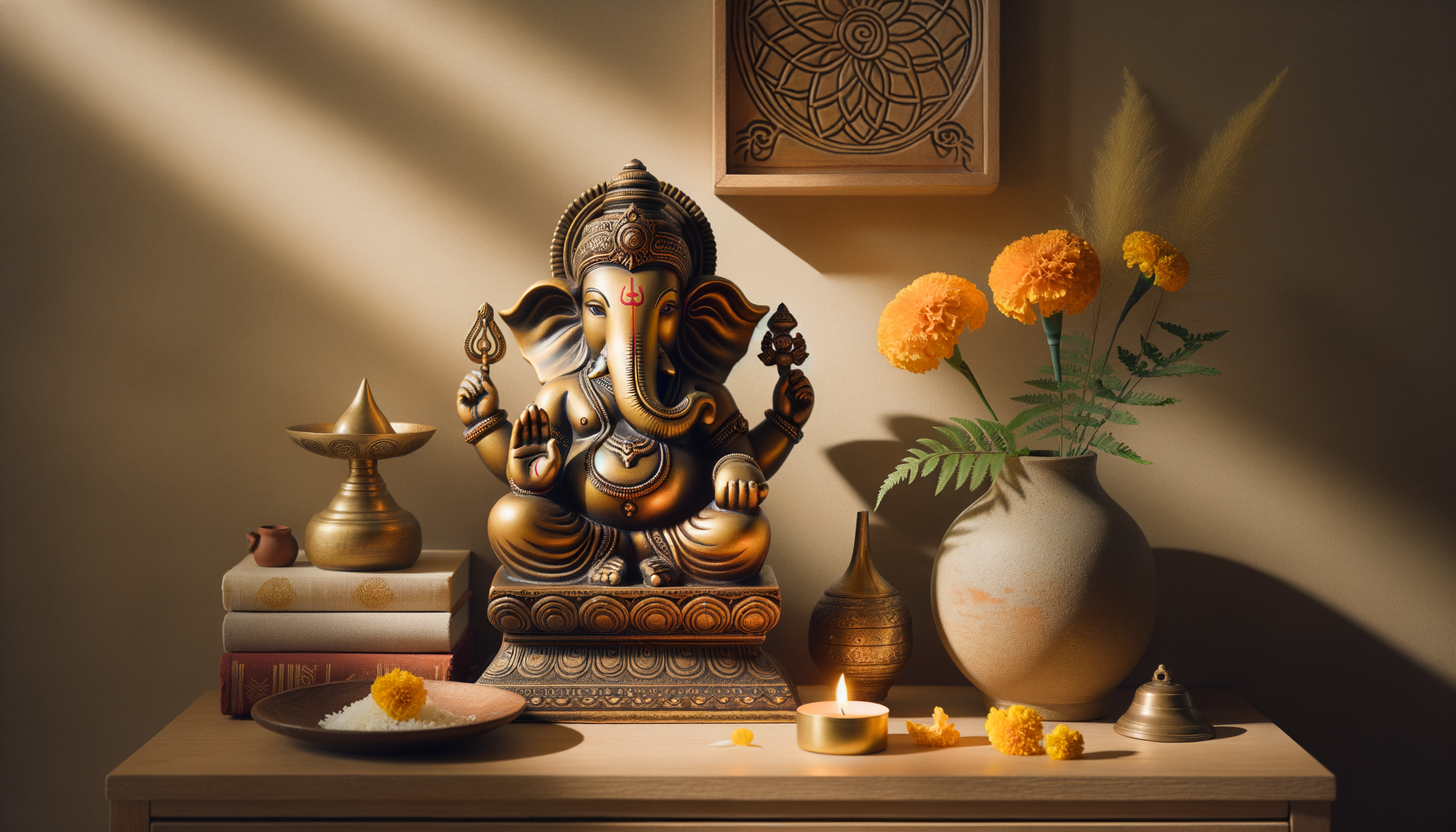
Across Hindu households, the orientation of Ganesha’s trunk is studied with care because form communicates function in ritual life. Within this visual grammar, the left-coiled trunkVamavarta Ganeshahas long been regarded as especially suitable for domestic worship. This preference is not a rigid rule but a time-tested convention that aligns household rhythm with a calm, auspicious current of devotion.
In many traditions, the left-coiled trunk is interpreted as resonant with the Ida nadi (the lunar, cooling channel) and the shanta (peaceful) aspect of Vighneshwara. Such iconography symbolizes approachable grace, gentle removal of obstacles, and easeful upasana for the grihastha (householder). For everyday puja, this form is associated with steady well-being, family concord, and prosperity that accrues through right conductmotifs central to the Hindu way of life. Devotees often observe that a Vamavarta Ganesha fosters a contemplative atmosphere conducive to daily prayers, study, and communal meals.
By contrast, the right-coiled form (often called Dakshinavarta Ganesha) is linked in several lineages to the solar, heating Pingala nadi and a more exacting ritual discipline. This icon can be especially potent in temple contexts or for advanced practitioners under guidance, where procedural rigorsuch as precise naivedya, shodashopachara, and purity observancesis consistently maintained. Because household schedules are variable, many families prefer the left-coiled trunk for its forgiving and accessible nature, while recognizing the sanctity of right-coiled forms in settings designed for such intensity.
Some images show the trunk centered, an iconographic gesture that certain schools relate to the Sushumna nadi. Although meaningful, this form is comparatively less common in homes and more often appreciated in spaces where contemplative practice, scriptural study, or temple worship highlights inner balance and meditative equipoise. Across these variations, visual symbolism serves as a pedagogical aid, guiding devotees toward alignment between form, practice, and intent.
Notably, the preference for Vamavarta Ganesha at home also reflects a wider dharmic insight shared across Hinduism, Buddhism, Jainism, and Sikhism: household spirituality benefits from symbols that encourage mindfulness, compassion, ethical livelihood, and communal harmony. While philosophies and practices differ, the aspiration to cultivate inner calm and societal goodwill unites these traditions. Respect for local parampara (lineage) remains essential, and communities adapt iconography to uphold both continuity and inclusivity.
Practical considerations reinforce this symbolism. Many households select a Ganesha idol of modest size so that the puja remains consistent and heartfelt rather than ornate yet irregular. Clay, stone, or metal are common, each reflecting cultural heritage and ease of care. When feasible, families align a home altar in the northeast (Ishana) quadrant, seat the murti at stable, eye-level height, and maintain a clean, uncluttered setting. These practices, though not absolute requirements, are widely associated with auspicious domestic worship.
Daily observances can remain simple and steady: a lamp, flowers, Durva grass, and a brief recitation or meditation that centers intention before work or study. During festivals such as Ganesh Chaturthi, the household may expand offerings while preserving the same ethos of reverence and simplicity. In many families, elders share narratives from the Puranas and the Eight incarnations of Ganesha (Mudgala Purana), reinforcing values of wisdom, courage, and compassion for younger generations.
Taken together, these strands explain why the left-coiled trunk of Ganesha is commonly kept at home: it communicates accessible auspiciousness, supports stable practice, and harmonizes with the cadence of family life. While honoring the sanctity of all forms, householders often find that Vamavarta Ganesha best sustains everyday devotion, quietly shaping an environment where learning, livelihood, and love can flourish together.
Inspired by this post on Hindu Blog.
