
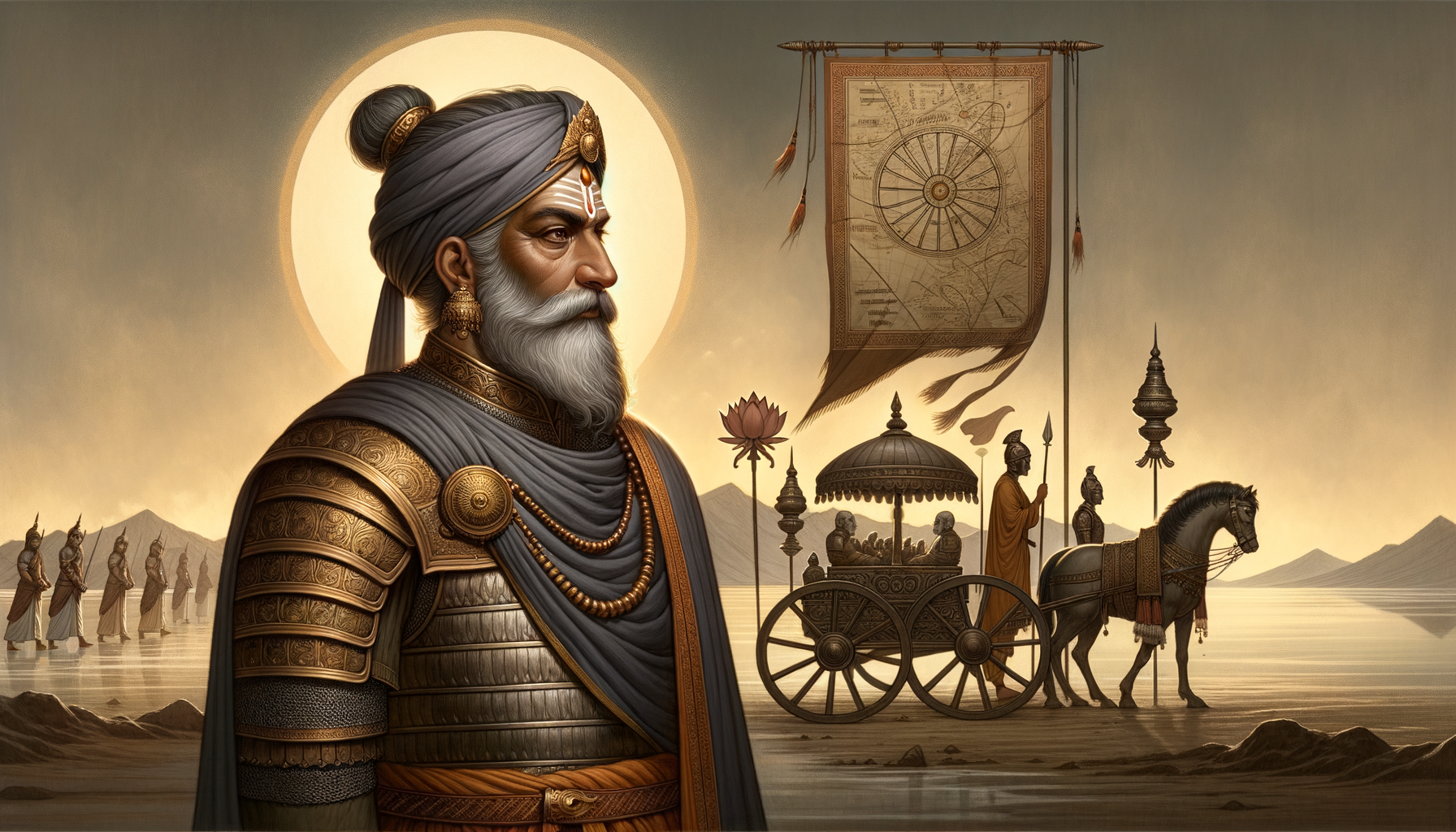
Public memory gravitates to iconic figures such as the Pandavas, Krishna, the Kauravas, Bhishma, and Drona; however, the Mahabharata also preserves moving portraits of lesser-known participants whose choices illuminate dharma. Among them, Bahlika Raja stands out, yet most retellings summarize him only briefly.
Traditional accounts describe Bahlika Raja as an elder of the Kuru lineage and sovereign of Bahlika, a region often linked by scholars to ancient Balkh/Bactria in Central Asia, underscoring the epic’s vast cultural geography in Ancient India. His presence widens the canvas of Mahabharata Characters and highlights how the epic integrates multiple frontiers, lineages, and perspectives.
During the Kurukshetra War, dynastic loyalty drew Bahlika Raja to the Kaurava side. Despite advanced age, he fought with exemplary discipline and restraint. Genealogical notes connect him to Somadatta and Bhurishravas, illustrating how lineages shaped strategy, honor, and responsibility. Several recensions record that Bhima eventually felled him on the battlefield, a detail that underscores the tragedy and moral gravity of war.
A revered strand of belief holds that Bahlika Raja is the next birth of the great Bhakta Prahalada. Read in a spiritual register, this association emphasizes steadfast devotion and the continuity of merit across lifetimesideas central to Hindu scriptures and resonant, in ethical spirit, with broader dharmic reflections across Buddhism, Jainism, and Sikhism on integrity, compassion, and responsibility.
Bahlika Raja’s life invites reflection on Dharma and Adharma: when kinship obligations, statecraft, and personal conscience diverge, how should one act? The Mahabharata repeatedly shows that dharma is contextual and requires viveka (discernment). Similar inquiries animate dharmic traditionswhether through Jain ahimsa, Buddhist right intention, or Sikh seva and courageaffirming a shared search for righteous conduct and unity in diversity.
For many readers, the quiet strength of an elder who upholds order, respects lineage, and accepts consequence feels deeply relatable; families across South Asia recognize such figures in their own histories. Bahlika Raja embodies the grace and gravity of elderhooddignity without spectacle, resolve without rancorqualities that evoke empathy and moral reflection.
Re-centering lesser-known Mahabharata Characters enriches cultural understanding: it broadens narrative empathy, balances heroic archetypes with nuanced human choices, and keeps alive the plural voices that make the epic timeless. In doing so, it also strengthens unity within the dharmic family by highlighting common virtues rather than sectarian divisions.
Exploring figures like Bahlika Raja offers living lessons: devotion anchored in duty, prudence in conflict, and humility before the moral complexity of life. Such insights remain relevant todayfrom public leadership to personal relationshipsguiding readers toward steadier judgment and compassionate action.
Inspired by this post on Hindu Pad.
