
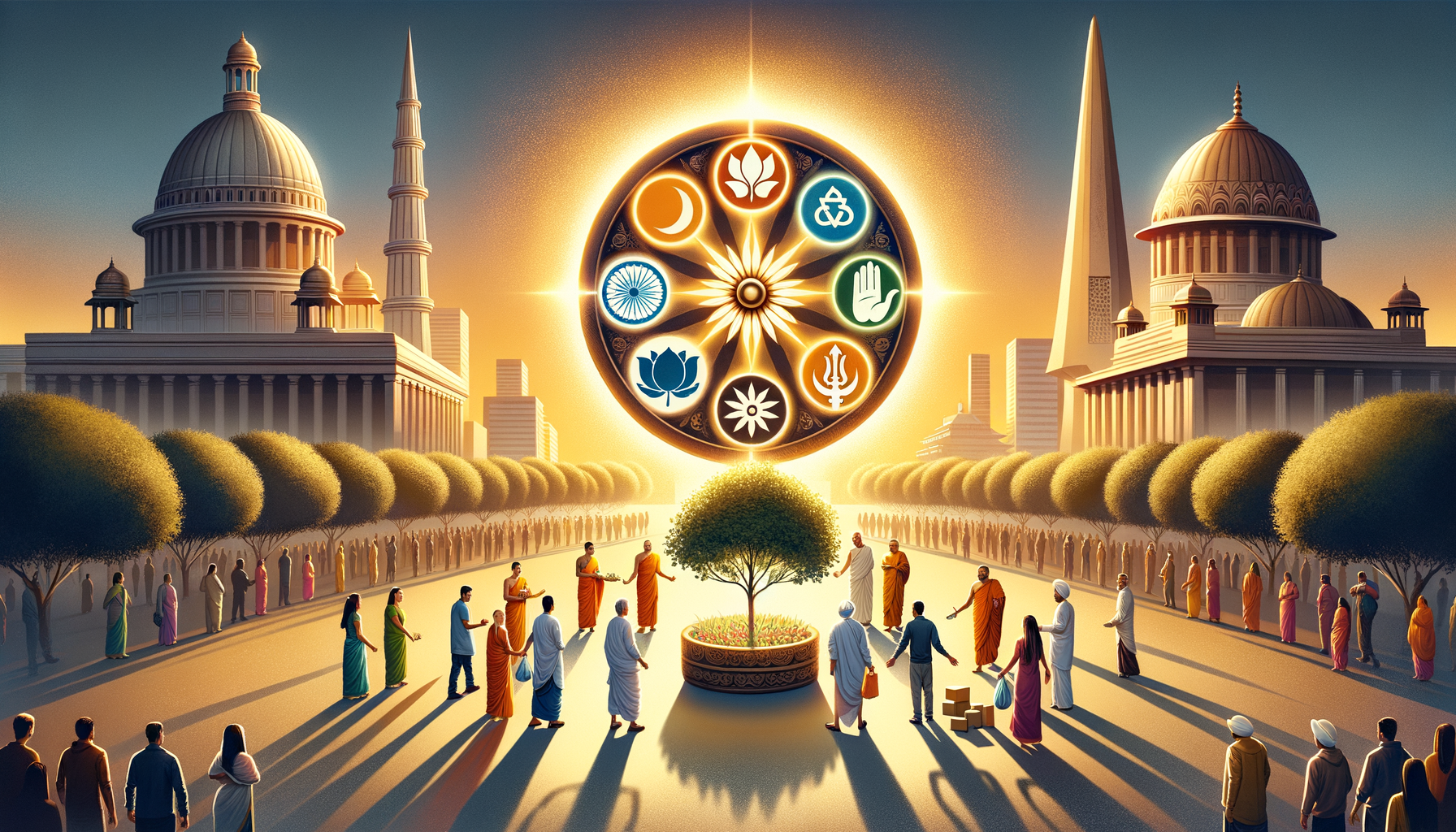
In a special guidance session held in Saharanpur, Ramesh Shinde of Hindu Janajagruti Samiti (HJS) presented a concise yet compelling analysis of contemporary challenges facing the Nation and Dharma, emphasizing the urgent need to align public life with the ideal of ‘Ramrajya’. The address framed Dharma not as sectarian allegiance but as a universal ethic of responsibility, justice, and compassion that strengthens national harmony and collective resilience.
Central to the presentation was the call to awaken Dharma Shaktisociety’s moral and spiritual energythrough unity in diversity across dharmic traditions. The session underlined how shared values present in Hinduism, Buddhism, Jainism, and Sikhism can foster ethical citizenship, mutual respect, and sustainable Nation-building without erasing distinct identities or practices. This vision of Dharma Shakti is integrative, dialogic, and rooted in service (seva) and good governance.
The analysis highlighted cross-cutting concerns frequently observed in public life: social polarization that weakens community cohesion, erosion of civic ethics, and the dilution of pluralistic discourse. Such patterns, it was noted, can hinder effective governance, diminish trust in institutions, and fragment the cultural fabric. Addressing these trends requires a renewed commitment to truth, non-violence, accountability, and shared civic dutyprinciples common to the dharmic family of traditions.
Positioned as an aspirational model, ‘Ramrajya’ was presented not as a theological state but as a framework for good governance grounded in justice, compassion, and the rule of law. In practical terms, the session underscored pathways such as ethical leadership, transparent institutions, community-led service initiatives, and interfaith cooperationespecially among Hindu, Buddhist, Jain, and Sikh communitiesto nurture social welfare, protect cultural heritage, and amplify Dharma Shakti for the common good.
The atmosphere of the gathering reflected thoughtful engagement, with participants responding to the call for unity with clarity and conviction. Many expressed that framing Dharma as a shared ethical compassrather than as a competitive identitymade the vision of Nation-building tangible and relatable. The emphasis on lived values, everyday service, and respectful dialogue offered an immediate, actionable path toward strengthening national cohesion.
Overall, the session affirmed that awakening Dharma Shakti is both a personal and collective endeavor: cultivating inner discipline and compassion while building external systems that embody fairness, inclusion, and public trust. By converging on the ideal of ‘Ramrajya’ through unity in diversity and sustained cooperation among dharmic traditions, communities can advance a stable, just, and harmonious societyone where Dharma safeguards the Nation, and the Nation, in turn, safeguards Dharma.
Inspired by this post on Hindu Jagruti Samiti.
